
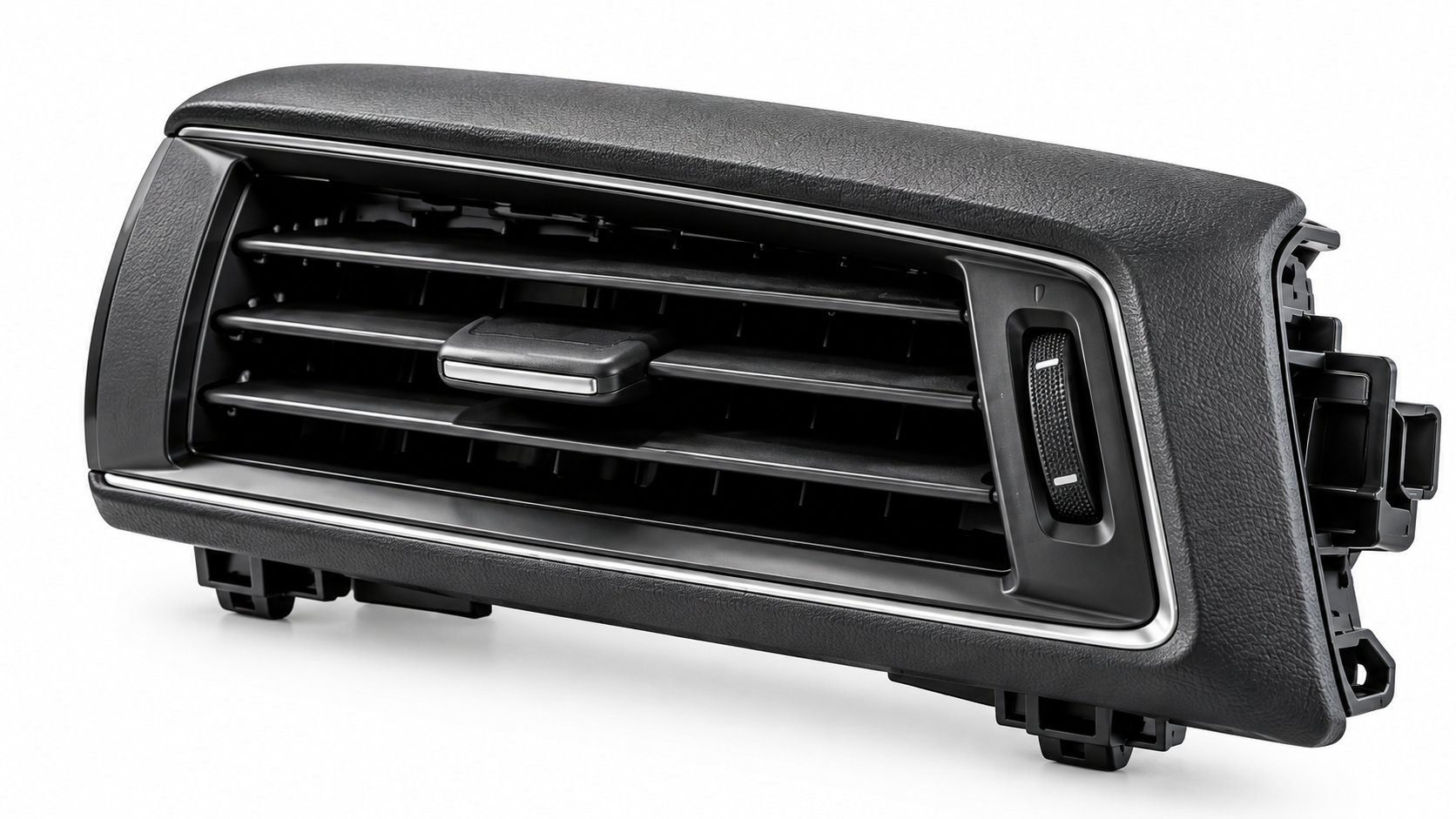
ABS injection molding temperature plays a major role in part quality, surface finish, and production stability. If the temperature is too low, plastic may not fill the mold correctly. However, excessive heat can cause material damage, discoloration, and other defects.
Therefore, choosing the right temperature is not simply about setting the injection molding machine to a fixed number. You need to consider the ABS grade, part design, mold temperature, and processing conditions.
In this guide, we explain the recommended temperature ranges for ABS injection molding. We also cover practical ways to control the process and produce consistent plastic parts.
What Is the Recommended ABS Injection Molding Temperature?
Most general-purpose ABS grades use a melt temperature of around 230–260°C (446–500°F). However, the exact range depends on the material grade and manufacturer.
Mold temperature also matters. For many ABS grades, a mold temperature of approximately 40–80°C provides a useful starting range.
The following table shows typical starting parameters for general-purpose ABS.
| Processing Parameter | Typical Starting Range |
|---|---|
| Melt temperature | 230–260°C |
| Mold temperature | 40–80°C |
| Rear barrel zone | 190–220°C |
| Middle barrel zone | 210–240°C |
| Front barrel zone | 220–250°C |
| Nozzle temperature | 220–250°C |
These barrel settings are starting points, not universal requirements. Actual melt temperature also depends on screw speed, back pressure, shear heating, and residence time.
Therefore, always check the material supplier’s technical data sheet before setting production parameters.
How Does ABS Melt Temperature Affect Part Quality?
ABS melt temperature controls how easily plastic flows into the mold cavity.
When melt temperature increases, viscosity generally decreases. As a result, the material can fill thin walls and complex features more easily.
However, higher temperatures also increase the risk of material degradation when the melt stays inside the barrel for too long.
When ABS Melt Temperature Is Too Low
Low melt temperature can cause several production problems:
- Short shots due to poor material flow
- Visible flow lines on cosmetic surfaces
- Weak weld lines
- Higher injection pressure requirements
- Incomplete filling of thin sections
For example, a thin automotive interior trim component may develop flow marks when the melt freezes too quickly.
Therefore, increasing the melt temperature within the approved range may improve filling. However, engineers should also check gate size, injection speed, and mold temperature.
When ABS Melt Temperature Is Too High
Excessive melt temperature can lead to:
- Yellowing or discoloration
- Material degradation
- Gas-related defects
- Black specks
- Stringing at the nozzle
- Longer cooling requirements in some applications
Furthermore, excessive screw shear or long residence time can damage ABS even when the barrel settings appear acceptable.
For this reason, engineers should measure the actual melt temperature instead of relying only on the machine display.
For more information about ABS material behavior, read our ABS Injection Molding Guide.
Why Is ABS Mold Temperature Important?
Mold temperature controls how ABS cools after it enters the cavity.
A colder mold can shorten the cooling stage. However, it can also cause premature freezing, poor gloss, and visible weld lines.
In contrast, a warmer mold may improve the appearance of the finished part. It can also reduce internal stress when the process is properly controlled.
Lower ABS Mold Temperature
A lower mold temperature may help shorten cycle time for simple parts.
However, it can also increase the risk of:
- Flow marks
- Weak weld lines
- Uneven surface gloss
- Higher molded-in stress
Higher ABS Mold Temperature
A higher mold temperature can improve surface quality and weld-line strength.
For automotive interior parts, this may be particularly useful when a consistent cosmetic finish is important.
However, higher mold temperatures may require longer cooling times. Therefore, engineers must balance appearance, dimensional stability, and production efficiency.
How to Set the Right ABS Injection Molding Temperature
A reliable process window is a range of settings that produces acceptable parts, rather than one perfect temperature.
At Fentor Mold, we consider the material, part geometry, mold construction, and quality requirements when developing an ABS molding process.
The following steps provide a practical starting method.
Step 1: Check the ABS Material Grade
Start with the resin manufacturer’s processing guidelines.
General-purpose ABS, high-impact ABS, and flame-retardant ABS may require different temperature settings.
In addition, additives and colorants can influence processing behavior.
Therefore, do not copy a temperature profile from another ABS grade without checking its specifications.
Step 2: Set the Initial Melt Temperature
Choose a starting melt temperature near the middle of the approved processing range.
For a general-purpose ABS grade with a recommended range of 230–260°C, an initial target around 245°C may be reasonable.
Next, adjust the barrel zones to achieve this target.
Measure the actual melt temperature after the process reaches stable conditions.
Step 3: Adjust the Mold Temperature
Begin with a mold temperature recommended by the material supplier.
For example, 60°C may be a useful trial setting for some general-purpose ABS grades.
Then, inspect the molded parts for:
- Surface gloss
- Weld lines
- Warpage
- Dimensional consistency
- Ejection behavior
If visible flow marks remain, a higher mold temperature may help. However, check the filling pattern before changing the setting.
Step 4: Optimize Injection Speed and Holding Pressure
Temperature alone cannot solve every molding defect.
If injection speed is too slow, ABS may freeze before the cavity fills. In contrast, excessive speed can create high shear, trapped gas, or surface defects.
Holding pressure also affects shrinkage and dimensional accuracy.
Therefore, optimize injection speed and holding pressure after establishing a suitable temperature range.
You can also explore How Injection Temperature and Speed Affect Plastic Part Quality to understand how these parameters work together.
Step 5: Validate the Stable Process Window
Run controlled molding trials and record the results.
Change one main parameter at a time during initial trials. Once a stable process is found, test its limits.
A practical validation plan should include:
- Low, middle, and high melt temperature trials within the approved range.
- Mold temperature trials for appearance and dimensional stability.
- Part weight and dimensional measurements.
- Visual checks for surface defects.
- Production trials to confirm repeatability.
Finally, record the acceptable limits for key parameters.
This creates a more reliable process window for future production.
Common ABS Injection Molding Temperature Problems
Incorrect ABS injection molding temperature can contribute to different molding defects.
The table below shows common problems and possible corrective actions.
| Defect | Possible Cause | Recommended Action |
|---|---|---|
| Short shot | Low melt temperature or early freezing | Verify melt temperature and filling conditions |
| Flow marks | Low mold temperature or uneven flow | Adjust mold temperature and injection speed |
| Burn marks | Trapped air, excessive shear, or degradation | Check venting, speed, and melt temperature |
| Warpage | Uneven cooling or internal stress | Balance mold cooling and packing |
| Poor surface gloss | Low mold temperature | Increase mold temperature within the approved range |
| Silver streaks | Moisture, gas, or degradation | Check resin drying and processing conditions |
| Black specks | Material degradation or contamination | Check residence time and purge the barrel |
However, these defects can have several causes. Temperature adjustments should never replace a proper check of mold design, venting, and material handling.
For a better understanding of tooling-related problems, explore our custom injection mold manufacturing services.
How Does Part Design Affect ABS Injection Molding Temperature?
Even with the correct ABS injection molding temperature, poor part design can create production problems.
For example, sudden wall thickness changes may cause uneven cooling. Long flow paths can also make filling more difficult.
Therefore, good part design helps achieve a wider and more stable process window.
Wall Thickness and Flow Length
Thin walls cool quickly and require careful control of flow conditions.
Meanwhile, thick sections may need more cooling time and packing optimization.
A balanced wall thickness helps reduce these differences.
Gate Location and Mold Cooling
Gate location affects how ABS flows through the cavity.
If the gate is too small, high shear heating may occur. Poor gate placement can also create visible weld lines or difficult filling conditions.
In addition, uneven cooling channels may lead to warpage.
For this reason, a complete injection molding production plan should consider both mold design and process parameters.
ABS Injection Molding Temperature for Automotive Parts
Automotive plastic components often require stable dimensions and consistent surface quality.
For example, ABS is commonly used in selected interior trim parts, vents, bezels, and decorative components.
However, each product has different requirements.
Automotive Air Vents
Air vents often contain thin blades, narrow gaps, and visible surfaces.
Therefore, the melt must flow smoothly through the cavity without creating excessive stress or surface defects.
Consistent mold temperature also helps control gloss, weld lines, and dimensional stability.
Interior Trim and Bezels
Automotive trim components often require a clean appearance and consistent fit.
For these parts, proper melt temperature and balanced cooling help reduce molded-in stress.
Furthermore, stable processing conditions can improve part-to-part consistency during production.
For large or complex automotive plastic parts, Moldflow analysis can help engineers evaluate flow balance, pressure requirements, and cooling performance before production.
At Fentor Mold, combining mold engineering with process validation helps improve the stability of automotive injection molding projects.
You can also learn more about our manufacturing capabilities on the Fentor Mold homepage.
Frequently Asked Questions About ABS Injection Molding Temperature
What Is the Best Temperature for ABS Injection Molding?
For many general-purpose ABS grades, a melt temperature between 230°C and 260°C is suitable. However, the best value depends on the specific material and part design.
What Is the Recommended ABS Mold Temperature?
A common starting range is around 40–80°C. Higher temperatures may improve surface gloss and weld-line strength, while lower temperatures may shorten cooling time.
Can ABS Be Injection Molded at 200°C?
Some ABS grades may process at lower temperatures, but 200°C is below the typical melt range for many general-purpose grades. It may cause poor filling or increased injection pressure. Always follow the resin manufacturer’s recommendations.
Does Higher ABS Temperature Reduce Warpage?
Not always. Higher mold temperature may reduce internal stress, but warpage also depends on cooling balance, packing pressure, wall thickness, and part design.
How Do You Prevent ABS From Burning During Injection Molding?
Check melt temperature, material residence time, screw speed, venting, and injection speed. Burn marks may result from trapped gas as well as thermal degradation.
Conclusion
Choosing the correct ABS injection molding temperature is essential for consistent plastic part quality.
For many general-purpose ABS grades, a melt temperature of 230–260°C and an appropriate mold temperature provide a useful starting point.
However, temperature settings must match the material grade, mold design, and product requirements.
By controlling melt temperature, mold cooling, injection speed, and holding pressure together, manufacturers can reduce molding defects and maintain a stable production process.
For automotive and industrial plastic components, Fentor Mold supports custom mold development and injection molding solutions, from early engineering review to production validation.