
Choosing between HDPE and PP can be difficult when both materials appear suitable for the same plastic part. In HDPE vs PP injection molding, the better material depends on what the part needs to do, how it will be used, and how much production cost matters.
HDPE offers good impact resistance, chemical resistance, and toughness. PP is lighter, more flexible, and has excellent fatigue resistance. Both materials are widely used for injection molded parts, but they behave differently during molding and in finished products.
For a buyer preparing an injection molding project, the right choice should be based on performance, dimensional requirements, tooling, production volume, and total part cost—not simply the resin price.
HDPE vs PP Injection Molding: Quick Comparison
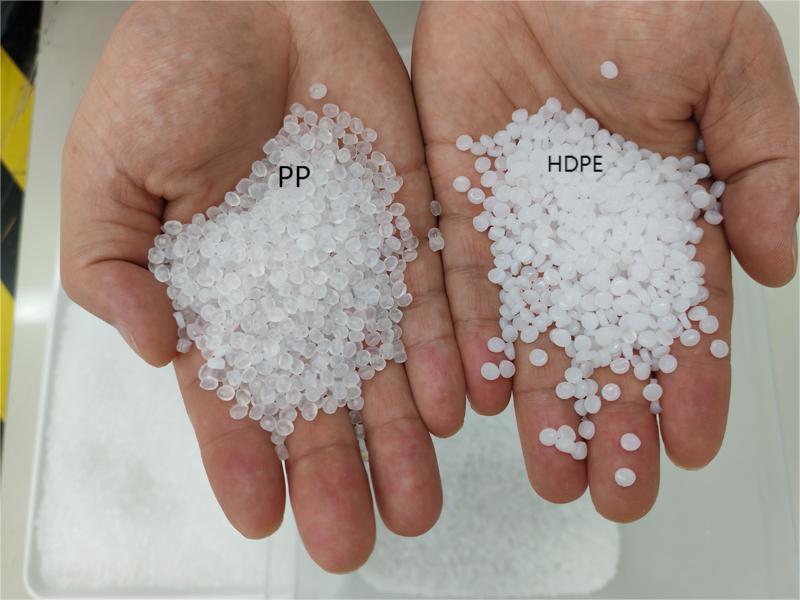
Before looking at the details, the following comparison gives a quick overview.
| Property | HDPE | PP |
|---|---|---|
| Density | Higher than PP | Lower than HDPE |
| Impact resistance | Excellent | Good to excellent |
| Chemical resistance | Excellent | Excellent |
| Flexibility | Good | Excellent |
| Stiffness | Good | Good |
| Fatigue resistance | Good | Excellent |
| Moisture absorption | Very low | Very low |
| Heat resistance | Moderate | Generally higher |
| Shrinkage | Relatively high | Relatively high |
| Lightweight parts | Good | Excellent |
| Living hinges | Not ideal | Excellent |
| Typical cost | Competitive | Competitive |
| Common applications | Containers, pipes, industrial parts | Caps, containers, automotive and appliance parts |
Neither material is universally better. The application determines which one makes more sense.
What Is HDPE?
HDPE stands for high-density polyethylene. It is a thermoplastic known for its toughness, chemical resistance, low moisture absorption, and relatively high impact strength.
HDPE is commonly used for:
- Containers
- Caps and closures
- Industrial components
- Chemical containers
- Automotive parts
- Pipe-related components
- Household products
- Packaging products
One important advantage of HDPE is its resistance to many chemicals. This makes it useful for parts exposed to detergents, cleaning chemicals, oils, and other substances.
HDPE also has good impact resistance, which can be valuable when a component may be dropped, hit, or handled repeatedly.
If you are specifically evaluating HDPE for production, our guide to HDPE Injection Molding covers material behavior, molding problems, and quality control in more detail.
What Is PP?
PP, or polypropylene, is another widely used thermoplastic for injection molding.
PP is particularly attractive when low weight, chemical resistance, flexibility, and fatigue resistance are important.
Common applications include:
- Automotive components
- Appliance parts
- Food containers
- Caps and closures
- Living hinges
- Storage products
- Packaging
- Consumer products
One of PP’s biggest advantages is its ability to withstand repeated flexing. This is why PP is often used for snap-fit components and living hinges.
PP also has a relatively low density, so the finished part can weigh less than an equivalent HDPE component.
HDPE vs PP: Which Is Stronger?
Strength needs to be defined carefully.
A material can have higher tensile strength but still be less suitable for a particular application because of its flexibility, impact behavior, or temperature requirements.
HDPE is known for its toughness and impact resistance. It can be a good choice when the part needs to withstand mechanical impact or rough handling.
PP offers a useful combination of stiffness and flexibility. It is also well suited to parts that need to flex repeatedly without cracking.
So, in HDPE vs PP injection molding, neither material should automatically be called stronger.
The better question is:
Does the part need impact resistance, stiffness, flexibility, or repeated flexing?
If impact resistance and toughness are the priority, HDPE may be a strong candidate.
If repeated flexing or low weight is more important, PP may be the better choice.
HDPE vs PP: Which Has Better Chemical Resistance?
Both HDPE and PP have very good chemical resistance.
They are commonly considered for components exposed to:
- Detergents
- Cleaning agents
- Acids
- Alkalis
- Oils
- Moisture
- Many industrial chemicals
However, chemical compatibility depends on the actual chemical, concentration, temperature, exposure time, and mechanical stress.
For a production project, the resin supplier’s chemical resistance data should be checked against the actual operating conditions.
Do not select HDPE or PP solely because both materials are generally described as “chemical resistant.”
HDPE vs PP: Which Is More Flexible?
PP generally provides better flexibility and fatigue resistance.
This makes it especially useful for:
- Living hinges
- Flexible clips
- Snap-fit components
- Repeatedly opened covers
- Flexible packaging components
HDPE is also somewhat flexible, but it is generally chosen more often when toughness and impact resistance are more important than repeated flexing.
For a part that needs to bend thousands or millions of times, PP deserves serious consideration.
HDPE vs PP for Injection Molding
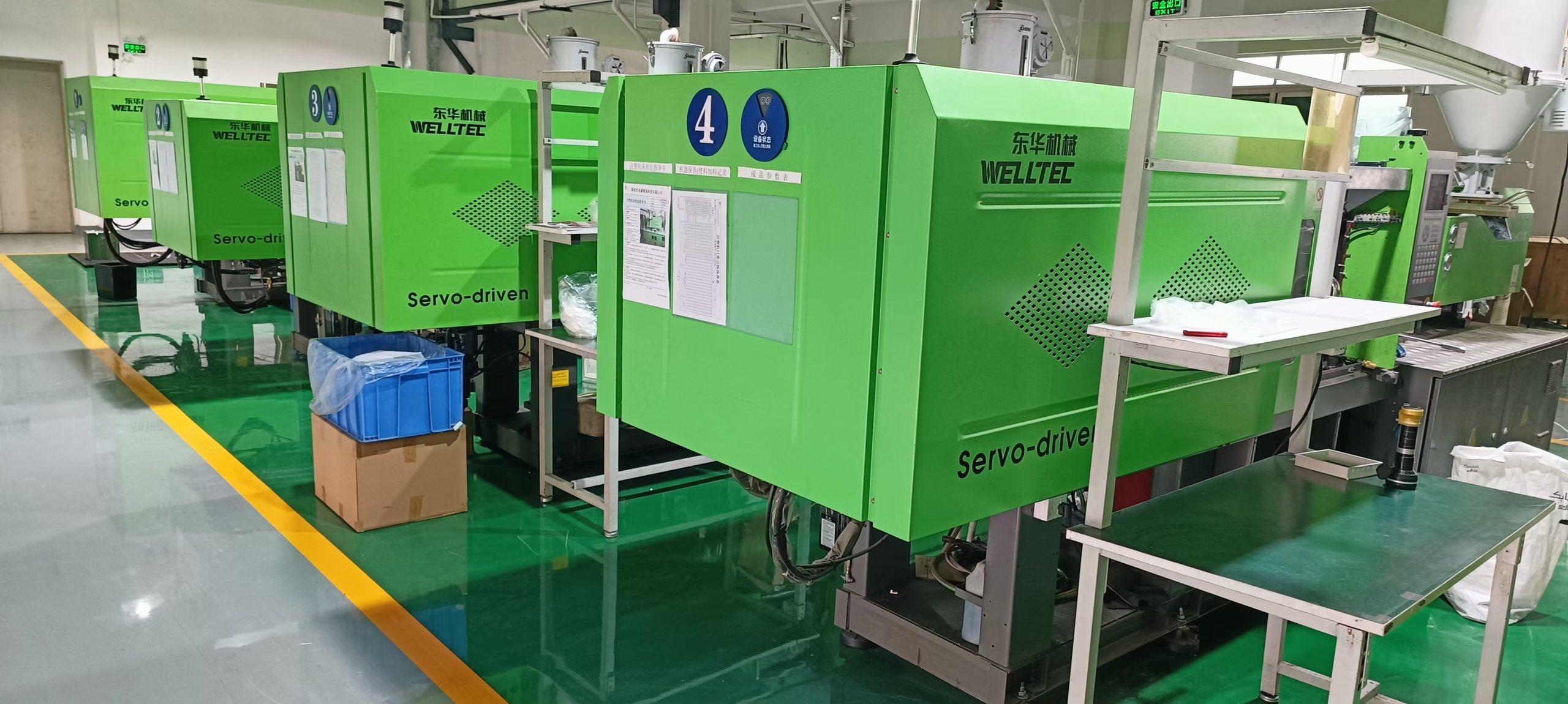
Both materials are well suited to injection molding, but their processing behavior is not identical.
HDPE Injection Molding
HDPE generally has good flow characteristics and can be processed efficiently.
However, its relatively high shrinkage needs to be considered during mold design.
The mold designer should account for:
- Material shrinkage
- Wall thickness
- Cooling
- Gate location
- Part geometry
- Ejection
Poor control of these factors can contribute to dimensional variation or warpage.
PP Injection Molding
PP is also highly suitable for high-volume injection molding.
Its low density helps reduce material consumption, while its flow characteristics make it suitable for many thin-wall applications.
However, PP also has relatively high molding shrinkage.
Cooling conditions and part geometry therefore need to be considered carefully when tight dimensions are required.
HDPE vs PP: What About Shrinkage?
Shrinkage is an important consideration when comparing HDPE and PP.
Both materials can experience relatively significant molding shrinkage compared with some engineering plastics.
The actual result depends on:
- Resin grade
- Part geometry
- Wall thickness
- Mold temperature
- Melt temperature
- Packing pressure
- Cooling time
- Flow direction
- Fiber reinforcement, if applicable
This means a material data sheet alone cannot predict the final part dimensions.
For precision parts, mold design and molding process control are equally important.
A mold manufacturer should consider expected shrinkage during cavity and core design rather than trying to correct dimensional problems only after the first trial.
HDPE vs PP: Which Has Better Dimensional Stability?
If tight dimensional control is required, neither HDPE nor PP should be selected without considering the part geometry and production conditions.
Both materials are semi-crystalline thermoplastics, so shrinkage and cooling behavior can have a noticeable effect on dimensions.
Large flat areas, uneven wall thickness, ribs, bosses, and other geometry changes can increase the risk of dimensional variation or warpage.
For this reason, the part design should be reviewed before mold manufacturing.
The mold design should also consider:
- Uniform wall thickness
- Cooling layout
- Gate position
- Runner balance
- Ejection
- Expected shrinkage
This is particularly important when producing small precision components.
HDPE vs PP: Which Is More Cost-Effective?
Material price is only one part of the total cost.
PP often has a cost advantage when its lower density reduces material consumption. However, the final part cost depends on much more than resin price.
The following factors also matter:
- Part weight
- Cycle time
- Cavity count
- Mold cost
- Scrap rate
- Annual production volume
- Material grade
- Machine size
- Secondary operations
For example, changing from HDPE to PP may reduce material consumption, but if the alternative material does not meet the required performance, the apparent saving may not be worthwhile.
For procurement teams, the better approach is to compare total cost per acceptable part, rather than comparing the price per kilogram of resin.
HDPE vs PP for Automotive Parts
Both materials are used in automotive applications.
HDPE may be considered for components where toughness, chemical resistance, and impact resistance are important.
PP is widely used for components where low weight, chemical resistance, flexibility, and cost efficiency matter.
The actual choice depends on the application.
Important considerations include:
- Operating temperature
- Impact requirements
- Chemical exposure
- Dimensional requirements
- Surface appearance
- Weight reduction
- Assembly method
For automotive projects, material selection should be completed together with part design and mold design.
HDPE vs PP for Home Appliance Parts
Both materials can also be suitable for home appliance components.
PP is often attractive for lightweight housings, covers, containers, and components requiring some flexibility.
HDPE can be considered for parts requiring toughness and good chemical resistance.
For appliance projects, the material should also be evaluated against:
- Detergent exposure
- Water exposure
- Heat
- Impact
- Repeated assembly
- Surface appearance
- Product lifetime
The lowest-cost resin is not necessarily the best choice if the component needs to survive years of repeated use.
When Should You Choose HDPE?
HDPE may be the better choice when the part requires:
- High impact resistance
- Good toughness
- Excellent chemical resistance
- Low moisture absorption
- Good environmental resistance
- A balance of stiffness and flexibility
Typical examples include containers, industrial components, chemical-resistant parts, and products exposed to rough handling.
When Should You Choose PP?
PP may be the better choice when the part requires:
- Low weight
- Good chemical resistance
- Repeated flexing
- Excellent fatigue resistance
- Living hinges
- Snap-fit performance
- Good cost efficiency
PP is particularly attractive for high-volume consumer products and components where weight reduction matters.
HDPE vs PP: Which Material Is Better for Your Mold?
Material selection should happen before the mold design is finalized.
Changing the material after the mold has already been manufactured can create additional engineering work because different plastics may have different shrinkage and processing requirements.
Before requesting a mold quotation, provide:
- Part 3D model
- 2D drawing
- Required material or approved alternatives
- Annual production volume
- Critical dimensions
- Surface finish requirements
- Expected mold life
- Application conditions
This information allows the mold manufacturer to evaluate the part more accurately.
For custom tooling projects, Fentormold’s Injection Mold Manufacturing Service can support projects from mold design through tooling production and trial.
HDPE vs PP Injection Molding: Final Decision
So, which is better in HDPE vs PP injection molding?
There is no single answer.
Choose HDPE when impact resistance, toughness, chemical resistance, and durability are major priorities.
Choose PP when low weight, flexibility, fatigue resistance, living hinges, and cost efficiency are more important.
For many products, both materials can technically work. The final decision should therefore be based on the actual application rather than material popularity.
A good material choice should satisfy the product’s performance requirements while also keeping molding, tooling, and production costs under control.
Quick Decision Guide
| Requirement | Recommended Material |
|---|---|
| High impact resistance | HDPE |
| Excellent chemical resistance | Both |
| Low density | PP |
| Repeated flexing | PP |
| Living hinge | PP |
| Toughness | HDPE |
| Low moisture absorption | Both |
| Lightweight design | PP |
| Chemical containers | HDPE |
| High-volume consumer products | PP |
| Rough handling | HDPE |
The best HDPE vs PP injection molding decision is ultimately the one that balances part performance, manufacturability, tooling requirements, and total production cost.