
Small plastic parts are everywhere, from electronic connectors and automotive clips to sensors, medical components, and appliance parts. When these components need to be produced in large quantities, small plastic parts injection molding is often a practical way to achieve consistent quality and a competitive unit cost.
However, molding a small part is not simply a matter of making a smaller mold. Small cavities, thin walls, tiny holes, tight tolerances, and limited space for gates and ejectors can make these projects surprisingly demanding.
For buyers, the real question is not whether a small plastic part can be molded. It is whether the mold can produce the part consistently throughout the required production volume.
What Are Small Plastic Parts?
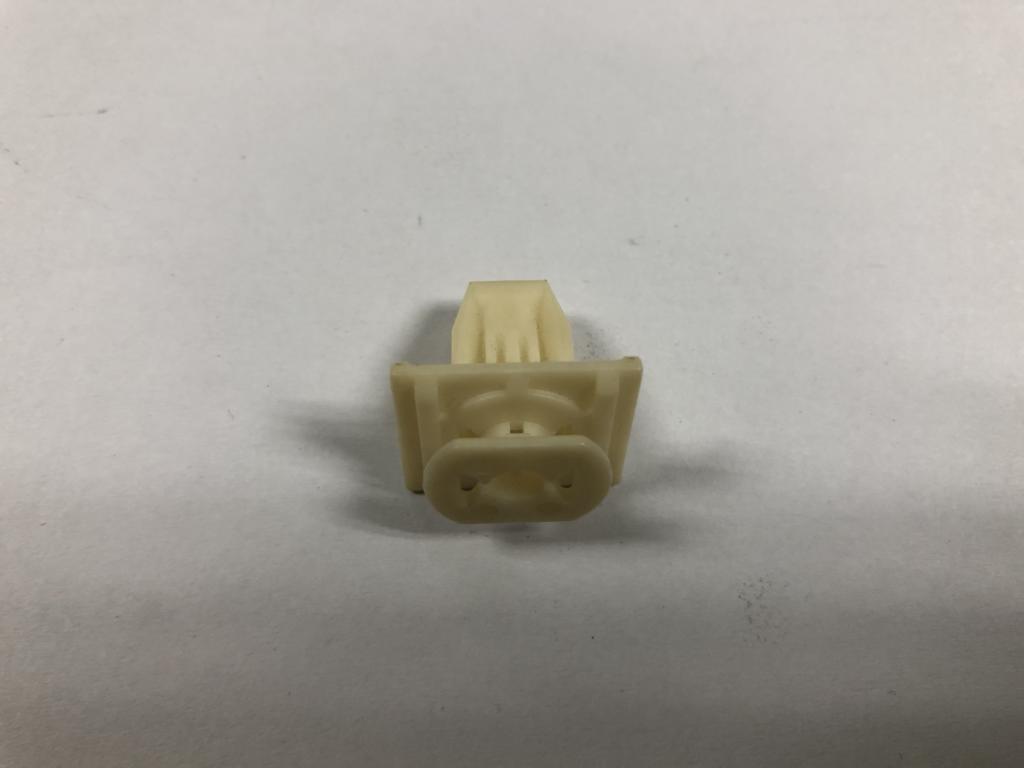
There is no single size that officially defines a small plastic part. In practice, the term usually refers to components with small overall dimensions, low part weight, or miniature functional features.
Typical small plastic parts include:
- Electronic connectors
- Automotive clips and retainers
- Small housings
- Sensor components
- Buttons and switches
- Small gears
- Bushings
- Medical components
- Cable clips
- Appliance components
- Precision covers
Part size is only one factor. A small part with a simple shape may be easy to mold, while a slightly larger component with thin walls, deep ribs, or tight tolerances can require much more complicated tooling.
This is why small plastic parts injection molding should be evaluated based on the complete part geometry rather than its overall size alone.
Why Use Injection Molding for Small Plastic Parts?
For repeated production, injection molding offers several practical advantages.
Consistent Production
Once the mold and molding process have been properly validated, the same tool can produce thousands or even millions of parts with consistent dimensions.
This matters even more for small components because a small dimensional variation can affect assembly.
For example, a connector housing may only be a few millimeters across, but the position of a locating pin or the diameter of a small hole can determine whether the part fits correctly.
High Production Efficiency
Small parts generally require relatively little material per shot. This makes it possible to produce multiple parts in one molding cycle.
A properly designed multi-cavity mold can therefore provide a high production output without requiring a large amount of material for each cycle.
Competitive Unit Cost
The initial mold investment can be significant, but the cost per part can become very competitive at higher production volumes.
This is one reason small plastic parts injection molding is widely considered for products requiring tens of thousands or millions of components.
Repeatable Quality
Injection molding can reproduce small ribs, bosses, holes, clips, and other functional details with good repeatability when the mold and process are properly controlled.
For precision components, this repeatability can be more valuable than simply achieving a low initial tooling price.
What Makes Small Plastic Parts Difficult to Mold?
Small plastic parts can create several tooling and processing challenges.
The most common issues include:
- Very thin walls
- Tiny holes
- Small ribs and bosses
- Narrow flow paths
- Difficult gate locations
- Limited ejector space
- Tight dimensional tolerances
- Difficult venting
- Material shrinkage
- Cavity-to-cavity variation
For a large plastic housing, a small amount of dimensional variation may not affect assembly. On a miniature component, the same variation can be significant.
The smaller the functional feature, the less room there is for process variation.
This means the mold designer needs to consider the part geometry, material, gate location, runner balance, venting, cooling, and ejection together.
How Mold Design Affects Small Plastic Parts
Mold design has a direct influence on the quality of small plastic parts.
A mold that looks relatively simple from the outside may contain highly precise cores, inserts, ejector components, and small cavity details.
Cavity Layout
For multi-cavity tooling, filling balance is important.
If the runner system is not properly balanced, different cavities may receive different amounts of material or experience different filling conditions.
This can lead to differences in:
- Part weight
- Dimensions
- Shrinkage
- Surface appearance
- Packing pressure
For small precision components, these differences can become noticeable during assembly.
Gate Location
Gate design deserves attention from the beginning of the project.
The gate needs to provide reliable filling while keeping gate marks away from important surfaces when possible.
A gate that is too restrictive can increase injection pressure and make filling more difficult. A gate that is too large can create unnecessary cosmetic or trimming issues.
The right solution depends on the material, wall thickness, part geometry, cavity layout, and production requirements.
Venting
Air trapped inside a small cavity can cause filling problems, burn marks, weld lines, or short shots.
Because small features can leave very little room for conventional venting, vent locations should be considered during mold design rather than added only after the first mold trial.
Ejection
Ejection is another area that can become difficult with small parts.
There may be very limited space for ejector pins. At the same time, the pins must provide enough force to remove the part without deforming thin walls or leaving unacceptable marks.
For some parts, ejector pins, sleeves, lifters, or other ejection structures may need to be carefully positioned around the functional features.
How to Control Tolerances in Small Plastic Parts
Tolerance requirements should be discussed before mold manufacturing begins.
Not every dimension needs the same tolerance. A better approach is to identify which dimensions are actually important for assembly and function.
These may include:
- Hole diameter
- Pin position
- Snap-fit dimensions
- Mating surfaces
- Overall assembly dimensions
- Critical wall thickness
The selected plastic also affects dimensional behavior.
Different materials have different shrinkage characteristics. Reinforced materials can behave differently from unfilled grades, while materials that absorb moisture may require additional control.
Processing conditions also matter.
Injection speed, injection pressure, holding pressure, mold temperature, cooling time, and material drying can all affect the final dimensions.
If the project has tight dimensional requirements, the tolerance should be discussed with the mold manufacturer before the tooling design is finalized.
For more information, see our related guide on Injection Molding Tolerances.
Which Plastics Are Best for Small Plastic Parts?
There is no single best material for every small component.
The right choice depends on the part’s mechanical requirements, operating temperature, chemical exposure, appearance, and cost target.
ABS
ABS is commonly selected when a combination of toughness, appearance, and processability is required.
PC
PC is useful when high impact resistance is important. Transparent PC grades can also be considered when optical appearance is required.
POM
POM is often used for small mechanical components because of its stiffness, wear resistance, and low-friction characteristics.
PA
Nylon can provide good strength and wear resistance. However, moisture absorption should be considered when tight dimensional control is required.
PP
PP offers low density, good chemical resistance, and good fatigue performance, making it suitable for many functional components.
PPS and PEEK
For demanding applications involving high temperatures, chemicals, or mechanical loads, high-performance materials such as PPS and PEEK may be considered.
Material selection should be based on the actual application rather than simply choosing the lowest-cost resin.
How Mold Steel Affects Small Plastic Parts
Mold steel becomes especially important when the tooling contains small precision features.
Small cores, inserts, sliders, and other mold components can experience significant wear during production.
The appropriate steel depends on:
- Expected mold life
- Production volume
- Plastic material
- Glass-fiber content
- Required surface finish
- Corrosion risk
- Dimensional requirements
For example, glass-fiber-reinforced plastics can be more abrasive than unfilled materials.
Choosing a lower-cost steel may reduce the initial quotation, but it can increase maintenance or replacement costs over the life of the mold.
For this reason, buyers should evaluate mold steel based on the expected production requirements rather than comparing tooling prices alone.
Single-Cavity vs Multi-Cavity Molds for Small Parts
Cavity number is often an important decision for small plastic parts injection molding.
Single-Cavity Mold
A single-cavity tool may be appropriate when:
- Production volume is relatively low
- The product is still being validated
- The design may change
- Initial tooling investment needs to be controlled
Multi-Cavity Mold
A multi-cavity mold is usually more attractive when:
- Annual volume is high
- Unit cost is important
- High production output is required
- The product will remain in production for a long period
However, increasing the cavity count also increases tooling complexity.
The goal should not simply be to maximize the number of cavities. The right cavity count should balance production volume, machine capability, tooling investment, cycle time, and quality requirements.
How to Improve Small Plastic Parts Injection Molding
Several decisions made before tooling can reduce production problems later.
Keep Wall Thickness as Consistent as Practical
Large changes in wall thickness can create uneven cooling and shrinkage.
A more consistent wall structure generally makes filling and cooling easier to control.
Avoid Unnecessary Tiny Features
Very small ribs, bosses, holes, and sharp corners can increase mold machining difficulty.
If a feature does not provide a clear functional benefit, simplifying it may reduce both tooling complexity and production risk.
Provide Sufficient Draft
Even very small parts require suitable draft for reliable mold release.
Insufficient draft can cause sticking, drag marks, deformation, or excessive wear on the mold.
Plan the Gate During Part Design
The gate should not be treated as an afterthought.
Gate location affects filling, weld lines, packing, appearance, and sometimes the dimensional stability of the finished part.
Consider Inspection Before Production
For precision small plastic parts, the inspection method should be defined before mass production.
Depending on the tolerance and geometry, inspection may involve:
- Optical measurement
- CMM inspection
- Pin gauges
- Digital microscopes
- Dedicated inspection fixtures
The measurement method should be appropriate for the required tolerance. A very small feature cannot always be checked accurately with a standard hand measuring tool.
What Does Small Plastic Parts Injection Molding Cost?
There is no standard price for small plastic parts.
A small component may use very little resin but still require an expensive precision mold.
Important cost factors include:
- Part geometry
- Material
- Part weight
- Cavity number
- Mold complexity
- Tolerance requirements
- Surface finish
- Annual volume
- Runner system
- Mold steel
- Cycle time
- Secondary operations
For example, a simple four-cavity mold may be relatively straightforward, while a small part with multiple sliders, tiny inserts, tight tolerances, and a high-volume requirement may require significantly more engineering and machining.
Therefore, buyers should compare the total production cost, not just the initial mold quotation.
When Should You Consider Prototype Molding?
If the part contains complicated geometry or tight tolerances, prototype molding can help validate the design before investing in a high-volume production tool.
A prototype run can help confirm:
- Part dimensions
- Assembly
- Material selection
- Surface appearance
- Functional performance
- Moldability
This is particularly useful when the part contains small functional features that are difficult to evaluate only from a 3D CAD model.
For projects that need sample parts before production tooling, see our Prototype Injection Molding service.
What Should Buyers Provide When Requesting a Quote?
When sourcing small plastic parts injection molding, the quality of the RFQ information can have a direct effect on the accuracy of the quotation.
A useful RFQ package should include:
- 3D part drawing
- 2D drawing with critical dimensions
- Plastic material and grade
- Annual production quantity
- Expected mold life
- Surface finish requirements
- Color requirements
- Critical tolerance information
- Packaging requirements
- Target production schedule
If the material or tooling concept has not been finalized, make that clear in the RFQ.
A good mold manufacturer can then review the part and identify potential tooling issues before manufacturing begins.
Why the Right Manufacturer Matters
Small components require more than basic injection molding equipment.
The manufacturer should have experience with:
- Precision mold machining
- Small cavity features
- Multi-cavity tooling
- Tight dimensional control
- Precision ejection
- Mold trial and adjustment
- Production quality control
The manufacturer also needs to understand how the mold design affects the actual molding process.
For custom tooling and production projects, Fentormold provides custom injection mold manufacturing for customers requiring precision tooling and production support.
Final Takeaway
Small plastic parts injection molding can provide high production efficiency, repeatable quality, and competitive unit costs when the tooling and process are properly designed.
However, a small part does not necessarily mean a simple project. Tiny features, tight tolerances, difficult ejection, material shrinkage, cavity balance, and venting can all become more important as the part gets smaller.
For buyers, the best approach is to define the critical requirements before requesting a mold quotation. Provide the part drawings, material, annual volume, tolerance requirements, and expected mold life so the manufacturer can recommend an appropriate tooling solution.
The goal is not simply to produce a small plastic part. The goal is to produce the same part consistently, cycle after cycle, at the required quality and cost.