Introduction
PPS (Polyphenylene Sulfide) is one of the most widely used engineering plastics today. It offers excellent heat resistance, chemical resistance, high strength, and good dimensional stability.
Many industries use PPS with 30% or 40% glass fiber reinforcement. These industries include electric vehicles, automotive sensors, electronic connectors, industrial equipment, and electrical components.
However, PPS is much harder on molds than common plastics such as ABS or PP. It causes faster wear, higher maintenance costs, and a shorter mold life.
At Fentormold, we have built many molds for PPS and other engineering plastics. We also provide complete Plastic Injection Molding Services:
If you need custom mold manufacturing, you can also learn more about our Injection Mold Manufacturing service.
Many molds can produce ABS or PP parts for more than 50,000 cycles without major wear. A PPS glass fiber mold is very different. In many cases, noticeable wear starts after only 10,000 cycles. Regular maintenance becomes necessary much earlier.
What Is PPS?
PPS is a high-performance engineering plastic.
Most PPS grades contain 30% to 40% glass fiber (GF30 or GF40). The glass fiber increases strength and stiffness.
PPS also offers many other advantages.
- Excellent heat resistance
- High mechanical strength
- Good dimensional stability
- Very low moisture absorption
- Excellent chemical resistance
- Natural flame resistance
- Low shrinkage after molding
PPS melts at a very high temperature. Processing temperatures usually range from 300°C to 340°C.
These properties make PPS an excellent material. They also make mold design much more challenging.
Common Applications of PPS
PPS is used in many high-performance products.
Common applications include:
- EV battery components
- High-voltage connectors
- Automotive sensor housings
- Motor parts
- ECU housings
- IGBT modules
- Electrical connectors
- Pump and valve components
- Aerospace components
- High-temperature appliance parts
Many manufacturers replace traditional plastics with PPS because it performs better in demanding environments.
Why PPS Is Hard on Injection Molds
PPS creates two major problems for molds.
The first is abrasion.
The second is corrosion.
These two problems often happen at the same time.
1. Glass Fiber Causes Heavy Wear
Most PPS materials contain glass fiber.
Glass fiber is very hard.
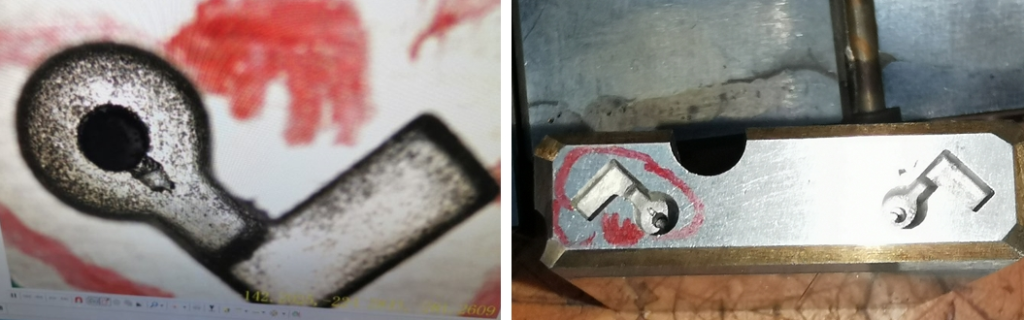
During injection molding, the fibers move through the mold at high speed. They continuously rub against the steel surfaces.
Over time, this wears away the mold.
The areas with the highest wear include:
- Gates
- Runners
- Core pins
- Parting surfaces
- Shut-offs
- Slides
- Inserts
As the steel wears, small gaps begin to appear.
These gaps become larger after thousands of molding cycles.
Eventually, flash appears on the plastic parts.
For this reason, mold designers should choose wear-resistant steel and replaceable inserts whenever possible.
2. PPS Can Corrode Mold Steel
PPS runs at very high temperatures.
If the material stays in the barrel for too long, it can release sulfur-containing gases.
These gases attack the mold surface.
Corrosion usually appears on:
- Mold cavities
- Parting lines
- Shut-off areas
- Vent grooves
- Inserts
Corrosion weakens the steel surface.
Glass fiber then removes the damaged steel even faster.
This combination greatly reduces mold life.
Good mold steel and proper surface treatment can slow this process.
PPS Easily Traps Gas
PPS flows quickly.
It also runs at a high melt temperature.
Poor venting often causes:
- Gas traps
- Burn marks
- Black spots
- Short shots
- Incomplete filling
Hot gas can also damage the mold.
If gas stays inside the cavity, it slowly attacks the vent area and the parting surface.
For this reason, PPS molds need better venting than standard plastic molds.
Good mold designs usually include:
- More vent grooves
- Slide vents
- Insert vents
- Ejector pin vents
- Extra vents at the end of the flow path
Good venting improves both part quality and mold life.
Shut-Off Areas Wear the Fastest
Shut-off areas are one of the first places to fail.
Three factors cause this problem.
First, glass fiber wears the steel.
Second, high temperature creates thermal fatigue.
Third, corrosive gas attacks the shut-off surface.
At first, the wear is very small.
After several thousand cycles, the gap becomes larger.
The mold begins to show a step between steel surfaces.
Flash then appears on the molded parts.
Many factories see the same pattern.
The mold works perfectly during sampling.
After about 8,000 to 10,000 shots, small flash appears.
If production continues, the flash becomes worse.
This is normal wear. It is not a machining problem.
Why ABS and PP Molds Last Much Longer
ABS and PP are much easier on molds.
They contain little or no glass fiber.
They also run at much lower temperatures.
These materials are not very corrosive.
As a result, mold steel wears very slowly.
Many ABS or PP molds can run 50,000 shots or more before major maintenance.
PPS is very different.
Many PPS molds begin to show wear after only 10,000 shots.
Regular maintenance becomes necessary much earlier.
Because of this, PPS molds need preventive maintenance instead of waiting for problems to appear.
Design Recommendations for PPS Injection Molds
A good PPS mold starts with good design.
The following practices can improve mold life.
- Use high-hardness and wear-resistant mold steel. Common choices include S136, H13, SKD61, and ASP23. S136 offers excellent corrosion resistance. H13 and SKD61 provide good toughness and heat resistance. ASP23 is widely used for its excellent wear resistance in glass fiber reinforced plastics.
- Use corrosion-resistant steel for critical mold components whenever possible.
- Design replaceable shut-off inserts.
- Use replaceable gate inserts.
- Apply nitriding or PVD coating to critical surfaces.
- Add more vent grooves throughout the mold.
- Leave enough space for future repairs.
- Strengthen slide shut-off areas.
- Design an efficient cooling system.
- Schedule regular mold inspection and preventive maintenance.
If your project uses PPS, PEEK, LCP, or other engineering plastics, proper mold design becomes even more important.
Learn more about our services: Injection Mold Manufacturing and Plastic Part Production
Conclusion
PPS offers excellent performance.
It also creates unique challenges for injection molds.
Glass fiber causes heavy wear.
High processing temperatures increase corrosion.
Poor venting can lead to gas traps and mold damage.
A standard mold design is usually not enough.
A successful PPS mold needs wear-resistant steel, corrosion-resistant materials, good venting, and regular maintenance.
These improvements reduce flash, extend mold life, lower maintenance costs, and keep production stable over the long term.