
Introduction
TPU has good transparency, flexibility, wear resistance, and impact resistance.
It is often used for transparent housings, electronic parts, automotive parts, and other appearance products.
However, high-transparency TPU parts are not easy to mold.
TPU is very sticky and elastic.
Because of this, the runner, gate, and ejection system need special attention.
For a multi-cavity TPU mold, three areas are especially important.
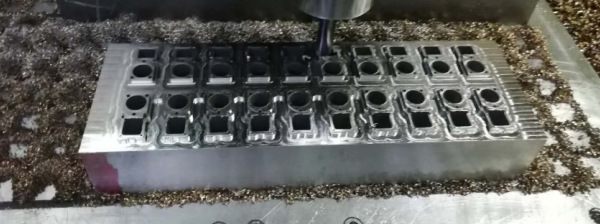
Fentormold provides Injection Mold Manufacturing for precision plastic parts and multi-cavity molds.
1. Runner and Gate Design
TPU is very sticky.
So, the cold runner and gate need careful design.
The main points include:
- Runner balance
- Gate size
- Gate pin size
- Ejection force
- TPU viscosity
- Cold runner depth
- Runner length
- Cooling conditions
Runner balance is very important.
All cavities should receive the material at a similar time and pressure.
Poor runner balance can cause different filling times.
This can affect:
- Part weight
- Part dimensions
- Transparency
- Filling quality

Do Not Make the Cold Runner Too Deep
This is a common problem with TPU molds.
TPU is highly elastic.
If the cold runner is too deep, the material may expand and stretch during ejection.
It may not come out of the mold easily.
The ejector pins then need much more force.
This can cause:
- Broken ejector pins
- Bent ejector pins
- Deformed runners
- Difficult ejection
- Production downtime
Therefore, the runner depth and ejection system must be designed together.
Do not design a deep runner first and solve the ejection problem later.
The runner, gate pin, and ejection system should work as one system.
For projects that require both mold manufacturing and production, Fentormold also provides Plastic Injection Molding Services.
2. Mold Steel: POMAX vs. S136
High-transparent TPU parts need a very good mold surface.
The mold steel must provide good corrosion resistance and surface quality.
POMAX stainless mold steel is one option for this type of mold.
POMAX offers good corrosion resistance, wear resistance, and toughness.
It is suitable for molds that need stable long-term production.
POMAX
- Good corrosion resistance
- Good wear resistance
- Good toughness
- Suitable for long production runs
- Good choice for precision molds
S136
- Excellent corrosion resistance
- Excellent polishing performance
- Very suitable for high-gloss surfaces
- Good dimensional stability
- Widely used for transparent parts
Both POMAX and S136 can work well for high-transparent TPU molds.
The final choice depends on the product, surface finish, production volume, mold life, and machining requirements.
For a high-transparent TPU mold, do not choose steel based only on price.
Consider:
Polishing + corrosion resistance + wear resistance + toughness + dimensional stability
3. Clean Production Is Important
High-transparent TPU parts have strict appearance requirements.
Even a small amount of dust can create a visible defect on a high-gloss surface.
For this reason, mold assembly and injection molding should use a clean or dust-controlled environment.
This helps reduce:
- Dust contamination
- Particles on the mold surface
- Surface defects
- Polishing contamination
- Appearance problems
This is especially important for transparent and high-gloss products.
The mold must stay clean.
The production area must also stay clean.
[Image 4: Clean injection molding workshop or clean mold assembly area]
4. Multi-Cavity Machining Must Be Accurate
A multi-cavity TPU mold needs consistent cavity dimensions.
Small differences between cavities can cause:
- Filling imbalance
- Different part weights
- Different part dimensions
- Different transparency
- Different gate sizes
- Different ejection forces
For this reason, machining accuracy is very important.
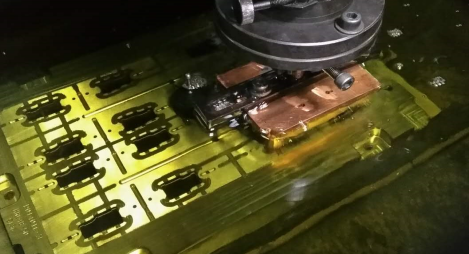
Electrode accuracy is especially important.
For critical electrodes, the dimensional tolerance should be controlled within ±0.01 mm.
Poor electrode accuracy can create differences between cavities.
These differences may not be obvious during the first mold trial.
They can become more serious during mass production.
CNC machining, EDM, electrode inspection, and cavity inspection all need strict control.
For precision mold components and electrode machining, you can also learn more about Fentormold’s Components Manufacturing service.
Key Points for TPU Multi-Cavity Molds
A high-transparent TPU multi-cavity mold is not simply a standard mold with more cavities.
The mold must match the properties of TPU.
The three most important areas are:
1. Runner and Gate
Pay close attention to runner balance, gate size, cold runner depth, and ejection force.
2. Mold Steel
Use suitable stainless mold steel such as POMAX or S136.
Also pay close attention to polishing and surface quality.
3. Machining and Production Environment
Control multi-cavity machining accuracy carefully.
Keep critical electrode dimensions within ±0.01 mm.
Use a clean or dust-controlled environment for high-transparent products.
Conclusion
The challenge of high-transparent TPU molds is not only transparency.
TPU is highly sticky and elastic.
This makes runner design, gate design, and ejection more difficult.
A good TPU mold must consider these problems from the beginning.
The mold also needs suitable steel, accurate multi-cavity machining, and a clean production environment.
Good design can reduce broken ejector pins, difficult runner ejection, cavity differences, and surface contamination.
It also helps achieve more stable mass production.
If you are developing a high-transparent TPU product, Fentormold can support the project from mold design and manufacturing to injection molding production.