
An injection mold draft angle is a critical design factor that determines whether plastic parts can be released smoothly from the mold without damage. It is measured between the part surface and the mold opening direction.
To measure draft angle accurately, engineers usually use CAD draft analysis tools during the design stage. The correct angle depends on several factors, including part depth, plastic material, surface texture, shrinkage, and production requirements.
A properly designed draft angle can reduce ejection force, prevent surface defects, extend mold life, and avoid costly tooling modifications.
For injection molding projects, draft angle should be reviewed before mold manufacturing begins. Early design evaluation helps identify potential release problems before CNC machining, EDM processing, and mold assembly.
For companies looking for reliable tooling support, Fentormold provides injection mold design, manufacturing, and production solutions for automotive, electronics, industrial, and consumer products. www.fentormold.com
Engineering Insights
- Most injection molded parts require a draft angle between 0.5° and 3°, depending on material, surface finish, and part geometry.
- Textured surfaces usually need a larger draft angle than polished surfaces.
- Insufficient draft is one of the common reasons for difficult ejection and mold modification.
- Draft analysis should be completed during DFM review, not after mold manufacturing.
What Is Injection Mold Draft Angle?
Draft angle is the slight taper added to vertical walls of an injection molded part to help the part separate from the mold.
During injection molding, molten plastic fills the mold cavity and cools under pressure. As the material cools, it shrinks slightly and grips the mold surface.
Without enough draft angle, the molded part may stick to the cavity or core surface.
This can cause:
- High ejection force
- Scratches on part surfaces
- Deformed plastic parts
- Broken ejector pins
- Longer production cycles
A simple example is a plastic container.
A vertical wall with zero draft creates a large contact area with the mold. Adding a small angle allows the part to release smoothly when the mold opens.
Why Is Draft Angle Important in Injection Mold Design?
Draft angle is not only a part release requirement. It directly affects tooling cost, production stability, and product quality.
1. Reduce Ejection Problems
The main purpose of draft angle is to reduce friction between the molded part and the mold surface.
A proper draft angle helps:
- Reduce ejector force
- Prevent part deformation
- Improve cycle stability
In actual mold production, many ejection failures are not caused by ejector system problems but by insufficient draft design.
For complex parts, draft analysis should be combined with ejection system planning. A complete ejection strategy is also discussed in:
Injection Mold Ejection System Design: Components, Types & Best Practices
2. Improve Surface Quality
Surface appearance is especially important for:
- Automotive interior parts
- Electronic housings
- Consumer products
- Medical components
Incorrect draft angle can create:
| Problem | Cause |
|---|---|
| Drag marks | Insufficient clearance |
| Whitening | Excessive ejection stress |
| Scratches | Surface friction |
| Texture damage | Lack of draft on textured areas |
For appearance-critical parts, draft angle should be considered together with mold surface treatment.
You can also learn more about surface requirements in:
How to Choose the Right Injection Mold Surface Finish
3. Reduce Mold Modification Costs
Changing draft angle during product design is usually simple.
Changing draft angle after mold manufacturing can require:
- Steel modification
- EDM repair
- Insert replacement
- New mold components
This is why experienced mold manufacturers perform DFM analysis before tooling production.
A proper injection mold design review helps identify problems related to:
- Draft angle
- Parting line
- Gate location
- Cooling layout
More design principles can be found in:
Injection Mold Design Guide: Process, Tips & Best Practices
How Do You Measure Injection Mold Draft Angle?
There are three common methods used to measure draft angle.
1. CAD Draft Analysis
CAD analysis is the most common method during product development.
Most professional CAD software provides draft analysis functions that display surface conditions based on the mold pull direction.
The basic process includes:
Step 1: Define Mold Opening Direction
Engineers first select the direction in which the mold will open.
This direction determines whether a surface has:
- Positive draft
- Zero draft
- Negative draft
Step 2: Apply Draft Analysis
The software analyzes each surface and creates a color map.
Typical results:
| Analysis Result | Meaning |
|---|---|
| Positive draft | Surface can release normally |
| Zero draft | Possible sticking risk |
| Negative draft | Undercut condition |
Step 3: Modify Design if Required
If insufficient draft is detected, engineers can adjust:
- Wall angle
- Part geometry
- Texture depth
- Surface location
Making changes at this stage is much more cost-effective than modifying the completed mold.
How to Measure Draft Angle During Mold Design and Inspection
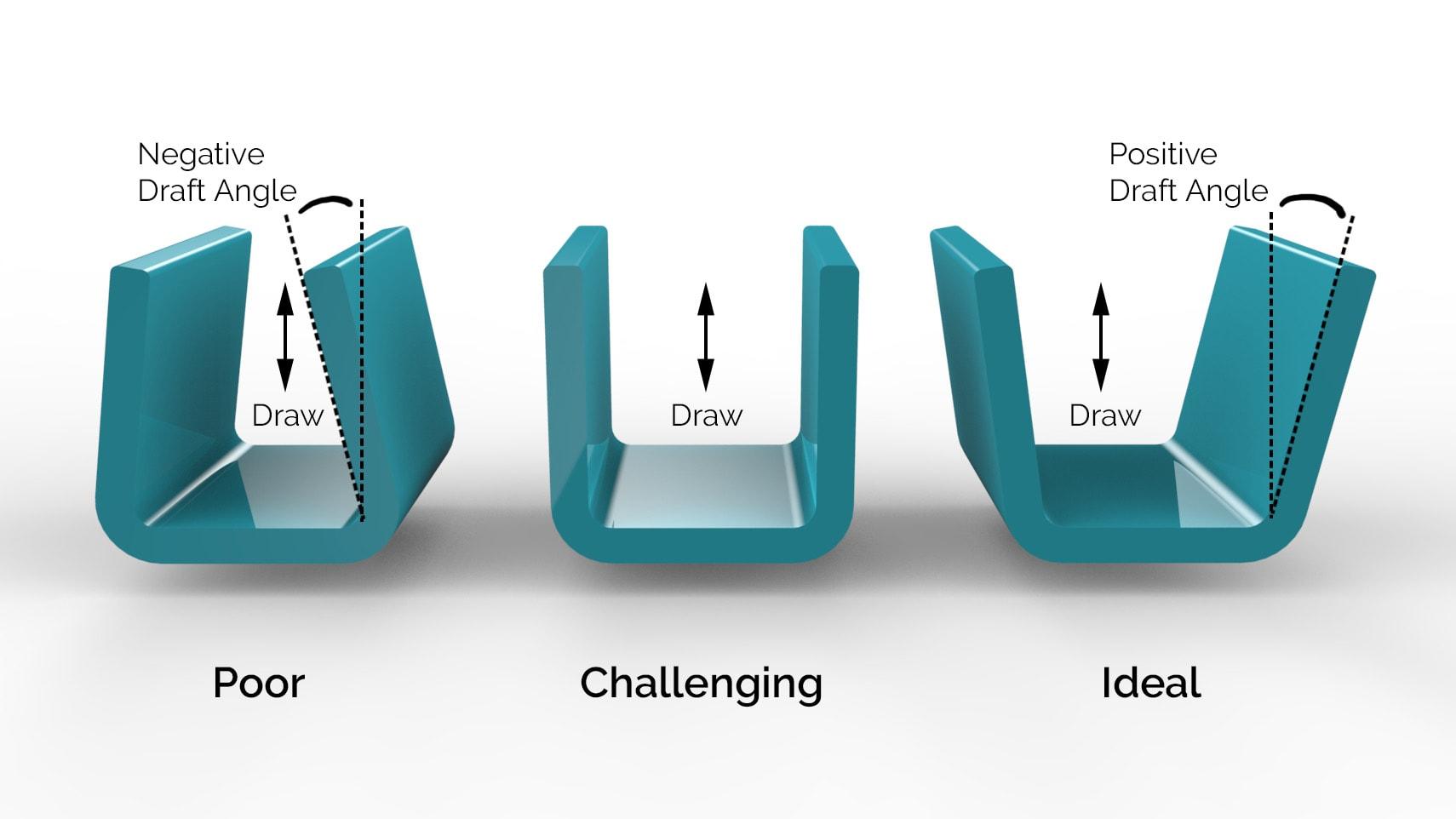
Besides CAD draft analysis, engineers may use other methods depending on the project stage.
2. Technical Drawing Measurement
For simple plastic parts, draft angle can be checked directly from engineering drawings.
The designer should confirm:
- Mold opening direction
- Wall angle
- Part depth
- Critical appearance surfaces
For example, a shallow electronic cover may only require a small draft angle, while a deep automotive housing needs a larger angle because the contact area between the part and mold increases.
The basic relationship is:
Deeper wall + higher friction = larger draft requirement
Therefore, draft angle should not be selected only by experience. It should be evaluated based on actual part geometry.
3. Physical Mold and Part Inspection
After mold manufacturing, draft conditions can also be verified through:
- Mold trial results
- Part appearance inspection
- Dimensional measurement
- Ejection performance testing
However, inspection after tooling completion is mainly for verification.
If the draft angle is incorrect, corrections at this stage may involve:
- Polishing
- Steel rework
- Insert replacement
- Mold redesign
These modifications increase tooling costs and may delay production schedules.
For this reason, professional mold manufacturers usually complete DFM review before starting mold machining.
Recommended Injection Mold Draft Angle for Different Applications
There is no universal draft angle value for every plastic part.
The correct selection depends on:
- Plastic material
- Part depth
- Surface finish
- Texture requirement
- Production volume
The following values are commonly used as a starting guideline:
| Application | Recommended Draft Angle |
|---|---|
| Smooth polished surface | 0.5°–1° |
| Standard molded surface | 1°–2° |
| Textured surface | 2°–3°+ |
| Deep ribs or walls | 2°+ |
| Glass-filled engineering plastics | 1.5°–3° |
These values are general recommendations. The final draft angle should be confirmed through mold flow analysis, CAD evaluation, and DFM review.
How Material Selection Affects Draft Angle Requirements
Plastic material properties have a significant influence on draft angle selection.
Different materials have different:
- Shrinkage rates
- Friction characteristics
- Mechanical strength
- Surface behavior
For example:
| Material | Draft Angle Consideration |
|---|---|
| ABS | Usually requires moderate draft for good appearance |
| PP | Higher shrinkage may increase sticking risk |
| PC | Careful ejection control is needed due to stress sensitivity |
| PA (Nylon) | Reinforced grades may increase mold wear |
| PC+ABS | Appearance surfaces need accurate draft control |
Engineering plastics with glass fiber reinforcement require special attention.
Glass-filled materials can increase:
- Mold surface wear
- Ejection resistance
- Surface damage risk
In high-volume production, material selection should be considered together with mold steel selection and surface treatment.
How Surface Texture Changes Draft Angle Design
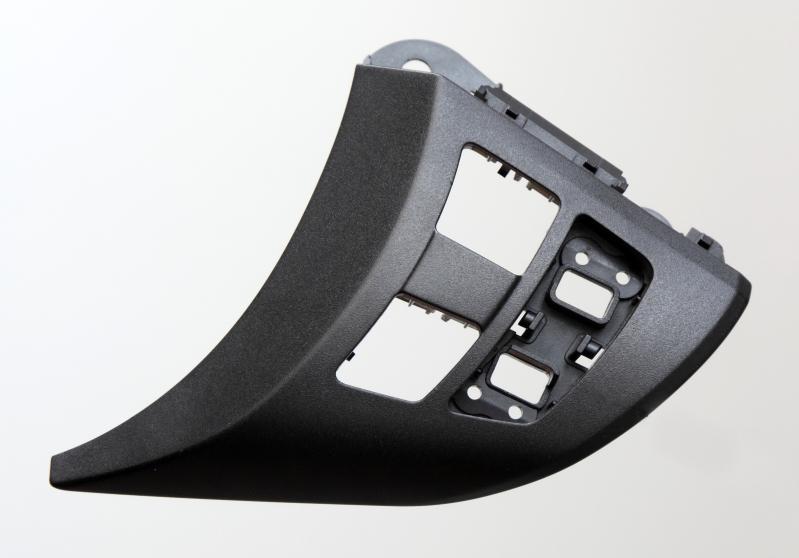
Surface texture is one of the most overlooked factors affecting draft angle.
A polished mold surface creates less resistance during ejection.
However, textured surfaces increase friction because the texture creates additional contact between the plastic part and mold surface.
Typical examples:
| Surface Condition | Draft Requirement |
|---|---|
| SPI polished surface | Lower draft possible |
| Fine texture | Additional draft required |
| Deep texture | Larger draft required |
For textured automotive interior parts, insufficient draft can create:
- Texture damage
- Drag marks
- Uneven appearance
- Customer rejection
A good practice is to discuss texture requirements during the mold design stage instead of adding texture after mold completion.
Common Injection Mold Draft Angle Problems and Solutions
1. Insufficient Draft Angle
This is the most common draft-related problem.
Symptoms include:
- Parts sticking in the mold
- High ejector pressure
- Surface scratches
- Longer cycle time
Possible solutions:
- Increase draft angle
- Reduce surface friction
- Improve polishing quality
- Adjust part design
2. Negative Draft and Undercut Problems
Negative draft occurs when a surface prevents normal mold opening.
Common examples:
- Internal hooks
- Side holes
- Snap features
- Complex ribs
Solutions may include:
- Slides
- Lifters
- Collapsible cores
- Design modification
However, additional mechanisms increase mold complexity and maintenance requirements.
Before adding complex tooling structures, engineers should evaluate whether the part design can be simplified.
3. Incorrect Draft Direction
A surface may have an angle but still fail during ejection if the draft direction is incorrect.
During DFM review, engineers should check:
- Mold opening direction
- Parting line location
- Core and cavity relationship
A professional mold design review helps prevent these problems before manufacturing begins.
Draft Angle Optimization During Injection Mold Manufacturing
Draft angle is only one part of successful mold design.
Other factors also influence molding performance, including:
- Gate location
- Cooling efficiency
- Venting design
- Mold steel selection
- Ejection method
For example, poor cooling design can increase shrinkage variation, which may create additional ejection problems even when draft angle is acceptable.
Related design factors include:
- Injection Mold Cooling System Design: Essential Tips for Better Results
- Injection Mold Gate Design Guide
- How to Improve Injection Mold Venting Design and Avoid Defects
Optimizing these factors together creates a more stable production process.
Injection Mold Draft Angle Selection Checklist
Before approving a plastic part design, engineers should verify the following points:
Check Item Questions to Consider
Mold opening direction Is the pull direction clearly defined?
Wall design Do vertical surfaces include enough draft?
Part depth Does deeper geometry require additional draft?
Material selection Will shrinkage increase ejection difficulty?
Surface finish Does texture require more draft angle?
Ejection system Can ejectors remove the part without damage?
Mold structure Are slides or lifters required?
A complete review before tooling production can prevent many common injection molding problems.
In professional mold manufacturing, draft angle checking is usually part of the DFM process together with parting line analysis, gate design, cooling layout, and mold manufacturability evaluation.
Draft Angle vs. Part Quality: What Happens If Draft Is Incorrect?
The influence of draft angle is often underestimated during product development.
A wrong draft angle can affect both the molded part and the production process.
Draft Condition Possible Result
No draft Part sticking and high ejection force
Small draft Surface drag marks and slow production
Excessive draft Unnecessary design limitations
Incorrect direction Mold interference and damage
The goal is not to maximize draft angle.
The goal is to select the minimum effective draft angle that provides reliable release while maintaining the required product appearance and dimensions.
How to Choose the Right Draft Angle for Injection Molded Parts?
The best draft angle should balance product requirements and manufacturing efficiency.
Engineers should consider:
- Product Function
Functional surfaces may require tighter control.
For example:
Assembly areas
Sealing surfaces
Precision mating features
These areas may need special attention during draft analysis.
- Appearance Requirements
Cosmetic parts usually require more careful draft control.
Automotive interior parts and consumer electronics housings often use:
Textured surfaces
High-gloss finishes
Decorative patterns
These applications usually require additional draft to maintain appearance quality.
- Production Volume
High-volume molds require more reliable ejection performance.
For millions of cycles, insufficient draft can lead to:
Increased mold wear
Higher maintenance frequency
Production interruptions
A small improvement in draft design can significantly improve long-term mold performance.
FAQ About Injection Mold Draft Angle
What is the recommended draft angle for injection molding?
Most injection molded parts use a draft angle between 0.5° and 3°. The exact value depends on material, part depth, surface finish, and texture requirements.
How do you check draft angle in CAD?
Draft angle can be checked using CAD draft analysis tools. Engineers define the mold pull direction and analyze each surface to identify positive, zero, or negative draft areas.
Can injection molding parts be made without draft angle?
Some parts can be produced with zero draft in specific areas, but this usually increases ejection difficulty and mold risk. Special solutions such as lifters or sliders may be required.
Why do textured surfaces need more draft angle?
Textures increase friction between the plastic part and mold surface. Additional draft reduces drag marks and prevents texture damage during ejection.
Does draft angle affect injection mold cost?
Yes. Proper draft design can reduce mold complexity and avoid additional tooling modifications. Insufficient draft may increase machining, polishing, and repair costs.
When should draft angle be checked?
Draft angle should be checked during product design and DFM review before mold manufacturing begins. Early correction is much cheaper than modifying a finished mold.
Conclusion: Optimize Draft Angle Before Mold Manufacturing
Injection mold draft angle is a small design feature that has a major impact on molding success.
The correct draft angle helps:
- Improve part release
- Reduce ejection problems
- Protect mold surfaces
- Maintain product appearance
- Lower manufacturing risks
For complex plastic parts, draft analysis should be completed before tooling begins. Combining draft angle optimization with professional mold design, cooling, gating, and DFM review creates a more reliable production process.
Before starting mold manufacturing, engineers should also evaluate other key factors such as mold structure, cooling efficiency, gate location, and venting performance. These elements work together to improve part quality and production stability.
Related injection mold design guides:
- Injection Mold Cooling System Design: Essential Tips for Better Results
- Injection Mold Gate Design Guide
- How to Improve Injection Mold Venting Design and Avoid Defects
Fentormold provides custom injection mold design and manufacturing services, helping customers evaluate part designs, optimize tooling structures, and achieve stable mass production.
Our engineering team supports customers with:
- DFM feedback before tooling
- Mold design optimization
- Prototype and production tooling solutions
- Injection molding production support
Learn more about our injection mold manufacturing capabilities:
Injection Mold Manufacturing Service
https://www.fentormold.com/
Need support selecting the right draft angle for your plastic part? Our engineering team can provide DFM feedback and tooling recommendations before mold manufacturing begins