
Engineering Insights
- TPE overmolding combines flexible elastomer materials with rigid plastic substrates to improve grip, comfort, and sealing performance.
- Material compatibility between TPE and the substrate plastic is the most important factor affecting bonding strength.
- Proper mold design helps prevent common defects such as delamination, flash, and short shots.
- TPE hardness, shrinkage, and processing temperature should be evaluated before mold manufacturing.
- Early DFM analysis can reduce tooling modifications and improve production reliability.
Introduction
TPE overmolding is an injection molding process that combines a soft thermoplastic elastomer layer with a rigid plastic component to create functional and durable products.
The rigid plastic substrate provides structural strength, while the TPE layer improves product performance through better grip, soft-touch feeling, vibration absorption, and sealing capability.
This technology is widely used in automotive components, electronic products, medical devices, industrial tools, and consumer products.
However, successful TPE overmolding requires more than selecting a soft material. Engineers must consider material compatibility, mold design, processing parameters, and production experience to achieve reliable bonding and consistent quality.
Before starting tooling production, a DFM review can help identify potential risks related to material selection, part structure, and mold filling.
For custom plastic parts requiring professional tooling support, Fentormold provides custom injection molding solutions from mold design to mass production.
https://www.fentormold.com/
What Is TPE Overmolding and How Does It Work?
TPE overmolding is a manufacturing process where a thermoplastic elastomer material is injected onto a pre-molded rigid plastic component.
The basic structure is:
Rigid Plastic Substrate + TPE Soft Layer = Overmolded Plastic Part
The hard material provides mechanical strength, while TPE creates a flexible surface with improved usability.
Typical TPE overmolding steps include:
- Mold the rigid plastic substrate.
- Place the substrate into the overmolding cavity.
- Inject molten TPE material around the plastic part.
- Allow the material to cool and bond.
- Inspect appearance and bonding performance.
Depending on production requirements, manufacturers may use:
- Two-shot injection molding machines.
- Rotary molding systems.
- Standard injection molding machines with overmolding tools.
For projects requiring multiple materials or colors, two-shot molding can also be considered. Learn more about the differences between these processes in our article about Two-Shot Molding vs. Overmolding.
Why Choose TPE Overmolding for Plastic Parts?
Improved Grip and Soft Touch Performance
One of the biggest advantages of TPE overmolding is the improved user experience.
TPE materials provide:
- Soft surface feeling
- Better grip
- Anti-slip performance
- Comfortable handling
Common applications include:
- Hand tools
- Automotive switches
- Electronic devices
- Consumer products
Better Sealing and Protection
TPE has excellent flexibility and compression recovery.
Therefore, it is often used for:
- Waterproof seals
- Protective covers
- Dust-resistant components
- Shock absorption parts
Reduced Assembly Requirements
Traditional products may require separate rubber parts assembled onto plastic components.
TPE overmolding can combine different materials in one manufacturing process, reducing:
- Assembly steps
- Labor costs
- Component complexity
Common Materials Used in TPE Overmolding
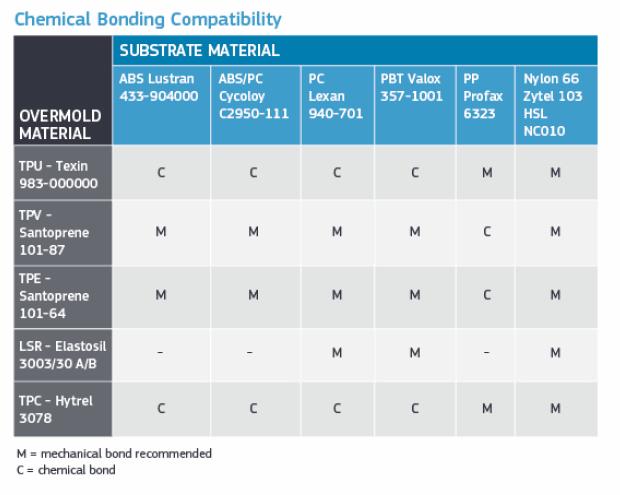
Material compatibility is one of the most important factors in TPE overmolding.
The bonding performance depends on the chemical compatibility between TPE and the substrate material.
| Substrate Material | TPE Compatibility | Typical Applications |
|---|---|---|
| ABS | Excellent | Consumer electronics, housings |
| PC | Good | Electronic components |
| PP | Requires compatible TPE grade | Automotive parts |
| PA Nylon | Requires special bonding design | Industrial components |
| PC/ABS | Good | Automotive and electronic products |
In actual production, many TPE overmolding failures happen because the wrong material combination is selected before mold manufacturing.
TPE Overmolding Process: Step-by-Step Guide
1. Material Selection
Engineers need to evaluate:
- Hardness requirement
- Chemical resistance
- Temperature resistance
- Bonding performance
TPE hardness is usually measured by Shore A scale.
Typical ranges:
- Soft TPE: Shore A 20-50
- Medium TPE: Shore A 50-80
- Harder TPE: Shore A 80-90
2. Mold Design
TPE overmolding requires special mold design considerations.
Important factors include:
- Gate location
- Venting
- Wall thickness
- Draft angle
- Bonding area design
A proper draft angle helps prevent sticking during ejection.
Related article:
Injection Mold Draft Angle: How to Measure and Optimize
3. Injection Molding
During production, engineers must control:
- Injection temperature
- Pressure
- Cooling time
- Mold temperature
The processing temperature must allow good bonding without degrading the TPE material.
TPE Overmolding Design Guidelines for Better Results
Good part design is critical for achieving strong bonding and stable production.
Unlike conventional injection molding, TPE overmolding involves two different materials, so designers need to consider both structural strength and material bonding.
Design the Bonding Area Properly
The bonding surface between TPE and the rigid substrate directly affects adhesion.
Recommended design practices include:
- Increase the contact area between materials.
- Avoid sharp corners at the bonding interface.
- Add mechanical locking features when chemical bonding is limited.
- Maintain consistent TPE thickness.
For example, adding grooves, holes, or undercut features can improve mechanical bonding when the two materials have poor chemical compatibility.
Control TPE Thickness
The thickness of the TPE layer affects:
- Product feeling
- Material consumption
- Cooling time
- Production cost
A thicker TPE layer can provide a softer touch, but it may increase cycle time and material cost.
In many applications, TPE thickness is designed between 1 mm and 3 mm, depending on the required function.
Consider Gate and Runner Design
Because TPE materials are usually softer and more flexible than traditional plastics, mold filling behavior must be carefully considered.
Poor gate design may cause:
- Weld lines
- Flow marks
- Short shots
- Uneven bonding
Proper runner and gate design helps ensure consistent material flow.
Related article:
Injection Mold Runner Design: Tips for Better Filling Performance
Improve Venting Performance
Air trapped inside the cavity can prevent proper filling and reduce bonding quality.
Common symptoms include:
- Burn marks
- Weak bonding
- Surface defects
Proper venting design is especially important for thin TPE sections.
Related article:
Injection Mold Venting Design: How to Prevent Defects
Common TPE Overmolding Defects and Solutions
Although TPE overmolding provides many benefits, several manufacturing problems may occur.
| Defect | Possible Cause | Solution |
|---|---|---|
| Poor bonding | Material incompatibility or low temperature | Select compatible TPE grade and optimize temperature |
| Delamination | Weak interface bonding | Increase bonding area or improve surface design |
| Short shot | Poor flow or insufficient pressure | Optimize gate design and injection parameters |
| Flash | Excessive pressure or poor mold fit | Adjust molding parameters and mold tolerance |
| Warping | Uneven cooling | Improve cooling system design |
In actual mold production, many overmolding defects are not caused by the injection parameters alone. Mold design, material selection, and DFM review usually determine the final production stability.
TPE Overmolding Cost Factors
The cost of TPE overmolding depends on several factors, including tooling complexity, materials, production volume, and quality requirements.
Mold Complexity
TPE overmolding molds are generally more complicated than standard injection molds because they require:
- Additional cavities
- Precise material positioning
- Better sealing design
- More complex mold structures
For high-volume production, investing in a reliable mold design can significantly reduce long-term production costs.
Material Selection
Different TPE grades have different prices.
Factors affecting material cost include:
- Hardness
- Chemical resistance
- Flame retardancy
- FDA or medical requirements
- Color requirements
Choosing the lowest-cost material is not always the best solution because poor bonding performance may increase rejection rates.
Production Volume
Production quantity affects the best tooling strategy.
| Production Volume | Recommended Solution |
|---|---|
| Low volume | Prototype or simple tooling |
| Medium volume | Standard production mold |
| High volume | Multi-cavity overmolding mold |
For new products, prototype injection molding can help verify material compatibility, product design, and manufacturing feasibility before investing in full production tooling.
Related article:
How to Select a TPE Overmolding Manufacturer?
Choosing an experienced injection mold manufacturer helps reduce tooling risks and improve production consistency.
Before selecting a supplier, consider:
Experience With Similar Materials
A capable manufacturer should understand:
- TPE and substrate compatibility
- Material shrinkage differences
- Processing temperature requirements
- Bonding problems
Mold Design Capability
The supplier should provide DFM feedback before manufacturing.
Important evaluation points include:
- Gate location recommendations
- Mold flow analysis
- Cooling design
- Defect prevention
Production Quality Control
A professional supplier should have inspection processes for:
- Bonding strength
- Appearance quality
- Dimensional accuracy
- Material consistency
For customers looking for a complete solution from tooling to production, selecting an experienced injection mold manufacturer can reduce project risks.
TPE Overmolding Applications
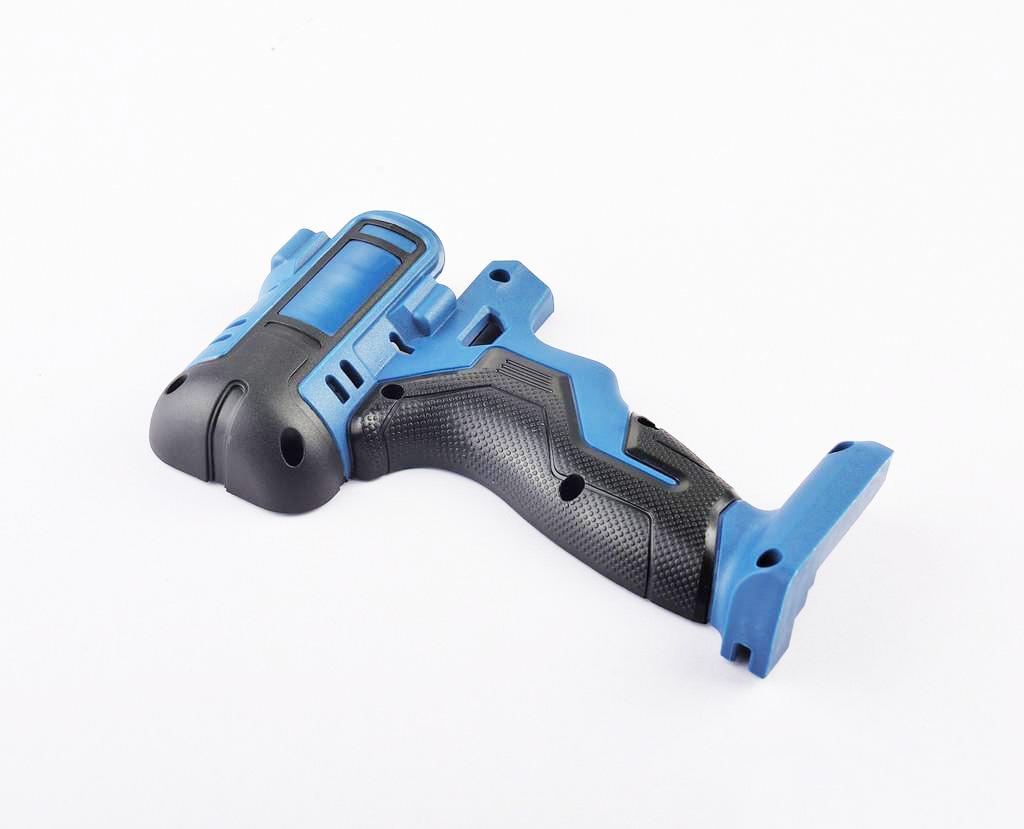
TPE overmolding is widely used across different industries.
| Industry | Applications |
|---|---|
| Automotive | Handles, switches, seals, grips |
| Electronics | Device covers, buttons, protective parts |
| Medical | Soft-touch components, ergonomic devices |
| Industrial | Tools, grips, vibration-resistant parts |
| Consumer Products | Kitchen tools, sports equipment |
FAQ About TPE Overmolding
What is TPE overmolding used for?
TPE overmolding is mainly used to add soft-touch surfaces, improved grip, sealing performance, and vibration absorption to plastic parts.
Can TPE bond with ABS and PP?
Yes. TPE bonds well with ABS, while PP requires specially formulated TPE materials because compatibility is more challenging.
Is TPE overmolding more expensive than regular injection molding?
Yes. TPE overmolding usually requires more complex tooling and additional processing steps, which increases initial tooling costs.
However, it can reduce assembly costs by combining multiple materials into one component.
What causes poor bonding in TPE overmolding?
Common causes include:
- Incorrect material selection
- Poor surface design
- Incorrect processing temperature
- Insufficient bonding area
What is the difference between TPE overmolding and two-shot molding?
TPE overmolding usually involves molding a soft material onto an existing rigid part, while two-shot molding injects two materials within the same mold cycle.
The best choice depends on production volume, product design, and cost requirements.
Conclusion
TPE overmolding provides an effective solution for creating plastic parts with improved comfort, functionality, and appearance.
However, successful production depends on several key factors, including material compatibility, mold design, injection parameters, and supplier experience.
Before starting tooling, engineers should evaluate the TPE grade, substrate material, bonding structure, and production requirements.
With proper design and manufacturing support, TPE overmolding can deliver reliable performance while reducing assembly complexity and improving product value.
Need help with TPE overmolding or injection mold manufacturing?
Our engineering team provides complete plastic injection molding services from mold design, tooling production, and mass manufacturing.