
1. What is PCTG?
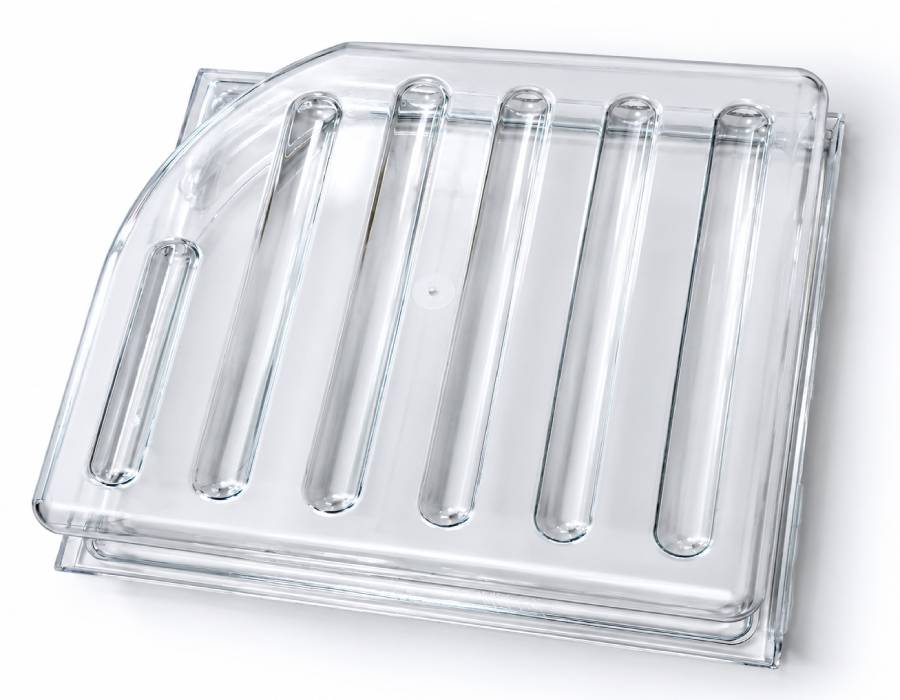
PCTG is a transparent copolyester. It offers high clarity, excellent toughness, and strong impact resistance. It also has good chemical resistance. Because of these advantages, PCTG is widely used for medical products, food containers, cosmetic packaging, drinkware, and consumer electronics.
However, PCTG is more demanding during injection molding. Both the mold design and the molding process play an important role in product quality.
2. Key Features of PCTG Injection Molding
PCTG has several processing characteristics:
- High transparency requires a high-quality surface finish.
- The melt has relatively high viscosity.
- The material is sensitive to internal stress.
- Hot runner valve gate systems can easily cause sticking problems.
A good mold should have a proper gate design, effective venting, balanced cooling, and a reliable ejection system.
3. Common Injection Molding Problems
The most common defects include:
- Silver streaks
- Air bubbles
- Sink marks
- Warpage
- Flow marks
- Stress cracking
- Hot runner valve pin sticking (the most challenging problem)
For transparent PCTG parts, valve pin sticking is one of the biggest challenges.
4. Typical Question
Why does PCTG stick to the hot runner valve pin and sometimes crack the part?
Answer
PCTG has high toughness and strong adhesion. If the valve gate design, valve pin structure, temperature, or machining accuracy is not ideal, the molten material can stick to the valve pin.
When the valve pin opens or closes, it may pull the material instead of releasing it cleanly. This can lead to:
- Material sticking to the valve pin
- Stringing at the gate
- White marks or scratches around the gate
- Cracked or broken parts
- Lower production yield and more maintenance
In most cases, changing the molding parameters alone cannot solve the problem. The mold design, hot runner system, material behavior, and process settings all affect the result.
5. Possible Solutions
To reduce valve pin sticking, manufacturers can:
- Optimize the valve gate and valve pin design
- Control the temperature around the gate more precisely
- Improve the machining accuracy and surface finish of the valve pin
- Optimize injection speed, packing pressure, and valve timing
- Choose the most suitable hot runner system for the product
These improvements usually require strong mold design experience and proven production knowledge.
6. Conclusion
PCTG is an excellent transparent engineering plastic. However, hot runner valve pin sticking is a common challenge during injection molding. It can cause stringing, gate damage, and even cracked parts.
If your PCTG project has valve pin sticking or part cracking issues, Fentormold can provide professional mold design support and practical solutions based on your product requirements.