
Small plastic parts injection molding is widely used for electronic components, automotive parts, medical devices, appliance components, connectors, clips, and other precision products. Although the parts are small, they are not always simple to manufacture.
A small part may require tight tolerances, small gates, precise ejection, careful venting, and multiple cavities. These requirements can make the mold more complex than expected. Therefore, small plastic parts injection molding should be considered from both the part design and tooling cost perspectives.
For buyers, the key question is not simply whether a small plastic part can be molded. It is whether the part can be molded consistently, accurately, and at a reasonable total cost.
What Makes Small Plastic Parts Difficult to Mold?
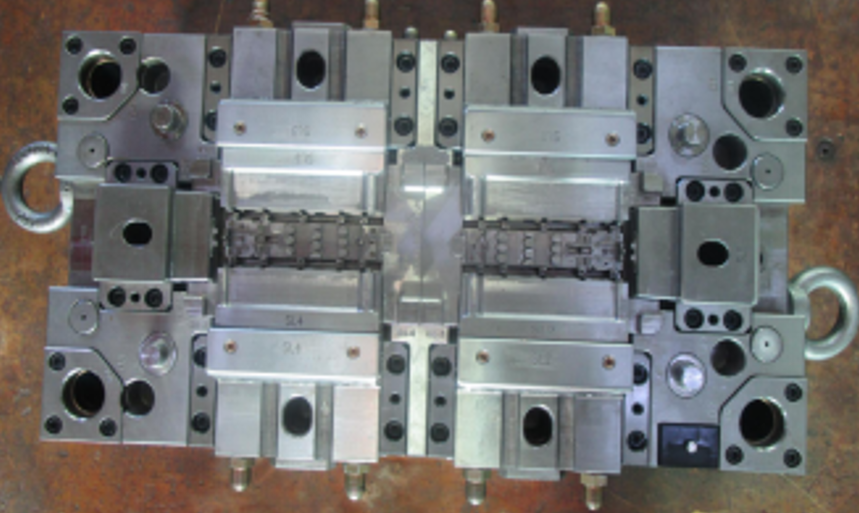
The small size of a plastic part does not automatically make it inexpensive.
In fact, small precision parts can require more attention during mold design and production than larger, less demanding components.
Common challenges include:
- Small wall sections
- Tight dimensional tolerances
- Small gates and runners
- Limited space for ejector pins
- Difficult venting
- Short filling distances
- Small slides or inserts
- High cavity counts
- Difficult part handling after ejection
For example, a 20 mm electronic component may require a much more precise mold than a 200 mm cover with loose dimensional requirements.
The complexity comes from the required precision, not simply from the physical size of the part.
Small Plastic Parts Design Considerations
Good part design is the first step toward stable production.
Before the mold is designed, engineers should review wall thickness, ribs, bosses, draft angles, corners, gates, and tolerances.
Wall Thickness
Very thin walls can make filling difficult, particularly when the plastic has a long flow path or the material has relatively high viscosity.
At the same time, making the wall unnecessarily thick can increase material usage, cooling time, and the risk of sink marks.
A more uniform wall thickness usually makes the molding process easier to control.
Ribs and Bosses
Small parts often contain ribs, mounting bosses, clips, or other functional features.
These features should be designed carefully because they can create:
- Sink marks
- Air traps
- Filling imbalance
- Ejection problems
- Local deformation
The connection between a rib and the main wall should also be designed to avoid excessive material accumulation.
Draft Angle
Even a small plastic part needs enough draft to separate cleanly from the mold.
Insufficient draft can cause:
- Scratches
- Drag marks
- Sticking
- Ejection damage
- Longer mold trials
For precision parts with textured surfaces, the required draft may need to be increased.
Gate Design for Small Plastic Parts
Gate design becomes particularly important when the molded part is small.
A gate that is too large may leave an unacceptable gate mark or affect the appearance of the part. A gate that is too small can restrict material flow and increase injection pressure.
The gate location also affects:
- Filling pattern
- Weld lines
- Packing
- Warpage
- Gate vestige
- Part appearance
For small precision parts, the gate should be selected according to the material, wall thickness, flow length, part geometry, and required appearance.
A good mold design does not simply use the smallest possible gate. It uses a gate that provides stable filling while meeting the customer’s appearance and dimensional requirements.
Runner Design and Cavity Balance
When only one part is required per cycle, runner design may be relatively straightforward.
However, small plastic parts are often produced using multi-cavity molds because the part volume can justify higher cavity counts.
For example:
- 4 cavities
- 8 cavities
- 16 cavities
- 32 cavities
- More cavities for very small components
As cavity count increases, runner balance becomes more important.
Every cavity should receive approximately the right amount of molten plastic at the appropriate time. Poor balance can result in differences in:
- Filling
- Packing pressure
- Part weight
- Dimensions
- Appearance
For high-volume small components, a balanced runner system can have a significant effect on production consistency.
Ejection Design for Small Plastic Parts
Ejection is another area that deserves careful attention.
Small parts provide limited space for ejector pins. Large ejector pins may damage the part, while very small pins can be more vulnerable to bending or breaking.
The mold designer therefore needs to consider:
- Ejector pin diameter
- Pin position
- Ejection force
- Part wall thickness
- Draft angle
- Ejector layout
- Part rigidity
Ejector pins should normally be placed where they can push the part without creating visible marks or deformation.
For delicate components, stripper plates, sleeves, or other ejection solutions may sometimes be more appropriate.
Venting for Small Plastic Parts
Air trapped inside a small cavity can cause short shots, burn marks, weld lines, or other molding defects.
This can be especially challenging when the part contains:
- Thin walls
- Deep ribs
- Small bosses
- Blind pockets
- Fine details
The mold needs enough venting to allow air to escape as the plastic fills the cavity.
However, excessive venting can create flash.
Therefore, vent dimensions and locations should be considered together with the material and filling behavior.
Material Selection for Small Plastic Parts
Material selection should be based on the part’s actual application rather than simply choosing the cheapest resin.
Common choices include:
- ABS for housings and components requiring good appearance
- PP for lightweight and flexible parts
- PC for high impact strength and demanding applications
- PA for mechanical components
- POM for wear-resistant precision components
- PBT for electrical and automotive applications
Material properties can affect shrinkage, filling behavior, cooling, dimensional stability, and mold wear.
For example, glass-filled materials may provide better stiffness but can also increase mold wear and require more attention to gate and cooling design.
How Tolerances Affect Small Plastic Parts
Small parts often have tighter dimensional requirements than general-purpose molded components.
A tolerance of ±0.1 mm may be reasonable for one feature but extremely difficult for another, depending on:
- Part size
- Material shrinkage
- Mold steel
- Mold temperature
- Cooling conditions
- Machine repeatability
- Measurement method
- Production environment
It is important to distinguish between critical dimensions and dimensions that do not affect product assembly or function.
Specifying unnecessarily tight tolerances can increase mold and production costs without providing additional value.
How Small Plastic Parts Affect Mold Cost
A common misconception is:
Small part = cheap mold.
This is not necessarily true.
The mold cost depends on the tooling requirements rather than simply the part’s physical size.
Small precision parts can require:
- High-precision CNC machining
- EDM machining
- Small inserts
- Precision ejector components
- Tight cavity matching
- Special steel
- High cavity counts
- Complex cooling
- Precision inspection
For example, a four-cavity mold for a relatively simple part may be inexpensive compared with a 32-cavity precision mold containing multiple inserts and complicated ejection.
This is why buyers should compare the complete tooling scope rather than judging a quotation only by the size of the molded part.
How Cavity Count Changes the Cost
Increasing cavity count normally increases the initial mold investment.
However, it can reduce the molding cost per part when production volume is high enough.
Consider a simplified example:
| Mold Configuration | Tooling Cost | Parts per Cycle | Potential Part Cost |
|---|---|---|---|
| 1 cavity | Lower | 1 | Higher |
| 4 cavities | Medium | 4 | Lower |
| 8 cavities | Higher | 8 | Lower |
| 16 cavities | Higher | 16 | Potentially lower |
The best cavity count depends on annual volume, target cycle time, machine availability, part price, and required tool life.
A 16-cavity mold is not automatically better than a 4-cavity mold. If the production volume is low, the additional tooling investment may never be recovered.
How to Reduce Small Plastic Parts Injection Molding Cost
Cost reduction should start during design rather than after the mold quotation has already been issued.
Simplify the Part Where Possible
Avoid unnecessary features that increase machining or ejection complexity.
Use Practical Tolerances
Only critical dimensions should receive tight tolerances.
Review Cavity Count
Select the cavity number according to the actual production volume.
Avoid Unnecessary Mold Mechanisms
Slides, lifters, inserts, and other mechanisms can increase tooling cost. If a feature can be redesigned without compromising product function, the mold may become simpler.
Select the Material Carefully
A lower-cost material can reduce part cost, but material performance must still meet the application requirements.
Consider Mold Maintenance
A slightly higher initial investment in appropriate mold steel or replaceable inserts can reduce maintenance costs over the life of the tool.
When Should You Use a Precision Mold?
Not every small plastic component needs a precision mold.
A precision mold becomes more appropriate when the part has:
- Tight dimensional tolerances
- Small functional features
- Complex geometry
- High cavity counts
- Strict appearance requirements
- Critical assembly requirements
- Long production life
For simpler parts with larger tolerances, a standard mold construction may provide better overall value.
The key is to match mold precision with the actual product requirements.
Small Plastic Parts Injection Molding for High-Volume Production
Small components are often produced in large quantities.
When annual demand is high, cycle time and cavity count become major cost factors.
For example, increasing the number of cavities can produce more parts per cycle without necessarily increasing the cycle time proportionally.
However, higher cavity counts also require better control of:
- Cavity balance
- Cooling
- Mold temperature
- Ejection
- Mold component precision
- Process consistency
For customers who need both tooling and ongoing production, Injection Molding Production can be considered together with the mold requirements from the beginning.
This approach helps the tooling design match the actual production target instead of treating the mold as a standalone project.
Choosing a Mold Manufacturer for Small Plastic Parts
The supplier’s precision capability becomes particularly important when small parts have tight tolerances or complex features.
Before placing an order, buyers should ask about:
- CNC machining capability
- EDM capability
- Inspection equipment
- Mold steel selection
- Cavity balance
- Trial molding process
- Dimensional inspection
- Mold maintenance
- Production support
It is also useful to review the supplier’s experience with similar components rather than relying only on a general statement about precision.
For projects requiring custom tooling, Injection Mold Manufacturing can be evaluated based on the part geometry, material, cavity count, tolerance requirements, and expected production volume.
Small Plastic Parts Injection Molding: Buyer Checklist
Before requesting a quotation, prepare as much information as possible.
A useful RFQ package should include:
- 3D part file
- 2D drawing
- Plastic material and grade
- Annual production volume
- Expected tool life
- Required cavity count, if known
- Critical dimensions
- Surface finish requirements
- Color requirements
- Assembly requirements
- Packaging requirements
The more complete the information, the easier it is for a mold manufacturer to prepare an accurate quotation.
Final Thoughts
Small plastic parts injection molding requires more than simply making a smaller version of a conventional mold.
The part design, gate location, runner balance, venting, ejection, material, tolerances, and cavity count all influence the final result.
For buyers, the lowest mold quotation is not always the lowest-cost solution. A mold that is difficult to maintain, produces unstable parts, or requires frequent adjustments can create much higher costs during production.
A better approach is to balance tooling cost, part quality, production volume, cycle time, and expected tool life before the mold is manufactured.
For small plastic parts, good design decisions made before tooling can often save much more money than cost cutting after the mold has already been built.