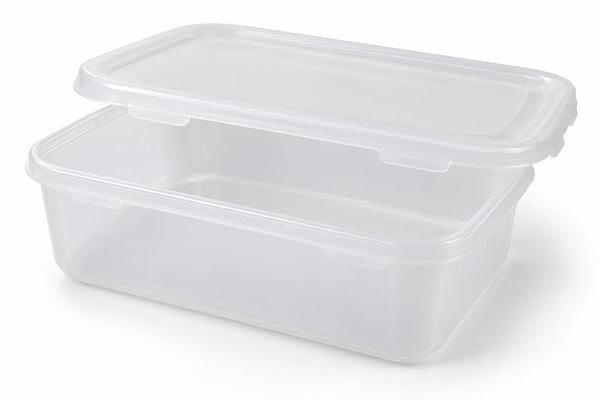
Polypropylene injection molding is widely used for automotive parts, consumer products, packaging, household products, and industrial components. PP offers low density, good chemical resistance, flexibility, and competitive material cost.
However, producing stable PP parts is not always simple.
Shrinkage, warpage, sink marks, poor dimensional control, and surface defects can appear when the mold design or molding parameters are not well controlled.
Therefore, improving part quality requires more than adjusting one machine setting. Material condition, gate design, cooling, packing pressure, mold temperature, and part geometry all work together.
This article explains the main process tips for better polypropylene injection molded parts.
Why Polypropylene Injection Molding Needs Careful Process Control
Polypropylene is a semi-crystalline plastic.
This means its molecular structure changes significantly as the material cools and crystallizes. As a result, PP normally has higher shrinkage than many amorphous plastics such as ABS or PC.
In addition, cooling conditions can strongly affect final dimensions.
Common quality problems include:
- Excessive shrinkage
- Warpage
- Sink marks
- Short shots
- Flash
- Weld lines
- Poor surface finish
- Dimensional variation
- Uneven deformation
Therefore, stable production depends on both mold design and process control.
Understand Polypropylene Shrinkage
Shrinkage is one of the most important issues in polypropylene injection molding.
PP can shrink significantly after molding because the polymer contracts during cooling.
The actual shrinkage depends on:
- Material grade
- Part thickness
- Flow direction
- Mold temperature
- Packing pressure
- Holding time
- Gate size
- Cooling rate
- Fiber reinforcement
Different PP grades can behave very differently.
For example, glass-filled polypropylene usually shows lower shrinkage than unfilled PP.
However, fiber orientation can create directional shrinkage and increase warpage.
Therefore, mold shrinkage should never be selected only from a general material table.
Actual resin data and part geometry must also be considered.
Control Warpage in Polypropylene Injection Molding
Warpage happens when different areas of the molded part shrink at different rates.
This creates internal stress and causes the part to bend or twist after ejection.
Common causes include:
- Uneven wall thickness
- Unbalanced cooling
- Uneven packing pressure
- Poor gate position
- Fiber orientation
- Early ejection
- Large flat surfaces
Large PP parts are especially sensitive to warpage.
Therefore, mold cooling should be as balanced as possible.
Cooling channels should follow the part shape and remove heat evenly from both sides.
For large or complex parts, Moldflow analysis can help predict filling, pressure, cooling, and warpage before the mold is built.
Use Consistent Wall Thickness
Wall thickness has a major effect on PP molding quality.
Sudden changes in thickness can cause uneven cooling and shrinkage.
Thick areas cool more slowly.
As a result, they may create:
- Sink marks
- Voids
- Warpage
- Longer cycle time
- Internal stress
Therefore, designers should keep wall thickness as uniform as possible.
When thicker areas are unavoidable, smooth transitions are better than sharp thickness changes.
Ribs can also provide stiffness without making the entire wall thicker.
However, rib thickness should be controlled carefully to reduce sink marks on the opposite surface.
Choose the Right Gate Position
Gate location affects how molten PP fills the cavity.
It also affects pressure distribution, fiber orientation, weld lines, and shrinkage.
A poor gate position can create:
- Long flow paths
- Uneven filling
- Large pressure differences
- Weld lines in critical areas
- Warpage
- Poor packing
For large flat PP parts, a balanced filling pattern is especially important.
Multiple gates or hot runner systems may be useful when a single gate cannot fill the part evenly.
However, more gates can also create weld lines.
Therefore, gate location should be selected based on both filling and final part function.
Optimize Melt Temperature
Melt temperature influences material flow and final part quality.
If the melt temperature is too low, PP may not fill thin sections or long flow paths completely.
Possible defects include:
- Short shots
- Flow marks
- Poor weld lines
- High injection pressure
However, excessively high melt temperature can also create problems.
These may include:
- Longer cooling time
- Increased shrinkage
- Material degradation
- Flash
Therefore, the melt temperature should remain within the resin supplier’s recommended range.
The correct setting also depends on part size, wall thickness, gate design, and machine conditions.
Control Mold Temperature
Mold temperature has a strong influence on cooling and crystallization.
A warmer mold can improve:
- Surface quality
- Weld line strength
- Material flow
- Crystallinity
However, it can also increase cooling time and shrinkage.
A colder mold shortens the cycle but may increase internal stress or reduce surface quality.
Therefore, mold temperature should not be selected only to reduce cycle time.
Consistent mold temperature is more important than simply using the lowest possible setting.
Use Enough Packing Pressure
Packing pressure compensates for material shrinkage after the cavity is filled.
If packing pressure is too low, the part may develop:
- Sink marks
- Voids
- Low weight
- Dimensional shrinkage
However, excessive packing can cause:
- Flash
- High internal stress
- Difficult ejection
- Gate stress
- Longer cycle time
Therefore, packing pressure should be adjusted until part weight and dimensions become stable.
Monitoring part weight is often a simple way to check process consistency.
Set the Correct Holding Time
Holding time works together with packing pressure.
The pressure should normally continue until the gate freezes.
If holding time is too short, material can flow back through the gate before solidification.
This may increase shrinkage and sink marks.
However, once the gate is fully frozen, additional holding time usually gives little benefit.
Therefore, excessive holding time only increases cycle time.
A practical method is to increase holding time gradually while measuring part weight.
When the part weight stops increasing, the gate is likely frozen.
Improve Cooling Balance
Cooling often takes up the largest part of the injection molding cycle.
It also has a major effect on dimensional stability.
Uneven cooling can create differential shrinkage.
As a result, the part may warp even if the cavity fills correctly.
Good cooling design should consider:
- Channel location
- Channel diameter
- Distance from cavity surface
- Water flow
- Core cooling
- Cavity cooling
- Hot spots
- Thick sections
For deep cores or difficult areas, bubblers, baffles, or conformal cooling may help.
At Fentor Mold, cooling layout is reviewed during custom injection mold manufacturing to improve both molding stability and cycle time.
Avoid Ejecting the Part Too Early
PP parts can remain relatively soft when they first leave the mold.
If the part is ejected too early, ejector force may deform it.
This is especially common with:
- Large flat parts
- Thin-wall parts
- Deep ribs
- Tall bosses
- Flexible components
Therefore, the part should have enough rigidity before ejection.
However, excessively long cooling time reduces production efficiency.
The goal is to find the shortest cooling time that still produces stable parts.
Control Sink Marks
Sink marks usually appear near thick areas such as:
- Ribs
- Bosses
- Screw columns
- Reinforced sections
These areas cool more slowly than the surrounding wall.
As the material contracts, the surface can sink inward.
To reduce sink marks:
- Reduce local thickness
- Optimize rib thickness
- Improve packing pressure
- Extend holding time when necessary
- Improve cooling near thick areas
- Increase gate size if needed
However, processing cannot completely compensate for poor product design.
Therefore, DFM review should identify thick sections before mold manufacturing begins.
Watch for Weld Lines
Weld lines form when two flow fronts meet.
They often appear around:
- Holes
- Inserts
- Multiple gates
- Complex geometry
In polypropylene parts, weld lines can affect both appearance and strength.
To improve them, manufacturers may adjust:
- Melt temperature
- Mold temperature
- Injection speed
- Venting
- Gate position
However, the best solution may require changing the mold design.
For high-strength parts, critical weld lines should not be placed in heavily loaded areas.
Improve Mold Venting
Poor venting can trap air inside the cavity.
This may cause:
- Burn marks
- Short shots
- Weak weld lines
- High injection pressure
- Surface defects
PP can fill quickly, so trapped air must escape efficiently.
Vents are often placed near:
- End-of-fill areas
- Deep ribs
- Weld line locations
- Complex corners
Venting should be deep enough to release air but not so deep that it creates flash.
Therefore, vent dimensions need to match the material and mold condition.
Control Injection Speed
Injection speed affects filling behavior and surface quality.
Fast injection can improve filling in thin-wall sections.
It can also reduce premature freezing.
However, very high speed may create:
- Jetting
- Burn marks
- Flash
- Excessive shear
Low injection speed can reduce these problems but may increase weld lines or short shots.
Therefore, many PP parts perform best with staged injection speed.
For example, the machine can fill quickly through the main cavity and slow down near the end of filling.
Consider Fiber Orientation in Reinforced PP
Glass-filled PP behaves differently from standard PP.
The glass fibers align with the flow direction during injection.
This improves stiffness but creates directional properties.
Shrinkage is usually lower along the fiber direction and higher across it.
As a result, the part can warp after cooling.
Gate location has a major effect on fiber orientation.
Therefore, reinforced PP parts often require additional Moldflow and warpage analysis before tooling.
Maintain Stable Material Conditions
PP absorbs much less moisture than nylon.
Therefore, drying is generally less critical.
However, contamination and mixed materials can still cause serious problems.
Production should control:
- Resin grade
- Color masterbatch
- Regrind ratio
- Storage conditions
- Contamination
- Material lot consistency
Too much regrind may change flow behavior and mechanical properties.
Therefore, the allowable regrind percentage should be defined before mass production.
Polypropylene Injection Molding Process Checklist
A stable PP molding process should review several areas together.
| Process Area | What to Check |
|---|---|
| Material | Correct PP grade and consistent lot |
| Melt temperature | Within supplier recommendation |
| Mold temperature | Stable and balanced |
| Injection speed | Fast enough to fill without defects |
| Packing pressure | Enough to control shrinkage |
| Holding time | Until gate freeze |
| Cooling | Balanced around the part |
| Gate | Correct size and location |
| Venting | Enough air escape |
| Ejection | Part sufficiently cooled |
The exact settings will vary by part.
Therefore, the process window should be developed based on real molding trials rather than copied from another product.
DFM and Mold Design Matter Before Processing
Many PP molding problems begin before production starts.
A molding technician can adjust machine parameters, but processing cannot solve every design problem.
For example, severe warpage caused by poor wall thickness or an unbalanced gate may require mold modification.
Therefore, DFM should review:
- Wall thickness
- Draft angles
- Rib design
- Boss design
- Gate location
- Cooling layout
- Ejection
- Shrinkage
- Weld lines
Fentor Mold provides DFM, mold design, tooling, and injection molding production for custom plastic parts.
You can also visit the Fentor Mold homepage to learn more about our mold manufacturing and plastic production capabilities.
Final Thoughts
Good polypropylene injection molding quality depends on the entire process.
Shrinkage and warpage cannot be controlled by changing only one parameter.
Instead, part design, gate location, mold cooling, melt temperature, packing pressure, holding time, and ejection must work together.
Stable material conditions and a repeatable molding window are also important.
When these factors are controlled from the beginning, manufacturers can improve dimensional stability, reduce defects, shorten trial time, and achieve more consistent PP molded parts.