
For high-precision PPE parts, almost zero step mismatch is often a basic requirement.
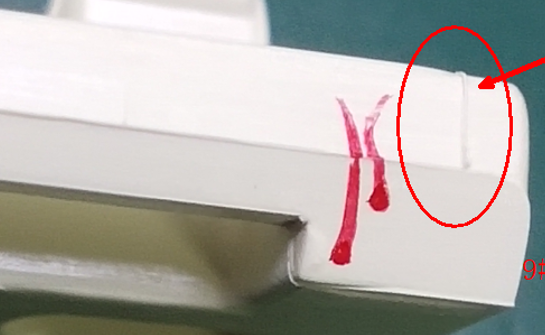
A small step between two surfaces may affect assembly, sealing, appearance, or product function. More importantly, the mold must keep this accuracy stable during continuous production.
This makes PPE molds different from many standard injection molds.
The key is not simply to make the mold more accurate. The mold must be designed so that the critical heights can be controlled and kept stable.
Why Is Step Mismatch So Important for PPE Parts?
PPE is a high-temperature engineering plastic. Many PPE parts are used in applications that require high dimensional stability and tight assembly tolerances.
For these parts, a small height difference between two mold components can transfer directly to the molded part.
The problem becomes more serious when the mold uses several components to form one product surface.
For example, if an ejector pin, insert, or other component is slightly higher than the surrounding mold surface, the difference may appear directly on the PPE part.
Therefore, controlling the height of these components is critical.
Use Ejector Blocks Instead of Standard Ejector Pins
One of the most important points in a PPE mold is the ejection system.
For many PPE parts, standard ejector pins are not the best choice for pushing the product. A better solution is often an ejector block.
Why?
A large ejector block gives the mold maker a much better reference surface. Its height can be precisely machined and controlled.
This makes it easier to keep the ejector block flush with the surrounding mold surface.
The goal is simple:
Control the ejector block height → control the product surface height → control the step mismatch.
This is much more stable than relying on many small ejector pins.
For a high-precision PPE part, the ejector block should be treated as a critical dimensional feature, not just an ejection component.
Its height, fitting, and final adjustment should receive special attention during mold assembly.
The Gate Design Also Affects PPE Part Stability
PPE is a high-temperature material, and its molding behavior requires careful consideration.
For many PPE applications, the gate needs enough flow area. A larger gate is often preferred to support filling and reduce the risk of excessive pressure loss.
A gate that is too small can create problems such as:
- Higher injection pressure
- Poor filling
- Insufficient packing
- Higher risk of shrinkage
- Less stable product dimensions
For this reason, PPE molds often use a relatively large gate design rather than an extremely small gate.
The gate design should also match the product wall thickness and flow path. The goal is not simply to make the gate large, but to provide enough material flow and packing without creating new cosmetic or dimensional problems.
Stability Is More Important Than One Good Trial
A PPE mold should not be judged only by the first successful trial.
The real test is whether the mold can maintain the same product quality after continuous production.
For a nearly zero-step PPE part, the critical dimensions should remain stable after repeated molding cycles.
This is why the mold design should focus on controlling critical heights from the beginning.
The ejector block is one of the most important examples. Instead of trying to correct the step mismatch after molding, control the block height during mold manufacturing and assembly.
The same principle applies to other critical shut-off and forming surfaces.
Control the Cause, Not the Product After the Problem Appears
When a PPE part has a step mismatch, simply polishing or modifying the mold surface may solve the problem temporarily.
But if the root cause is poor height control, the problem may return after production.
A better approach is to identify the critical surfaces during DFM and define how their heights will be controlled.
For PPE molds, this means paying particular attention to:
- Ejector block height
- Critical forming surfaces
- Parting and shut-off areas
- Gate size and location
- Areas where several mold components meet
These details have a much greater impact on PPE part stability than simply increasing the overall machining accuracy.
Conclusion
For high-precision PPE parts, almost zero step mismatch requires more than accurate machining. The mold must be designed for stable dimensional control.
Using ejector blocks instead of standard ejector pins can provide much better control of the ejection surface height. The block height can be precisely adjusted to keep the product surface stable.
At the same time, PPE molds usually need a sufficiently large gate to support material flow and packing, helping reduce shrinkage and dimensional variation.
The key is to solve these problems during the mold design stage, rather than relying on repeated mold modifications after the first trial.
At Fentor Mold, we focus on precision injection mold design and manufacturing, with particular attention to DFM, critical dimensions, and long-term mold stability.