
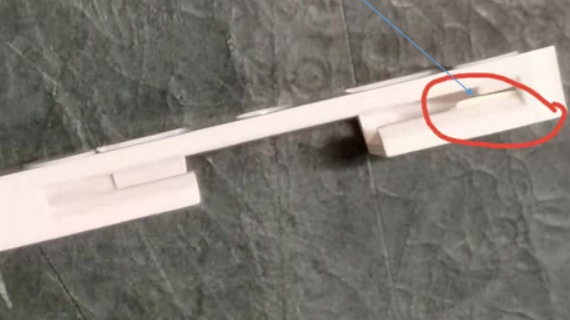
Mold modification delays are common in the injection mold industry. Some companies solve problems quickly. Others face repeated mold modifications and project delays.
The biggest reason is often not machining. It is design.
A successful mold depends heavily on its design. In many projects, design determines more than 80% of the final result. If the design has defects, later mold modifications may not solve them. In some cases, every repair creates new problems.
That is why Design for Manufacturing (DFM) is so important. A good DFM review can prevent many issues before machining starts.
Why Do Mold Modification Delays Keep Happening?
Many mold shops complete the design and then hand the project to manufacturing. The original designer is often not involved during mold trials.
Without the designer’s support, the team can only fix visible defects. They may not find the real cause.
Typical problems include:
- Flash on molded parts
- High clamping force
- Repeated fitting of the parting surface
- More and more mold modifications
- Longer project lead times
In many cases, these problems begin with one overlooked detail—the parting line.
The Parting Line Is More Important Than Many Designers Think
Parting surface design includes many factors, such as:
- Parting surface layout
- Venting
- Inserts
- Sliding mechanisms
- Parting line location
- Bearing surface
- Shut-off area
This article focuses on two key points:
- Bearing surface width
- Shut-off width
These two dimensions have a major impact on mold performance.
Why Does Flash Appear?
Many mold makers have experienced this situation.
The first trial shows flash.
The toolmakers inspect the parting surface but find nothing unusual.
They polish and fit the mold again.
The second trial still shows flash.
After several rounds of adjustment, the problem remains.
Many people blame:
- Poor machining accuracy
- Incorrect mold fitting
- Insufficient clamping force
However, the real cause is often a shut-off area that is too narrow.
A Narrow Shut-Off Area Can Lead to Repeated Mold Repairs
For standard molds, the shut-off area is usually wide enough.
High-precision molds are different.
Medical, automotive, and optical molds often contain very small shut-off areas. In some locations, the parting surface may be only 0.2 mm wide.
Although this feature can be machined, it creates several risks.
A very narrow shut-off area may cause:
- Poor sealing during mold closing
- High local pressure
- Faster wear on the parting surface
- Flash after only a few production cycles
- Frequent welding and mold repair
As a result, the mold enters a repair cycle.
One repair improves one area.
The next repair creates a new problem somewhere else.
Eventually, the mold becomes less accurate with every modification.
DFM Should Always Check Parting Line Width
Many DFM reports focus on:
- Draft angle
- Wall thickness
- Undercuts
- Ribs
- Sink marks
- Venting
However, designers often spend too little time checking the parting line width.
This should be one of the key inspection items during DFM.
1. Make Sure the Bearing Surface Is Wide Enough
The bearing surface supports the clamping force.
If it is too narrow, the mold experiences:
- Higher contact pressure
- Faster wear
- Lower production stability
A wider bearing surface improves mold life and performance.
2. Keep Enough Shut-Off Width
As a general guideline, the shut-off width should be at least 2 mm whenever possible.
A wider shut-off area provides:
- Better sealing
- Lower risk of flash
- More stable production
- Longer mold life
Some product designs cannot provide 2 mm of width.
In these cases, designers should identify the risk during DFM instead of waiting until mold trials.
3. Pay Special Attention to Critical Areas
Some locations need extra attention, including:
- Deep ribs
- Thin-wall sections
- Slide shut-offs
- Insert joints
- Sharp corners
These areas often have the narrowest shut-off surfaces.
Finding these risks during design is much easier than fixing them after mold trials.
Machining Accuracy Is Also Critical
Good design alone is not enough.
Poor machining accuracy can still cause:
- Uneven contact on the parting surface
- Plastic leakage
- Flash
- Higher clamping force
For narrow shut-off areas, manufacturers should carefully control:
- CNC machining accuracy
- EDM stock allowance
- Surface finishing
- Mold fitting quality
Design and manufacturing must work together to achieve consistent mold quality.
Too Many Mold Repairs Can Make Things Worse
There is a common saying in the mold industry:
Some molds are not repaired. They are damaged by repeated repairs.
This is often true.
If the original design is wrong, every repair changes the mold structure.
One area is welded.
Another area is ground.
Then the parting surface is fitted again.
Over time, the mold may suffer from:
- Poor parting line alignment
- Unstable part dimensions
- Shorter mold life
- Longer delivery time
The best solution is to solve problems during design, not after mold trials.
Conclusion
A successful mold starts with a strong design. The parting line is one of the most important features. Even a difference of a few tenths of a millimeter can affect sealing, flash, mold life, and project lead time.
During DFM, designers should carefully check both the bearing surface and the shut-off width. In most cases, the shut-off width should be 2 mm or more. If the product design limits the available width, the team should identify the risk early and control machining and assembly with higher precision.
This approach reduces mold modifications, shortens development time, and improves long-term production stability.
To learn more about injection mold design, DFM analysis, and precision mold manufacturing.