
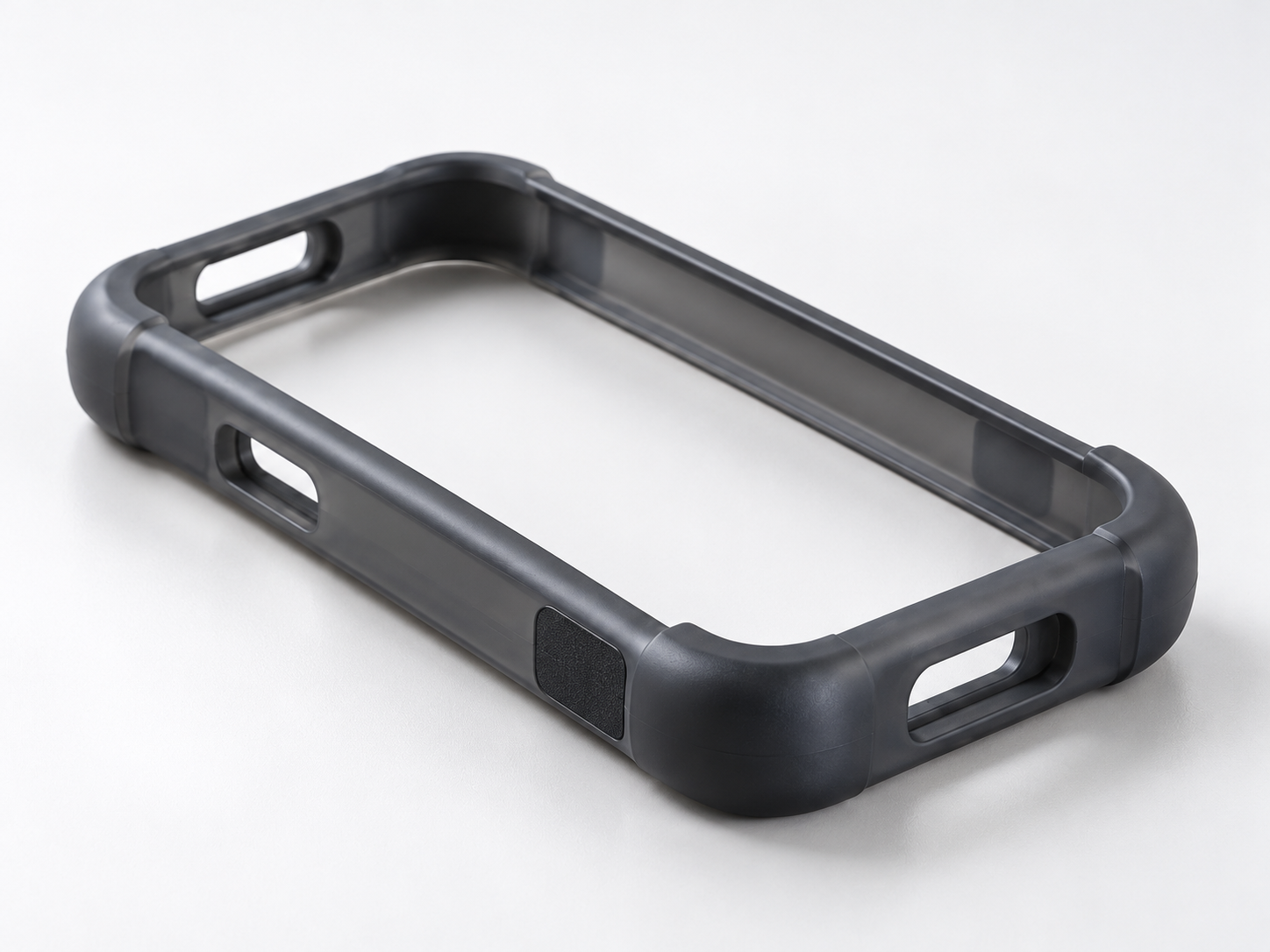
TPU injection molding is a common way to make soft, strong, and flexible plastic parts. However, shrinkage and warpage can affect part size, shape, and quality. These problems may also cause poor assembly and higher production costs.
For example, uneven cooling can make a part bend. Low packing pressure may cause excess shrinkage. Wet TPU material can also lead to surface defects and weak parts.
At Fentor Mold, we understand how mold design and process control affect plastic part quality. This guide explains how to reduce TPU shrinkage, prevent warpage, and improve molding results.
What Is TPU Injection Molding?
TPU injection molding uses heat and pressure to form thermoplastic polyurethane into plastic parts.
TPU is a flexible material. It can bend and stretch without breaking under suitable conditions. Many TPU grades also resist wear and impact.
Common TPU products include:
- Flexible seals and gaskets
- Automotive interior parts
- Cable protection parts
- Soft grips
- Industrial rollers
- Protective bumpers
- Flexible connectors
- Wear-resistant parts
TPU comes in many grades. Each grade has different hardness, strength, and shrinkage properties.
For this reason, material choice is important before mold design begins.
What Causes TPU Injection Molding Shrinkage?
TPU injection molding shrinkage happens when a part becomes smaller during cooling.
Some shrinkage is normal. However, too much shrinkage can affect the final size.
Several factors can change the shrinkage rate.
TPU Material Grade
Different TPU grades shrink at different rates.
For example, soft and hard TPU grades may behave differently during cooling. Material structure also affects the final part size.
Therefore, always check the material data sheet before making the mold.
Mold Temperature
Mold temperature affects how the plastic cools.
If one area is hotter than another, the part may shrink unevenly. This can also cause bending.
A stable mold temperature helps improve part quality.
Packing Pressure
Packing pressure adds material while the gate remains open.
Low pressure may cause excess shrinkage. In contrast, too much pressure can create stress inside the part.
For better results, adjust the packing pressure and time together.
Wall Thickness
Thick sections often cool more slowly than thin sections.
As a result, different areas may shrink at different rates.
Try to keep wall thickness as even as possible. Smooth changes in thickness also help reduce defects.
What Is the TPU Shrinkage Rate?
There is no single shrinkage rate for every TPU grade.
Some TPU grades have reported molding shrinkage values around 0.5% to 2.0%. However, the actual value depends on material type, hardness, part design, and molding conditions.
This range is only a general reference. It should not replace the selected material’s data sheet.
Main Factors Affecting TPU Shrinkage
| Factor | Possible Effect | How to Improve |
|---|---|---|
| Material grade | Changes shrinkage rate | Check material data |
| Wall thickness | Causes uneven cooling | Keep walls even |
| Mold temperature | Changes cooling behavior | Use stable settings |
| Packing pressure | Affects final part size | Adjust pressure and time |
| Gate position | Changes packing balance | Improve gate design |
| Cooling time | Affects part stability | Allow enough cooling |
| Part shape | Can cause uneven shrinkage | Improve part design |
For tight tolerance parts, mold trials are important.
Engineers can measure the first samples and adjust the mold if needed.
How to Reduce TPU Injection Molding Shrinkage
Good mold design and stable processing help control TPU shrinkage.
Although shrinkage cannot be removed completely, several steps can reduce its effect.
Use the Right Shrinkage Value
Start with the selected TPU material data sheet.
Next, review the part shape and wall thickness. These details can change actual shrinkage.
For important dimensions, use mold trials to confirm the final size.
Our injection mold manufacturing services support DFM review and custom mold development.
Keep Wall Thickness Even
Uneven walls can cause different cooling rates.
For example, a thick boss beside a thin wall may create local shrinkage.
To improve the design:
- Avoid thick solid areas.
- Use even wall thickness.
- Add smooth thickness changes.
- Keep ribs thinner than main walls where suitable.
- Review bosses and support features.
These changes can help the part cool more evenly.
Improve Gate Design
Gate position affects how TPU fills the mold.
A poor gate location may cause uneven pressure. It can also create different shrinkage rates across the part.
Therefore, place the gate where it supports smooth and balanced filling.
For complex parts, flow analysis may help find a better location.
Adjust Packing Pressure
Packing pressure helps control part size.
Too little pressure can increase shrinkage. However, high pressure may create stress or flash.
Start with the material supplier’s process guide. Then, use molding trials to find stable settings.
Control Mold Temperature
A stable mold temperature supports repeatable production.
Check the cooling channels and look for hot spots.
In addition, keep the temperature as even as practical across the mold.
This helps reduce both shrinkage changes and part distortion.
What Causes TPU Warpage?
TPU warpage happens when a molded part bends, twists, or changes shape.
Uneven shrinkage is a common cause. Stress inside the molded part may also affect its shape.
Common reasons include:
- Uneven wall thickness
- Poor cooling balance
- Incorrect packing pressure
- Poor gate position
- Early part ejection
- Internal molding stress
- Poor support after molding
Soft TPU parts may also bend during handling or storage.
Therefore, manufacturers should check both molding conditions and part handling.
How to Prevent TPU Injection Molding Warpage
To reduce TPU warpage, focus on cooling, part design, and process settings.
Good control during molding helps parts keep their intended shape.
Improve Cooling Balance
Uneven cooling can make one side shrink faster than the other.
As a result, the part may bend after leaving the mold.
To improve cooling:
- Use balanced cooling channels.
- Check for hot spots.
- Keep mold temperatures stable.
- Allow enough cooling time.
- Compare temperatures across the mold.
Better cooling balance can help reduce part distortion.
Improve Part Design
Long, thin parts may bend more easily.
Uneven walls and thick sections can also increase warpage.
Therefore, keep the design simple where possible. Use support ribs only when they improve the part.
Early DFM review can help find these risks.
Control Packing Pressure
Poor packing may create uneven shrinkage.
However, too much pressure can leave stress inside the part.
Adjust pressure and holding time based on part measurements.
A stable process can improve part shape and size.
Avoid Early Ejection
TPU parts may still be soft when the mold opens.
If the part comes out too early, it may stretch or bend.
Therefore, allow enough cooling before ejection. Good part support after molding is also important.
Reduce Internal Stress
High pressure and poor flow can create stress in molded parts.
Later, this stress may cause the part to change shape.
To reduce the risk, use suitable filling speeds and packing settings.
For production projects, our injection molding production services support custom plastic part manufacturing and process review.
How Does TPU Mold Design Affect Quality?
Good mold design helps TPU flow, cool, and leave the mold correctly.
Poor design can lead to shrinkage, warpage, flash, and surface marks.
Choose a Good Gate Position
The gate controls how TPU enters the cavity.
If the gate is poorly placed, filling may become uneven.
Therefore, review the gate size and position before mold production.
Improve Mold Venting
Air trapped inside the mold can cause short shots and burn marks.
Good venting helps air escape.
However, vents must be small enough to avoid excess flash.
Design Better Cooling Channels
Cooling channels help control mold temperature.
For parts with thick areas, extra cooling may be useful.
As a result, good cooling design can improve part size and reduce cycle changes.
Improve Part Ejection
TPU can stretch during ejection.
Poor ejector design may leave marks or change the part shape.
Use suitable draft angles and smooth mold surfaces. Also, place ejectors where they can support the part.
Why Is TPU Material Drying Important?
TPU absorbs moisture from the air.
If the material is too wet, moisture can cause damage during melting.
This may lead to:
- Silver streaks
- Bubbles
- Poor surface finish
- Weak parts
- Unstable material properties
- Processing problems
Therefore, proper drying helps improve TPU injection molding quality.
How to Dry TPU Before Molding
Drying settings depend on the material grade.
Some TPU grades use drying temperatures around 80–110°C. However, the correct time, temperature, and moisture limit must come from the supplier.
Follow these steps:
- Check the TPU data sheet.
- Use a suitable drying machine.
- Set the correct drying temperature.
- Allow enough drying time.
- Check moisture when required.
- Protect dried TPU from moisture.
Avoid using the same drying settings for every TPU grade.
Excess heat can damage some materials.
What Are Common TPU Injection Molding Defects?
TPU injection molding can produce several types of defects.
Some affect the surface. Others change part size or strength.
| Defect | Common Cause | Solution |
|---|---|---|
| Shrinkage | Low packing or uneven cooling | Improve packing and cooling |
| Warpage | Uneven shrinkage | Improve part and mold design |
| Sink marks | Thick wall sections | Reduce local thickness |
| Silver streaks | Moisture or material damage | Improve drying |
| Flash | Poor mold fit or high pressure | Check mold and settings |
| Short shots | Poor filling or trapped air | Improve flow and venting |
| Flow marks | Unstable material flow | Adjust filling settings |
| Bubbles | Moisture or trapped gas | Improve drying and venting |
| Ejection damage | Poor ejection or early removal | Improve cooling and ejection |
How to Prevent Sink Marks
Sink marks often appear near thick areas.
To reduce them, use even wall thickness and suitable packing pressure.
Also, review bosses and ribs during part design.
How to Reduce Surface Defects
Surface defects may come from wet material or poor flow.
Start by checking TPU drying conditions.
Next, review melt temperature and filling speed.
A clean mold surface also helps improve appearance.
How to Prevent Flash
Flash happens when TPU flows into small gaps between mold parts.
Poor mold fit or high pressure may cause this problem.
Therefore, check mold alignment and clamping conditions before changing other settings.
What Are the Best TPU Molding Conditions?
The best TPU molding conditions depend on the material grade.
Each TPU has its own temperature and processing needs.
Melt Temperature
Melt temperature affects TPU flow.
Low temperature may make filling difficult. However, too much heat can damage the material.
Use the range given by the material supplier.
Mold Temperature
Mold temperature affects cooling, shrinkage, and part appearance.
Keep the temperature stable during production.
However, the best setting depends on the TPU grade and part shape.
Injection Speed
Injection speed controls how fast TPU fills the mold.
High speed may create excess shear. Slow filling may lead to short shots or flow marks.
Therefore, adjust speed based on part quality.
Holding Pressure
Holding pressure helps control shrinkage.
However, too much pressure may create internal stress.
For better results, test different settings and measure the finished parts.
Cooling Time
Cooling time affects part shape and cycle time.
Short cooling can lead to bending during ejection.
However, long cooling increases production cost.
Choose a cooling time that keeps the part stable.
How to Measure TPU Shrinkage and Warpage
TPU is flexible, so accurate inspection can be difficult.
For example, a measuring tool may press against a soft part and change its shape.
Therefore, choose a suitable inspection method.
Check Important Dimensions
Focus on dimensions that affect assembly.
These may include:
- Overall length
- Overall width
- Hole diameter
- Wall thickness
- Flatness
- Sealing areas
- Assembly positions
Non-contact tools can help measure some soft TPU features without changing their shape.
Measure After Cooling
TPU parts may change size after ejection.
Therefore, measure parts after a defined cooling or conditioning period.
Use the same inspection method for each sample.
Check Part Function
A part may meet its drawing but still fail during assembly.
For example, a flexible seal may not seal correctly under load.
Therefore, functional testing may also be needed.
How to Reduce TPU Injection Molding Costs
Good part design helps reduce manufacturing costs.
A stable process also lowers scrap and rework.
Choose the Right TPU Grade
Select a material that meets the product needs.
Avoid paying more for properties that the part does not require.
Keep the Design Simple
Complex features can increase mold cost.
Deep undercuts and uneven walls may also make molding harder.
Therefore, simplify the design where possible.
Reduce Scrap
Scrap increases production costs.
To reduce waste, control material drying, molding temperature, and packing conditions.
Regular inspection can also catch problems early.
Improve Cycle Time
Shorter cycles can reduce production costs.
However, cooling must remain long enough to prevent deformation.
For this reason, improve cycle time only after part quality is stable.
How to Choose a TPU Injection Molding Manufacturer
A good TPU molding supplier should understand the material and its processing needs.
Before choosing a manufacturer, ask these questions:
- Can the team review TPU part drawings?
- Does the supplier understand TPU shrinkage?
- Can it recommend suitable mold designs?
- Does the factory control material drying?
- Can it reduce warpage through process changes?
- Can it inspect flexible parts accurately?
Clear communication is also important.
Early design review helps identify problems before mold production.
Fentor Mold provides custom injection mold development, DFM review, and plastic component manufacturing support.
Frequently Asked Questions About TPU Injection Molding
What Is TPU Injection Molding?
TPU injection molding is a process used to make flexible plastic parts.
It is common in automotive, electronics, and industrial products.
What Is the Typical TPU Shrinkage Rate?
Some TPU grades have shrinkage values around 0.5% to 2.0%.
However, actual values depend on the material and molding conditions. Always check the selected grade’s data sheet.
What Causes TPU Warpage?
Uneven cooling, poor wall design, and incorrect packing can cause warpage.
Early ejection may also change part shape.
How Can TPU Shrinkage Be Reduced?
Use the correct material shrinkage data. Also, improve wall thickness, packing pressure, and cooling balance.
Does TPU Need Drying Before Molding?
Yes. TPU generally needs drying before molding.
Wet material can cause surface defects and poor part strength.
How Can TPU Warpage Be Prevented?
Improve cooling, keep walls even, and avoid early ejection.
Stable process settings also help.
Conclusion
TPU injection molding requires good material preparation, mold design, and process control.
Shrinkage and warpage often result from uneven cooling, poor packing, or weak part design.
However, better tooling and stable production settings can reduce these problems.
By choosing the right TPU grade and checking key molding conditions, manufacturers can improve part quality and reduce waste.
For custom TPU parts and mold development, contact Fentor Mold to discuss your drawings and project needs.