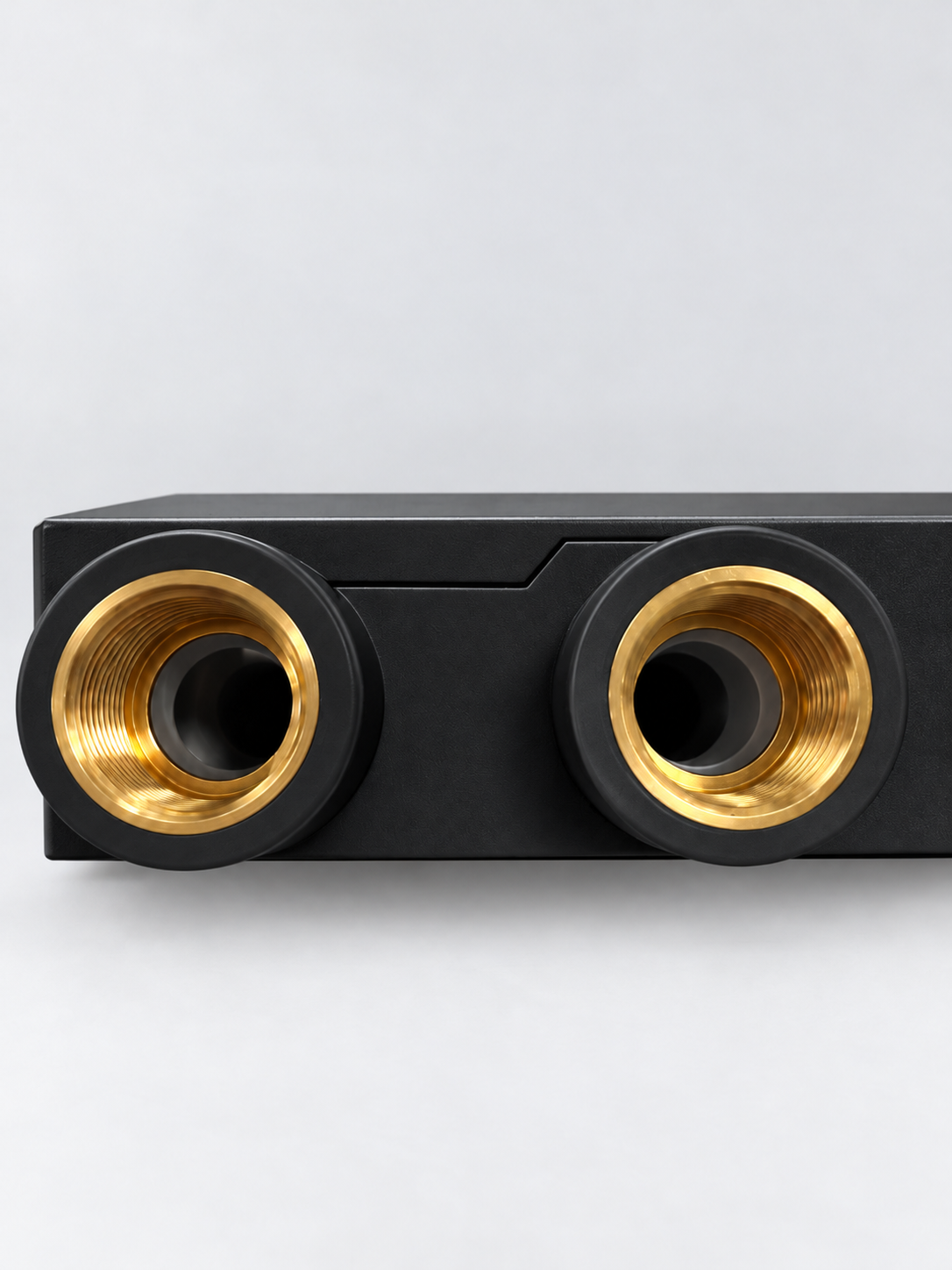
Heat stake inserts create strong metal threads in plastic parts. They allow users to remove and tighten screws many times. However, poor design or incorrect heating can cause loose inserts, cracked plastic, and weak joints.
A hole that is too large may not hold the insert well. Too much heat can damage the plastic. Poor alignment can also cause assembly problems. As a result, small errors can lead to costly defects.
At Fentor Mold, we understand how plastic part design affects assembly quality. This guide explains how to select heat stake inserts, design strong plastic bosses, improve installation, and prevent common problems.
What Are Heat Stake Inserts?
Heat stake inserts are metal threaded parts installed into plastic using heat and pressure. They are often called heat-set inserts.
During installation, a hot tool heats the metal insert. The heat softens the plastic around the hole. Next, the insert moves into the plastic. As the plastic cools, it holds the insert in place.
This process creates a strong metal thread inside the plastic part.
Common uses include:
- Automotive plastic components
- Electronic devices
- Industrial equipment
- Consumer products
- Plastic mounting brackets
- Electrical connectors
- Medical equipment components
Unlike screws that cut threads directly into plastic, metal inserts can support repeated assembly. However, their strength depends on the insert, plastic material, and installation process.
Why Use Heat Stake Inserts in Plastic Parts?
Heat stake inserts offer several benefits for plastic assemblies.
Stronger Threads
Metal threads can handle repeated screw use better than many plastic threads. They also help spread loads into the plastic.
As a result, heat stake inserts are useful for products that need regular assembly or maintenance.
Easier Assembly
Metal inserts allow manufacturers to use standard machine screws.
For example, workers can remove a screw during repair without cutting a new thread into the plastic.
This makes many products easier to service.
Better Insert Retention
Most heat stake inserts have knurls or grooves on the outside.
During installation, soft plastic flows around these features. After cooling, the plastic holds the insert and helps stop it from turning or pulling out.
However, the insert must fit the hole correctly.
Flexible Manufacturing
Manufacturers install heat stake inserts after molding the plastic part.
As a result, the mold does not need to hold a metal insert during every molding cycle.
This can make tooling and production easier for some projects.
Which Plastics Work Best with Heat Stake Inserts?
Heat stake inserts work mainly with thermoplastics. These plastics soften when heated and become firm again after cooling.
However, each plastic reacts to heat differently.
ABS Plastic
ABS is common in electronics, consumer products, and industrial parts.
It works well with many heat-set inserts. However, too much heat or pressure can damage the plastic boss.
Therefore, use the correct hole size and heating conditions.
Polycarbonate (PC)
PC offers good impact strength and stability.
It is often used in electrical products and equipment parts.
However, high stress can cause cracking. For this reason, the boss must have enough wall thickness.
Nylon (PA6 and PA66)
Nylon is strong and resists wear.
It is common in automotive and industrial products. However, nylon absorbs moisture, which can affect part size and strength.
Therefore, check the material condition before installation.
PBT Plastic
PBT offers good strength and stable dimensions.
It is often used in electrical connectors.
However, glass-filled grades may need different installation settings. As a result, testing is important.
Plastic Material Comparison
| Material | Main Benefit | Important Point |
|---|---|---|
| ABS | Easy to process | Avoid excess heat |
| PC | Good impact strength | Prevent boss cracking |
| PA6/PA66 | Good strength | Check moisture |
| PBT | Stable dimensions | Check glass-filled grades |
| PP | Good chemical resistance | Consider creep |
| POM | Good wear resistance | Check heat-setting conditions |
For best results, test the insert with the actual plastic grade.
How to Design Plastic Bosses for Heat Stake Inserts
Good boss design helps heat stake inserts stay strong.
A boss is the raised plastic area that holds the insert.
If the boss is too thin, it may crack. A large hole can make the insert loose. Poor rib design may also cause sink marks.
For this reason, check the boss design before mold production.
Our injection mold manufacturing services include DFM review and tooling development for custom plastic parts.
Choose the Right Hole Size
Hole size is one of the most important design factors.
A large hole may not provide enough plastic to hold the insert. In contrast, a small hole can create too much pressure during installation.
Therefore, use the hole size given by the insert supplier.
Do not use the same hole size for all insert types.
Provide Enough Boss Wall Thickness
The boss needs enough plastic around the insert.
Thin walls can crack during installation. They may also fail when the screw is tightened.
Some insert suppliers suggest a boss outer diameter around two to three times the insert diameter as an early design guide.
However, the final size depends on the insert, plastic, and load.
Check Hole Depth
The hole must be deep enough for the insert.
Also, leave enough room so the screw does not hit the bottom of a blind hole.
For many heat-set insert designs, the required hole depth is greater than the insert length.
Always check the exact dimensions in the supplier’s drawing.
Add Ribs When Needed
Ribs can support tall or weak bosses.
However, thick ribs may cause sink marks on the molded surface.
Therefore, use ribs only where they help the part.
Avoid Sharp Corners
Sharp corners can raise stress around the boss.
Instead, use smooth transitions and suitable radii.
This can help reduce cracking during installation and use.
How to Install Heat Stake Inserts
Correct installation helps improve joint strength and part quality.
The process involves checking the hole, placing the insert, applying heat, and allowing the plastic to cool.
Step 1: Check the Plastic Hole
Start by checking the molded hole.
Look for:
- Incorrect diameter
- Flash
- Cracks
- Sink marks
- Poor alignment
- Incomplete molding
A damaged hole may not hold the insert correctly.
Step 2: Align the Insert
Place the insert above the hole.
Keep it straight before applying pressure. Otherwise, the insert may enter at an angle and damage the boss.
A guide fixture can help improve alignment.
Step 3: Apply Heat
A heated tool warms the metal insert.
The insert then softens the surrounding plastic.
However, too much heat may damage the part. Too little heat can stop the plastic from flowing into the insert grooves.
Therefore, use settings that match the plastic and insert.
Step 4: Control Insertion Force
The tool pushes the insert into the softened plastic.
Use enough force to move the insert without damaging the boss.
In addition, a stable insertion speed helps improve consistency.
Step 5: Check Insert Depth
The insert must reach the correct depth.
Many designs require a flush position. Others may need the insert slightly below the surface.
Therefore, follow the assembly drawing.
Step 6: Allow Cooling
After installation, let the plastic cool.
As it becomes firm, the plastic holds the insert in place.
Avoid applying loads before the joint has cooled enough.
What Temperature Is Best for Heat Stake Inserts?
There is no single best temperature for all heat stake inserts.
The correct setting depends on the plastic, insert size, and heating tool.
Important factors include:
- Plastic type
- Insert material
- Insert size
- Tool temperature
- Heating time
- Insertion speed
- Glass fiber content
For example, ABS and PBT may need different settings.
In addition, glass-filled plastic may react differently from unfilled plastic.
Start with the supplier’s process guide. Then, test the insert on real molded parts.
Do not choose the tool temperature based only on the plastic melting point. Heat transfer and heating time also matter.
How to Improve Heat Stake Insert Strength
Heat stake insert strength depends on the insert shape, boss design, and installation process.
The main goals are good pull-out strength, strong torque resistance, and reliable screw assembly.
Improve Pull-Out Strength
Pull-out strength is the force needed to remove an insert from the plastic.
To improve it:
- Select the correct insert length.
- Use the right hole size.
- Provide enough boss material.
- Allow plastic to flow into the insert grooves.
- Prevent cracks during installation.
Longer inserts may improve retention. However, the boss must have enough depth and wall thickness.
Improve Torque Resistance
Torque resistance helps prevent the insert from turning when a screw is tightened.
Knurls and grooves on the insert provide grip.
However, they work only when the plastic fills the external features correctly.
Therefore, control heat, pressure, and insertion depth.
Improve Screw Assembly
A strong insert does not always mean a strong joint.
The screw and plastic boss must also support the load.
For example, excessive screw torque can damage the assembly.
As a result, manufacturers should define the correct tightening torque.
For projects that need stable plastic part dimensions, our injection molding production services support custom plastic component manufacturing.
What Are Common Heat Stake Insert Problems?
Several problems can affect heat stake insert quality.
| Problem | Common Cause | Solution |
|---|---|---|
| Loose insert | Hole too large | Correct hole size |
| Cracked boss | Thin wall or high force | Improve boss design |
| Insert rotation | Poor plastic grip | Improve heat and insert choice |
| Insert pull-out | Weak retention | Check insert length and hole size |
| Plastic damage | Too much heat | Reduce heating or exposure |
| Wrong insert depth | Poor tool control | Use a depth stop |
| Angled insert | Poor alignment | Improve fixture |
| Plastic overflow | Excess material movement | Adjust hole and process settings |
Why Do Inserts Become Loose?
A loose insert often means the plastic did not grip the metal features well.
For example, the hole may be too large. Low heat can also prevent proper plastic flow.
Therefore, check the hole and installation settings.
Why Do Plastic Bosses Crack?
Bosses can crack when the wall is too thin.
Incorrect hole sizes and high insertion forces can also cause damage.
In addition, stress from injection molding may increase cracking risk.
Why Do Inserts Rotate?
An insert may rotate when its outer features do not grip the plastic.
Poor heating or an oversized hole may cause this problem.
To prevent rotation, select the correct insert and control the installation process.
How to Test Heat Stake Insert Strength
Testing helps confirm that heat stake inserts meet the product’s needs.
For critical parts, define the test method and pass limits before production.
Pull-Out Testing
Pull-out testing measures the force needed to remove the insert.
A test machine pulls the insert along its axis.
The result helps show how well the plastic holds the metal insert.
Torque Testing
Torque testing checks how well an insert resists turning.
This is important when workers tighten or remove screws.
However, test results should show whether the insert turned, the screw failed, or the plastic broke.
Visual Inspection
Visual checks help find common defects.
Look for:
- Boss cracks
- Damaged threads
- Plastic overflow
- Wrong insert depth
- Poor alignment
- Surface damage
However, visual inspection cannot replace strength testing.
Dimensional Inspection
Check the insert depth, position, and alignment.
Also, inspect the thread when needed.
For production parts, use an inspection plan that matches the product’s risk and volume.
Heat Stake Inserts vs Molded-In Inserts
Both heat stake inserts and molded-in inserts create metal threads in plastic parts.
However, manufacturers install them at different stages.
| Feature | Heat Stake Inserts | Molded-In Inserts |
|---|---|---|
| Installation | After molding | During molding |
| Main method | Heat and pressure | Insert placed inside mold |
| Mold design | Often simpler | Needs insert holding features |
| Extra assembly step | Usually required | Often not required |
| Automation | Possible | Possible |
| Common use | Post-mold assembly | Integrated insert molding |
Heat stake inserts are useful when manufacturers want to install the metal threads after molding.
Meanwhile, molded-in inserts may work better when the metal part must be part of the molding process.
The best method depends on strength, product design, volume, and cost.
How to Reduce Heat Stake Insert Assembly Costs
Good design can help reduce production costs.
However, cost reduction should not weaken the joint.
Use Standard Insert Sizes
Standard inserts are often easier to buy.
They may also reduce lead time and material cost.
Therefore, choose standard sizes when they meet the design needs.
Keep Boss Design Simple
Complex bosses may increase tooling cost.
However, weak bosses can cause scrap and repair work.
As a result, the design should balance strength and easy molding.
Reduce Installation Errors
Poor installation creates waste.
To prevent this, use stable equipment, proper fixtures, and clear work steps.
In addition, regular checks help catch problems early.
Consider Automation
Automated insert installation may improve speed for large production runs.
However, equipment costs must match the expected volume.
Review the Design Early
Early DFM review can help find problems before mold production.
For example, engineers can check hole size, boss strength, and screw access.
This can reduce later design changes.
How to Choose a Heat Stake Insert Supplier
A suitable supplier should understand insert design and plastic part manufacturing.
Before choosing a supplier, ask these questions:
- Can the supplier recommend a suitable insert?
- Can the team review boss and hole dimensions?
- Does the supplier understand the plastic material?
- Can the process control insert depth and position?
- Can the supplier arrange strength tests?
- Can production meet the required quality level?
In addition, good communication can reduce project delays.
Fentor Mold supports customers with custom plastic molds, engineering review, and component manufacturing. For insert projects, early design checks can help improve assembly quality and reduce risks.
Frequently Asked Questions About Heat Stake Inserts
What Are Heat Stake Inserts Used For?
Heat stake inserts create reusable metal threads in plastic parts. They are common in electronics, automotive products, and industrial equipment.
Can Heat Stake Inserts Be Used in ABS?
Yes. ABS works with many heat-set inserts. However, the hole size and heating process must be correct.
What Is the Best Hole Size for Heat Stake Inserts?
The best size depends on the insert type and plastic material. Always follow the selected insert supplier’s drawing.
How Strong Are Heat Stake Inserts?
Strength depends on the insert, plastic, boss size, and installation quality. Pull-out and torque tests help measure actual performance.
Are Brass Inserts Better Than Plastic Threads?
Brass inserts often provide better thread life for repeated screw use. However, plastic threads may still work for light loads.
What Causes Heat Stake Inserts to Fail?
Common causes include wrong hole size, poor alignment, weak bosses, too much heat, and poor plastic flow.
Conclusion
Heat stake inserts help create strong metal threads in plastic parts.
However, good results depend on correct insert selection, strong boss design, and stable installation.
Hole size, wall thickness, temperature, and insertion force all affect joint quality.
By reviewing these details early, manufacturers can reduce defects, improve assembly strength, and control costs.
For custom plastic part design and tooling support, contact Fentor Mold to discuss your drawings and project requirements.