
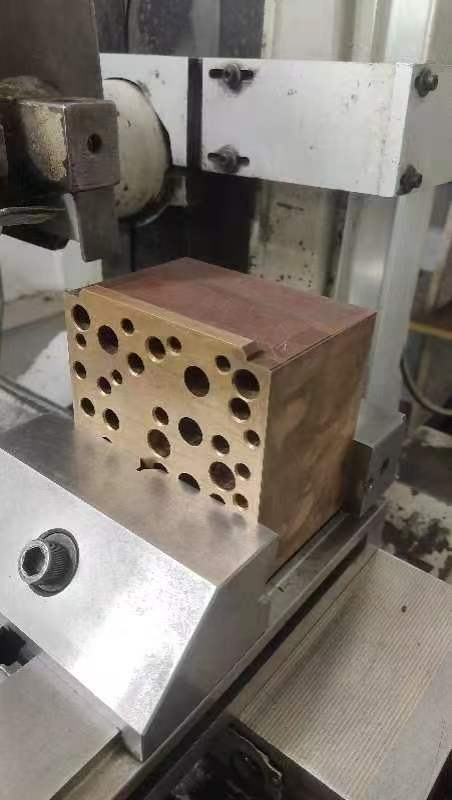
CNC brass parts are widely used in electronics, automotive systems, electrical equipment, and industrial products. Brass is easy to machine, resists corrosion in many environments, and offers good electrical conductivity. However, achieving tight tolerances still requires careful planning.
For example, tool wear can affect hole sizes. Poor clamping may cause vibration, while temperature changes can lead to measurement errors. Even small dimensional differences can create assembly problems.
At Fentor Mold, we understand the importance of precision machining and dimensional control. In this guide, we explain how to choose brass materials, improve CNC machining accuracy, control tolerances, and reduce manufacturing costs.
What Are CNC Brass Parts?
CNC brass parts are components made by computer-controlled machining processes. Manufacturers use CNC milling, turning, drilling, and threading to produce accurate brass components.
Brass is a copper-zinc alloy. Different grades offer different levels of machinability, strength, and corrosion resistance.
Common CNC brass parts include:
- Precision bushings and sleeves
- Brass connectors and fittings
- Electrical terminals
- Threaded inserts
- Brass shafts and pins
- Sensor components
- Valve bodies
- Custom industrial components
Because brass machines well, it is often suitable for both prototypes and production parts.
However, material selection and part design still affect the final accuracy.
What Tolerances Can CNC Brass Parts Achieve?
CNC brass parts can achieve tight dimensional tolerances with suitable equipment, tooling, and inspection methods.
However, not every part requires the same accuracy.
The achievable tolerance depends on part size, geometry, material grade, and machining conditions.
Common CNC Brass Machining Tolerances
The following values are general planning examples rather than guaranteed capabilities.
| Tolerance | Typical Application | Manufacturing Considerations |
|---|---|---|
| ±0.10 mm | General brass components | Usually easier to manufacture |
| ±0.05 mm | Precision mechanical parts | Requires controlled machining |
| ±0.02 mm | Close-fitting components | Requires careful setup and inspection |
| ±0.01 mm | Selected critical features | Requires suitable machines and process control |
| Below ±0.01 mm | Special high-precision features | Requires engineering review and possible finishing operations |
For example, a general brass bracket may work well with ±0.10 mm. Meanwhile, a precision bushing may require tighter control of its internal diameter.
Therefore, engineers should apply tight tolerances only where the product needs them.
For projects requiring precise dimensions, our components manufacturing services support custom machined components with engineering review and dimensional inspection.
Why Tight Tolerances Matter
Tight tolerances help ensure that parts fit and function correctly.
They are especially important for:
- Shaft and hole fits
- Precision assemblies
- Threaded connections
- Sealing surfaces
- Electrical contacts
- Moving mechanical parts
However, unnecessary precision can increase machining time and inspection costs.
As a result, the best tolerance is not always the smallest one. It is the tolerance that meets the product’s functional needs.
Which Brass Materials Are Best for CNC Machining?
Material selection plays an important role in the quality of CNC brass parts.
Different brass grades have different cutting behavior, strength, and surface finish characteristics.
C360 Brass
C360 is a common free-machining brass grade. It is widely used for precision turned parts and automatic machining.
Its main advantages include:
- Excellent machinability
- Good chip breaking
- Efficient CNC turning
- Suitable surface finish
- Good performance for many threaded components
Therefore, C360 is often a practical choice for bushings, fittings, and precision connectors.
However, C360 contains lead. Buyers should confirm whether the material meets the environmental and product regulations that apply to their projects.
C260 Brass
C260 is also known as cartridge brass.
It offers good formability and useful corrosion resistance in many applications.
Common uses include:
- Electrical components
- Decorative parts
- Formed brass components
- Selected precision parts
However, C260 generally does not machine as easily as C360.
Therefore, cutting conditions and tooling may need additional attention.
C377 Brass
C377 is commonly associated with forging applications.
It offers useful properties for components that require hot forming before final machining.
Typical applications include:
- Valve parts
- Fittings
- Plumbing components
- Forged mechanical parts
However, its suitability depends on the final manufacturing route.
Comparison of Common Brass Grades
| Brass Grade | Main Advantage | Common Applications |
|---|---|---|
| C360 | Excellent machinability | Precision fittings, bushings, connectors |
| C260 | Good formability | Electrical parts, formed components |
| C377 | Suitable for hot forging | Valves, fittings, forged parts |
For many precision CNC brass parts, C360 is an efficient option when its composition is acceptable.
However, material choice should always match the required mechanical properties and compliance needs.
How to Achieve Tight Tolerances in CNC Brass Parts
Producing accurate CNC brass parts requires more than a high-precision machine.
Tool selection, clamping, temperature, and cutting conditions all affect dimensional accuracy.
Use Sharp Cutting Tools
Sharp tools help produce clean cuts and consistent dimensions.
Meanwhile, worn tools can increase cutting forces and affect surface quality.
To improve accuracy:
- Select suitable cutting tools for brass.
- Monitor tool wear.
- Replace damaged tools.
- Use consistent cutting parameters.
- Check critical dimensions regularly.
In addition, suitable tool geometry helps reduce burrs and improves chip removal.
Improve Workpiece Clamping
Poor clamping can cause movement or vibration during machining.
As a result, the finished part may not meet the required dimensions.
For thin or delicate brass components, excessive clamping force can also cause deformation.
Therefore, manufacturers should use fixtures that hold the part securely without damage.
Control Cutting Speed and Feed Rate
Brass often supports efficient cutting speeds.
However, the correct cutting conditions depend on the material grade, tool geometry, and machining operation.
For example, excessive feed rates may affect surface finish. Meanwhile, unsuitable cutting speeds can influence tool wear and dimensional stability.
Therefore, machining parameters should match the part requirements.
Reduce Setup Errors
Every time a part moves to a new setup, there is a risk of positioning error.
For this reason, manufacturers should reduce unnecessary setups whenever possible.
CNC turning centers with live tooling or suitable multi-axis milling machines can help machine several features in one setup.
As a result, manufacturers may improve positional accuracy and reduce handling time.
Control Temperature Changes
Temperature can affect the dimensions of both the brass part and the machine.
For example, a warm part may measure differently after it cools.
Therefore, manufacturers should use stable machining conditions and suitable inspection temperatures.
For high-precision features, allow the part and measuring equipment to reach a consistent temperature before final inspection.
When CNC brass inserts are used in plastic assemblies, dimensional accuracy becomes even more important. Early coordination between CNC machining and injection mold design can help improve part fit and reduce assembly problems.
How CNC Turning Improves Brass Part Accuracy
CNC turning is a common method for producing round brass components.
Typical products include:
- Brass shafts
- Bushings
- Threaded fittings
- Precision pins
- Cylindrical connectors
During turning, the workpiece rotates while the cutting tool removes material.
This process is especially suitable for controlling diameters and producing round features.
Control Diameter Accuracy
Diameter accuracy is important for parts that connect with shafts, bearings, or other components.
To maintain accuracy, manufacturers should monitor tool offsets, machine conditions, and cutting forces.
In addition, regular measurements help identify dimensional changes during production.
Improve Concentricity
Some brass parts require multiple diameters to share a common axis.
Poor concentricity or coaxial alignment can cause assembly problems.
Therefore, machining important features in one setup can help reduce positioning errors.
Engineers should also define appropriate datum references and geometric tolerances on the drawing.
Improve Surface Finish
Smooth surfaces may improve sealing, movement, and assembly.
However, the required surface finish depends on the application.
For example, a sealing surface may need a finer finish than a noncritical external diameter.
Therefore, specify surface roughness only where it affects the part’s function.
How CNC Milling Improves Brass Part Accuracy
CNC milling is suitable for brass parts with flat surfaces, pockets, slots, and complex shapes.
However, accurate milling requires stable workholding and suitable cutting tools.
Control Flatness
Flatness is important for mating surfaces and precision assemblies.
To improve flatness, manufacturers should use rigid fixtures and stable cutting conditions.
In addition, suitable finishing passes can help improve the final surface.
Improve Hole Position Accuracy
Hole position is important for screws, pins, and assembly features.
Poor hole location can cause alignment problems.
Therefore, engineers should use clear drawing datums and suitable machining strategies.
For critical holes, drilling followed by reaming or boring may improve size and position control, depending on the setup.
Avoid Thin Wall Deformation
Thin brass walls may bend under cutting or clamping forces.
As a result, dimensional accuracy can become difficult to maintain.
To reduce this risk:
- Avoid unnecessarily thin walls.
- Use suitable fixtures.
- Reduce excessive cutting forces.
- Plan machining sequences carefully.
- Inspect parts after removing clamping forces.
Early design review can help identify these problems before production begins.
How to Measure CNC Brass Parts Accurately
Inspection is essential for precision CNC brass parts.
Even when machining conditions are stable, manufacturers must verify that finished parts meet the drawing requirements.
Use the Right Measuring Tools
Common measuring equipment includes:
- Digital calipers
- Outside micrometers
- Bore gauges
- Pin gauges
- Height gauges
- Coordinate measuring machines (CMM)
- Optical measuring equipment
However, tool selection should depend on the required tolerance.
For example, a caliper may be suitable for general dimensions. Meanwhile, a bore gauge or suitable CMM inspection may be necessary for tighter requirements.
Check Critical Dimensions
Not every dimension needs the same inspection frequency.
Instead, manufacturers should identify critical features during drawing review.
These may include:
- Precision hole diameters
- Shaft diameters
- Thread dimensions
- Flatness
- Perpendicularity
- Position tolerances
- Critical assembly distances
Therefore, inspection plans should focus on features that affect product function.
Control Measurement Conditions
Measurement errors may occur because of temperature, poor calibration, or incorrect inspection methods.
To improve accuracy:
- Use calibrated measuring equipment.
- Keep measuring surfaces clean.
- Follow consistent inspection procedures.
- Control inspection temperature where needed.
- Confirm measurement methods for delicate features.
In addition, operators should record inspection results when the project requires traceability.
What Are Common Problems in CNC Brass Machining?
Although brass has good machinability, several problems can affect the quality of CNC brass parts.
| Problem | Possible Cause | Recommended Solution |
|---|---|---|
| Dimensional variation | Tool wear or temperature changes | Monitor tools and stabilize machining conditions |
| Burrs | Tool geometry or cutting conditions | Optimize tools and deburring |
| Poor surface finish | Worn tools or vibration | Improve cutting stability |
| Hole size errors | Drill movement or tool wear | Use suitable finishing operations |
| Thread defects | Incorrect tooling or process settings | Check threading tools and parameters |
| Part deformation | Excessive clamping force | Improve fixture design |
| Position errors | Multiple setups or poor datum control | Reduce setups and improve alignment |
How to Prevent Burrs
Burrs often appear around drilled holes, milled edges, and threads.
They can affect assembly and product appearance.
Therefore, manufacturers should choose suitable cutting tools and define appropriate deburring methods.
For small precision components, excessive deburring may also change important dimensions.
As a result, the process must remove burrs without damaging critical features.
How to Prevent Threading Problems
Brass parts often contain internal or external threads.
However, poor tool selection or incorrect cutting conditions can damage threads.
Therefore, manufacturers should verify thread size, pitch, depth, and fit.
For critical applications, thread gauges help confirm the finished thread.
How Does Surface Finishing Affect CNC Brass Parts?
Surface finishing can improve appearance, corrosion resistance, and product performance.
However, finishing methods may also affect final dimensions.
Polishing
Polishing improves surface appearance and can reduce visible machining marks.
However, excessive polishing may remove material from critical features.
Nickel Plating
Nickel plating can improve appearance and provide additional surface protection.
However, plating adds thickness.
Therefore, engineers should consider the coating thickness when defining final dimensions.
Tin Plating
Tin plating is used on selected electrical components.
It can provide a suitable contact surface for certain applications.
However, the correct plating specification depends on the electrical and environmental requirements.
Uncoated Brass
Some brass components do not require additional surface treatment.
For these parts, a suitable machined finish may be enough.
However, manufacturers should consider the operating environment and appearance requirements.
How to Reduce CNC Brass Parts Manufacturing Costs
Precision machining does not always need to be expensive.
Good design decisions can reduce machining time while maintaining part quality.
Avoid Unnecessary Tight Tolerances
Tight tolerances may require slower machining, additional inspection, or secondary operations.
Therefore, apply them only to critical features.
For general dimensions, more practical tolerances can help reduce cost.
Choose the Right Brass Grade
Material choice affects cutting speed, tool life, and total production cost.
For example, free-machining brass may reduce machining time compared with a harder-to-machine grade.
However, the selected material must still meet mechanical and regulatory requirements.
Simplify Part Design
Complex shapes may require additional tools and setups.
As a result, simplifying noncritical features can make production more efficient.
For example, reducing unnecessary deep pockets or difficult internal corners may shorten machining time.
Combine Machining Operations
Reducing setups can save time and improve accuracy.
Therefore, manufacturers should review whether several features can be machined in one operation.
Plan Production Quantities
Prototype and production machining have different cost structures.
For larger quantities, efficient tooling and process planning may reduce the cost per part.
However, the expected annual volume should be discussed during quotation.
How to Choose a CNC Brass Parts Manufacturer
A reliable CNC brass parts manufacturer should offer more than low prices.
Precision, engineering support, consistent quality, and communication are equally important.
Before selecting a supplier, consider the following questions:
- Can the supplier review 2D drawings and 3D models?
- Does the engineering team understand brass material grades?
- Can the manufacturer meet the required tolerances?
- Does the company have suitable CNC turning and milling equipment?
- Can the supplier provide dimensional inspection reports?
- Can the manufacturer support both prototypes and production orders?
In addition, buyers should confirm the expected lead time and inspection requirements before placing an order.
Good communication also matters. Early engineering feedback can help identify difficult features, avoid unnecessary precision, and reduce manufacturing costs.
Frequently Asked Questions About CNC Brass Parts
Is Brass Easy to CNC Machine?
Yes. Many brass grades have good machinability. However, cutting performance varies by alloy.
C360 is a common choice for free-machining applications.
What Is the Best Tolerance for CNC Brass Parts?
The best tolerance depends on the function and geometry of the part.
General features may use wider tolerances, while precision fits may require ±0.02 mm or tighter.
However, manufacturers should confirm the achievable tolerance for each critical feature.
Can CNC Brass Parts Achieve ±0.01 mm?
Yes, selected features may achieve ±0.01 mm with suitable machines, tooling, and process control.
However, this level of precision is not guaranteed for every part or dimension.
Is CNC Turning Better Than CNC Milling for Brass?
CNC turning is usually more efficient for round parts such as shafts and bushings.
Meanwhile, CNC milling is suitable for parts with flat surfaces, slots, and complex geometry.
What Is the Most Common Brass Grade for CNC Machining?
C360 is a widely used free-machining brass grade.
However, other alloys may be more suitable when lead restrictions, strength, or forming requirements are important.
How Can CNC Brass Machining Costs Be Reduced?
Manufacturers can reduce costs by selecting suitable materials, avoiding unnecessary tight tolerances, simplifying designs, and reducing machining setups.
Conclusion
Producing accurate CNC brass parts requires careful control of materials, tooling, machining conditions, and inspection.
Good material selection improves machining efficiency. Meanwhile, stable cutting conditions and suitable fixtures help maintain dimensional accuracy.
However, tight tolerances should only be used where they improve the function of the finished part.
By reviewing part designs early and choosing suitable manufacturing methods, buyers can improve quality and control production costs.
If you need precision brass components or custom machined parts, contact Fentor Mold to discuss your drawings, tolerances, and project requirements.