
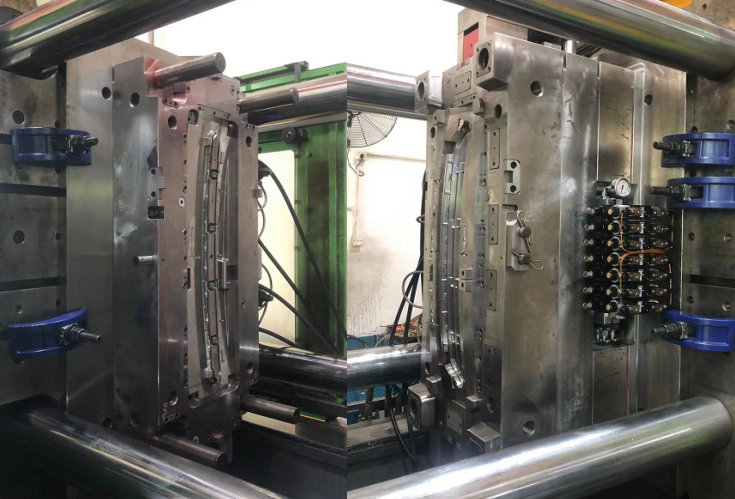
The automotive plastic grille is an important exterior part of a vehicle. It has a large visible surface and usually sits at the front of the car. Because of this, both the part appearance and mold quality need careful control.
A grille may look simple from the outside, but its structure can be quite complex. Different versions may use different textures, paint finishes, materials, and mold structures.
For an automotive plastic parts project, the grille is a good example of a part where appearance and mold design are closely connected.
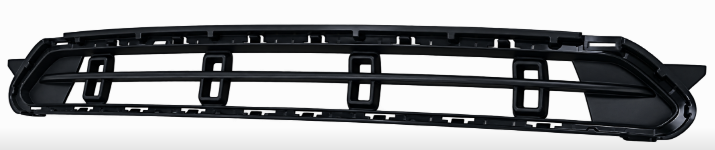
Different Grille Versions for the Same Vehicle
One vehicle model may use several grille versions.
The basic shape can be similar, but the surface finish, decoration, or local structure may change between different versions.
For example, one version may have a molded texture directly on the plastic surface. The mold surface is textured so the part comes out with the required grain.
Another version may use a smooth molded surface followed by painting. Some grilles may also use gloss black paint, matte paint, metallic paint, chrome-like decoration, or other secondary finishing processes.
These different finishes affect the mold requirements.
For a textured grille, the mold surface must have a consistent texture. The draft angle also needs enough consideration so the textured area can release smoothly.
For a painted grille, the molded surface must be clean and stable. Flow marks, weld lines, scratches, sink marks, or flash may still remain visible after painting.
The same vehicle platform may therefore require several grille versions even when the main shape is similar.
Grille Is a Medium-to-Large Automotive Appearance Part
An automotive grille is usually a medium-to-large injection molded exterior part.
Its appearance requirements are normally higher than those of many internal plastic components.
The grille often contains many ribs, openings, thin walls, and decorative surfaces. Melt flow must travel through a relatively large and complicated cavity.
Several molding defects need strict control.
Weld lines can appear where two melt fronts meet around grille openings. If the weld line appears on an important visible surface, it may affect the final appearance.
Air traps are another common concern. The grille has many narrow areas and flow branches. Air can easily become trapped near the end of the filling path. Good venting is therefore important.
Flash also needs close control. Grilles often have many edges, holes, shut-off areas, and complex parting surfaces. Even small flash can make the product look poor or cause problems during assembly.
Because of these requirements, the mold needs accurate machining, stable mold alignment, proper venting, and good control of the parting surface.
Our injection mold manufacturing work for this type of part focuses on both mold structure and the final molded appearance.
Common Materials for Automotive Plastic Grilles
The most common materials for automotive grilles include ABS and PP.
ABS
ABS provides a good surface appearance and is easy to process. It also works well with painting and other secondary finishing processes.
For this reason, ABS is often used when the grille has higher surface requirements.
PP
PP is another common option.
It has good toughness, low density, and reasonable material cost. It is suitable for many automotive exterior applications.
Material modification can also improve its stiffness or impact performance depending on the product requirements.
PC/ABS
Some higher-level vehicle projects use PC/ABS.
PC/ABS combines the processing and surface characteristics of ABS with better impact resistance and heat resistance.
However, PC/ABS also requires more careful molding control. Melt temperature, mold temperature, filling balance, and material drying can all affect the final quality.
The final material selection depends on the grille design, appearance requirement, mechanical performance, finishing process, and project cost.
Grille Molds Often Use Sliders and Lifters
Automotive grille parts rarely have a completely simple mold structure.
Many grille designs contain undercuts, side holes, clips, hooks, and complex mounting features. A straight mold opening cannot release all these areas.
For this reason, sliders and lifters are common in grille molds.
A slider can release side undercuts or features located in a direction different from the mold opening direction.
Lifters are often used for internal hooks, clips, and local undercuts.
The exact structure depends on the part design.
For a larger grille mold, these moving components must stay stable during repeated production. Their guiding surfaces, wear resistance, clearance, and locking structure all need careful design.
The mold also needs enough rigidity because the grille itself can be relatively large.
During mold design, we need to consider the appearance surface together with the moving mold components. Slider lines, insert lines, ejector marks, and parting lines should stay away from important visible areas whenever the product design allows it.
Key Characteristics of an Automotive Grille Mold
An automotive plastic grille mold combines large-part molding with strict appearance requirements.
The main characteristics usually include:
- Medium-to-large mold size
- High requirements for visible surfaces
- Complex melt flow around grille openings
- Strict control of weld lines, air traps, and flash
- ABS, PP, or PC/ABS material
- Textured, painted, or other finished surfaces
- Sliders and lifters for undercuts and mounting features
- Accurate parting surfaces and stable mold alignment
A good grille mold must do more than fill the cavity.
It needs to produce a stable part with a clean appearance, correct dimensions, and reliable molding performance.
For projects that require both mold manufacturing and production, our injection molding production service can cover the process from mold trial to molded plastic parts.