Choosing the right runner system is an important decision when designing an injection mold.
The two most common options are cold runner and hot runner systems.
A cold runner mold lets the plastic cool and solidify inside the runner. A hot runner keeps the plastic molten until it reaches the mold cavity.
Both systems can produce high-quality plastic parts. The better choice depends on the product, material, production volume, and mold budget.
For more information about injection mold design and manufacturing, visit Fentor Mold.
What Is a Cold Runner System?
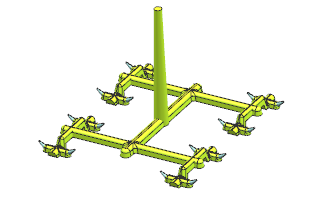
A cold runner system uses an unheated runner.
The injection machine pushes molten plastic through the sprue and runner system into the cavity. The plastic in the runner cools together with the part.
After the mold opens, the machine ejects both the part and the solidified runner.
The runner then needs to be separated from the part.
In some applications, manufacturers can grind and reuse the runner material. However, this adds extra processing and may not work well with every plastic.
Common Cold Runner Mold Types
Cold runner systems mainly include:
- Two-plate molds
- Three-plate molds
- Submarine or tunnel gate molds
- Side gate molds
- Pin gate systems
A three-plate mold can place the gate at a more suitable position, but it also creates additional runner waste.
What Is a Hot Runner System?
A hot runner system uses heated manifolds and nozzles to keep the plastic molten.
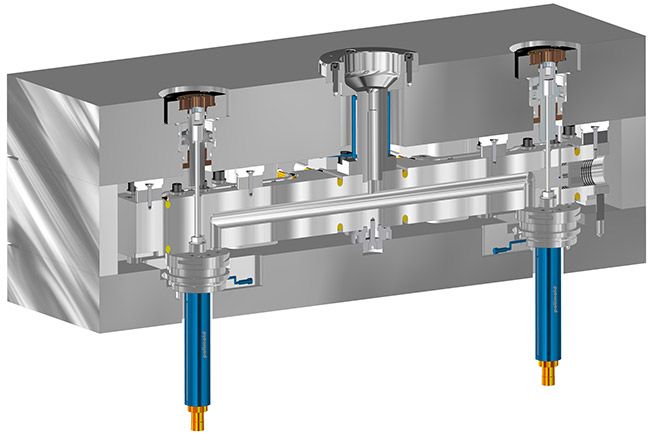
The plastic flows from the injection machine into the hot runner manifold. The manifold distributes the melt to one or more nozzles.
The nozzle then feeds the plastic into the cavity.
The runner does not solidify during normal production.
As a result, the mold produces the finished part without a separate cold runner.
You can learn more about the basic structure and working principle in our Hot Runner System Injection Molding Guide.
Main Difference Between Cold Runner and Hot Runner
The biggest difference is simple:
A cold runner becomes solid. A hot runner stays molten.
This difference affects almost every part of the molding process.
| Factor | Cold Runner | Hot Runner |
|---|---|---|
| Runner | Solidifies | Remains molten |
| Runner Waste | Yes | No |
| Mold Cost | Lower | Higher |
| Maintenance | Simpler | More complex |
| Cycle Time | Usually longer | Usually shorter |
| Material Waste | Higher | Very low |
| Gate Control | Good | Better with valve gate |
| Automation | More complex | Easier |
| Start-Up | Easier | Requires heating |
| High-Volume Production | Good | Excellent |
Cold Runner: Main Advantages
Lower Mold Cost
Cold runner molds have fewer components.
They do not need:
- Hot runner manifold
- Heating elements
- Thermocouples
- Temperature controller
This makes them less expensive to build.
For low-volume production, the lower mold cost can be more important than material savings.
Simple Mold Design
Cold runner systems are relatively simple.
This makes them easier to manufacture and maintain.
Most mold technicians are also familiar with cold runner systems.
Easy Maintenance
There are no heaters or temperature zones inside the runner system.
If a runner becomes damaged, technicians can usually repair or modify it without dealing with electrical heating components.
Good for Low-Volume Production
If you only need a few thousand parts, a cold runner may be the more economical option.
The material waste may remain acceptable compared with the higher initial cost of a hot runner mold.
Cold Runner: Main Disadvantages
Runner Waste
The main disadvantage is material waste.
Every cycle produces a solid runner.
For a high-cavity mold, the runner can consume a significant amount of material.
This becomes more expensive when the resin has a high price.
Longer Cycle Time
The runner must cool before the mold can open.
A large runner takes longer to cool.
This can increase the overall cycle time.
Extra Processing
The runner must be separated from the molded part.
Some applications also require grinding and recycling.
This creates additional labor and handling.
Hot Runner: Main Advantages
Almost No Runner Waste
A hot runner eliminates normal cold runner waste.
This is one of its biggest advantages.
For expensive engineering plastics, the savings can become significant.
Faster Production
The mold does not need to cool a large solid runner.
This can reduce the cooling time and increase production efficiency.
However, the actual cycle-time reduction depends on the product and mold design.
Better Material Utilization
The injection unit sends most of the material directly toward the cavities.
This improves material utilization.
It also reduces the amount of recycled runner material.
Easier Automation
A hot runner mold produces parts without solid runners.
This simplifies automatic production.
Robots can pick the parts directly from the mold without needing a separate runner-removal process.
Better Gate Control
Valve gate systems allow engineers to control when each gate opens and closes.
This provides better control over:
- Filling
- Weld lines
- Gate marks
- Sequential filling
- Cosmetic appearance
Hot Runner: Main Disadvantages
Higher Mold Cost
Hot runner components increase the initial mold investment.
A complete system may include:
- Manifold
- Nozzles
- Heaters
- Thermocouples
- Temperature controller
- Wiring
For a simple, low-volume project, this cost may not make sense.
More Complex Design
Hot runner design requires careful attention to thermal and mechanical conditions.
Engineers must consider:
- Melt flow
- Temperature control
- Thermal expansion
- Manifold balance
- Nozzle position
- Gate design
A poor design can cause unstable molding.
More Difficult Maintenance
A hot runner system contains electrical and heating components.
A failure can come from a heater, thermocouple, wiring, nozzle, manifold, or gate.
Technicians need the right experience and tools to identify the problem.
Cold Runner vs Hot Runner: Cost
Many people think a hot runner is always more expensive.
That is not necessarily true.
The initial mold cost is usually higher, but the total production cost can be lower.
Consider a high-volume product.
A hot runner may cost more when you build the mold, but it can save money through:
- Lower material waste
- Shorter cycle time
- Less runner handling
- Lower labor cost
- Easier automation
For low-volume production, a cold runner may still be the better choice.
The right decision should consider the complete production cost, not only the mold price.
Cold Runner vs Hot Runner: Material Waste
This is where hot runners have a clear advantage.
Imagine a mold produces four parts per shot.
With a cold runner, every cycle produces four parts plus a solid runner.
If the runner is large, the amount of wasted material can be substantial.
With a hot runner, the runner remains molten.
The material goes into the cavities instead of becoming a solid runner.
This matters even more when using expensive materials such as:
- PC
- PA
- POM
- PPS
- PEI
- PEEK
Some materials also become less suitable for repeated recycling.
Cold Runner vs Hot Runner: Cycle Time
A hot runner can reduce cycle time because it does not need to cool the runner.
But this does not mean every hot runner mold will have a shorter cycle.
The product itself usually controls much of the cooling time.
For example, a thick plastic housing may need a long cooling period even when using a hot runner.
So engineers should analyze the entire molding cycle rather than assuming that a hot runner always provides a major cycle-time reduction.
Which System Is Better for High-Volume Production?
Hot runners are often the better choice for high-volume production.
The higher mold cost can be recovered through material savings and improved production efficiency.
Typical applications include:
- Automotive parts
- Medical products
- Packaging
- Consumer electronics
- Appliance components
- High-volume industrial parts
For millions of parts, even a small material saving per shot can become a large cost saving.
Which System Is Better for Low-Volume Production?
Cold runners often make more sense for low-volume projects.
This is especially true when:
- The material is inexpensive
- Production volume is low
- Mold cost is critical
- Runner recycling is acceptable
- The product has simple gating requirements
A simple cold runner can provide a reliable and economical solution.
Cold Runner vs Hot Runner for Different Materials
Material selection also affects the decision.
PP and PE
These materials are relatively inexpensive.
A cold runner can work well for many applications.
However, high-volume production may still benefit from a hot runner.
ABS
Both systems can work well.
The choice depends mainly on production volume, product design, and gate requirements.
PC
PC is more expensive than many common plastics.
Reducing runner waste can provide a stronger reason to use a hot runner.
PA
PA can work with both systems.
However, engineers need to consider moisture, temperature, and material degradation.
POM
POM requires careful temperature control.
The hot runner system must match the material and processing requirements.
High-Performance Plastics
Materials such as PPS, PEI, and PEEK can have high material costs and strict processing requirements.
A properly designed hot runner can reduce waste, but the system must have good temperature control.
When Should You Choose a Cold Runner?
A cold runner is usually a good choice when:
- Production volume is low
- Mold budget is limited
- The resin is inexpensive
- Runner waste is acceptable
- The mold has a simple layout
- Maintenance simplicity is important
For many prototype and low-volume injection molding projects, cold runners remain a practical choice.
Fentor Mold also provides prototype injection molding when customers need low-volume plastic parts or fast mold development.
When Should You Choose a Hot Runner?
A hot runner becomes more attractive when:
- Production volume is high
- Material cost is high
- Runner waste is significant
- Automatic production is required
- Gate appearance is important
- The product needs multiple injection points
- The mold has many cavities
Large automotive and packaging molds often use hot runner systems for these reasons.
Can You Change a Cold Runner to a Hot Runner?
Sometimes, but not always.
The mold structure must have enough space for the hot runner manifold and nozzles.
The mold base, cooling layout, gate position, and injection location may also need modification.
For an existing mold, engineers should check the complete mold structure before deciding whether a conversion makes economic sense.
In many cases, a new hot runner mold may be a better solution.
Cold Runner or Hot Runner: How Should You Decide?
Do not choose only by mold price.
Look at the complete project.
Ask these questions:
- How many parts will you produce?
- How expensive is the plastic?
- How much runner waste does each cycle create?
- How many cavities does the mold have?
- Does the gate need a high-quality cosmetic finish?
- Do you need automatic production?
- How important is mold maintenance?
- What is the expected mold life?
The answers will usually make the choice much clearer.
Conclusion
Cold runner and hot runner systems both have a place in injection molding.
A cold runner offers lower mold cost, simple construction, and easy maintenance. It is often a good option for low-volume or cost-sensitive projects.
A hot runner offers better material utilization, easier automation, and better control for demanding applications. It often makes more sense for high-volume production.
The best system depends on the complete project, not one factor.
If you are unsure which runner system fits your product, Fentor Mold can evaluate the product design, material, cavity layout, production volume, and gate requirements before mold construction.
Learn more about our custom injection mold manufacturing and discuss your next mold project with our engineering team.
FAQ
Is a hot runner better than a cold runner?
Not always. A hot runner usually works better for high-volume production, expensive materials, and applications that need good gate control. A cold runner can be more economical for low-volume projects.
Does a hot runner reduce material waste?
Yes. The hot runner keeps the runner molten, so normal production does not create a solid runner.
Does a hot runner always reduce cycle time?
No. It can reduce cooling time associated with the runner, but the product’s wall thickness and cooling requirements often have a much larger effect on cycle time.
Is a cold runner cheaper?
The initial mold cost is usually lower because the mold does not need a heated manifold, nozzles, heaters, or temperature controller.
Can ABS use a hot runner?
Yes. ABS is commonly used with hot runner systems. The system must match the material’s processing temperature and the product requirements.
Is a valve gate part of a hot runner system?
Yes. A valve gate is a type of hot runner gate. It uses a valve pin to control the flow of molten plastic into the cavity.
Which system is better for automotive molds?
Many automotive molds use hot runner systems because they often require multiple gates, high production volume, good appearance, and automated production.
Can a prototype mold use a hot runner?
Yes, but a cold runner is often more economical for low-volume prototype production. The decision depends on material cost, part design, production quantity, and future production plans.