
What Is a Single Point Hot Runner System?
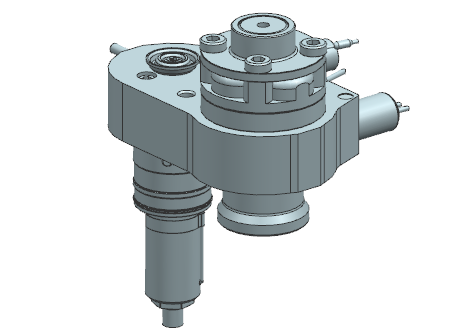
A single point hot runner system uses one hot runner nozzle and one gate to inject molten plastic into the mold cavity.
The system keeps the plastic hot from the machine nozzle to the gate. It does not create a solid runner during normal production.
This design is simple and works well for many small and medium-size plastic parts.
For custom injection mold design and manufacturing, see Fentor Mold’s injection mold services.
How Does It Work?
The injection machine pushes molten plastic into the hot runner nozzle.
The nozzle keeps the material at the required temperature.
The melt then enters the cavity through one gate.
The mold cools the plastic part, while the material inside the hot runner remains molten.
After the mold opens, the finished part is ejected without a solid runner.
The basic flow is:
Injection Machine → Hot Runner Nozzle → Gate → Mold Cavity
When Should You Use a Single Point Hot Runner?
A single point system works best when one gate can fill the entire cavity properly.
Typical applications include:
- Bottle caps
- Small containers
- Cosmetic parts
- Medical parts
- Electronic components
- Round or symmetrical products
It is especially useful when the product has a simple flow path.
For example, a round product with a central gate can often achieve good filling balance with a single point hot runner.
Main Advantages
Simple Structure
A single point system has fewer components than a multi-point system.
This makes mold design and maintenance easier.
Lower Hot Runner Cost
One nozzle and one gate usually cost less than a system with multiple nozzles.
Less Material Waste
The hot runner keeps the runner molten.
This eliminates normal cold runner waste.
Easy Temperature Control
With fewer heating zones, engineers can manage the system more easily.
Good for High-Volume Production
When the product design allows one gate, a single point hot runner can provide efficient and stable production.
Limitations of a Single Point Hot Runner
The main limitation is filling distance.
If the product is large or has a complex shape, one gate may not fill the cavity evenly.
This can cause:
- High injection pressure
- Long flow length
- Weld lines
- Uneven filling
- Warpage
- Short shots
In these cases, a multi-point hot runner may provide a better solution.
Single Point vs Multi-Point Hot Runner
| Item | Single Point | Multi-Point |
|---|---|---|
| Gates | One | Multiple |
| Structure | Simple | More complex |
| Cost | Lower | Higher |
| Filling Area | Limited | Larger |
| Flow Control | Simple | More flexible |
| Large Parts | Limited | Better |
| Maintenance | Easier | More complex |
The correct choice depends on the product geometry and flow requirements.
For large or complex parts, engineers should use mold flow analysis before deciding the gate layout. You can also learn more about Fentor Mold’s mold design and engineering capabilities.
Gate Position Is Critical
The gate position has a major effect on part quality.
A good gate location should help:
- Shorten the flow length
- Reduce injection pressure
- Improve filling balance
- Control weld lines
- Reduce warpage
- Improve surface quality
For a symmetrical product, a center gate often provides a natural flow pattern.
For an irregular product, engineers need to study the flow direction before selecting the gate position.
Open Gate or Valve Gate?
A single point hot runner can use different gate designs.
Open Gate
The plastic flows through an open nozzle directly into the cavity.
It has a simple structure and lower cost.
Valve Gate
A valve pin controls the gate.
It provides better control over gate opening and closing.
Valve gates can also improve gate appearance and reduce stringing.
Both pneumatic and hydraulic systems are commonly used to drive valve pins.
Conclusion
A single point hot runner system is a simple and cost-effective solution when one gate can fill the cavity properly.
It works particularly well for small, medium-size, round, or symmetrical products.
However, one gate cannot solve every filling problem. Large or complex parts may need multiple injection points.
The best approach is to decide the gate position based on product geometry, material, flow length, injection pressure, and production requirements.
If you are developing a new plastic part, contact Fentor Mold for mold design and hot runner system evaluation.
Related Articles
- Hot Runner System Injection Molding: Complete Guide
- Multi-Point Hot Runner System Injection Molding
- Open Gate vs Valve Gate Hot Runner
- Valve Gate Hot Runner System Injection Molding