
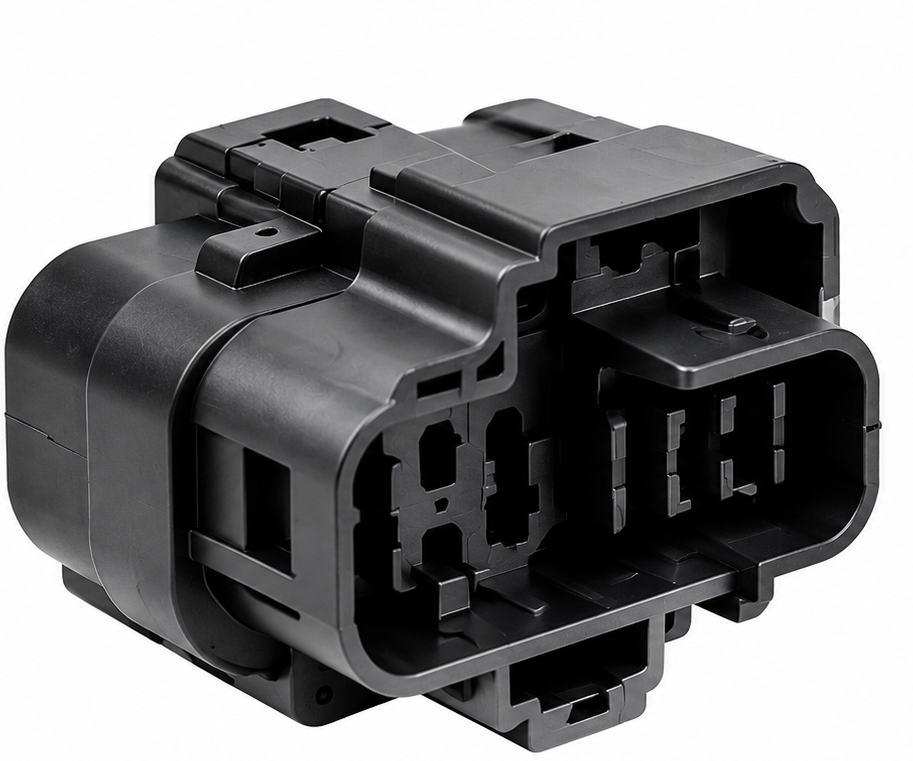
Collapsible lifters help release complex undercuts in injection molds. Some plastic parts have deep hooks, grooves, or snap-fit features. These shapes can make the parts hard to remove from a mold. Standard lifters may not have enough space to move. In such cases, collapsible lifters can offer a better way to release the part.
However, not every undercut needs a special mold part. The best choice depends on the part shape, mold space, and production needs.
In this guide, we explain how collapsible lifters work, when to use them, and how to avoid common mold problems.
What Are Collapsible Lifters?
Collapsible lifters are moving parts inside an injection mold. They help release undercuts that are hard to remove with normal mold actions.
A standard lifter moves at an angle during ejection. In contrast, a collapsible lifter uses a special action to move part of its forming surface inward.
This movement creates space between the steel and the plastic part. As a result, the part can leave the mold with less risk of damage.
Collapsible lifters may help mold parts with:
- Deep internal hooks
- Complex snap-fit features
- Internal locking tabs
- Narrow grooves
- Limited space for normal lifters
However, each design works in a different way. The mold maker must choose a structure that fits the part.
How Do Collapsible Lifters Work?
Collapsible lifters use a set movement to clear an undercut before the part leaves the mold.
The exact action depends on the mold design. Still, most systems follow a similar process.
Step 1: Mold Closing
The mold closes, and the lifter moves into its working position.
At this point, the lifter forms the required undercut. It must stay firm during injection.
Step 2: Plastic Injection
Hot plastic flows into the mold cavity.
The plastic fills the space around the lifter. Then, it cools and becomes solid.
Step 3: Mold Opening
Once the part is cool enough, the mold opens.
Next, the ejection system starts its planned movement.
Step 4: Lifter Collapse
The lifter moves inward to clear the undercut.
Some designs also use an angled or upward movement. This helps the steel move away from the plastic feature.
As a result, the part has enough space to leave the mold.
Step 5: Part Ejection
After the undercut is clear, the ejector system pushes the part out.
Finally, the lifter returns to its starting position before the next cycle.
Design tip: The lifter must clear the undercut before the part moves past it. If not, the plastic may scratch, bend, or break.
When Should You Use Collapsible Lifters?
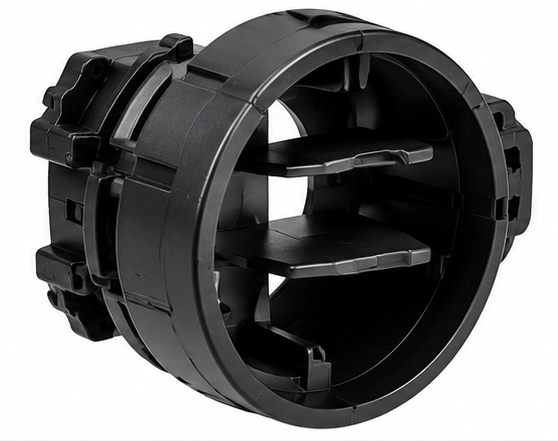
Collapsible lifters are useful when normal mold parts cannot release an undercut safely.
However, engineers should first check if a simpler mold design can work.
Deep Internal Undercuts
Some plastic parts have deep hooks or locking grooves.
For example, a plastic connector may have a hook inside a narrow opening.
A standard lifter may not have enough room to move away from this hook. In this case, a collapsible lifter may offer a better release path.
Limited Mold Space
Many plastic parts have ribs, bosses, and other small features close together.
These features can leave little space for mold movement.
A side slider may need too much room. Also, a standard lifter may hit nearby steel parts.
A compact collapsible lifter may solve this problem. However, the mold must still have enough space for the moving parts.
Complex Snap-Fit Features
Snap-fit joints are common in plastic products.
Some shallow hooks can bend during ejection. However, deep or stiff hooks may break if the mold pulls against them.
Collapsible lifters can help by moving away from the hook before ejection.
This can lower the risk of part damage.
Parts That Cannot Be Changed
Sometimes, the product design cannot change.
For example, a locking hook may be needed for assembly. A groove may also need a fixed shape.
In these cases, the mold must handle the undercut.
A collapsible lifter may be one way to do this.
Collapsible Lifters vs. Standard Lifters and Sliders
Different undercuts need different mold actions.
Therefore, it is important to compare the main options before choosing a design.
| Feature | Standard Lifter | Slider | Collapsible Lifter |
|---|---|---|---|
| Movement | Angled | Sideways | Inward or combined |
| Best use | Simple internal hooks | Side undercuts | Complex internal hooks |
| Space needed | Medium | Side space | Depends on design |
| Design difficulty | Medium | Medium | High |
| Tooling cost | Often lower | Varies | Often higher |
| Maintenance | Medium | Medium | More care needed |
A standard lifter is often enough for a simple internal hook.
Meanwhile, a slider works well for a side hole or outer undercut.
Collapsible lifters are useful when these actions cannot clear the feature.
However, some round internal undercuts need a collapsible core instead.
Key Design Tips for Collapsible Lifters
Good collapsible lifter design helps the mold run smoothly. It can also reduce part defects and tool wear.
Here are the main points to check.
Check the Undercut Depth
First, measure the depth of the undercut.
Then, work out how far the lifter must move to clear it.
The release path must also allow for part shrinkage and tool fit.
If the movement is too short, the lifter may damage the part.
Control the Lifter Movement
The lifter must move in the right direction and at the right time.
For example, it must not hit nearby ribs, inserts, or ejector pins.
Therefore, engineers should check the full movement in a 3D mold design.
This helps find possible clashes before steel cutting.
Choose the Right Mold Steel
Collapsible lifters have moving surfaces that rub against other steel parts.
Over time, this contact can cause wear.
Therefore, choose steel with good wear strength and toughness.
Heat treatment may also help some parts last longer.
However, the steel grade should match the mold life and working load.
Avoid Sharp Corners
Sharp corners can create weak points in both steel and plastic.
As a result, cracks or wear may appear.
Where possible, add small radii to reduce stress.
This can also make the part easier to release.
Make Maintenance Easy
Collapsible lifters often have more moving parts than standard lifters.
Therefore, they need regular checks.
The mold should allow easy access for cleaning, repair, and part changes.
This can reduce downtime during production.
Check Plastic Shrinkage
Plastic parts shrink as they cool.
Some parts may grip the lifter tightly after cooling.
As a result, more force may be needed to release the part.
Therefore, check the material, wall thickness, and cooling design.
Common Collapsible Lifter Problems and Solutions
Even a good mold may face problems during trials.
However, many issues can be found and fixed early.
Lifter Sticking
A lifter may stick if its guide surfaces are worn or poorly aligned.
Dirt and high friction can also cause this problem.
How to fix it:
- Check the guide surfaces.
- Clean the moving parts.
- Review the working clearance.
- Check the lifter movement.
- Use suitable lubrication where needed.
Scratches on Plastic Parts
Scratches may appear if the lifter rubs against the part during ejection.
This can happen when the release travel is too short.
How to fix it:
- Check the release distance.
- Inspect the steel surface.
- Review the movement timing.
- Check part shrinkage.
Broken Undercut Features
A deep hook may break if the lifter does not clear it fully.
Thin plastic walls can also make the problem worse.
How to fix it:
- Check the undercut depth.
- Increase release travel if space allows.
- Review the ejection sequence.
- Improve the plastic feature design if possible.
Flash Around Moving Parts
Moving mold parts need small gaps to work.
However, large gaps can let hot plastic enter.
As a result, flash may form around the lifter.
How to fix it:
- Check the fit between steel parts.
- Inspect worn contact surfaces.
- Improve support for moving parts.
- Review local injection pressure.
What Plastic Parts Use Collapsible Lifters?
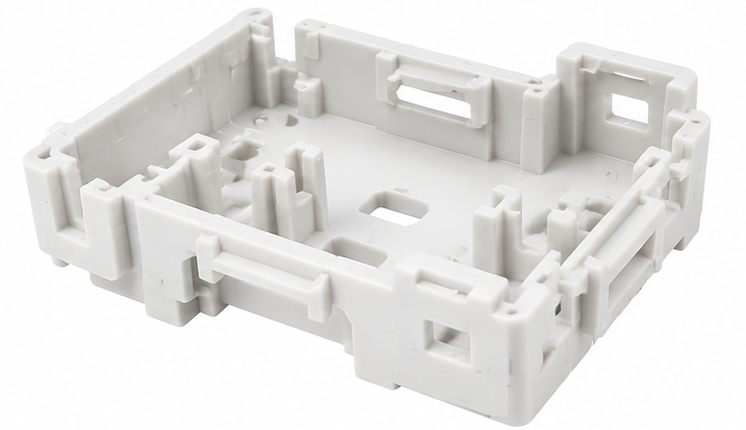
Collapsible lifters can help make many plastic products with hard-to-release features.
However, the choice depends on the part design.
Automotive Plastic Parts
Automotive parts often have internal clips, hooks, and locking tabs.
Common examples include:
- Interior trim parts
- Automotive connectors
- Plastic brackets
- Air vent parts
- Electrical mounting parts
Some of these parts have very little space for normal mold actions.
Therefore, a collapsible lifter may help release the internal features.
Electronic Plastic Parts
Electronic products often use small plastic parts with locking features.
For example, a connector may have a hook inside a narrow opening.
A collapsible lifter may help form and release this hook.
Consumer Plastic Products
Many consumer products use snap-fit joints.
Examples include:
- Plastic closures
- Household accessories
- Small plastic fasteners
- Reusable containers
- Plastic locking parts
However, simple snap-fits may not need special mold parts.
Therefore, the design should be checked before choosing a complex lifter.
Industrial Plastic Parts
Industrial plastic parts may have internal grooves or locking hooks.
Some of these features cannot release in a straight direction.
In such cases, collapsible lifters may offer a useful solution.
How to Reduce Collapsible Lifter Tooling Costs
Collapsible lifters can raise mold costs.
They need more design time, steel parts, and fitting work.
However, good planning can help control these costs.
Improve the Part Design
First, check if the undercut can be made smaller.
For example, a small change to a hook may allow a standard lifter to work.
This can make the mold simpler and lower its cost.
Choose a Simple Mold Action
Not every undercut needs a collapsible lifter.
Therefore, compare standard lifters, sliders, and collapsible cores.
Choose the simplest method that can release the part safely.
Complete a DFM Review
A DFM review helps find mold risks before production.
At Fentor Mold, our team checks part shape, undercut depth, and mold movement during the early design stage.
This helps customers avoid costly mold changes later.
Our injection mold manufacturing services support custom tooling for plastic parts with complex shapes.
Check Production Volume
A complex lifter may be a good choice for a high-volume project.
However, it may cost too much for a small production run.
Therefore, compare tooling cost with the expected number of parts.
How to Test Collapsible Lifters Before Production
Mold trials help confirm that collapsible lifters work as planned.
During T0 and T1 trials, engineers should check:
- Smooth lifter movement
- Full undercut release
- Part scratches or cracks
- Flash around moving parts
- Lifter return position
- Wear after repeated cycles
- Final part dimensions
Also, check how the mold runs over many cycles.
A lifter may work well at first but show wear or sticking later.
For projects that need finished plastic parts, Fentor Mold also provides injection molding production services.
This helps customers move from mold trials to stable production.
FAQ About Collapsible Lifters
What Are Collapsible Lifters Used For?
Collapsible lifters help release complex internal undercuts in injection molds.
They move away from the molded feature before part ejection.
Are Collapsible Lifters the Same as Collapsible Cores?
No. Collapsible cores often use moving segments to release round internal features.
Collapsible lifters usually handle smaller or more local undercuts.
However, some mold makers may use these terms in different ways.
Are Collapsible Lifters Expensive?
They often cost more than standard lifters.
This is because they need more moving parts, design work, and careful fitting.
Can Collapsible Lifters Work in High-Volume Molds?
Yes. A well-designed system can support high-volume production.
However, the mold must have good guides, strong parts, and a clear maintenance plan.
Can Every Undercut Use a Collapsible Lifter?
No. Some undercuts need sliders, standard lifters, or collapsible cores.
In other cases, a small change to the plastic part may be the best choice.
Conclusion
Collapsible lifters can help mold complex internal undercuts that are hard to release with standard mold actions.
They create space between the steel and plastic part before ejection. As a result, they can reduce scratches, cracks, and other part damage.
However, they also add cost and moving parts to the mold.
Therefore, engineers should check the undercut shape, mold space, and production needs before choosing this design.
If your plastic part has complex internal undercuts, Fentor Mold can help review the design and suggest a practical mold solution.
Contact our engineering team to discuss your project and request a quotation.