
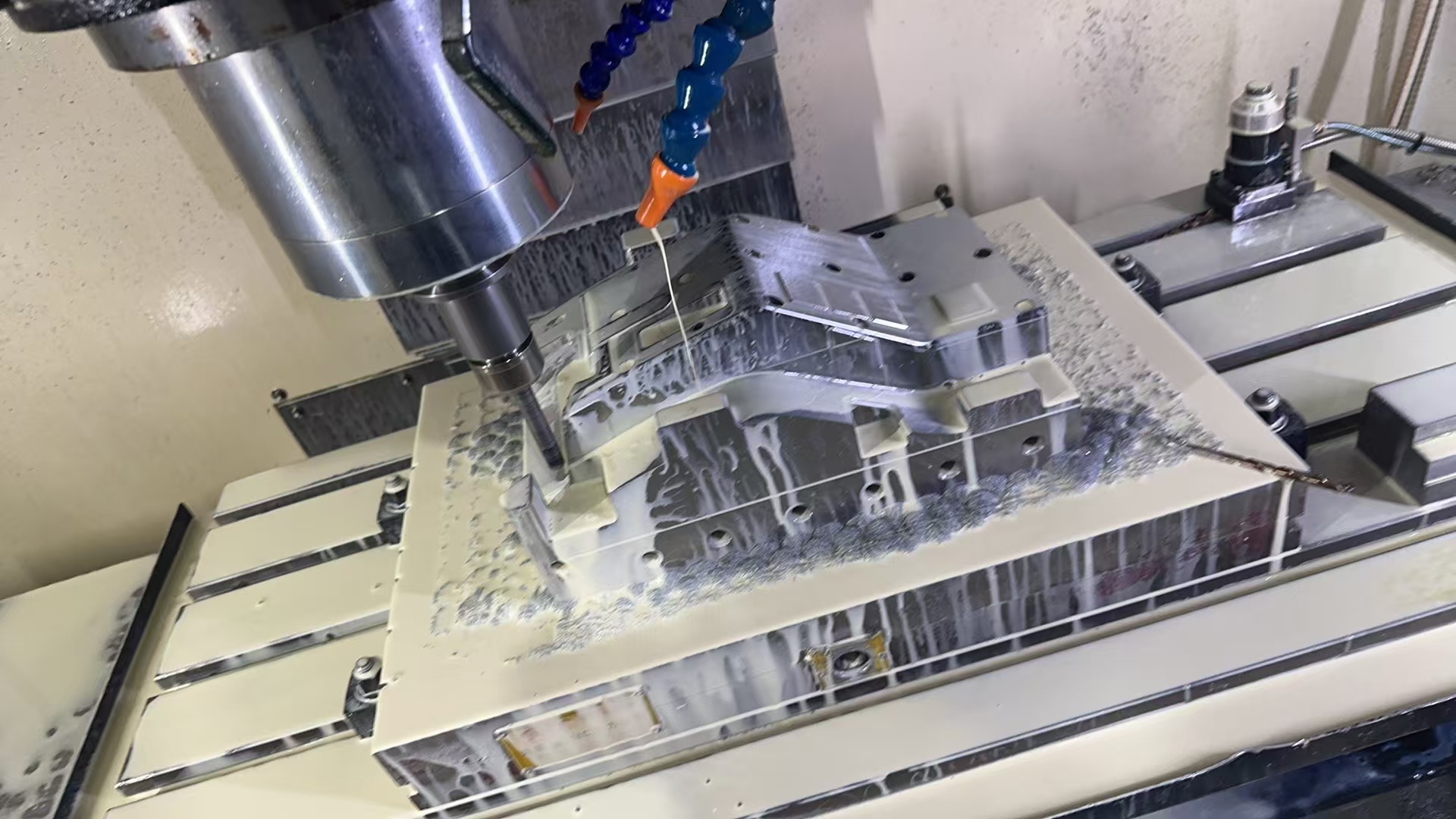
The core and cavity in injection molding are the two main mold areas that form a plastic part. In simple terms, the cavity usually forms the outside surface, while the core usually forms the inside features.
However, real mold design is more complex than this basic definition. Parting line, cooling, ejection, draft, alignment, and shrinkage all affect how the core and cavity work.
Therefore, understanding the core and cavity in injection molding helps buyers review DFM reports, mold drawings, tooling quotations, and trial results more clearly.
What Is the Core in Injection Molding?
The core usually forms the internal shape of the plastic part.
For example, it may form:
- Inner walls
- Bosses
- Ribs
- Holes
- Deep pockets
- Internal threads
- Internal undercuts
Because plastic shrinks during cooling, the molded part often grips the core.
As a result, the part usually stays on the core side when the mold opens.
For this reason, the ejector system is often installed on the core side.
What Is the Cavity in Injection Molding?
The cavity usually forms the outside surface of the molded part.
This side often has higher appearance requirements.
For example, the cavity may need:
- High polishing
- Texture
- Fine EDM finish
- Laser texture
- Gloss control
Therefore, cavity quality has a strong effect on the final appearance of the part.
In many molds, the cavity is on the fixed half, while the core is on the moving half.
However, some products require a different layout.
Core and Cavity in Injection Molding: Main Difference
The basic difference is easy to understand.
| Item | Core | Cavity |
|---|---|---|
| Main function | Forms internal features | Forms external features |
| Typical mold side | Moving half | Fixed half |
| Part retention | Part often stays here | Part usually releases |
| Ejection | Usually on this side | Usually no ejectors |
| Common features | Bosses, ribs, holes | Outer walls, logos, textures |
| Surface focus | Functional surface | Often cosmetic surface |
| Cooling | Very important | Very important |
However, this is not a fixed rule for every mold.
Some parts need sliders, lifters, inserts, or reverse structures.
Therefore, the final core and cavity layout depends on the actual product design.
How Core and Cavity in Injection Molding Form the Part
When the mold closes, the core and cavity create the space that becomes the plastic part.
The basic process is:
- The mold closes.
- Plastic enters the cavity.
- The cavity fills.
- Packing pressure reduces shrinkage.
- The plastic cools.
- The mold opens.
- The part stays on the core side.
- The ejector system removes the part.
Because both mold halves define the final shape, machining accuracy is critical.
Even a small error can affect:
- Wall thickness
- Part dimensions
- Flatness
- Assembly
- Parting line
- Flash
- Surface quality
Why Does the Part Stay on the Core Side?
Plastic contracts as it cools.
Therefore, the part often shrinks around the core.
This is common with:
- Deep housings
- Caps
- Containers
- Parts with ribs
- Parts with bosses
Because the part grips the core, the mold designer usually places the ejectors on that side.
However, the part must not grip too tightly.
Otherwise, ejection may cause:
- Ejector marks
- Stress whitening
- Deformation
- Cracks
- Drag marks
As a result, draft angle becomes very important.
Draft Angle for Core and Cavity in Injection Molding
Draft helps the part release from the mold.
Without enough draft, the plastic may stick to the core or scrape against the cavity.
The required draft depends on:
- Plastic material
- Surface texture
- Part depth
- Surface finish
- Product shape
- Ejection method
For example, textured surfaces usually need more draft than polished surfaces.
Deep parts may also need extra draft.
Therefore, draft should be reviewed during DFM before mold manufacturing begins.
At Fentor Mold, we review draft direction, parting line, core structure, and cavity structure before steel cutting.
You can learn more about our injection mold design and manufacturing.
Core and Cavity in Injection Molding Affect Wall Thickness
Wall thickness comes from the distance between the core surface and cavity surface.
For example, if the gap is 2 mm, the plastic wall will be about 2 mm thick.
Therefore, core and cavity accuracy directly affects wall thickness.
Possible problems include:
- One side too thin
- One side too thick
- Uneven shrinkage
- Warpage
- Sink marks
- Assembly problems
For precision parts, accurate machining and mold alignment are especially important.
Core and Cavity Alignment Is Critical
The core and cavity must return to the correct position every cycle.
Poor alignment can cause:
- Flash
- Core shift
- Uneven wall thickness
- Tool wear
- Part mismatch
- Shut-off damage
To improve alignment, mold makers may use:
- Leader pins
- Guide bushes
- Taper locks
- Side locks
- Interlocks
- Precision shut-offs
For large or high-precision molds, guide pins alone may not be enough.
Therefore, extra positioning systems may be required.
What Is Core Shift?
Core shift happens when the core moves slightly during injection.
As a result, one side of the part becomes thicker and the other side becomes thinner.
This often happens with:
- Tall cores
- Thin-wall parts
- Deep cylindrical parts
- Long core pins
- Unbalanced filling pressure
For example, if melt pressure pushes harder on one side, a long core may bend slightly.
To reduce core shift, engineers can improve:
- Core support
- Gate position
- Mold stiffness
- Filling balance
- Steel thickness
- Core locking
Therefore, core design must consider both shape and strength.
Core and Cavity Steel Selection
The core and cavity may use the same steel or different steels.
The choice depends on:
- Mold life
- Plastic material
- Surface finish
- Wear resistance
- Corrosion resistance
- Production volume
For example, glass-fiber-filled plastics can wear mold steel faster.
Therefore, harder steel may be needed.
For transparent or high-gloss parts, polishing performance becomes more important.
As a result, steel should match the real production requirement.
Core Inserts and Cavity Inserts
Many molds use separate core and cavity inserts instead of one solid block.
This design offers several benefits.
For example, inserts can make:
- Machining easier
- Repairs easier
- Replacement easier
- Cooling easier
- Steel selection more flexible
In addition, a high-wear area can use harder steel without making the whole mold from expensive material.
Therefore, inserts can reduce both tooling cost and maintenance cost.
Cooling the Core and Cavity in Injection Molding
Cooling is important on both sides of the mold.
However, the core is often more difficult to cool.
It may contain:
- Deep shapes
- Ejector pins
- Lifters
- Inserts
- Limited water-channel space
Poor cooling can cause:
- Long cycle time
- Warpage
- Uneven shrinkage
- Hot spots
- Sink marks
The cavity also needs stable cooling to control dimensions and appearance.
Therefore, cooling should be designed together with the core and cavity structure.
Core and Cavity Surface Finish
The core and cavity do not always need the same finish.
The cavity often controls the visible surface.
Therefore, it may require:
- Mirror polishing
- Texture
- Fine EDM
- High gloss
The core side may focus more on function.
However, internal surfaces can also need polishing if they affect:
- Ejection
- Sealing
- Assembly
- Airflow
A rough core surface can increase release resistance.
Therefore, surface finish should match the function of each mold area.
Parting Line and Core and Cavity in Injection Molding
The parting line is where the core side and cavity side meet.
Its position affects:
- Mold opening
- Flash
- Appearance
- Ejection
- Slider design
- Shut-off design
For cosmetic parts, the parting line should stay away from important visible areas when possible.
However, appearance is not the only concern.
The mold must also open and eject safely.
Therefore, parting line design is usually a balance between appearance and mold structure.
Core, Cavity, Slider, and Lifter
The core and cavity form the main shape of the part.
However, some features cannot release in the normal mold-opening direction.
In that case, the mold may also need:
- Sliders
- Lifters
- Core pulls
- Collapsible cores
For example, a side hole may require a slider.
An internal undercut may require a lifter.
Therefore, a complex mold may include one main core, one main cavity, and several moving inserts.
Common Core and Cavity in Injection Molding Problems
During mold trials, several defects may be linked to core and cavity design.
| Problem | Possible Cause |
|---|---|
| Flash | Poor shut-off or alignment |
| Uneven wall thickness | Core shift |
| Difficult ejection | Poor draft |
| Sink marks | Poor cooling |
| Warpage | Uneven cooling |
| Part mismatch | Poor mold alignment |
| Scratches | Rough surface or low draft |
| Size variation | Unstable cooling |
Therefore, buyers should not only inspect the plastic part.
In many cases, the real cause comes from the mold structure.
What Buyers Should Confirm Before Mold Manufacturing
Before steel cutting starts, buyers should confirm:
- Core side
- Cavity side
- Parting line
- Gate position
- Ejection direction
- Slider requirements
- Lifter requirements
- Cosmetic surfaces
- Draft angles
- Mold steel
- Cooling layout
- Critical dimensions
A clear DFM report makes these points easier to review.
In addition, it can reduce changes after machining starts.
For projects that require both tooling and production, you can review our injection molding production service.
Core and Cavity in Injection Molding: Which Is More Important?
Both are equally important.
The cavity often controls the outside appearance.
Meanwhile, the core often controls internal dimensions, ejection, ribs, bosses, and functional features.
Therefore, a problem on either side can affect the final part.
A good mold should provide:
- Accurate alignment
- Stable cooling
- Good filling
- Reliable ejection
- Enough strength
- Easy maintenance
So, the goal is not to decide which side is more important.
Instead, the core and cavity should work as one complete system.
Final Thoughts
The core and cavity in injection molding work together to create the final plastic part.
The cavity usually forms the outside surface, while the core usually forms the inside features. In addition, the part often stays on the core because of molding shrinkage.
However, good mold design depends on more than this basic difference.
Core strength, cavity finish, cooling, alignment, draft, parting line, and ejection all affect quality.
Therefore, the core and cavity in injection molding should be reviewed during DFM and mold design, not only after the first trial.
Fentor Mold supports custom mold design, mold manufacturing, trial, modification, and plastic part production for projects that need stable tooling and reliable production.