
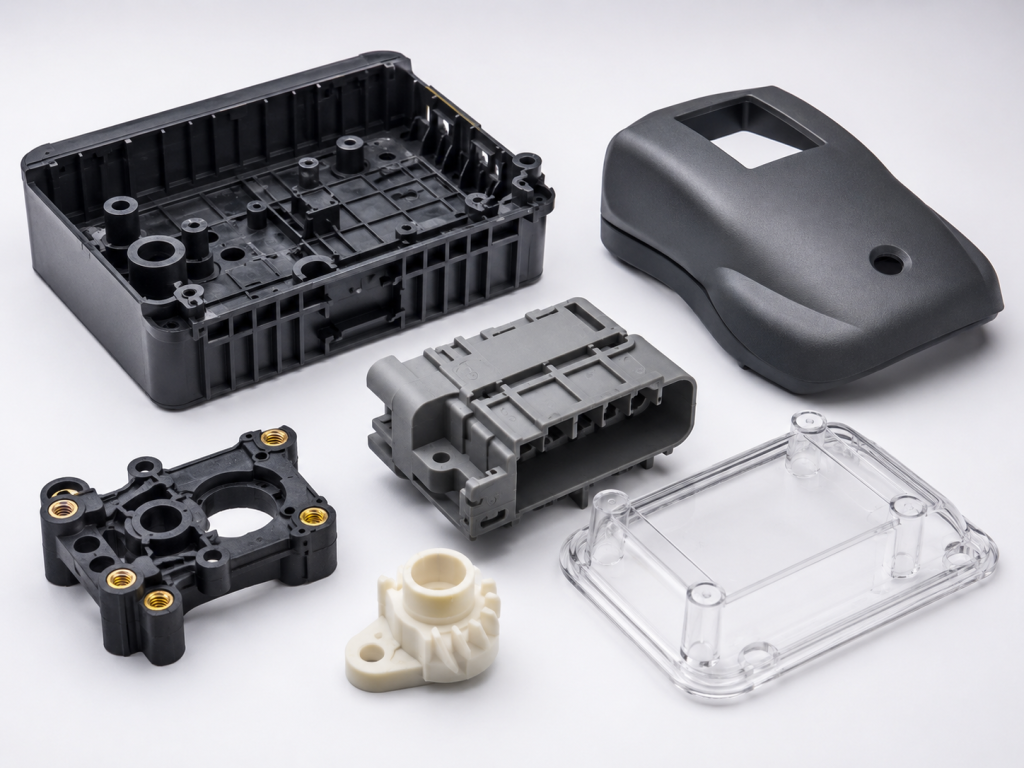
Custom-made plastic parts can vary enormously in price and quality even when two suppliers appear to be quoting the same drawing.
One supplier may offer a lower tooling price but use a simpler mold structure. Another may recommend a better material, additional machining, tighter inspection, or a different production process.
The final difference may not show up clearly in the quotation.
It often appears later through:
- Mold modifications
- Dimensional problems
- Surface defects
- Higher scrap
- Longer cycle time
- Rework
- Production instability
- Shorter mold life
For buyers, the real question is not simply how much a plastic part costs.
It is what is driving that cost, and whether the manufacturing plan can deliver the required quality repeatedly.
Understanding these factors before production makes it much easier to compare suppliers and avoid paying for either too much manufacturing or too little.
Product Design Has a Direct Effect on Custom-Made Plastic Parts
The design itself is one of the biggest cost drivers.
A plastic component may look simple in CAD but still require a complicated mold or machining process.
Features that can increase manufacturing difficulty include:
- Deep ribs
- Undercuts
- Side holes
- Thin walls
- Large projected area
- Tight shutoffs
- Complex sliders
- Deep bosses
- Fine textures
- Tight cosmetic requirements
For injection molded products, every undercut may require additional tooling structure.
A simple side hole might require a slider.
Several undercuts in different directions can turn a relatively simple mold into a much more expensive tool.
This is why DFM review should happen before mold manufacturing starts.
Small product changes made early can sometimes remove a slider, reduce machining time, improve ejection, or make the gate position easier to manage.
Our Injection Mold Design Guide explains how part geometry, gate location, cooling, ejection, and parting lines influence the final mold structure.
Material Choice Can Change Both Cost and Quality
Not all plastics cost the same, and material selection also affects how difficult the part is to manufacture.
Common materials may include:
- PP
- ABS
- PC
- POM
- PA
- TPE
- PMMA
- PEEK
Even within one material family, different grades can have very different prices.
For example, a general-purpose ABS grade and a flame-retardant ABS grade are not equivalent.
The same applies to:
- Glass-filled materials
- UV-resistant grades
- High-temperature materials
- Medical grades
- Food-contact materials
- Branded engineering plastics
The material also affects the mold and processing conditions.
Glass-filled resin may increase tooling wear.
High-temperature materials may require different mold steel, heating, or machine conditions.
Transparent materials can require better polishing and tighter control of contamination.
For custom-made plastic parts, material should therefore be selected based on the actual function rather than simply choosing the cheapest resin that appears similar.
Tolerances Can Increase Cost Faster Than Expected
Tight tolerances are another major cost factor.
A drawing may contain dozens of dimensions, but not all of them need to be tightly controlled.
The most important dimensions usually affect:
- Assembly
- Sealing
- Bearings
- Snap fits
- Hole positions
- Connector alignment
- Moving components
- Functional interfaces
If every dimension is assigned a very tight tolerance, the project becomes more expensive to manufacture and inspect.
For molded parts, dimensional accuracy is influenced by:
- Material shrinkage
- Gate position
- Mold temperature
- Packing pressure
- Cooling
- Part geometry
- Fiber orientation
For machined plastics, temperature, clamping pressure, moisture absorption, and internal stress can also affect dimensions.
The better approach is to identify the genuinely critical dimensions first.
Our guide to Injection Molding Tolerances explains why realistic tolerance selection is important for controlling both quality and manufacturing cost.
The Manufacturing Process Matters
Not every plastic component should be injection molded.
Depending on quantity, geometry, and tolerance, custom-made plastic parts may be produced by:
- Injection molding
- CNC machining
- Prototype molding
- Silicone molding
- 3D printing
- Secondary machining after molding
For a very small quantity, building a production mold may not make economic sense.
CNC machining or prototype tooling may be cheaper.
As volume increases, injection molding becomes more attractive because the tooling cost is distributed across more parts.
This is why buyers should always provide expected quantity when requesting a quotation.
Without quantity information, suppliers may recommend completely different manufacturing methods.
For projects requiring CNC machining or supporting manufacturing processes, our Components Manufacturing service covers custom component production in addition to injection molding.
Mold Design Strongly Affects the Cost of Custom-Made Plastic Parts
Once injection molding is selected, mold design becomes one of the biggest influences on both part cost and long-term quality.
Important tooling decisions include:
- Number of cavities
- Mold steel
- Runner system
- Gate type
- Slider structure
- Lifters
- Cooling layout
- Replaceable inserts
- Hot runner or cold runner
- Expected mold life
A one-cavity cold-runner mold may be suitable for a small project.
For higher volume, a multi-cavity or hot-runner mold may reduce unit cost.
However, a more complex mold also costs more to manufacture.
The correct solution should match the project.
Overbuilding a mold wastes money.
Underbuilding it can cause wear, maintenance problems, and production instability later.
For new tooling projects, our Injection Mold Manufacturing service covers mold design, machining, fitting, trial, and modification before production.
Surface Finish Can Add Significant Cost
Surface requirements are easy to underestimate.
A functional internal plastic component may only need a normal molded finish.
A visible product may require:
- High-gloss polishing
- Texture
- Painting
- Printing
- Laser marking
- Plating
- Special cosmetic control
High-gloss parts generally require better cavity polishing and cleaner molding conditions.
Textured surfaces may require additional draft.
Painted products require secondary processing.
Each extra step adds cost and also introduces another potential quality risk.
Before ordering custom-made plastic parts, buyers should clearly separate functional surfaces from cosmetic surfaces.
Do not apply premium appearance requirements to surfaces the customer will never see.
Part Size Has More Impact Than Just Material Weight
Large parts cost more for reasons beyond the amount of plastic used.
A larger component may require:
- Larger mold steel
- Larger mold base
- Larger CNC equipment
- Higher clamping force
- Larger injection molding machine
- Longer cooling time
- More handling
- More packaging space
Large flat parts are also more sensitive to warpage.
Cooling and gate design become more important as part size increases.
The mold may need several gates or more complicated temperature control to achieve stable filling.
This is why two components made from the same resin can have completely different tooling and production costs.
Cycle Time Directly Affects Unit Cost
For injection molded custom-made plastic parts, cycle time is one of the most important production cost factors.
The molding cycle usually includes:
- Filling
- Packing
- Cooling
- Mold opening
- Ejection
- Mold closing
Cooling is often the longest stage.
A thick-walled part may need much more cooling time than a thin component.
Poor cooling design can make the cycle even longer.
If a mold runs at 60 seconds instead of 30 seconds, the same machine can produce roughly half as many parts in the same time.
That affects unit cost directly.
Good mold design should therefore consider cooling efficiency from the beginning.
However, reducing cycle time should not come at the expense of quality.
Opening the mold too early can cause:
- Warpage
- Deformation
- Ejector marks
- Dimensional instability
The goal is not simply the fastest possible cycle.
It is a stable cycle that produces acceptable parts consistently.
Gate and Runner Design Affect Material Cost
Cold-runner molds generate additional runner material during every shot.
That material can represent a meaningful percentage of the total shot weight, particularly for small products.
Depending on the resin, runner material may be:
- Recycled
- Reground
- Discarded
For expensive engineering plastics, runner waste can significantly affect part cost.
A hot-runner system can reduce this waste, but it increases tooling investment and maintenance complexity.
The decision should therefore consider:
- Resin cost
- Production volume
- Part weight
- Runner weight
- Mold complexity
There is no automatic answer that hot runner is always better.
For some low-volume projects, a simple cold-runner mold is still the most economical choice.
Quality Depends on More Than the First Good Sample
One good T1 sample does not prove that a mold is ready for production.
A mold trial can produce several good parts even when the tooling still has small problems.
These may include:
- Poor venting
- Slider rubbing
- Water leakage
- Insert movement
- Ejector wear
- Gate damage
- Positioning problems
- Unstable cooling
During long-term production, these small issues can become larger.
For example, insufficient venting may create only a minor burn mark during the first trial.
After residue accumulates around the vent, the defect may become much worse.
A moving component that already rubs during trial may also wear quickly after thousands of cycles.
For this reason, buyers should evaluate the mold itself as well as the molded samples.
Inspection Requirements Also Affect Cost
More inspection means more labor and equipment.
But inspection should be focused on what actually matters.
Typical checks may include:
- Critical dimensions
- Appearance
- Color
- Assembly
- Flatness
- Hole position
- Insert position
- Functional testing
Simple projects may only require basic dimensional inspection.
More critical components may require:
- CMM measurement
- First article inspection
- Gauge inspection
- Functional testing
- Leak testing
- More detailed reports
The inspection requirement should be defined before quotation.
If a supplier quotes basic inspection and later the buyer requests a full dimensional report on every batch, the final production cost will change.
Secondary Operations Can Change the Final Cost
Some custom-made plastic parts are not finished when they leave the molding machine.
Additional processes may include:
- Painting
- Screen printing
- Pad printing
- Laser marking
- Ultrasonic welding
- Heat staking
- Metal insert installation
- Assembly
- CNC machining
Each secondary operation adds:
- Labor
- Equipment
- Handling
- Quality control
- Scrap risk
A product that appears cheap to mold can become expensive after several secondary processes.
This is why buyers should compare the complete finished-part cost rather than just the molding price.
Packaging Can Matter More Than Expected
Packaging is another cost that is often ignored during early quotation.
Simple internal parts may be packed together in bulk.
Cosmetic parts may require:
- Protective film
- Individual bags
- Trays
- Dividers
- Custom cartons
Large or flexible components may need support to prevent deformation during shipping.
Poor packaging can damage parts that were perfectly acceptable when they left production.
For visible surfaces, scratching during transportation can create more rejects than the molding process itself.
Packaging requirements should therefore be included in the RFQ.
Order Quantity Changes the Economics
The same part can have a very different unit cost depending on order quantity.
Small orders may carry higher cost because of:
- Machine setup
- Material preparation
- Mold installation
- First-piece inspection
- Packaging
- Production changeover
As quantity increases, these fixed costs are distributed across more parts.
However, high volume can justify a more expensive mold.
A larger initial tooling investment may reduce long-term unit cost through:
- More cavities
- Faster cycle
- Automatic degating
- Hot runner
- Automation
When requesting custom-made plastic parts, buyers should therefore provide both the first order quantity and expected annual demand.
That helps the supplier recommend a production method that makes sense beyond the first purchase order.
Supplier Communication Has a Direct Effect on Quality
Many production problems are not caused by machining or molding.
They are caused by unclear information.
Common examples include:
- Wrong drawing revision
- Material misunderstandings
- Unconfirmed tolerance changes
- Incorrect color
- Missing surface requirements
- Outdated CAD files
A supplier should keep the project data organized.
Before tooling begins, confirm:
- Final 3D file
- Final 2D drawing
- Material
- Color
- Surface finish
- Quantity
- Critical dimensions
- Assembly requirements
When the product changes, both the drawing and CAD data should be updated together.
Poor revision control can create expensive mold modifications that should never have been necessary.
What Really Improves Custom-Made Plastic Parts Quality?
Good quality usually comes from controlling several basic things consistently rather than adding complicated inspection after defects appear.
Before production:
- Confirm the material.
- Review the design.
- Identify critical dimensions.
- Choose the correct manufacturing process.
- Define cosmetic requirements.
- Confirm annual quantity.
During tooling:
- Review gate location.
- Control cooling.
- Design reliable ejection.
- Check moving components.
- Confirm mold steel and mold life.
During T1:
- Inspect the 2D drawing dimensions.
- Check appearance.
- Test assembly.
- Review mold movement.
- Check leaks, rubbing, venting, and positioning.
- Correct the mold rather than hiding problems with extreme machine settings.
During production:
- Maintain stable process conditions.
- Inspect critical characteristics.
- Maintain the mold.
- Control material and drawing revisions.
- Use appropriate packaging.
This approach usually produces better results than relying entirely on final inspection.
How to Balance Cost and Quality
The cheapest part is not always the lowest-cost solution.
At the same time, the most expensive tooling specification is not automatically better.
The goal is to match the manufacturing plan to the actual product requirement.
A simple internal bracket does not need the same cosmetic standards as a visible housing.
A prototype does not need the same mold life as a long-term production component.
A low-volume part may not justify automation.
A high-volume program may benefit from a more expensive mold if it reduces cycle time and labor.
When comparing suppliers, ask what each cost is paying for.
That makes it much easier to decide where additional investment improves the product and where it simply adds unnecessary complexity.
Final Thoughts
The cost and quality of custom-made plastic parts are influenced by much more than plastic material and machine time.
Product design, tolerances, material grade, mold structure, surface requirements, cycle time, inspection, secondary operations, packaging, and production volume all affect the final result.
Most unnecessary cost enters a project when requirements are unclear or when manufacturing decisions are made too late.
The best approach is to define the important requirements before production begins.
Identify which dimensions really matter, choose a material that matches the application, select the right production method, and make sure the tooling specification matches the expected volume.
Then use mold trials and inspection to confirm both the part quality and the stability of the manufacturing process.
When those decisions are made early, custom-made plastic parts can achieve a better balance between cost, quality, and long-term production reliability.