
Key Takeaways
- EDM machining for mold components is a critical process for manufacturing complex injection mold parts with high precision.
- Electrical Discharge Machining can produce sharp corners, deep cavities, and intricate features that are difficult to achieve with traditional cutting methods.
- EDM improves mold component quality by enhancing dimensional accuracy, surface finish, and overall mold performance.
- Choosing an experienced EDM machining supplier helps reduce tooling risks, improve production stability, and extend mold life.
What Is EDM Machining for Mold Components?
EDM machining for mold components is a precision manufacturing process used to produce complex injection mold parts with high accuracy and excellent surface quality.
Unlike traditional machining methods, EDM does not rely on direct cutting force. Instead, a tool electrode creates repeated electrical discharges between the electrode and the workpiece. These sparks generate high temperatures that melt and remove small amounts of metal.
For injection mold manufacturing, EDM allows experienced injection mold manufacturers to produce highly detailed components while maintaining strict dimensional tolerances
Common mold materials processed by EDM include:
- P20 tool steel
- H13 hardened steel
- S136 stainless steel
- NAK80 mirror steel
- SKD61 tool steel
EDM allows mold manufacturers to produce highly detailed components while maintaining strict dimensional tolerances.
Why EDM Machining Improves Mold Component Quality
High-quality mold components directly affect injection molding performance, part accuracy, and production efficiency. EDM machining provides several advantages that make it an essential process in precision mold manufacturing.
1. High Precision for Complex Mold Components
One of the biggest advantages of EDM machining is its ability to achieve extremely tight tolerances.
Injection mold components often contain:
- Small ribs
- Deep slots
- Narrow grooves
- Complex cavity details
- Sharp internal corners
These features can be challenging for traditional CNC machining because cutting tools have physical limitations.
EDM can machine complex geometries with excellent accuracy, making it ideal for precision mold inserts, cores, and cavity components.
For high-precision injection molds, EDM machining can typically achieve tolerances around ±0.005mm depending on material, machine capability, and component design.
2. Excellent Surface Finish Quality
Surface finish is an important factor in injection mold performance.
A poor mold surface can cause:
- Visible defects on plastic parts
- Difficult part release
- Additional polishing work
- Longer mold preparation time
EDM machining provides stable surface quality and reduces the amount of secondary finishing required. For applications requiring high cosmetic quality, EDM can create fine surfaces that support better mold polishing results. Understanding different mold finishing options is also important when selecting the right texture and appearance requirements for plastic parts.
Learn more about injection mold surface finishes and SPI standards in our [Injection Mold Surface Finish Guide]..
For applications requiring high cosmetic quality, EDM can create fine surfaces that support better mold polishing results.
3. Machining Hardened Mold Steel Without Cutting Stress
Injection molds are usually manufactured from hardened steel to withstand millions of production cycles.
However, hardened steel is difficult to machine because it causes:
- Faster tool wear
- Higher machining costs
- Lower cutting efficiency
EDM solves this problem because it removes material through electrical discharge instead of mechanical cutting force.
This means manufacturers can machine hardened materials after heat treatment, reducing deformation risks and improving component accuracy.
Common Mold Components Manufactured by EDM Machining
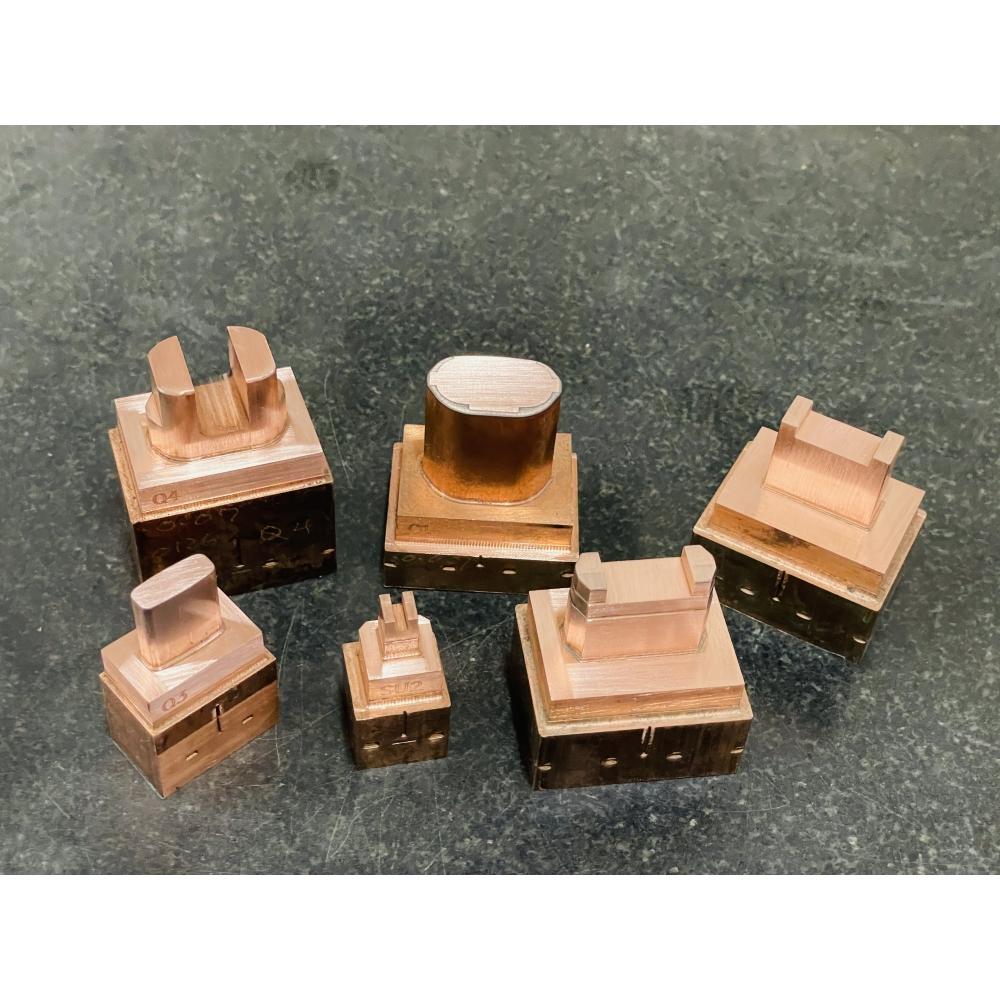
EDM machining is used throughout injection mold manufacturing for many precision components.
Mold Inserts
Mold inserts often contain complex cavity shapes and detailed product features.
EDM allows manufacturers to create:
- Fine textures
- Deep cavities
- Small precision structures
- Complex product details
For custom injection molding projects, high-quality inserts are essential for maintaining consistent part dimensions.
[Internal Link: Injection Mold Components Manufacturing]
Mold Cores and Cavities
The core and cavity are the most important sections of an injection mold.
EDM is commonly used for:
- Deep cavity machining
- Complex surfaces
- Tight tolerance areas
- Difficult-to-reach locations
Accurate EDM machining helps ensure better part matching and reduces flash problems during injection molding.
Sliders and Precision Mold Mechanisms
Many injection molds require sliders, lifters, and other mechanical components to release undercut features.
EDM machining helps create precise contact surfaces and complicated geometries for these mechanisms.
Proper machining accuracy improves:
- Mold movement stability
- Component lifespan
- Production reliability
EDM Machining Process for Mold Components
A professional EDM machining process usually includes several important steps.
1. CAD/CAM Programming
Before machining begins, engineers analyze the 3D mold design and create machining programs.
Important considerations include:
- Component geometry
- Material hardness
- Required tolerance
- Surface finish requirements
Accurate programming helps avoid machining errors and improves efficiency.
2. Electrode Design and Manufacturing
EDM requires specialized electrodes made from materials such as:
- Copper
- Graphite
The electrode shape directly affects the final mold component geometry.
A skilled EDM team must carefully design electrode dimensions because electrode wear can influence machining accuracy.
3. Rough EDM Machining
During rough EDM machining, larger amounts of material are removed quickly.
The goal is:
- Faster material removal
- Creating the basic shape
- Preparing for finishing operations
4. Finish EDM Machining
Finish EDM focuses on achieving final dimensions and surface quality.
Parameters are adjusted to improve:
- Accuracy
- Surface finish
- Component consistency
5. Inspection and Quality Control
After EDM machining, mold components should be inspected using precision measurement equipment.
Common inspection methods include:
- Coordinate Measuring Machine (CMM)
- Height gauge
- Optical measurement systems
Quality inspection ensures every component meets design requirements.
EDM Machining vs CNC Machining for Mold Components
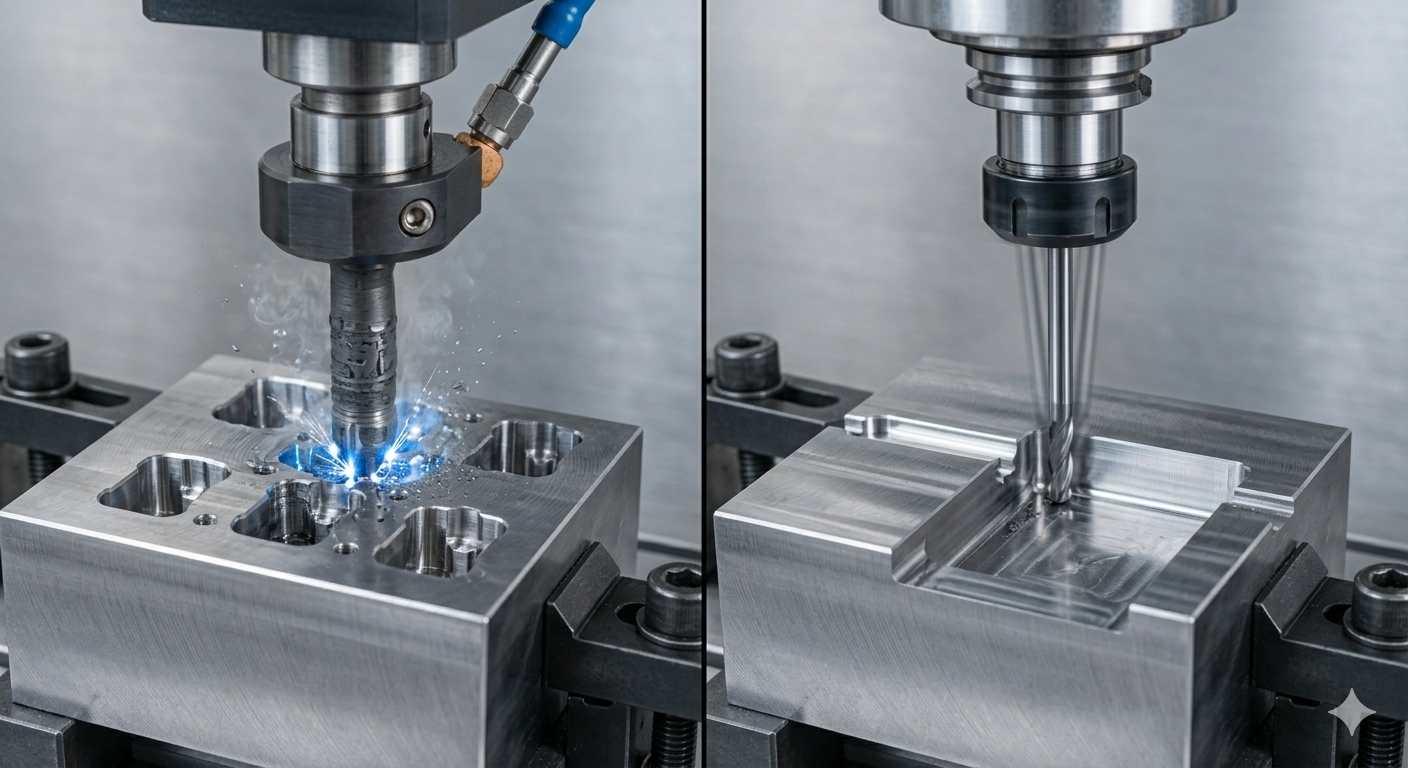
Both EDM and CNC machining are important technologies in mold manufacturing, but they have different advantages.
| Feature | EDM Machining | CNC Machining |
|---|---|---|
| Hardened steel machining | Excellent | Limited |
| Complex cavities | Excellent | Good |
| Sharp internal corners | Excellent | Limited |
| Material removal speed | Slower | Faster |
| Surface finish | Excellent | Good |
| Cutting force | No mechanical force | Cutting force exists |
In many mold projects, EDM and CNC machining are combined to achieve the best results.
CNC machining is often used for rough machining and structural components, while EDM is selected for precision areas requiring complex details.
Factors Affecting EDM Machining Quality
The final quality of EDM machined components depends on several factors.
Mold Steel Selection
Different steels have different EDM characteristics.
Material hardness, conductivity, and heat treatment condition can influence machining performance.
Electrode Quality
Poor electrode design can result in:
- Dimensional errors
- Uneven surfaces
- Longer machining time
Professional electrode manufacturing is essential for stable EDM results.
Machine Accuracy
Advanced EDM equipment provides better:
- Positioning accuracy
- Spark control
- Surface consistency
A supplier with modern EDM machines can better handle complex mold component requirements.
Operator Experience
EDM machining requires technical experience.
Experienced engineers understand how to optimize:
- Voltage settings
- Pulse parameters
- Electrode wear compensation
This directly affects final component quality.
How to Choose an EDM Machining Supplier
Selecting the right EDM supplier is important for injection mold projects.
Before choosing a supplier, consider:
Experience in Injection Mold Manufacturing
A supplier should understand not only EDM machining but also complete mold production requirements.
This knowledge helps engineers make better decisions regarding:
- Mold design
- Component tolerance
- Surface requirements
[Internal Link: Injection Mold Manufacturer]
Quality Control Capability
Reliable suppliers should have inspection systems to verify precision components.
Ask about:
- Measurement equipment
- Inspection reports
- Quality standards
Complete Manufacturing Capability
A supplier offering EDM, CNC machining, mold assembly, and injection molding services can provide better project coordination.
This reduces communication problems and improves delivery reliability.
Benefits of Working With Professional EDM Machining Suppliers
Partnering with an experienced EDM machining supplier provides several advantages:
- Better component accuracy
- Reduced mold repair risks
- Improved production stability
- Shorter development cycles
- Higher mold lifespan
For overseas customers, choosing a manufacturer with both EDM expertise and injection mold experience can significantly reduce project risks.
Frequently Asked Questions About EDM Machining for Mold Components
What materials can EDM machining process?
EDM can machine many conductive materials, including hardened tool steels such as H13, S136, NAK80, and P20 commonly used in injection molds.
Is EDM better than CNC machining for mold components?
EDM is better for complex cavities, hardened steel, and sharp internal features. CNC machining is usually better for faster material removal and larger structural components.
How accurate is EDM machining for mold components?
High-quality EDM machines can achieve very tight tolerances, commonly around ±0.005mm depending on machine capability, material, and design requirements.
Why is EDM important for injection mold manufacturing?
EDM helps manufacturers create precise mold components that improve part quality, reduce defects, and extend mold service life.
Conclusion
EDM machining for mold components plays an important role in modern injection mold manufacturing. Its ability to process hardened steel, create complex geometries, and achieve excellent surface finishes makes it a preferred solution for precision mold parts.
For companies looking for reliable injection mold production, choosing an experienced Injection Mold Manufacturer with advanced EDM machining, CNC machining, and complete mold manufacturing capabilities can help achieve better quality, lower risks, and more stable production results.