Injection mold guide pins and bushings are critical alignment components that directly affect mold accuracy, production stability, and tool life. Choosing the right Injection Mold Guide Pin and Bushing Manufacturer helps mold makers reduce wear problems, improve mold performance, and maintain consistent part quality.
For injection molding companies and tooling suppliers, guide pins and bushings are not simply standard mold accessories. Their material selection, machining accuracy, surface finish, and supplier capability directly influence mold maintenance frequency and production reliability.
A professional Injection Mold Manufacturing supplier should provide precision machining capability, strict quality control, and customized solutions for different mold applications.
This guide explains guide pin and bushing functions, manufacturing processes, material options, cost factors, and how to select a reliable supplier.
Key Takeaways
- Injection mold guide pins and bushings ensure accurate alignment between mold halves during production.
- Precision machining and proper material selection directly affect component life and mold performance.
- High-quality guide components help prevent flash defects, parting line mismatch, and uneven mold wear.
- Outsourcing guide pin and bushing machining allows mold makers to reduce costs and improve production capacity.
- A reliable manufacturer should provide machining capability, inspection equipment, and customization support.
What Are Injection Mold Guide Pins and Bushings?
Injection mold guide pins and bushings are precision alignment components used to ensure accurate positioning between the fixed and moving halves of an injection mold.
The guide pin is the male component that enters the guide bushing during mold closing. Together, they maintain proper alignment between:
- Mold plates
- Core and cavity components
- Inserts
- Slides
- Other precision mold parts
During injection molding production, the mold may open and close thousands or millions of times. Without accurate guide components, repeated movement can create alignment problems and accelerate mold wear.
Common issues caused by poor guide systems include:
- Flash around the parting line
- Incorrect part dimensions
- Damage to core and cavity surfaces
- Shortened mold service life
For complex tooling structures, guide systems work together with other precision components. Learn more about Injection Mold Core and Cavity Machining and how machining accuracy affects mold performance.
Why Are Guide Pins and Bushings Important for Injection Molds?
Improve Mold Alignment Accuracy
The primary function of guide pins and bushings is maintaining accurate positioning when the mold closes.
Proper alignment ensures:
- Core and cavity match correctly
- Parting surfaces remain stable
- Plastic parts maintain dimensional accuracy
For precision injection molds, guide components may require tolerances within ±0.005 mm depending on product requirements and mold structure.
Poor alignment can create additional pressure on mold components and increase maintenance costs.
Reduce Mold Wear and Maintenance Costs
Injection molds used for automotive, electronics, and industrial products often require long production cycles.
High-quality guide pins and bushings help reduce:
- Friction
- Mechanical impact
- Uneven wear
- Alignment errors
This improves mold reliability and reduces unexpected downtime.
Protect Expensive Mold Components
Core, cavity, inserts, and slides are often precision-machined and expensive to replace.
A reliable guide system protects these components by maintaining accurate movement during mold opening and closing.
For example, precision inserts require stable positioning to maintain product dimensions and surface quality. Learn more about Injection Mold Insert Machining.
Manufacturing Process of Injection Mold Guide Pins and Bushings
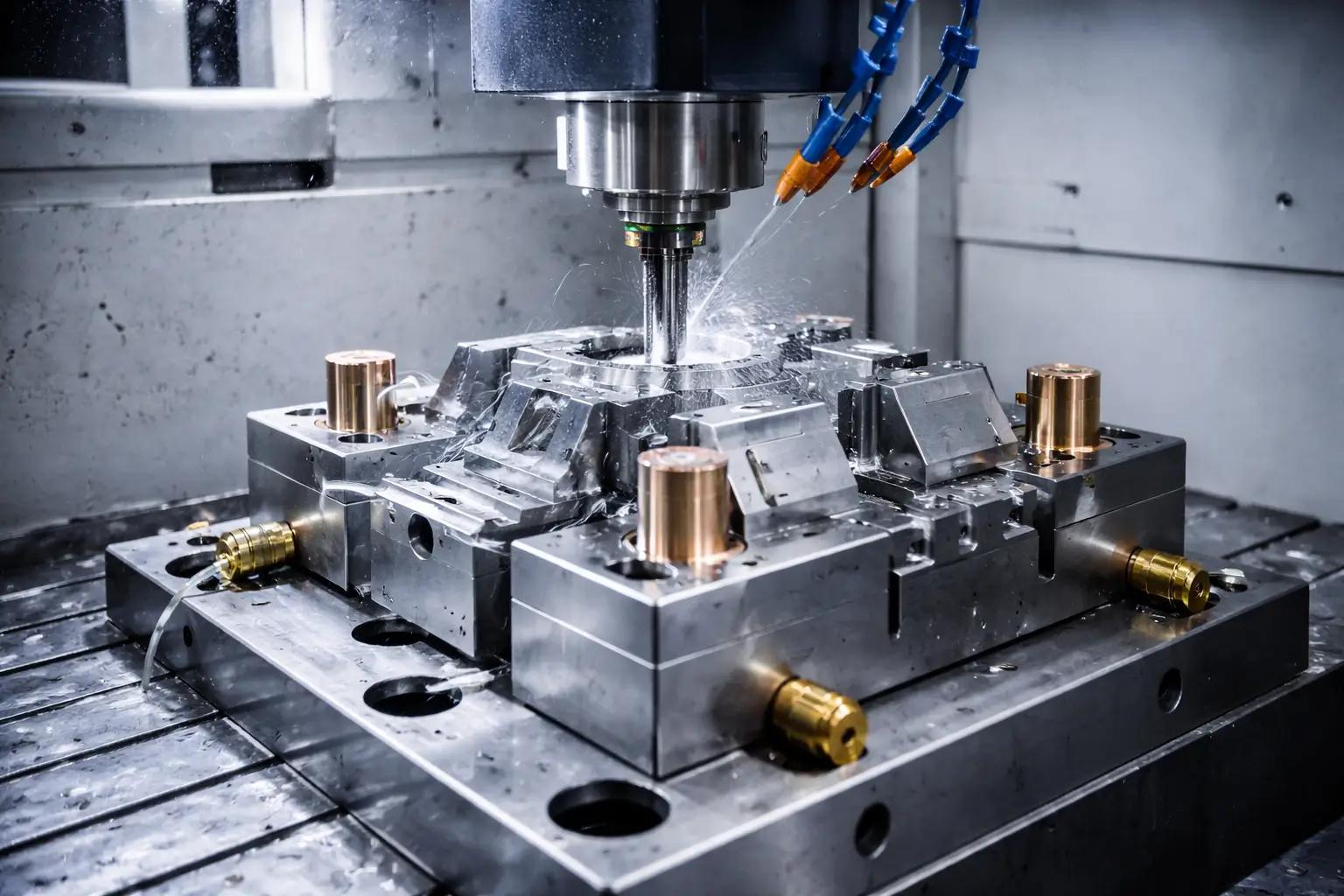
Producing reliable guide components requires several precision machining processes. A professional manufacturer must control every step from raw material preparation to final inspection.
CNC Machining for Guide Components
CNC machining is commonly used to produce the basic shape of guide pins and bushings.
Typical operations include:
- Turning
- Milling
- Drilling
- Precision boring
Machining accuracy is important for controlling:
- Outer diameter
- Inner diameter
- Concentricity
- Length tolerance
For custom mold components, CNC machining allows manufacturers to produce different dimensions based on specific tooling requirements.
Precision Grinding for Better Accuracy
Grinding is a key process for achieving high precision and smooth surface finishes.
It improves:
- Diameter accuracy
- Roundness
- Surface quality
- Wear resistance
A smooth surface reduces friction between guide pins and bushings, improving mold opening and closing performance.
EDM Machining for Complex Mold Components
Although guide pins and bushings are mainly produced through turning and grinding, EDM technology is widely used for other precision mold components that require complex shapes and tight tolerances.
For suppliers producing complete mold components, EDM capability is important for manufacturing inserts, sliders, and other complex parts.
Learn more about EDM Machining for Injection Mold Components and its role in precision tooling.
Materials Used for Injection Mold Guide Pins and Bushings
Material selection directly affects the durability, accuracy, and maintenance cycle of guide components.
Different applications require different steel properties, including hardness, wear resistance, corrosion resistance, and dimensional stability.
| Material | Advantages | Typical Applications |
|---|---|---|
| SUJ2 | High hardness and excellent wear resistance | Precision injection molds |
| SKD61 | High toughness and heat resistance | High production molds |
| GCr15 | Good fatigue resistance and dimensional stability | Standard guide components |
| Stainless Steel | Corrosion resistance | Medical and special applications |
SUJ2 Steel
SUJ2 is one of the most commonly used materials for precision guide pins and bushings.
Advantages include:
- High hardness
- Excellent wear resistance
- Stable dimensional performance
It is suitable for injection molds requiring long production cycles and consistent alignment accuracy.
SKD61 Steel
SKD61 provides excellent toughness and thermal resistance.
It is commonly used for applications requiring:
- High durability
- Heavy production conditions
- Better resistance to impact and heat
Stainless Steel Guide Components
For applications requiring corrosion resistance, stainless steel provides additional protection.
Typical applications include:
- Medical molds
- Clean manufacturing environments
- Special engineering plastics
Injection Mold Guide Pin and Bushing Cost Factors
The cost of guide pins and bushings depends on several factors.
Although standard components may have lower prices, customized precision components require additional machining and inspection processes.
| Cost Factor | Impact on Price |
|---|---|
| Material grade | Higher performance steel increases cost |
| Tolerance requirement | Tighter tolerance requires more precision machining |
| Surface treatment | Additional finishing increases cost |
| Quantity | Production volume affects unit price |
| Custom design | Special dimensions increase machining time |
How Precision Requirements Affect Cost
Higher precision requirements usually require:
- More machining steps
- Longer inspection time
- Advanced measuring equipment
For example, a standard guide component may use conventional machining, while a precision mold component requiring ±0.005 mm tolerance may need additional grinding and inspection.
Why Outsourcing Guide Component Machining Can Reduce Cost
Many mold makers choose outsourcing because maintaining all machining capabilities internally requires significant investment.
Outsourcing helps reduce:
- CNC equipment investment
- Operator training costs
- Machine maintenance expenses
- Production capacity limitations
A specialized supplier can provide machining support when internal production resources are limited.
How to Choose an Injection Mold Guide Pin and Bushing Manufacturer
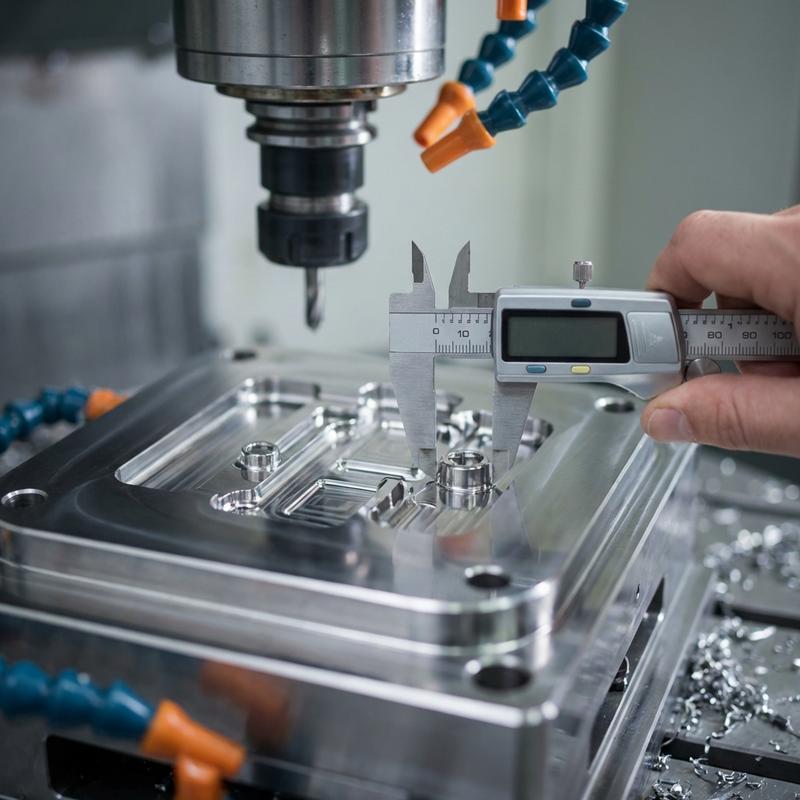
Selecting a supplier requires more than comparing prices. The right manufacturer should understand injection mold requirements and provide consistent quality.
Evaluate Manufacturing Capability
A reliable manufacturer should have experience with:
- CNC machining
- Precision grinding
- EDM machining
- Heat treatment control
- Quality inspection
For companies requiring complete mold component outsourcing, suppliers with broader capabilities can provide better production coordination.
Learn more about Injection Mold Components Manufacturing services.
Check Quality Control Process
Quality control is essential for precision mold components.
Important inspection methods include:
- CMM measurement
- Diameter inspection
- Hardness testing
- Surface finish inspection
Inspection reports help ensure every component meets design requirements.
Consider Injection Mold Experience
A machining supplier should understand how guide components interact with the complete mold structure.
Experience with:
- Core and cavity alignment
- Insert positioning
- Slider movement
- Mold assembly
can prevent potential problems during final mold assembly.
For example, slider systems require accurate positioning and reliable guide structures. Learn more about Injection Mold Slider Machining.
Fentormold Injection Mold Guide Pin and Bushing Manufacturing Capability
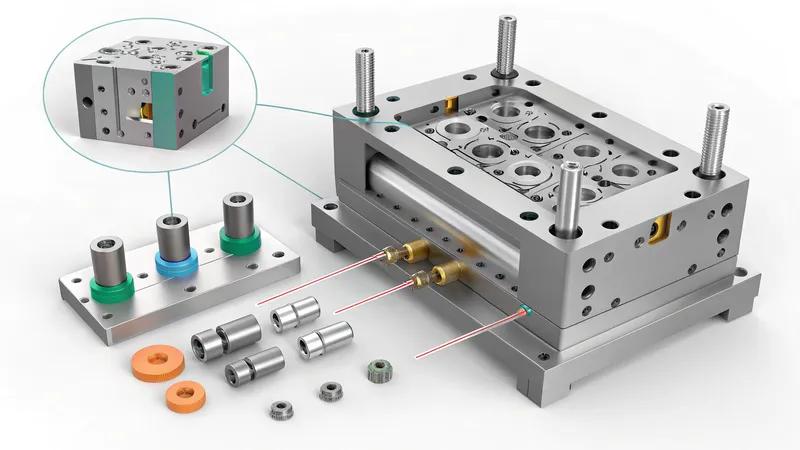
Fentormold provides precision machining solutions for injection mold components, including guide pins, bushings, inserts, sliders, and other custom tooling parts.
Our capabilities include:
- CNC machining
- Precision grinding
- EDM machining
- Dimensional inspection
- Custom component manufacturing
With experience in injection mold manufacturing, Fentormold understands that even small mold components can significantly affect mold accuracy, production stability, and tool life.
For customers looking to outsource precision mold component machining, Fentormold provides engineering support and manufacturing solutions based on project requirements.
Explore our Injection Mold Components Manufacturing capabilities.
Conclusion
Injection mold guide pins and bushings are small but critical components that influence mold accuracy, production efficiency, and maintenance costs.
Choosing the right Injection Mold Guide Pin and Bushing Manufacturer requires evaluating material selection, machining capability, quality control, and industry experience.
For mold makers and injection molding companies, working with an experienced supplier can improve component reliability, reduce maintenance risks, and support long-term production success.
Need help selecting the right mold components for your project? Fentormold provides engineering support, precision machining, and custom tooling solutions based on your application requirements.
Frequently Asked Questions
What does an injection mold guide pin do?
An injection mold guide pin aligns the fixed and moving mold halves during closing to ensure accurate positioning between mold components.
What materials are used for injection mold guide pins and bushings?
Common materials include SUJ2, SKD61, GCr15, and stainless steel depending on production requirements and application conditions.
How accurate are injection mold guide pins and bushings?
Precision guide components can typically achieve tolerances around ±0.005 mm depending on machining capability and mold requirements.
Can guide pins and bushings be customized?
Yes. Manufacturers can customize dimensions, materials, hardness levels, and surface treatments according to customer requirements.
Why outsource guide pin and bushing manufacturing?
Outsourcing allows mold makers to access specialized machining equipment, reduce internal costs, and improve production flexibility.
How do I select a reliable guide pin and bushing supplier?
Consider machining capability, inspection methods, material knowledge, delivery reliability, and experience with injection mold components.