
Injection mold core and cavity machining is one of the most critical processes in injection mold manufacturing. The core and cavity determine the final shape, dimensional accuracy, surface quality, and overall performance of plastic parts.
For mold makers and manufacturers, outsourcing injection mold core and cavity machining to an experienced supplier can reduce machining costs, improve production efficiency, and ensure consistent mold quality.
With advanced CNC machining, EDM, wire EDM, grinding, and inspection technology, Fentormold Injection Mold Manufacturing provides high-precision mold components and complete tooling solutions for automotive, electronics, medical, industrial, and consumer products.
This guide explains the machining process, materials, precision requirements, quality control methods, and how to select a reliable supplier for injection mold core and cavity manufacturing.
Key Takeaways
- Injection mold core and cavity components directly affect plastic part quality, accuracy, and appearance.
- Precision machining requires multiple processes, including CNC milling, EDM, grinding, and polishing.
- Choosing the right mold steel is essential for tool life and production performance.
- Outsourcing core and cavity machining helps mold makers reduce costs and improve delivery times.
- A reliable supplier should have advanced equipment, inspection capability, and injection mold experience.
What Are Injection Mold Core and Cavity Components?
The core and cavity are the most important components inside an injection mold. Together, they create the final shape of the molded plastic part.
The cavity forms the external surface of the product, while the core creates the internal features such as ribs, holes, bosses, and deep structures.
During injection molding, molten plastic is injected into the space between the core and cavity. After cooling, the mold opens and the finished part is ejected.
Because these components directly contact molten plastic, they require:
- High dimensional accuracy
- Excellent surface finish
- Proper steel hardness
- Good wear resistance
- Long service life
For complex plastic parts, even a small machining error in the core or cavity can cause problems such as flash, mismatch, sink marks, dimensional variation, or poor appearance.
Injection Mold Core and Cavity Machining Process
Producing high-quality mold cores and cavities requires several precision machining processes. A professional supplier normally combines different technologies to achieve tight tolerances and complex geometries.
CNC Milling for Mold Core and Cavity Manufacturing
CNC milling is usually the first major machining process for injection mold core and cavity components.
High-speed CNC machines remove excess steel and create the basic geometry of the mold component.
Typical CNC machining operations include:
- Rough machining
- Semi-finishing
- Precision finishing
- Complex 3D surface machining
For automotive and electronic plastic parts, CNC machining accuracy is critical because complex surfaces require precise tool paths and stable machining conditions.
EDM Machining for Complex Mold Features
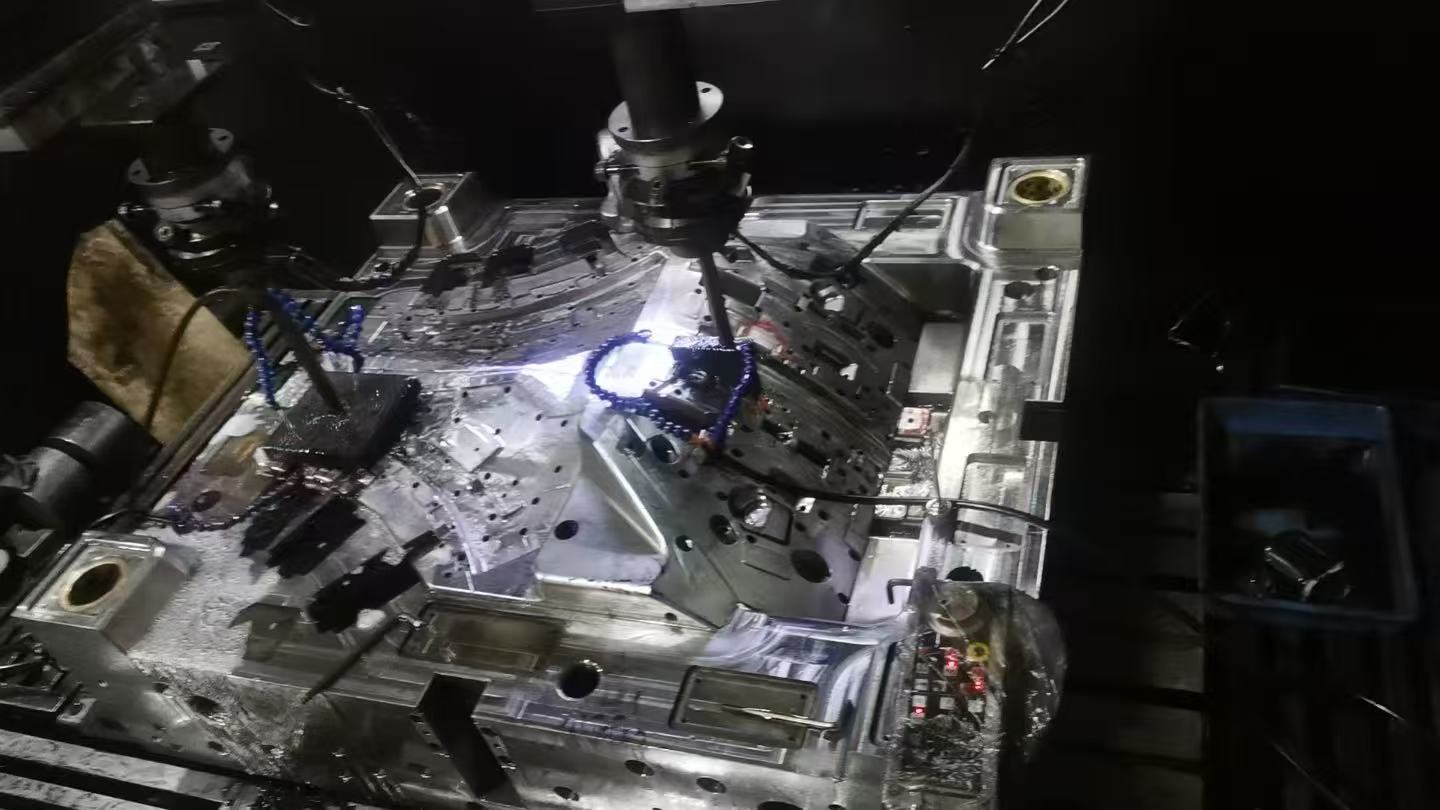
Electrical Discharge Machining (EDM) is widely used in injection mold core and cavity machining when parts contain deep ribs, sharp corners, narrow slots, or difficult geometries.
Learn more about EDM Machining for Injection Mold Parts and how this process improves precision for complex mold components.
Compared with traditional cutting methods, EDM can machine hardened steel without affecting component accuracy.
Common EDM applications include:
- Deep cavity machining
- Small ribs
- Sharp edges
- Complex internal structures
EDM is especially important for high-precision injection molds where conventional machining cannot reach required details.
Wire EDM for High Precision Mold Components
Wire EDM is another important technology for manufacturing injection mold components.
It is commonly used for:
- Inserts
- Slides
- Precision plates
- Complex profiles
Wire EDM provides excellent dimensional accuracy and is suitable for hardened mold steel.
Grinding and Polishing
After CNC and EDM machining, precision grinding and polishing improve the final quality of core and cavity surfaces.
Grinding helps achieve:
- Tight flatness requirements
- Accurate dimensions
- Better fitting between components
Polishing improves:
- Product appearance
- Surface texture quality
- Mold release performance
For optical parts or high-gloss plastic components, surface finishing is especially important.
Proper mold surface treatment and finishing methods are also important for achieving consistent plastic part quality. Learn more about Injection Mold Surface Finish Guide: SPI Standards and Options
Materials Used for Injection Mold Core and Cavity Machining
Selecting suitable mold steel is essential for durability, production volume, and product requirements.
Different applications require different materials.
| Mold Steel | Typical Application |
|---|---|
| P20 | Prototype molds and low-volume production |
| 718H | General production injection molds |
| NAK80 | High appearance plastic parts |
| S136 | Precision molds requiring corrosion resistance |
| H13 | High-temperature molding applications |
P20 Steel
P20 is commonly used for prototype molds and medium production applications.
Advantages:
- Good machinability
- Cost-effective
- Suitable for general plastic parts
718H Steel
718H is widely used in production molds because it provides a good balance between hardness, toughness, and polishing performance.
It is commonly applied in:
- Automotive parts
- Electronics housings
- Consumer products
S136 Stainless Steel
S136 is preferred for high-quality molds requiring excellent surface finish and corrosion resistance.
Typical applications include:
- Medical components
- Transparent plastic parts
- High-gloss products
Precision Requirements for Mold Core and Cavity Machining
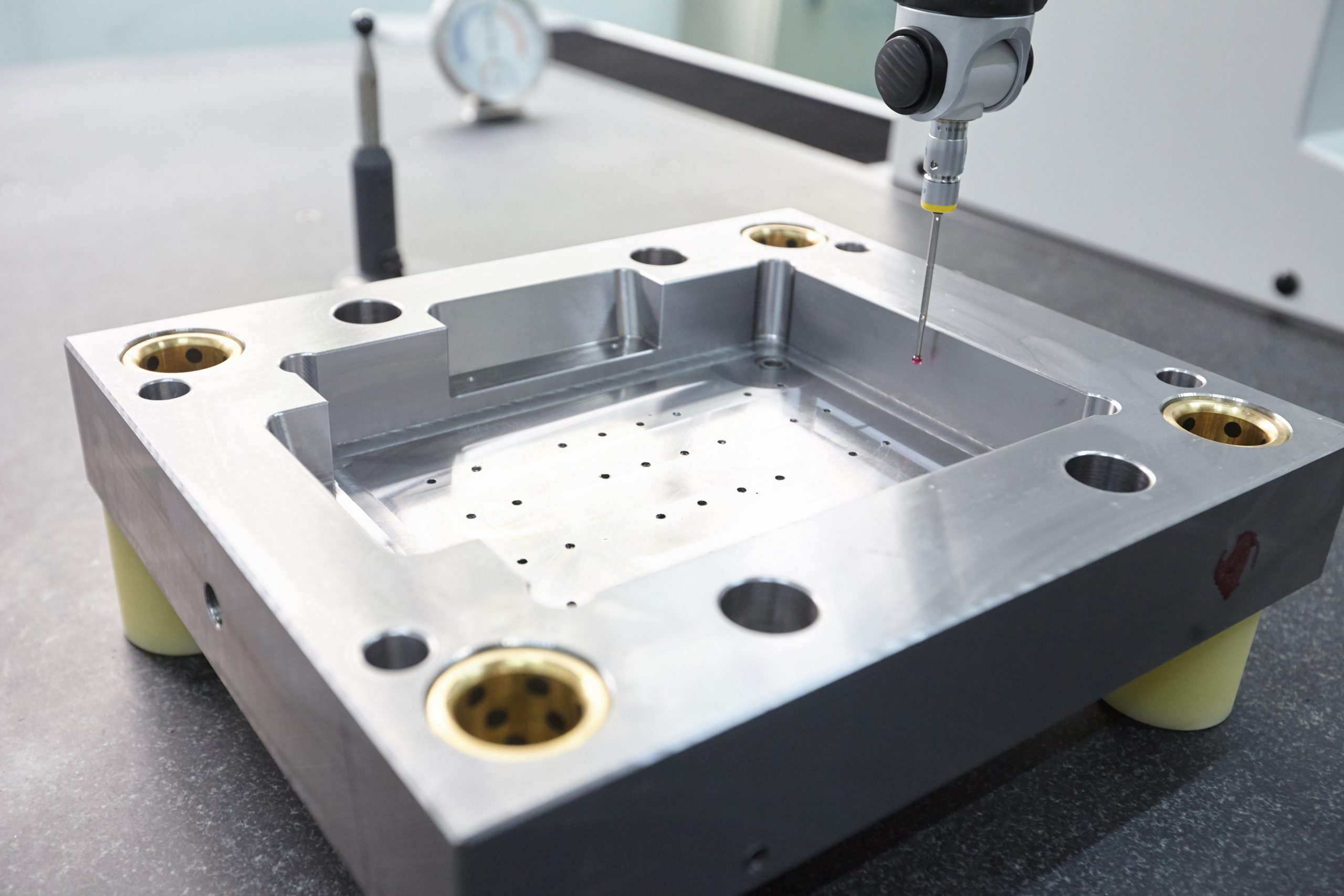
The quality of injection mold core and cavity machining directly affects the final molded product.
Important precision factors include:
Dimensional Accuracy
Core and cavity components often require tight tolerances to ensure proper mold assembly.
Depending on part requirements, machining tolerance may reach:
- ±0.01 mm
- ±0.005 mm for high-precision applications
Surface Finish
Surface finish affects:
- Plastic part appearance
- Mold release performance
- Post-processing requirements
Different products may require:
- SPI polishing
- EDM texture
- Mold surface treatment
Matching Accuracy
The core and cavity must fit accurately during mold closing.
Poor matching may cause:
- Flash defects
- Parting line marks
- Uneven wall thickness
Professional suppliers use precision inspection equipment to verify component accuracy before delivery.
Why Mold Makers Outsource Core and Cavity Machining
Many mold manufacturers outsource machining work to specialized suppliers instead of completing every process internally.
Professional suppliers can provide complete Injection Mold Components Manufacturing services, including CNC machining, EDM, precision grinding, and custom mold part production
Reduce Manufacturing Costs
Outsourcing allows companies to reduce investment in:
- CNC equipment
- EDM machines
- Skilled operators
- Maintenance costs
This is especially useful for small and medium-sized mold makers.
Improve Production Capacity
During busy periods, external machining suppliers help mold companies handle additional workload without expanding their own facilities.
This helps maintain delivery schedules.
Access Advanced Machining Technology
Experienced suppliers usually have:
- Multi-axis CNC machines
- Precision EDM equipment
- Wire EDM
- CMM inspection systems
This allows them to produce complex mold components with stable quality.
Shorten Mold Lead Time
A professional machining partner can complete components faster and help mold makers deliver finished tools to their customers on time.
How to Select an Injection Mold Core and Cavity Machining Supplier
Choosing the right supplier is critical because core and cavity components directly affect mold performance.
Check Machining Capability
A reliable supplier should provide:
- CNC machining
- EDM machining
- Wire EDM
- Grinding
- Polishing
A complete machining capability reduces communication problems and improves production efficiency.
Evaluate Quality Control Process
Quality inspection should include:
- CMM measurement
- Steel hardness testing
- Dimensional inspection
- Surface inspection
Inspection reports help ensure every component meets customer requirements.
Consider Injection Mold Experience
A supplier with strong mold design knowledge can better understand parting lines, draft angles, cooling requirements, and mold assembly accuracy.
A machining supplier with injection mold experience understands:
- Mold structure
- Parting line requirements
- Draft angle considerations
- Mold assembly accuracy
This experience helps prevent machining issues during mold assembly.
Fentormold Injection Mold Core and Cavity Machining Capability
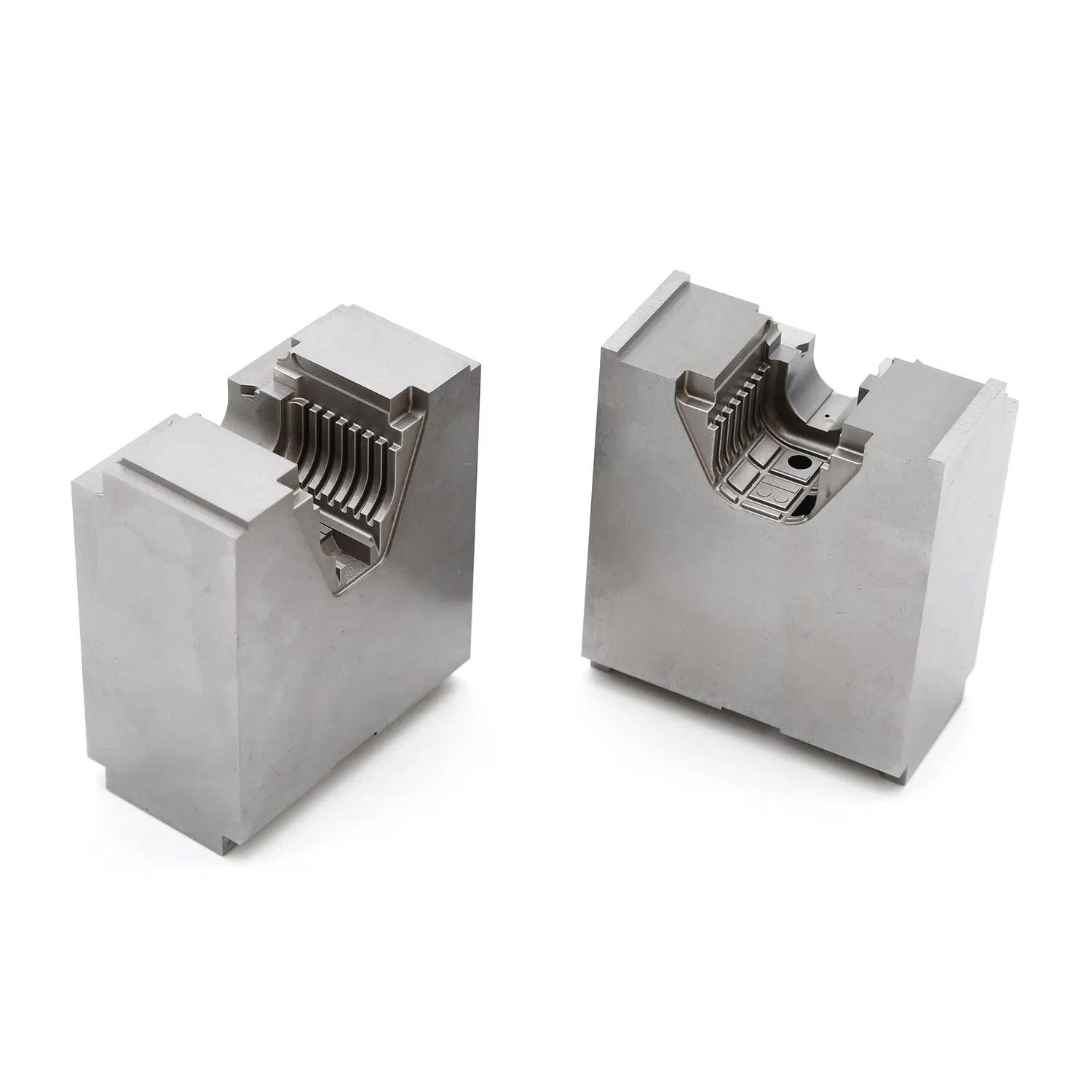
Fentormold provides precision injection mold manufacturing and mold component machining services for global customers.
Our capabilities include:
- CNC machining
- EDM machining
- Wire EDM
- Precision grinding
- Mold component inspection
With experience in injection mold manufacturing, we understand the importance of accuracy, surface quality, and delivery performance for core and cavity components.
For customers looking for reliable mold component outsourcing, Fentormold provides integrated solutions from mold design to precision machining and final mold production.
Learn more about our Injection Mold Components Manufacturing services.
Conclusion
Injection mold core and cavity machining plays a key role in producing high-quality injection molds. From material selection and CNC machining to EDM processing and final inspection, every step affects mold performance and plastic part quality.
For mold makers looking to outsource machining work, selecting an experienced supplier with advanced equipment and strong quality control capability can reduce risks and improve production efficiency.
A reliable injection mold core and cavity machining supplier can become a long-term manufacturing partner by providing precision components, stable quality, and professional technical support.
Frequently Asked Questions
What is injection mold core and cavity machining?
Injection mold core and cavity machining is the precision manufacturing process used to produce the main forming components inside an injection mold. These parts define the shape and surface quality of plastic products.
What machining methods are used for mold core and cavity manufacturing?
Common processes include CNC milling, EDM machining, wire EDM, grinding, and polishing.
What materials are commonly used for injection mold cores and cavities?
Common materials include P20, 718H, NAK80, S136, and H13 steel depending on production requirements.
Why should companies outsource core and cavity machining?
Outsourcing helps companies reduce costs, improve machining capacity, shorten lead times, and access experienced manufacturing resources.
How do I choose a reliable mold core and cavity supplier?
Look for suppliers with advanced machining equipment, strict quality control, injection mold experience, and the ability to provide inspection reports.