
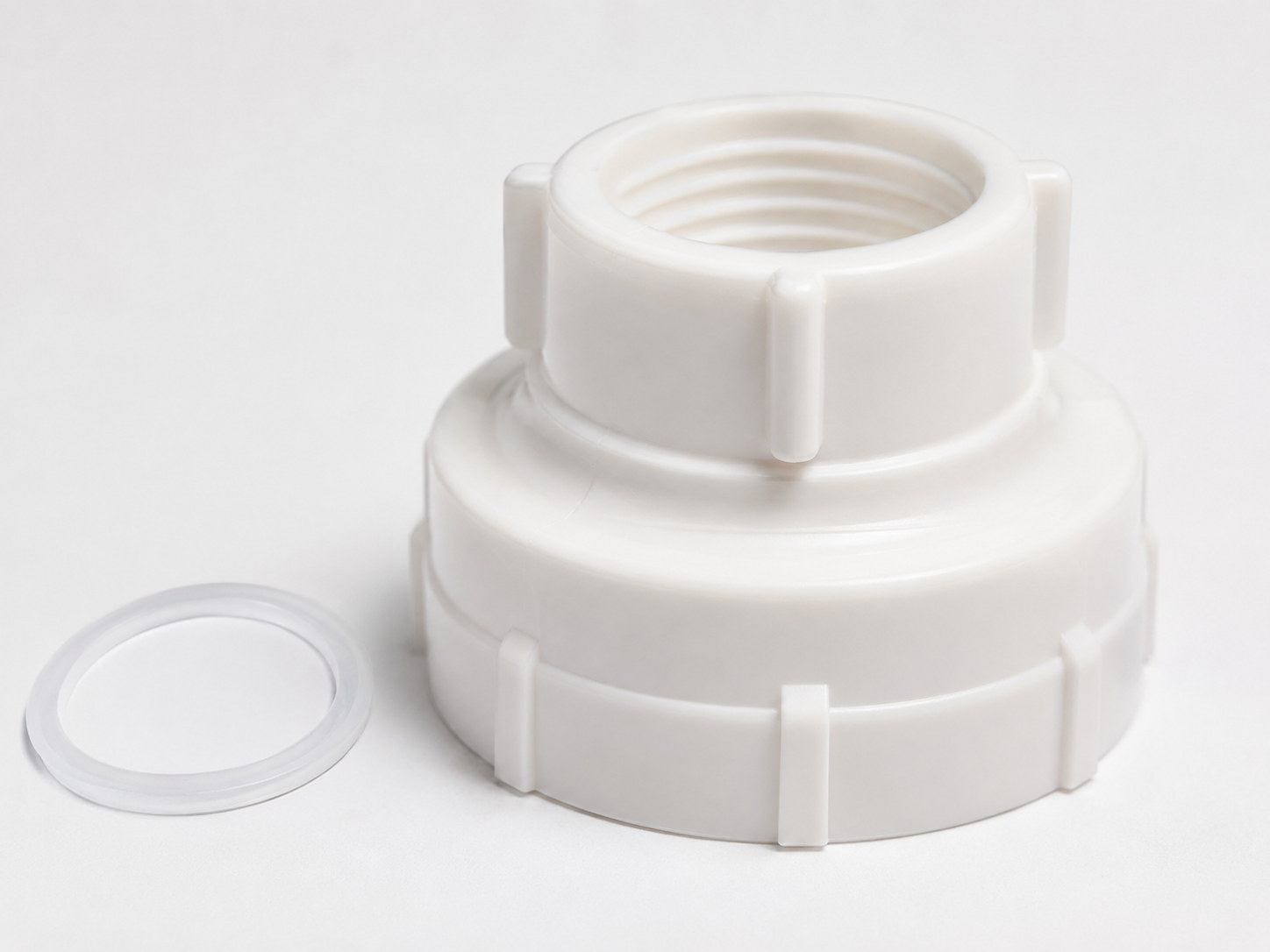
When sourcing FDA compliant plastic parts, choosing a resin simply because the supplier calls it “FDA grade” is not enough. Buyers also need to confirm the exact material grade, intended conditions of use, traceability, production controls, additives, and supporting documentation before mass production.
For food-contact or other regulated applications, material compliance is only one part of the project. The material used during production should match the approved specification, and any change involving resin, colorant, additives, or recycled material should be controlled.
At Fentormold, when we receive a project involving food-contact plastic components, we normally start by reviewing the application, drawing, material specification, and production requirements before mold manufacturing begins.
What Do FDA Compliant Plastic Parts Actually Mean?
The term FDA compliant plastic parts is widely used in plastic manufacturing, but it can easily be misunderstood.
FDA compliance does not simply mean that every finished plastic component made from a particular polymer is automatically “FDA approved.”
For food-contact applications, compliance depends on the substances used in the material, the intended application, and the relevant conditions of use.
This means that a material suitable for one application may not automatically be suitable for another.
For example, a customer may request:
“Please use FDA-compliant PP.”
That is a useful starting point, but several other questions should still be confirmed:
- What will the part contact?
- Is the contact direct or indirect?
- What is the working temperature?
- Is the part for single or repeated use?
- Will it contact hot food or liquid?
- Is sterilization required?
- Is there a specified resin grade?
- Are colorants or additives allowed?
These details should be clarified before material purchasing and production.
Material Selection for FDA Compliant Plastic Parts
One of the most important requirements for FDA compliant plastic parts is confirming the exact resin grade.
Specifying only:
- PP
- PE
- PC
- PA
- POM
is normally not enough.
Where compliance matters, the exact manufacturer and resin grade should be identified whenever possible.
For example:
Material: PP
Supplier: Material manufacturer
Grade: Specific commercial grade
Color: Natural
Requirement: Suitable for the specified food-contact application
This provides much better control than simply writing “FDA PP” on the purchase order.
Different grades within the same polymer family may contain different additives or formulations.
For this reason, a molding supplier should not replace a specified resin with another “equivalent” grade without customer approval.
For our Injection Molding Production projects, material confirmation is normally completed before mass production, especially when the customer drawing identifies a specific resin grade.
Check More Than the Base Polymer
Buyers sometimes focus only on the base resin.
However, an injection molded part may also contain:
- Masterbatch
- Colorant
- UV stabilizer
- Lubricant
- Processing aid
- Reinforcement
- Other additives
This can create problems if the original natural resin meets the required specification but another substance is later added during production.
For example, a customer may approve natural PP and later request:
“Change it to blue.”
The selected blue masterbatch must also be reviewed.
The same applies when adding materials to improve:
- UV resistance
- Wear resistance
- Stiffness
- Appearance
- Processing performance
For FDA compliant plastic parts, these changes should be treated as controlled material changes rather than simple production adjustments.
Traceability Requirements for FDA Compliant Plastic Parts
Material documentation is useful only when it can be connected to the actual material used during production.
Suppose the approved samples were made using Resin A.
Three months later, the factory switches to Resin B because the original material is temporarily unavailable.
The finished parts may look almost identical, but they are no longer necessarily the same from a compliance and traceability perspective.
A practical traceability process should connect:
Customer order → production order → resin grade → resin batch → molding date → finished part batch
Depending on the project, supporting records may include:
- Material technical data sheet
- Regulatory declaration
- Certificate of analysis where applicable
- Material lot information
- Purchase records
- Production batch records
The purpose is simple.
If a question appears several months after delivery, the manufacturer should be able to identify which material batch was used for that shipment.
Why Traceability Matters
Imagine that a customer reports a problem with one production batch.
The first question may be:
Which resin lot was used for these parts?
A proper production record should provide that answer.
Without traceability, the supplier may know which resin brand was generally used but may not be able to connect one finished shipment to a specific material batch.
For FDA compliant plastic parts, that can become a serious problem.
A basic traceability system can include:
| Production Information | Example Record |
|---|---|
| Customer PO | PO number |
| Part number | Customer drawing number |
| Material | Exact resin grade |
| Material lot | Supplier batch number |
| Production date | Molding date |
| Machine | Injection molding machine number |
| Mold | Mold identification number |
| Quantity | Production quantity |
| Inspection | Inspection record |
The key point is that these records connect together.
Production Control for FDA Compliant Plastic Parts
Another important issue is whether regrind or recycled material is allowed.
In normal injection molding production, runners or rejected parts may sometimes be crushed and reused.
This helps reduce waste and material cost.
However, for FDA compliant plastic parts, regrind should not simply be added because it is standard factory practice.
The customer specification should clearly define whether regrind is:
- Prohibited
- Allowed at a specified percentage
- Allowed only from clean internal runners
- Allowed only under defined conditions
Material control becomes much more difficult if recycled materials from different jobs, colors, additives, or resin grades are mixed together.
For projects with strict material requirements, clear production instructions and dedicated material handling are safer.
If you are still selecting a polymer for your product, our guide to Injection Molding Materials explains several commonly used plastics and their basic properties.
Mold Design Still Affects Part Quality
Compliance does not replace good mold engineering.
A correctly documented resin can still produce poor parts if the mold is not designed properly.
Gate location, venting, cooling, wall thickness, shrinkage, and ejection can all influence the finished part.
Common molding problems include:
- Flash
- Short shots
- Sink marks
- Burn marks
- Weld lines
- Warpage
- Dimensional variation
- Surface defects
For this reason, we normally review the 3D model before starting an Injection Mold project.
A DFM review can often identify issues such as:
- Uneven wall thickness
- Difficult ejection areas
- Unsuitable gate locations
- Deep ribs
- Poor draft angles
- Areas likely to trap gas
Correcting these issues before steel cutting is usually much easier than modifying the mold after T1.
Production Stability Matters More Than One Good Sample
A common mistake is approving FDA compliant plastic parts based only on a few good-looking samples.
T1 samples may look excellent while long-term production remains unstable.
During continuous molding:
- The mold temperature changes
- Cooling reaches equilibrium
- Material drying conditions vary
- Movable components cycle continuously
- Processing parameters may change slightly
For this reason, a production-ready part should be evaluated for repeatability rather than only appearance.
Critical dimensions should be checked across multiple molding cycles or different production intervals.
This is especially important for:
- Sealing areas
- Snap fits
- Threads
- Valve components
- Thin walls
- Assembly features
- Functional holes
- Flat sealing surfaces
We discuss this issue further in our article on Injection Molding Dimensional Stability.
Small dimensional differences seen during mold trials may become more noticeable after long production runs.
How to Prevent Contamination in FDA Compliant Plastic Parts
Contamination control may also need to be discussed before production begins.
Possible contamination sources include:
- Incorrect resin
- Mixed regrind
- Dust
- Oil
- Grease
- Metal particles
- Cleaning chemicals
- Previous resin remaining inside the barrel
- Incorrect masterbatch
- Poor packaging conditions
The necessary level of control depends on the actual application.
A simple food-contact housing does not automatically require the same manufacturing environment as a medical component.
Requirements should match the product risk and customer specification.
For example, changing a machine from black glass-filled nylon to natural PP may require careful purging before production starts.
If appearance or contamination requirements are strict, this should be communicated before scheduling the molding run.
Packaging Requirements for FDA Compliant Plastic Parts
Packaging is another area that can easily be overlooked.
Producing clean parts and then placing them into unsuitable packaging can create unnecessary contamination risk.
Before ordering FDA compliant plastic parts, consider defining:
- Inner PE bags
- Sealed bag requirements
- Maximum quantity per bag
- Carton requirements
- Part separation
- Dust protection
- Batch labels
- Production date
- Part number
- Lot number
Sensitive or cosmetic parts may also require individual protection.
Packaging should match the product rather than automatically using the same method for every molded part.
What Should Be Confirmed Before You Place an Order?
Many sourcing problems can be avoided if the important requirements are confirmed before mold manufacturing begins.
Product Information
Provide:
- 3D CAD file
- 2D drawing
- Material specification
- Color
- Annual quantity
- Critical dimensions
- Product application
- Working temperature
- Contact conditions where relevant
Material Requirements
Confirm:
- Exact resin manufacturer
- Exact resin grade
- Required material documentation
- Approved colorant or masterbatch
- Additive restrictions
- Regrind requirements
Production Requirements
Confirm:
- Material change approval process
- Batch traceability
- Inspection requirements
- Critical dimensions
- Packaging requirements
- Required production records
The clearer these requirements are at the beginning, the easier it is for the mold supplier to quote and plan the project correctly.
Common Mistakes When Sourcing FDA Compliant Plastic Parts
Several mistakes appear repeatedly when sourcing FDA compliant plastic parts.
Only Writing “FDA Material” on the Drawing
This is too general.
Whenever possible, specify the exact resin grade and application requirements.
Assuming All Grades of One Polymer Are the Same
Two PP grades may look similar but can have different formulations, additives, and processing behavior.
Ignoring Masterbatch
Changing the color also changes the material system.
The masterbatch should therefore be included in the material review.
Allowing Material Substitution Without Approval
Similar mechanical properties do not automatically mean the materials have the same compliance status.
Checking Certificates but Ignoring Traceability
The documents should correspond to the material actually used during production.
Approving Only T1 Samples
One good sample does not prove stable mass production.
Forgetting Packaging
Finished parts still need protection after molding and inspection.
How to Choose a Manufacturer for FDA Compliant Plastic Parts
You do not necessarily need the largest injection molding company.
You need a supplier that understands the project requirements and is willing to follow them consistently.
Before placing an order, ask practical questions:
Can you purchase the exact resin grade specified?
Can you provide the available material documentation?
Can finished production batches be connected to resin batches?
Will material changes require customer approval?
How do you control regrind?
How are critical dimensions inspected?
Can inspection records be supplied when required?
How are the finished parts packed after molding?
The answers to these questions usually provide much more useful information than a supplier simply saying:
“Yes, we can make FDA parts.”
Final Thoughts
Sourcing FDA compliant plastic parts is not simply a matter of choosing a resin that is described as FDA compliant.
A reliable project starts with the intended application.
From there, buyers should confirm the exact resin grade, colorants, additives, traceability requirements, production controls, inspection methods, and packaging requirements.
The practical approach is straightforward:
Specify the material clearly, control changes, maintain traceability, and verify the actual molded parts.
If you have a drawing for a food-contact or custom plastic component, Fentormold can review the part design, material requirements, and mold structure before tooling begins.