A hot runner system is one of the most important technologies in modern injection molding. It keeps the plastic melt inside the runner at the correct temperature. The plastic flows directly into the mold cavity without creating cold runners.
Many manufacturers use hot runner molds to improve efficiency, reduce material waste, and produce high-quality plastic parts. Automotive, medical, electronics, and packaging industries all use this technology.
If you are planning a new injection mold project, understanding the hot runner system will help you make the right decision.
At Fentormold, we design and build custom injection molds for customers worldwide. Our engineering team selects the right runner system based on your product, resin, production volume, and budget.
What Is a Hot Runner System?
A hot runner system is a heated runner system inside an injection mold. Unlike a cold runner, the plastic inside the runner does not cool and solidify during each molding cycle.
The molten plastic moves through heated manifolds and nozzles before entering the mold cavity.
This design removes the need to eject runners after every shot.
Instead of producing both a part and a runner, the mold only produces the finished plastic part.
Because of this, manufacturers can save material and shorten cycle time.
How Does a Hot Runner System Work?
The injection molding machine melts plastic pellets.
The melt enters the hot runner manifold through the machine nozzle.
Electric heaters keep the manifold at a stable temperature.
The molten plastic then flows through heated nozzles.
Finally, the plastic enters the mold cavity through one or more gates.
After the cavity fills, the mold cools the plastic part while the runner remains hot.
When the mold opens, only the finished part is ejected.
The plastic inside the hot runner stays molten and is ready for the next injection cycle.
This process improves production efficiency and reduces material waste.
Main Components of a Hot Runner System
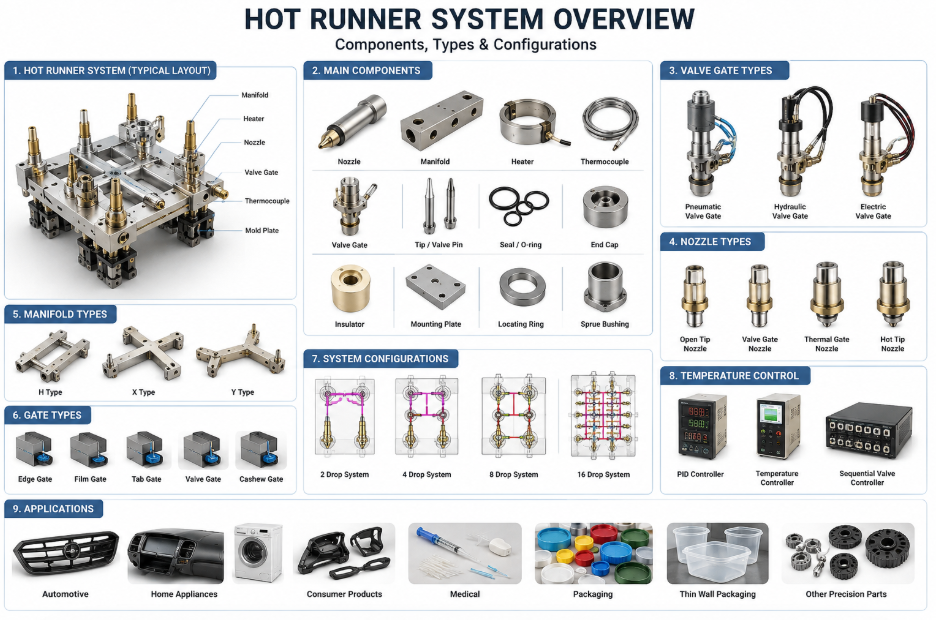
A hot runner system includes several key components.
Hot Runner Manifold
The manifold distributes molten plastic from the injection machine to each nozzle.
Its internal channels must provide balanced flow.
A well-designed manifold helps every cavity fill at the same time.
Hot Runner Nozzle
The nozzle connects the manifold to the mold cavity.
It transfers molten plastic while maintaining a stable temperature.
Different products require different nozzle designs.
Common options include:
- Open nozzle
- Valve gate nozzle
- Thermal gate nozzle
Heating Elements
Electric heaters keep the manifold and nozzles at the required temperature.
Stable heating prevents premature cooling and material degradation.
Thermocouples
Thermocouples monitor the temperature inside the hot runner system.
They send real-time data to the temperature controller.
Accurate temperature control is critical for consistent molding quality.
Temperature Controller
The controller adjusts heater output based on thermocouple feedback.
Each heating zone works independently.
This helps maintain stable melt flow throughout production.
Gate
The gate is the final opening before molten plastic enters the cavity.
Gate design directly affects:
- Surface appearance
- Weld lines
- Gate vestige
- Filling balance
- Cycle time
Different gate types suit different products.
We will explain them in later articles.
Types of Hot Runner Systems
Several hot runner systems are available for different molding applications.
Single Point Hot Runner
A single point hot runner uses one gate to fill one cavity.
This design is simple and reliable.
It works well for round or symmetrical products such as caps, containers, and medical parts.
Multi-Point Hot Runner
A multi-point system uses several gates.
It helps fill large or complex plastic parts evenly.
Automotive interior panels and appliance housings often use this design.
Open Hot Runner
An open hot runner allows molten plastic to flow directly into the cavity.
The structure is simple.
Maintenance is also easier.
However, gate marks may remain on the finished part.
Valve Gate Hot Runner
A valve gate system uses a pin to open and close the gate.
Today, the two most common valve gate systems are:
- Pneumatic valve gate
- Hydraulic valve gate
Valve gates produce excellent gate quality and reduce stringing or drooling.
They are popular for automotive, medical, and cosmetic products.
Future articles will explain these systems in detail.
Hot Runner vs Cold Runner
The biggest difference is material usage.
A cold runner becomes waste after each molding cycle.
Manufacturers often recycle the runner, but recycling increases labor and processing costs.
A hot runner keeps the plastic molten.
No runner waste is produced during normal production.
| Item | Hot Runner | Cold Runner |
|---|---|---|
| Runner Waste | None | Yes |
| Material Cost | Lower | Higher |
| Mold Cost | Higher | Lower |
| Cycle Time | Shorter | Longer |
| Product Quality | Better | Good |
| Automation | Easy | Moderate |
The best choice depends on your product, production volume, and budget.
At Fentormold, our engineers evaluate these factors before recommending a mold solution.
Advantages of a Hot Runner System
Reduce Material Waste
The biggest advantage is zero cold runner waste.
This is especially valuable for expensive engineering plastics.
Shorter Cycle Time
The mold does not need to cool thick runners.
This reduces cooling time and increases production output.
Better Part Quality
Stable melt flow improves cavity filling.
This helps reduce defects such as:
- Sink marks
- Short shots
- Weld lines
- Flow marks
Better Surface Finish
Valve gate systems create very small gate marks.
Many cosmetic products require this feature.
Easier Automation
Since there are no runners to separate, robotic automation becomes much easier.
Many fully automatic production lines use hot runner molds.
Lower Long-Term Production Cost
Although the initial mold cost is higher, lower material waste and faster production often reduce the total manufacturing cost over time.
Disadvantages of a Hot Runner System
Hot runner systems also have limitations.
Higher Initial Investment
The mold requires additional components such as:
- Manifold
- Nozzles
- Heaters
- Temperature controller
This increases mold cost.
More Complex Design
Engineers must carefully design:
- Flow balance
- Thermal expansion
- Heating zones
- Wiring layout
Poor design can cause molding defects.
Higher Maintenance Requirements
Heating components may require inspection or replacement after long production runs.
Regular maintenance helps maintain stable performance.
More Difficult Troubleshooting
Temperature, pressure, and electrical systems all affect molding quality.
Finding the root cause sometimes requires experienced technicians.
Common Applications
Hot runner systems are widely used in many industries.
Automotive
- Interior trim
- Dashboard components
- Connectors
- Air duct parts
Medical
- Syringes
- Diagnostic devices
- Laboratory consumables
These products require stable quality and high production efficiency.
Packaging
- Bottle caps
- Food containers
- Thin-wall packaging
Packaging is one of the largest applications for hot runner systems.
Consumer Electronics
- Phone housings
- Connectors
- Chargers
- Small precision parts
Household Products
- Storage boxes
- Kitchen products
- Appliance components
How to Choose the Right Hot Runner System
There is no single solution for every project.
Engineers usually consider:
- Plastic material
- Product size
- Wall thickness
- Number of cavities
- Annual production volume
- Surface finish requirements
- Budget
For example:
A simple container may only need an open hot runner.
A cosmetic housing may require a valve gate system.
A large automotive panel may need a multi-point hot runner.
Proper system selection improves both quality and production efficiency.
Frequently Asked Questions
What is a hot runner system?
A hot runner system keeps molten plastic at processing temperature inside the mold. It eliminates cold runners and reduces material waste.
Is a hot runner better than a cold runner?
For high-volume production, a hot runner usually offers better efficiency and lower long-term manufacturing cost.
What plastics can use a hot runner system?
Most thermoplastics can use hot runner systems, including PP, PE, ABS, PC, PA, POM, PET, and many engineering plastics.
Does a hot runner require maintenance?
Yes.
Heaters, thermocouples, and wiring should be inspected regularly to maintain stable production.
Which industries use hot runner molds?
Automotive, medical, packaging, consumer electronics, home appliances, and many other industries.
Conclusion
Hot runner systems have become the standard solution for many high-volume injection molding projects. They reduce material waste, improve production efficiency, and produce better-quality plastic parts.
Choosing the correct system depends on your product design, resin, production volume, and quality requirements. Single point, multi-point, open gate, and valve gate systems each have their own advantages.
If you are developing a new plastic product or upgrading an existing mold, working with an experienced mold manufacturer can help you achieve better performance and lower production costs.
Visit Fentormold to learn more about our custom injection mold solutions, hot runner mold design, and engineering support. Our team can help you select the most suitable hot runner system for your next project.
Related Articles
- Cold Runner vs Hot Runner: Which One Is Better?
- Single Point Hot Runner System Explained
- Multi-Point Hot Runner Design Guide
- Open Gate vs Valve Gate Hot Runner
- Valve Gate Hot Runner System Guide
- Hot Runner Design Guide
- Hot Runner Troubleshooting and Maintenance Guide