
Choosing the right edge gate vs sub gate mold design is not simply a matter of picking the smaller or cheaper gate. The right choice depends on part geometry, mold structure, appearance requirements, production volume, and how the part will be ejected and trimmed.
For mold buyers, the edge gate vs sub gate mold decision should be made before tooling is released for manufacturing. Once steel has been cut, changing the gate type may affect the parting line, runner layout, ejection system, and overall mold structure.
An edge gate is usually simpler and easier to manufacture. By contrast, a sub gate, also called a submarine or tunnel gate, can offer automatic degating and more freedom in gate placement.
However, it also requires more careful design and machining.
So, which one should you choose?
The answer depends on what the mold needs to achieve in production.
Edge Gate vs Sub Gate Mold: What Is an Edge Gate?
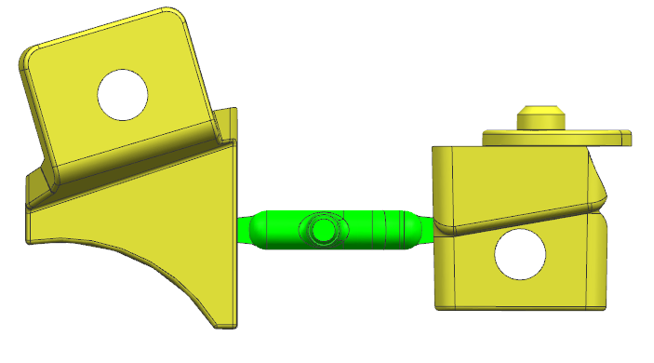
An edge gate is one of the most common gate types used in plastic injection molds.
It is normally located along the parting line and feeds molten plastic from the runner directly into the cavity.
The basic flow path is:
Runner → Edge Gate → Cavity
Because the gate sits at the parting line, it is generally easy to machine, inspect, and modify during mold trials.
Important edge-gate dimensions include:
- Gate width
- Gate thickness
- Gate land length
- Gate location
- Runner connection
The final dimensions depend on:
- Plastic material
- Wall thickness
- Flow length
- Part geometry
- Filling requirements
For complete tooling support, Fentor Mold provides custom injection mold manufacturing from DFM and mold design through machining and mold trial.
Advantages of an Edge Gate
The main advantage of an edge gate is simplicity.
It does not require an angled tunnel through the mold steel. Therefore, machining and maintenance are usually easier.
Other advantages include:
- Simple mold construction
- Lower tooling complexity
- Easy gate inspection
- Easy modification during mold trials
- Good filling capability
- Suitable for many thermoplastics
- Straightforward runner connection
For many simple parts, an edge gate can provide a reliable and economical solution.
Disadvantages of an Edge Gate
The main drawback is gate location.
Because the gate is normally at the parting line, the gate mark may be visible on the edge of the molded part.
This may be acceptable for internal parts. However, it can become a concern for visible consumer products.
In addition, an edge gate usually needs trimming after molding.
That trimming may be manual, automated, or part of a secondary process.
Therefore, production cost should include the gate-removal method.
Edge Gate vs Sub Gate Mold: What Is a Sub Gate?
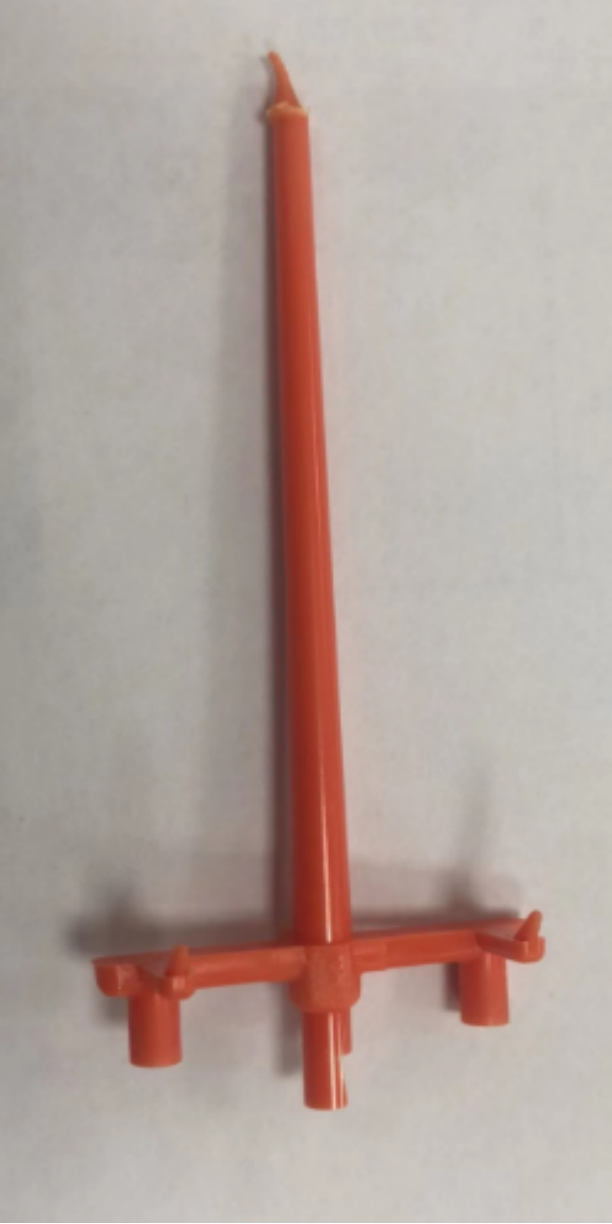
A sub gate is also called a submarine gate or tunnel gate.
Instead of entering the cavity directly at the parting line, the gate passes through the mold steel at an angle.
The basic flow path is:
Runner → Tunnel → Sub Gate → Cavity
This angled tunnel allows the gate to enter the part from a lower or less visible location.
In many suitable mold designs, the runner and part can separate automatically during ejection.
As a result, sub gates are often attractive for automated production.
They also give the mold designer more freedom to hide the gate away from a visible surface.
Edge Gate vs Sub Gate Mold: Key Differences
When comparing an edge gate vs sub gate mold, the main differences go beyond the gate itself.
The choice can affect:
- Mold construction
- Part appearance
- Ejection
- Automation
- Maintenance
- Tooling cost
Gate Location
An edge gate normally enters the part at the parting line.
By contrast, a sub gate enters through an angled tunnel.
Therefore, a sub gate can often be placed away from the visible edge of the part.
This can be useful when appearance is important.
Mold Construction
An edge gate is generally simpler.
The runner and gate can be machined directly into the parting-line area.
A sub gate, however, needs an angled tunnel and accurate connection to the cavity.
As a result, the machining is more complex.
Tooling Cost
In many cases, an edge gate costs less to manufacture.
A sub gate may require extra CNC or EDM work.
However, the actual cost depends on:
- Number of cavities
- Mold steel
- Gate size
- Runner design
- Part geometry
- Ejection system
- Automation requirements
Therefore, buyers should compare the full tooling design rather than assume that one gate is always cheaper.
Gate Mark and Appearance
Gate appearance is often a key reason for choosing one design over another.
With an edge gate, the mark is usually located at the parting line.
With a sub gate, the gate can often be hidden on a less visible surface.
However, a sub gate does not automatically guarantee a perfect appearance.
The final gate mark depends on:
- Gate diameter
- Gate angle
- Gate location
- Plastic material
- Mold temperature
- Injection speed
- Gate trimming
- Part geometry
Therefore, cosmetic requirements should be reviewed during DFM.
Edge Gate vs Sub Gate Mold: Filling Performance
Both gate types can fill well when designed correctly.
The real filling performance depends on:
- Gate size
- Gate location
- Runner size
- Flow length
- Wall thickness
- Plastic material
- Injection speed
- Mold temperature
For example, a well-positioned edge gate can perform better than a poorly positioned sub gate.
Likewise, a sub gate can work very well when the required location is not suitable for an edge gate.
Therefore, the complete flow path should be checked before the final gate is selected.
For more detail, see our Injection Mold Filling Balance guide.
Edge Gate vs Sub Gate Mold for Automatic Production
Automation is another important factor.
A properly designed sub gate can separate the runner and part during mold opening and ejection.
As a result, manual gate trimming may be reduced or eliminated.
This can be valuable in high-volume production.
An edge gate can also work in automated production. However, extra trimming equipment or another operation may be required.
Therefore, when comparing an edge gate vs sub gate mold, buyers should ask:
How will the runner and gate separate from the finished part?
That question is more useful than simply asking which gate is better.
If the project includes both tooling and production, the gate design should also match the planned injection molding production process.
Edge Gate vs Sub Gate Mold: Ejection Considerations
The ejection system must work with the selected gate.
An edge gate usually has fewer special requirements around the gate itself.
A sub gate, however, depends on the tunnel shape and the relationship between:
- Runner
- Gate
- Mold opening
- Ejection movement
If the tunnel angle or gate geometry is poor, the runner may not separate cleanly.
Possible problems include:
- Runner sticking
- Gate breakage
- Poor automatic separation
- Higher maintenance
- Damage around the gate
- Unstable production
Therefore, ejection and gate design should be reviewed together.
Edge Gate vs Sub Gate Mold for Long Production Runs
For high-volume production, the decision should focus on the total production process.
A sub gate can be attractive when:
- Automatic degating is important
- The gate needs to be hidden
- Manual trimming should be reduced
- The part is suitable for tunnel gating
- The mold will run many cycles
- The runner should separate automatically
An edge gate may be better when:
- Tooling simplicity is important
- The gate can stay on the parting line
- Mold cost needs to be controlled
- Gate trimming is acceptable
- The part is not suitable for a tunnel gate
Therefore, neither option is automatically better for high-volume production.
A simple multi-cavity edge-gated mold can still be more economical than a more complex sub-gated design.
Edge Gate vs Sub Gate Mold: Part Geometry
Part geometry should be reviewed early.
An edge gate works well when the part has a suitable edge along the parting line.
A sub gate can be useful when the preferred gate location is away from the parting line.
However, the tunnel needs enough space for reliable machining.
Before choosing a sub gate, check:
- Local wall thickness
- Available steel thickness
- Gate angle
- Gate access
- Ejection direction
- Distance from part edge
- Nearby ribs and bosses
- Cooling channels
- Mold inserts
In addition, the gate location should support balanced filling.
A well-designed gate in the wrong location can still cause filling problems.
Edge Gate vs Sub Gate Mold: Plastic Material
Plastic material also affects the edge gate vs sub gate mold decision.
High-viscosity materials may need a larger gate area to avoid excessive pressure loss.
Glass-filled materials also need extra attention because small tunnels and gates can wear faster.
Some engineering plastics are sensitive to high shear.
Therefore, gate design should be based on the actual material grade.
Using only a generic material name such as ABS, PC, PA66, or POM is not always enough.
Processing temperature and drying conditions should also be checked during mold trial.
Edge Gate vs Sub Gate Mold: Maintenance and Tool Life
Maintenance is often overlooked.
An edge gate is easy to inspect because it is located at the parting line.
A sub gate can be harder to repair because the tunnel is machined inside the mold steel.
If damage occurs, repairing the tunnel may require more work.
However, this does not mean that sub gates are unreliable.
A well-designed sub gate can run for a long time.
The key points are:
- Correct tunnel geometry
- Correct gate size
- Good mold steel condition
- Reliable ejection
- Proper maintenance
Edge Gate vs Sub Gate Mold: Cost Comparison
The initial mold price is only one part of the decision.
An edge gate may have a lower tooling cost because the structure is simple.
A sub gate may cost more because of additional machining.
However, it may reduce production labor if automatic degating is possible.
For buyers, the edge gate vs sub gate mold cost should be evaluated together with trimming labor, automation, and long-term maintenance.
| Factor | Edge Gate | Sub Gate |
|---|---|---|
| Mold construction | Simpler | More complex |
| Initial tooling cost | Usually lower | Usually higher |
| Gate location | Parting line | Below or away from parting line |
| Gate appearance | More visible | Easier to hide |
| Automatic degating | Limited | Often possible |
| Manual trimming | More likely | Often reduced |
| Maintenance | Easier | More demanding |
| Design flexibility | Good | Good for suitable parts |
| Best use | General parts | Automated or appearance-sensitive parts |
Therefore, the lowest mold price does not always mean the lowest production cost.
For example, if a sub gate removes a manual trimming step over hundreds of thousands of parts, the higher tooling cost may be justified.
On the other hand, if trimming is already acceptable, the extra complexity may not provide enough benefit.
When Should You Choose an Edge Gate?
An edge gate is usually a good choice when:
- The gate can be placed on the parting line
- Gate appearance is acceptable
- The mold should stay simple
- Tooling cost is important
- Gate trimming is acceptable
- The part geometry supports edge gating
- Hidden gating is not required
For many industrial parts, housings, brackets, covers, and internal components, an edge gate is a practical option.
It is also easier to inspect and modify during mold maintenance.
When Should You Choose a Sub Gate?
A sub gate is worth considering when:
- The gate needs to be hidden
- Automatic degating is important
- Manual trimming should be reduced
- The part allows tunnel gating
- Production volume is high
- The runner needs to separate automatically
- The parting-line location is not suitable
For automated production, this can be a strong advantage.
However, the mold designer should first confirm that the geometry and steel thickness are suitable.
Common Mistakes in Edge Gate vs Sub Gate Mold Selection
Choosing Only by Mold Price
A cheaper gate may increase production cost later.
For example, manual trimming can add labor to every cycle.
Ignoring the Gate Mark
A gate may fill well but still leave an unacceptable mark.
Therefore, appearance should be reviewed before tooling begins.
Selecting a Sub Gate Without Enough Steel
The tunnel needs enough surrounding steel.
Otherwise, mold strength and machining can become difficult.
Making the Gate Too Small
A smaller gate does not always mean a better appearance.
If the gate is too restrictive, pressure can increase and filling can become unstable.
Ignoring Runner Balance
Gate selection should be reviewed together with runner layout.
This is especially important in multi-cavity molds.
Making the Decision Too Late
Changing the gate type after mold manufacturing starts can be expensive.
Therefore, gate location should ideally be confirmed during DFM.
How to Choose the Right Edge Gate vs Sub Gate Mold Design
When choosing between an edge gate and a sub gate, start with five questions:
- Where can the gate be placed without affecting appearance?
- How will the plastic fill the cavity?
- Is automatic degating required?
- How much trimming is acceptable?
- Does the production benefit justify the extra tooling complexity?
Once these questions are answered, the choice becomes much clearer.
For complex parts, gate selection should also be reviewed together with runner layout, venting, cooling, ejection, and parting-line design.
For a broader look at parting-line decisions, see our Parting Line Design Rules guide.
Frequently Asked Questions
Is a sub gate better than an edge gate?
Not always.
A sub gate is often better when automatic degating or a hidden gate is important.
An edge gate is often better when simple tooling, easy maintenance, and lower initial cost are the priorities.
Is a sub gate more expensive?
Usually, it can be.
A sub gate often needs more machining and a more complex mold structure.
However, the actual cost depends on part design, cavity number, and automation requirements.
Which gate leaves a smaller mark?
A sub gate can often hide the gate mark better.
However, the final result still depends on gate size, material, process settings, and location.
Can an edge gate be used for high-volume production?
Yes.
Edge gates can work well in high-volume molds when trimming and automation are properly planned.
Can a sub gate be used for every plastic part?
No.
The part geometry, wall thickness, available steel, gate position, and ejection system must be suitable.
Which gate is easier to maintain?
An edge gate is usually easier to inspect and modify because it is located at the parting line.
Final Takeaway
There is no universal winner in the edge gate vs sub gate mold comparison.
The best edge gate vs sub gate mold choice depends on both tooling requirements and the complete production process.
An edge gate is often the better choice when simplicity, easy maintenance, and lower tooling complexity are important.
A sub gate can be better when automatic degating, hidden gate location, or lower trimming labor is needed.
Therefore, buyers should evaluate the gate together with:
- Part geometry
- Plastic material
- Runner layout
- Production volume
- Appearance requirements
- Automation plan
In short, do not choose a gate only because it is cheaper to manufacture.
Choose the design that gives the best balance of mold cost, part quality, production efficiency, and long-term reliability.
Fentor Mold can review gate location, runner layout, ejection, and production requirements during DFM before the final mold design is released.