
Choosing the right injection mold gate size is a small design decision that can have a major effect on filling performance, part quality, cycle time, and production stability.
A gate that is too small can restrict material flow, increase injection pressure, cause premature gate freeze, and contribute to short shots or poor packing. On the other hand, an oversized gate may leave a larger gate mark, increase trimming work, and make the gate more difficult to control cosmetically.
For engineers and mold buyers, gate size should therefore be considered together with the part geometry, plastic material, runner system, and production requirements.
There is no universal gate size that works for every plastic part. The appropriate dimension depends on factors such as material viscosity, wall thickness, flow length, part volume, gate type, injection speed, mold temperature, and appearance requirements.
This guide explains how to approach gate size calculation, which factors influence the decision, and what should be checked during mold trials.
What Is Injection Mold Gate Size?
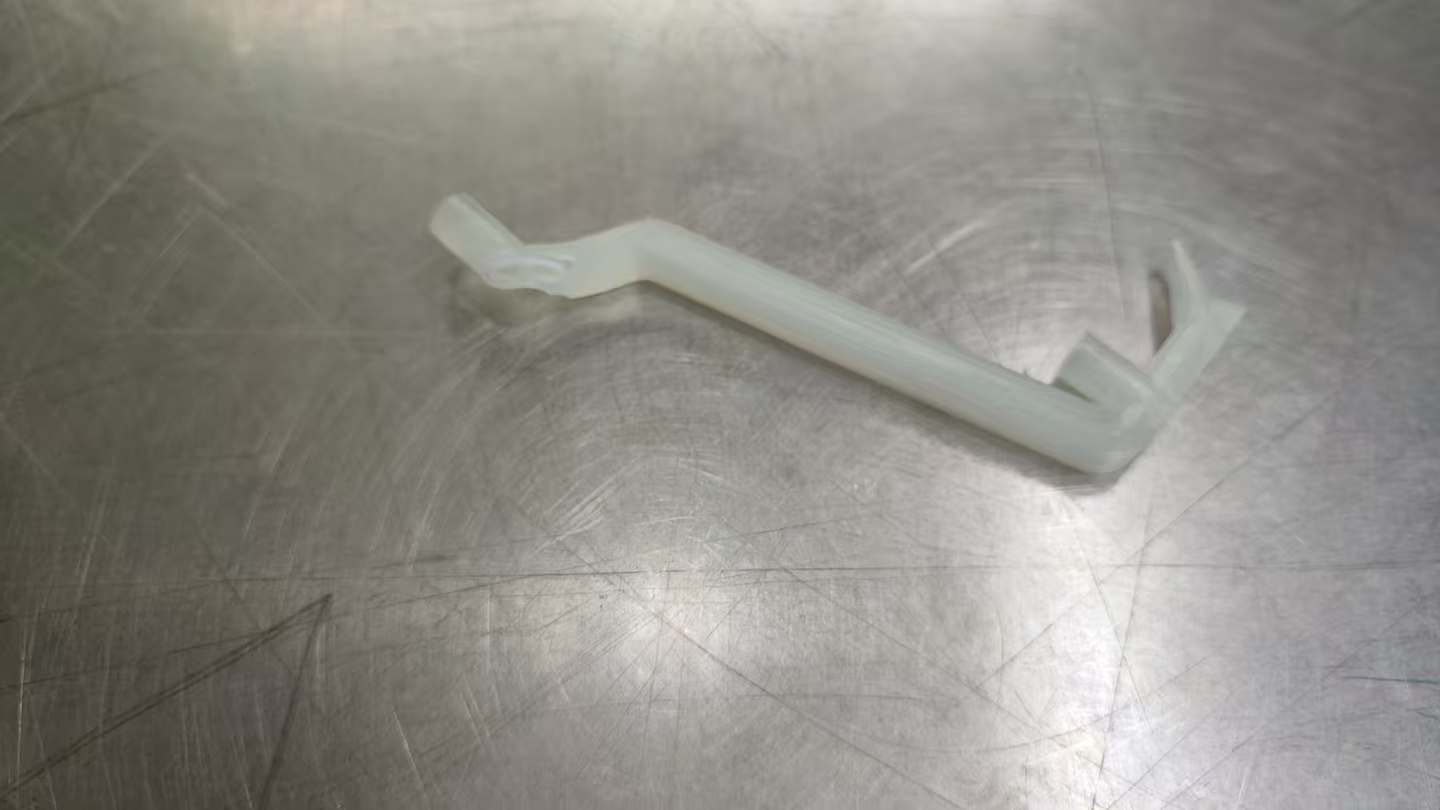
The gate is the opening through which molten plastic enters the mold cavity from the runner or hot runner system.
Injection mold gate size refers to the dimensions of this opening. Depending on the gate design, it may include:
- Gate thickness
- Gate width
- Gate diameter
- Gate length
- Gate land length
The dimensions depend on the gate type.
For example, an edge gate is generally defined by its width and thickness, while a pin gate is normally described by its diameter. A submarine gate has a different geometry because the melt enters the cavity through an angled tunnel.
Gate size should also be evaluated together with the runner system. Even a correctly sized gate may not provide stable filling if the runner is too small or poorly balanced.
For a broader discussion of how gate and runner dimensions affect filling, see Injection Mold Filling Balance: How To Design the Runner and Gate.
Why Gate Size Matters in Injection Molding
The gate controls how easily molten plastic enters the cavity.
Because the gate is normally smaller than the runner, it creates a flow restriction. This restriction affects injection pressure, shear, filling time, packing, and gate freeze time.
A properly sized gate should provide sufficient flow while still producing an acceptable gate mark and reliable production cycle.
A Gate That Is Too Small Can Cause
- High injection pressure
- Excessive shear
- Short shots
- Hesitation during filling
- Premature gate freeze
- Poor packing
- Sink marks
- Weld lines
- Dimensional variation
- Increased machine pressure requirements
A Gate That Is Too Large Can Cause
- Larger gate vestige
- Visible cosmetic marks
- Longer gate freeze time
- More difficult gate trimming
- Localized over-packing
- Greater residual stress in some applications
Therefore, the objective is not simply to make the gate as large as possible.
The goal is to find a practical gate size that provides stable filling and packing while meeting appearance and production requirements.
For more information about filling-related gate design, see Injection Mold Filling Balance: How To Design the Runner and Gate.
What Factors Determine Gate Size?
Before calculating or selecting a gate size, the mold designer should review several factors.
1. Plastic Material
Different plastics have different melt viscosities and processing requirements.
A higher-viscosity material may require a larger flow area or different processing conditions to fill the cavity effectively. Reinforced materials can also require special consideration because glass or mineral fillers affect flow behavior and can increase mold wear.
Material selection should therefore be considered before finalizing the gate.
For a broader comparison of commonly used injection molding materials, see 10 Best Injection Molding Materials for High Quality Parts.
The exact material grade is especially important for:
- Glass-filled plastics
- Flame-retardant materials
- High-temperature engineering plastics
- Transparent plastics
- Filled or reinforced materials
2. Part Wall Thickness
Wall thickness is one of the most important factors in gate selection.
Thin-wall components generally require faster and more stable filling. If the gate is too restrictive, the melt can freeze before the cavity is completely filled.
A thicker part may allow a larger gate, but the correct dimension still depends on the material, gate type, flow length, and appearance requirements.
As a starting point, designers may relate gate thickness to the local part wall thickness. However, this should be treated as a design estimate rather than a universal formula.
3. Flow Length
The longer the melt must travel from the gate to the end of the cavity, the greater the pressure loss.
A gate that works well on a short-flow component may be too restrictive for a long, thin part.
For long-flow applications, the mold designer may consider:
- A larger gate
- Multiple gates
- A different gate location
- Higher injection speed
- Higher mold temperature
- A different runner layout
This is why gate size should never be considered independently from gate location and runner balance.
4. Part Volume
Larger parts require more plastic to pass through the gate during filling and packing.
If the gate is too small for the required material flow, injection pressure can increase significantly.
For larger components, using a larger gate or multiple gates may be more effective than simply increasing machine pressure.
5. Gate Type
Gate geometry directly affects the way gate size is determined.
Common gate types include:
- Edge gate
- Tab gate
- Fan gate
- Submarine gate
- Pin gate
- Direct gate
- Valve gate
- Hot tip gate
A gate diameter suitable for a pin gate cannot simply be transferred to an edge gate.
The gate type should therefore be selected according to the part and mold structure before its dimensions are optimized.
6. Cosmetic Requirements
For visible consumer products, gate appearance can be as important as filling performance.
A larger gate may improve filling, but it can also leave a larger witness mark.
For cosmetic parts, the mold designer needs to balance:
filling performance + gate vestige + gate removal + appearance
In many cases, moving the gate to a hidden surface can be a better solution than simply reducing its size.
This is also why gate location should be reviewed during DFM rather than after the mold has already been manufactured.
How to Calculate Injection Mold Gate Size
There is no single formula that can determine the correct gate dimension for every injection molded part.
In practice, gate size calculation is an engineering estimation followed by design verification and mold-trial validation.
A practical approach includes several steps.
Step 1: Check the Part Wall Thickness
Start with the nominal wall thickness around the proposed gate location.
The gate should provide enough flow area for the melt to enter the cavity before the gate freezes.
For many thermoplastic applications, gate thickness is initially estimated in relation to the local part wall thickness. However, the appropriate ratio depends on the material, gate type, part geometry, and molding conditions.
The starting dimension should therefore be treated as a design value rather than a fixed standard.
Step 2: Estimate the Required Flow Rate
The required flow rate depends on how much material must enter the cavity and how quickly the cavity needs to be filled.
A simplified relationship is:
Q = V / t
Where:
- Q = volumetric flow rate
- V = volume of plastic being filled
- t = filling time
A larger gate cross-sectional area can generally support greater material flow with less restriction.
However, the actual relationship is affected by melt viscosity, temperature, gate geometry, and pressure.
Step 3: Calculate the Basic Gate Area
For a circular gate, the approximate cross-sectional area is:
A = πd² / 4
Where:
- A = gate cross-sectional area
- d = gate diameter
For a rectangular gate:
A = W × T
Where:
- W = gate width
- T = gate thickness
These equations are useful for understanding how changing gate dimensions changes the available flow area.
However, they should not be used as the only method for selecting a production gate size.
Actual gate performance depends on the complete flow system.
Step 4: Check Pressure and Shear
A smaller gate increases flow resistance.
If the gate becomes too restrictive, the injection machine may require substantially more pressure to maintain the required filling speed.
The mold designer should check:
- Injection pressure
- Melt temperature
- Injection speed
- Shear rate
- Pressure drop
- Filling time
- Gate freeze time
This is particularly important for engineering plastics and high-viscosity materials.
Step 5: Verify the Runner and Gate Together
Gate size cannot be optimized independently from the runner.
If the runner is undersized, increasing the gate may not solve the overall filling problem.
Similarly, an oversized runner combined with an unnecessarily small gate can create a significant restriction immediately before the cavity.
The complete flow path should therefore be evaluated:
Injection nozzle → Sprue → Runner → Gate → Cavity
For multi-cavity molds, runner balance becomes especially important because the gate dimensions must work with the complete runner layout.
Gate Size Considerations by Gate Type
Different gate types require different approaches.
Edge Gate
Edge gates are widely used because they are relatively simple to manufacture and can provide stable filling.
The main dimensions generally include:
- Gate width
- Gate thickness
- Gate land length
Gate thickness should provide sufficient filling and packing while keeping the gate vestige acceptable.
Submarine Gate
A submarine gate enters the part below the parting line and can separate automatically during ejection.
Its design involves more than selecting a gate diameter.
The designer should also consider:
- Gate angle
- Gate diameter
- Gate length
- Tunnel geometry
- Steel condition
- Flow direction
An excessively small submarine gate can increase pressure loss and make stable filling more difficult.
Pin Gate
Pin gates are commonly associated with three-plate molds and some hot runner applications.
Gate diameter is particularly important because a small change can noticeably affect flow restriction and gate freeze.
For precision parts, the gate diameter should be considered together with gate location, vestige requirements, and dimensional tolerances.
Hot Runner Gate
Hot runner gates have additional considerations because the gate is directly connected to the hot runner nozzle or hot tip system.
The gate size needs to be compatible with:
- Plastic material
- Nozzle design
- Processing temperature
- Production cycle
- Gate vestige
- Color changes
- Material sensitivity
The hot runner system should therefore be treated as a complete system rather than selecting the gate opening independently.
For more information about hot runner applications, see What Is the Purpose of a Hot Runner Mold?.
How Plastic Material Affects Gate Size
Material properties can significantly affect gate selection.
A material with relatively high melt viscosity may require more flow area to achieve stable filling.
Glass-fiber-reinforced materials also require additional consideration because reinforcement can affect flow behavior and increase wear at the gate and other mold areas.
Some engineering plastics are also sensitive to excessive shear.
For this reason, the mold designer should obtain the exact material grade whenever possible instead of designing the gate only from a generic material name such as ABS, PC, or PA.
This is especially important when the customer specifies:
- Glass-filled plastic
- Flame-retardant grades
- High-temperature plastics
- Transparent materials
- Reinforced materials
How Part Thickness Affects Gate Size
Gate size and wall thickness should always be considered together.
For example, a thin-wall part with a long flow path may require a larger or differently positioned gate to prevent premature freezing.
A restrictive gate can result in:
- Short shots
- Poor packing
- Weld lines
- Incomplete filling
- Dimensional instability
However, simply increasing gate size is not always the correct solution.
The designer should first ask:
Is the gate location correct?
If the gate creates an unnecessarily long flow path, changing the gate size alone may not solve the problem.
The gate, runner, wall thickness, and filling direction should therefore be reviewed as a complete system.
What Happens If the Gate Is Too Small?
An undersized gate increases flow resistance and can create several molding problems.
Short Shots
The cavity may not fill completely, especially in thin-wall or long-flow applications.
Poor Packing
If the gate freezes too early, holding pressure may no longer be transferred effectively into the cavity.
This can contribute to sink marks and dimensional variation.
For more information about controlling this defect, see How to Fix Sink Marks in Injection Molding Parts.
High Injection Pressure
The machine may require higher pressure to force the melt through the restricted opening.
Excessive Shear
A very small gate can increase shear and local melt heating, which may be undesirable for shear-sensitive materials.
Premature Gate Freeze
If the gate freezes before packing is complete, increasing holding pressure may have little effect.
Therefore, reducing gate size simply to make the gate mark smaller can create more serious production problems.
What Happens If the Gate Is Too Large?
An oversized gate can create different problems.
The most visible is usually the gate vestige.
A larger gate can leave a more obvious mark and may require additional trimming or finishing.
It may also increase the time required for the gate to freeze.
For some applications, excessive packing through a large gate can contribute to dimensional variation or residual stress.
Therefore, the largest possible gate is not necessarily the best solution.
The objective is to achieve:
stable filling + adequate packing + acceptable gate vestige + reliable cycle time
How to Optimize Gate Size During Mold Trials
Even when the initial gate design is based on engineering calculations, the final result should be verified during mold trials.
A practical mold trial should record:
- Injection pressure
- Filling time
- Holding pressure
- Holding time
- Melt temperature
- Mold temperature
- Part weight
- Gate appearance
- Gate freeze behavior
- Part dimensions
- Visible defects
If the part requires excessive injection pressure or does not fill properly, the gate may need to be enlarged.
If filling is stable but the gate mark is unacceptable, the supplier may consider reducing the gate or changing its location.
However, gate modification should not be the automatic solution to every molding defect.
Runner size, venting, cooling, material temperature, injection speed, and gate location should also be reviewed.
For more information about mold trial procedures, see Injection Mold Trial Process: From T0 Sampling to Mass Production.
Gate Size Checklist for Injection Mold Buyers
Buyers do not necessarily need to calculate every gate dimension themselves.
However, when reviewing a mold design, it is useful to ask the supplier:
- What gate type is being used?
- Why was this gate location selected?
- What is the proposed gate size?
- Is the gate suitable for the specified material grade?
- Has the flow path been reviewed?
- Is mold-flow analysis required?
- What gate vestige should be expected?
- How will the gate be removed?
- Is the gate located on a visible surface?
- Has gate freeze been considered?
- Can the gate provide sufficient packing?
- Is the gate compatible with the expected production cycle?
These questions are especially important before steel is cut.
A proper Injection Mold DFM Analysis can help identify potential tooling and molding problems before manufacturing begins, when changes are generally easier and less expensive.
Common Mistakes When Selecting Gate Size
Choosing the Gate Size Only by Wall Thickness
Wall thickness is important, but it is not the only factor.
Material, flow length, gate type, filling time, and cosmetic requirements also affect the final decision.
Making the Gate Too Small to Reduce Gate Marks
A smaller gate may produce a smaller vestige, but it can create excessive pressure and premature freezing.
Increasing Gate Size Without Checking Gate Location
A poor gate location cannot always be corrected by increasing the gate.
Ignoring the Exact Material Grade
Different grades of the same polymer family can have significantly different processing characteristics.
Designing the Gate Without Considering the Runner
The runner and gate work as one flow system.
Changing the Gate Without Reviewing Trial Data
Gate modifications should be based on measurable trial results rather than visual judgment alone.
Frequently Asked Questions
What is the ideal injection mold gate size?
There is no universal ideal size. The appropriate dimension depends on the plastic material, wall thickness, flow length, part volume, gate type, molding conditions, and cosmetic requirements.
How do you calculate injection mold gate size?
A basic design starts with wall thickness, required flow rate, gate geometry, and material characteristics. Circular and rectangular gate areas can be estimated using basic area equations, but the final production size should be verified through engineering analysis and mold trials.
Is a larger injection mold gate always better?
No. A larger gate can improve filling and packing but may increase gate vestige, trimming requirements, and gate freeze time.
What happens when an injection mold gate is too small?
A small gate can increase injection pressure and shear, cause premature gate freeze, reduce packing effectiveness, and contribute to short shots, weld lines, or dimensional problems.
Does plastic material affect gate size?
Yes. Melt viscosity, processing temperature, reinforcement, and shear sensitivity all influence gate selection. The exact material grade should be considered during mold design.
Should gate size be changed during mold trials?
It can be changed when trial results show that the original design does not provide stable filling or packing. However, gate modifications should be evaluated together with runner design, venting, processing parameters, and gate location.
Final Takeaway
Injection mold gate size should be selected as part of the complete molding system rather than from a fixed standard dimension.
The main factors include plastic material, wall thickness, flow length, part volume, gate type, injection conditions, packing requirements, and cosmetic expectations.
A practical design process is:
Check the part → select the gate type → estimate the gate size → review runner and filling → analyze if necessary → validate during mold trials.
For simple parts, experienced mold designers can establish a reliable starting point from established tooling practices. For complex or high-value parts, mold-flow analysis can provide additional confidence before manufacturing.
For overseas buyers, discussing gate size, gate location, runner design, and expected gate appearance during the DFM stage can help prevent costly tooling changes later.
Fentormold provides custom injection mold design and manufacturing for plastic parts, with gate and runner design considered according to the part geometry, material, production volume, and quality requirements.