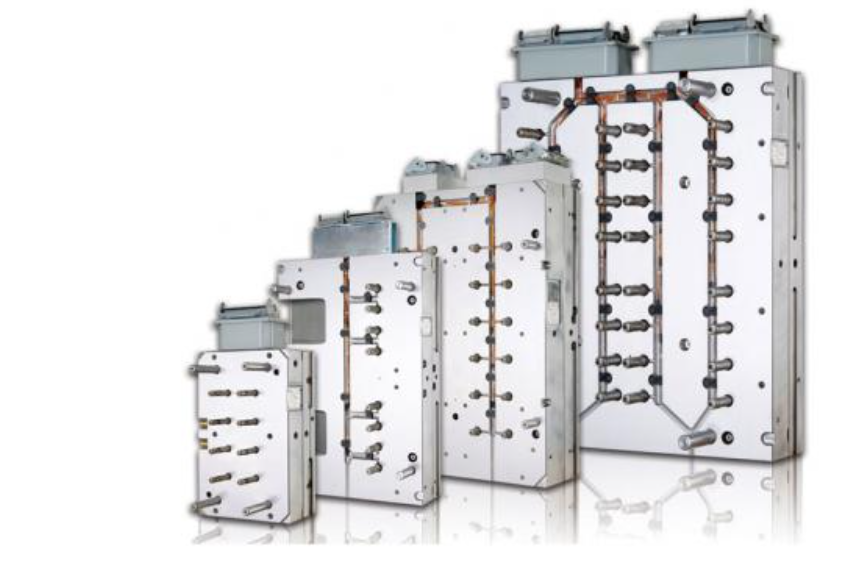
A good hot runner system injection molding design does more than keep plastic hot.
The manifold, nozzles, gates, temperature zones, and mold layout must work together. A poor design can cause high injection pressure, filling problems, leakage, or unstable production.
The goal is simple:
Keep the melt hot, keep the flow balanced, and make the mold easy to maintain.
For custom injection mold design and manufacturing, Fentor Mold considers these factors before machining the mold.
1. Start With the Product
Hot runner design should start with the plastic part, not the manifold.
First check:
- Part size
- Wall thickness
- Material
- Surface requirements
- Gate area
- Production volume
- Expected cycle time
The product geometry determines the best gate location and number of injection points.
A small round part may only need one gate.
A large automotive part may need several gates.
2. Choose the Right Gate Location
Gate position has a major effect on filling.
A good gate location can:
- Reduce flow length
- Lower injection pressure
- Improve filling balance
- Reduce warpage
- Control weld lines
- Improve appearance
Do not place the gate only because it is convenient for mold machining.
Consider how the plastic will flow through the entire cavity.
For difficult products, mold flow analysis can help compare different gate locations before mold construction.
You can also see how Fentor Mold’s case studies apply engineering analysis to real mold projects.
3. Select Single Point or Multi-Point
This is one of the first decisions in hot runner design.
Single Point
One nozzle fills the cavity.
It works well for:
- Small parts
- Round parts
- Symmetrical products
- Short flow lengths
Multi-Point
Several nozzles fill the cavity.
It works well for:
- Large parts
- Long flow lengths
- Complex shapes
- Large automotive parts
More gates do not always mean better filling.
The goal is to use the right number of gates.
4. Design the Manifold
The manifold distributes molten plastic from the machine nozzle to the hot runner nozzles.
The flow paths should be as balanced as possible.
A balanced manifold helps each gate receive similar melt conditions.
Poor manifold design can cause:
- Different filling times
- Pressure differences
- Temperature differences
- Uneven packing
- Material degradation
The manifold also needs enough space for heaters, thermocouples, and wiring.
5. Keep Flow Paths Balanced
Flow balance is critical in multi-point hot runner systems.
Ideally, the melt should travel through similar flow lengths and conditions.
For example:
Machine → Manifold → Nozzle 1
and
Machine → Manifold → Nozzle 2
should have similar flow resistance when possible.
An unbalanced system can cause one gate to fill much earlier than another.
This can create weld lines, air traps, and uneven packing.
6. Select the Right Nozzle
Nozzle selection depends on the:
- Plastic material
- Gate type
- Part size
- Injection volume
- Gate location
- Required gate appearance
Common options include:
- Open gate nozzle
- Valve gate nozzle
- Thermal gate nozzle
The nozzle should provide stable heat and sufficient flow capacity.
A nozzle that is too small can increase pressure.
A nozzle that is too large may create unnecessary heat and gate problems.
7. Open Gate or Valve Gate?
Choose the gate type based on product requirements.
Open Gate
It has a simple structure and lower cost.
It works well when the gate mark is acceptable.
Valve Gate
A valve pin opens and closes the gate.
It provides better gate control and can reduce stringing and drooling.
Valve gates are often useful for cosmetic parts and multi-point molds.
Both pneumatic and hydraulic systems can drive the valve pin.
For a detailed comparison, see Open Gate vs Valve Gate Hot Runner.
8. Temperature Control
Temperature control is one of the most important parts of a hot runner system.
Each heating zone should have stable temperature control.
The system normally uses:
- Heater
- Thermocouple
- Temperature controller
The manifold and nozzle temperatures must match the material requirements.
If the temperature is too low:
- Flow resistance increases
- Injection pressure increases
- Short shots may occur
If the temperature is too high:
- Material may degrade
- Color may change
- Gas or deposits may increase
Stable temperature is more important than simply using a high temperature.
9. Consider Thermal Expansion
The hot runner heats up during production.
The manifold expands as its temperature increases.
The mold designer must allow for this expansion.
If the design does not handle thermal expansion correctly, it may cause:
- Leakage
- Stress
- Misalignment
- Component damage
This is especially important for larger hot runner systems.
10. Gate Design
The gate is one of the smallest areas of the system, but it has a major effect on the product.
Engineers should consider:
- Gate diameter
- Gate length
- Gate location
- Gate vestige
- Cooling
- Plastic flow
A small change in gate geometry can affect injection pressure and product appearance.
For cosmetic products, the gate mark should receive special attention.
11. Mold Cooling Still Matters
A hot runner keeps the plastic hot before it enters the cavity.
The mold still needs an efficient cooling system.
Good cooling helps control:
- Cycle time
- Shrinkage
- Warpage
- Surface quality
- Dimensional stability
The hot runner and cooling system must work together.
Do not focus only on the hot runner while ignoring mold cooling.
12. Design for Maintenance
A hot runner mold should be easy to inspect and repair.
Engineers should consider access to:
- Heaters
- Thermocouples
- Wiring
- Nozzles
- Valve pins
- Manifold components
Good maintenance access can reduce downtime.
This becomes more important for high-volume production.
Fentor Mold provides custom injection mold manufacturing with a focus on practical mold construction and long-term production use.
Common Hot Runner Design Mistakes
Using Too Many Gates
More gates increase cost and complexity.
Use only the number required by the filling analysis.
Poor Gate Position
A convenient gate position is not always a good gate position.
Always consider the filling pattern.
Ignoring Temperature Balance
Different nozzle temperatures can create inconsistent filling.
Ignoring Thermal Expansion
Large hot runner systems need careful expansion design.
Poor Maintenance Access
A system that is difficult to repair can create unnecessary downtime.
Hot Runner Design Checklist
Before finalizing the design, check:
- Product geometry
- Plastic material
- Gate location
- Number of gates
- Manifold balance
- Nozzle selection
- Gate type
- Temperature zones
- Thermal expansion
- Mold cooling
- Maintenance access
A complete review can prevent many problems before mold manufacturing begins.
Conclusion
Good hot runner system injection molding design starts with the product and ends with a balanced, maintainable mold.
Engineers should carefully select the gate location, nozzle type, manifold layout, heating system, and cooling system.
For simple products, a single point open gate may be enough.
For large or complex products, a multi-point valve gate system may provide better control.
The best hot runner design is not the most complicated one. It is the one that provides stable filling, good part quality, reliable production, and reasonable cost.
If you need help selecting a hot runner system for your next project, visit Fentor Mold and contact our engineering team.
FAQ
What is the most important part of hot runner design?
Gate location and flow balance are two of the most important factors. They directly affect filling pressure, weld lines, and product quality.
How do I choose the number of hot runner gates?
Consider product size, wall thickness, material flow, injection pressure, and filling requirements. Mold flow analysis can help determine the best layout.
Is a valve gate always better than an open gate?
No. A valve gate provides better control, but an open gate has a simpler structure and lower cost.
Why is temperature control important?
Stable temperature keeps the plastic flow consistent. Poor temperature control can cause short shots, high pressure, material degradation, and unstable production.
Does a hot runner need mold cooling?
Yes. The hot runner keeps the melt hot, but the mold still needs efficient cooling to solidify the plastic part.
Why does a hot runner leak?
Common causes include poor thermal expansion control, incorrect assembly, damaged components, or improper operating conditions.