
What Is a Multi-Point Hot Runner System?
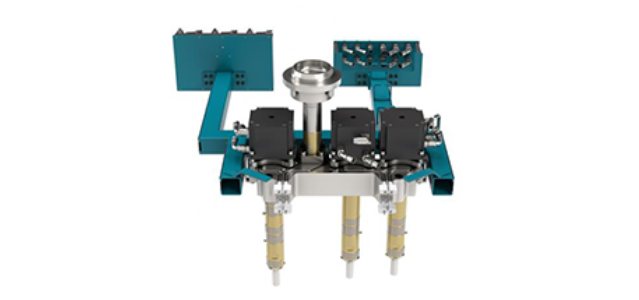
A multi-point hot runner system uses two or more injection points to fill a mold cavity.
Each nozzle sends molten plastic into a different gate. This design helps fill large or complex plastic parts that one gate cannot fill properly.
Unlike a cold runner, the hot runner keeps the plastic molten inside the manifold and nozzles.
For custom injection mold design and manufacturing, Fentor Mold selects the gate layout based on product geometry, material, and production requirements.
Why Use Multiple Injection Points?
The main reason is simple: one gate may not provide a good filling pattern.
A large product can have a very long flow path.
If engineers use only one gate, the mold may require high injection pressure. The far end of the cavity may also fill too slowly.
Multiple gates divide the filling distance.
This can help:
- Reduce flow length
- Lower injection pressure
- Improve filling balance
- Reduce filling time
- Improve pressure distribution
- Reduce warpage
How Does a Multi-Point Hot Runner Work?
The injection machine sends molten plastic into the hot runner manifold.
The manifold divides the melt into several flow paths.
Each nozzle then injects plastic through its own gate.
For example:
Injection Machine → Manifold → Nozzle 1 → Gate 1
Injection Machine → Manifold → Nozzle 2 → Gate 2
Injection Machine → Manifold → Nozzle 3 → Gate 3
The goal is to make these flow paths as balanced as possible.
Gate Layout Is Critical
Adding more gates does not automatically improve the mold.
Poor gate placement can create new problems.
Engineers need to consider:
- Product shape
- Wall thickness
- Flow length
- Gate location
- Weld line position
- Injection pressure
- Cooling conditions
- Material flow characteristics
The gates should work together rather than compete with each other.
Flow Balance
Flow balance is one of the most important factors in a multi-point hot runner system.
Ideally, each gate should fill its area at a similar rate.
If one gate fills much faster than another, the melt fronts can meet at an unexpected position.
This may create:
- Weld lines
- Air traps
- Uneven packing
- Different shrinkage
- Warpage
For complex products, engineers should use mold flow analysis before finalizing the gate layout.
You can learn more about Fentor Mold’s mold engineering and case studies to see how engineering analysis supports mold development.
Multi-Point Hot Runner for Large Parts
Multi-point systems are especially useful for large plastic parts.
Common applications include:
- Automotive interior parts
- Automotive exterior parts
- Appliance housings
- Large electronic housings
- Industrial covers
- Large thin-wall products
For a large automotive panel, one gate may require excessive injection pressure.
Several gates can shorten the flow distance and make filling easier.
How Many Gates Do You Need?
There is no fixed number.
Using more gates increases system cost and design complexity.
Too few gates may cause high pressure and poor filling.
Too many gates can create:
- More weld lines
- More gate marks
- More temperature zones
- Higher mold cost
- More maintenance
The goal is not to use as many gates as possible.
The goal is to use the right number of gates.
Open Gate or Valve Gate?
Multi-point hot runner systems can use both open gates and valve gates.
Open Gate
Open gates have a simple structure and lower cost.
They work well when the gate mark and flow control meet the product requirements.
Valve Gate
Valve gates use a valve pin to control each gate.
They offer better control over gate timing.
This is useful when the mold requires sequential filling.
For example, one gate can open first, and another gate can open later.
This can help control weld lines and improve filling.
Pneumatic and Hydraulic Valve Gates
Valve pins normally use either pneumatic or hydraulic actuation.
Pneumatic Valve Gate
Compressed air drives the valve pin.
It is widely used because the system is relatively clean and simple.
Hydraulic Valve Gate
Hydraulic pressure drives the valve pin.
It can provide strong and stable pin movement for demanding applications.
The right option depends on the mold design, machine setup, and production requirements.
Multi-Point Hot Runner vs Single Point
| Item | Single Point | Multi-Point |
|---|---|---|
| Gates | One | Two or more |
| Flow Length | Longer | Shorter |
| Large Parts | Limited | Better suited |
| Mold Cost | Lower | Higher |
| Design | Simpler | More complex |
| Flow Control | Limited | More flexible |
| Valve Gate Control | Simple | Can be sequential |
A single point system is often enough for small or symmetrical products.
A multi-point system becomes more useful as the product becomes larger or more complex.
Common Design Mistakes
Adding Too Many Gates
More gates do not always mean better filling.
Every additional gate adds cost and another potential gate mark or weld line.
Ignoring Weld Lines
Multiple flow fronts eventually meet.
Engineers should predict where these weld lines will appear and determine whether they affect product strength or appearance.
Poor Manifold Balance
The manifold must distribute material evenly.
Poor flow balance can create different filling times between nozzles.
Ignoring Injection Pressure
The mold should work within the injection machine’s pressure and capacity.
A mold flow study can help identify potential pressure problems before mold construction.
Conclusion
A multi-point hot runner system is an effective solution for large and complex injection molded parts.
It divides the filling process between multiple gates. This can reduce flow length, lower injection pressure, and improve filling performance.
However, more gates also mean higher cost and greater design complexity.
The best design does not use the most gates. It uses the right gate positions and the right number of gates.
At Fentor Mold, we use product geometry, material behavior, flow analysis, and production requirements to develop practical injection mold solutions.
Related Articles
- Hot Runner System Injection Molding: Complete Guide
- Single Point Hot Runner System Injection Molding
- Open Gate vs Valve Gate Hot Runner
- Valve Gate Hot Runner System Injection Molding
- Hot Runner Design Guide