
Introduction
Reducing mold trial times is not mainly a matter of making the injection machine run faster. Repeated mold trials usually indicate that the project entered the trial stage with unresolved design, tooling, material, or process variables. Each trial then becomes an expensive experiment: the mold is transported, installed, heated, adjusted, molded, inspected, modified, and tested again. The engineering objective should therefore be to reduce the number of unknowns before T0 and convert each trial into a controlled validation step. When mold design, DFM, material behavior, molding conditions, and dimensional requirements are defined before the first shot, engineers can reduce trial iterations without sacrificing part quality or production stability.
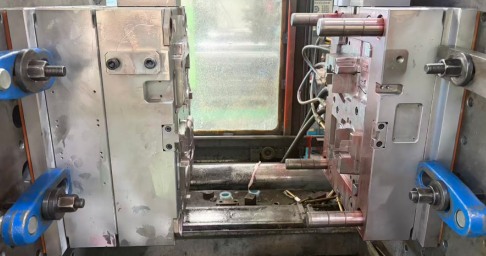
Why Do Injection Molds Require Too Many Trial Runs?
The main reason for excessive mold trials is usually not a single bad parameter. It is the accumulation of unresolved variables. A mold may have an incorrect gate location, insufficient venting, uneven cooling, difficult ejection, excessive wall variation, or an unrealistic dimensional requirement. If these issues reach the molding machine, the trial becomes a diagnostic exercise instead of a validation step.
The engineering chain is:
unresolved design variable → uncertain molding behavior → trial defect → mold modification → second trial → new interaction → additional trial.
This explains why changing one problem at a time does not always reduce trial count. A gate modification may improve filling but change weld-line location. Increasing packing pressure may reduce sink marks but increase flash or warpage. Increasing mold temperature may improve surface appearance but extend cooling requirements.
A successful trial therefore needs a defined objective before the machine starts. The team should know which dimensions are critical, which cosmetic surfaces require inspection, what material and grade will be used, and which molding parameters must remain controlled.
DFM Problems Create Trial-and-Modification Cycles
A mold trial cannot compensate for a product geometry that is fundamentally difficult to mold. Thin walls, abrupt thickness transitions, deep ribs, insufficient draft, undercuts, unbalanced filling, and poorly positioned gates can all create problems that process adjustment alone cannot solve.
This is why the design stage has a disproportionate effect on trial count. Your site’s injection mold design and manufacturing workflow includes DFM and mold-flow review before tooling, which is the correct stage to identify problems that would otherwise appear during T0 or T1.
For example, if simulation or engineering review indicates that a long flow path will produce a high-pressure region, simply increasing injection pressure during the first trial may produce a short-term result while creating excessive stress or flash elsewhere. A gate or wall-thickness modification may provide a more stable solution.
The objective of DFM is therefore not just to make the mold manufacturable. It is to remove avoidable process uncertainty before steel is cut.
Poorly Defined Product Requirements Cause Repeated Trials
A surprising number of mold trials become longer because the acceptance criteria were not defined before molding. If the customer changes the acceptable sink-mark level, color, gloss, texture, dimensional tolerance, or warpage requirement after T1, the mold may technically be correct while the project still requires another trial.
The engineering team should identify CTQ dimensions and cosmetic standards before T0. These requirements should include measurement location, tolerance, datum reference, surface appearance, and inspection method.
Without that definition, different people may evaluate the same molded part differently. One engineer may focus on dimensions while another rejects the part because of a cosmetic defect that was never formally specified.
A trial should validate an agreed specification—not discover what the specification should have been.
How Can Mold Design Reduce the Number of Trial Iterations?
Mold design determines how many problems can be corrected without modifying steel. A well-planned tool gives engineers access to process controls such as balanced filling, effective cooling, adequate venting, reliable ejection, and adjustable gates or inserts where appropriate.
The first priority is to identify variables that can be changed during molding and variables that require steel modification. Injection speed, pressure, temperature, and holding conditions can be adjusted quickly. Gate location, runner balance, vent depth, cooling layout, and core geometry usually require more substantial intervention.
The more problems that depend on steel modification, the higher the probability of additional trials.
This is why a structured DFM and mold-flow review before manufacturing can have a larger impact on trial count than simply assigning more time to mold tuning. The purpose is to identify the variables that will be difficult to change after the tool is complete.
Gate Location Determines More Than Filling
Gate position affects filling pattern, pressure distribution, weld-line location, packing efficiency, and often warpage. If the gate is fundamentally wrong, process adjustment may only move the defect rather than eliminate it.
For a large cosmetic housing, for example, placing the gate near a highly visible surface may reduce flow length but create an unacceptable gate vestige. Moving the gate to another location may improve appearance but increase weld-line risk or filling pressure.
The correct gate should therefore be evaluated against the complete part requirement rather than only fill time.
A mold-flow analysis can help identify these interactions before the mold reaches the machine. It does not replace physical validation, but it can reduce the number of major design variables entering the first trial.
Cooling Layout Controls Dimensional Stability
Cooling problems often create a particularly expensive type of trial loop because the defect may appear as warpage or dimensional drift rather than an obvious molding failure.
If one section of the mold cools significantly slower than another, the molded part can develop non-uniform shrinkage. The operator may attempt to correct this by changing mold temperature, holding pressure, or cooling time. Those adjustments may improve one measurement while creating another problem.
Cooling should therefore be treated as part of dimensional design, not simply as a way to shorten cycle time.
When a part has thick sections, deep cores, or large flat surfaces, the cooling layout should be reviewed before T0. Otherwise, the first trial may become a process experiment that reveals a thermal imbalance which requires tooling modification.
How Should the First Mold Trial Be Structured to Reduce Further Trials?
The first trial should generate useful engineering information, not simply produce a few acceptable-looking parts.
A common mistake is to immediately optimize the process for appearance. If the machine operator changes injection speed, pressure, mold temperature, holding time, and cooling time simultaneously, the team may obtain a good-looking part without understanding why it worked.
That creates a weak process window. When the material batch, machine, ambient conditions, or cycle changes later, the team may need another round of adjustment.
A better strategy is to establish a baseline first. Confirm mold temperature, resin drying condition, melt temperature, injection behavior, filling pattern, pressure response, ejection, and cooling before optimizing cosmetic and dimensional performance.
Your prototype injection molding process follows a sequence of design review, mold manufacturing, trial molding, validation, and optimization. Structuring production trials around the same logic helps separate mold-related problems from process-related problems.
Separate Filling Problems From Packing and Cooling Problems
Many trial iterations occur because engineers treat every molding defect as a general “injection parameter” problem.
Short shots and hesitation usually point toward filling behavior. Sink marks and dimensional shrinkage often involve packing and local thickness. Warpage can involve cooling imbalance, orientation, packing, geometry, or material shrinkage.
These problems should not be corrected with random parameter changes.
For example, increasing injection pressure may improve a short shot because it increases the available filling pressure. The same adjustment may increase flash if the mold has a weak parting-line condition. Increasing holding pressure may reduce sink marks while increasing internal stress and deformation.
The first trial should therefore identify the defect mechanism before changing the parameter that controls it.
Record Actual Trial Data Instead of Relying on Operator Experience
Experienced molders can often recognize defects quickly, but visual judgment alone does not provide enough information for repeatable optimization.
Each trial should record the actual resin grade, drying condition, barrel temperatures, mold temperatures, injection speed, peak injection pressure, holding pressure, holding time, cooling time, screw position, cycle time, and relevant machine settings.
The team should also record which parameter changed between trials and what physical effect followed.
This creates a cause-and-effect history. If T1 reduces warpage after changing cooling conditions, the team knows what contributed to the improvement. If T2 changes injection speed and the weld line moves, that relationship becomes part of the process window.
Without structured records, T2 often becomes a second T0.
How Can Mold Modifications Be Controlled to Avoid Endless Trial Loops?
Once a defect appears, the most important decision is whether it requires process adjustment, mold modification, or product redesign.
Process changes should handle problems that remain within the available molding window. Mold changes should address geometric or tooling limitations that process settings cannot reliably overcome. Product redesign should address requirements that the existing geometry cannot satisfy without excessive process compromise.
This classification prevents engineers from repeatedly adjusting machine parameters to solve a tooling problem.
A practical example is flash. If flash results from excessive injection pressure because the gate and flow path require unusually high pressure, reducing pressure may cause a short shot. The real issue may be filling resistance or gate design. Continuing to adjust pressure will not create a stable production window.
Make One Major Engineering Change at a Time
When several variables change simultaneously, the team loses the ability to identify the root cause.
Suppose a T1 mold trial shows warpage. The team changes mold temperature, cooling time, packing pressure, and gate geometry before T2. If the part improves, the team still does not know which change produced the improvement.
That creates another problem: the final process may work, but it may not be robust.
Major tooling changes should therefore have a defined hypothesis. For example:
Observed defect: excessive warpage on the gate-opposite side.
Hypothesis: non-uniform cooling and packing imbalance cause differential shrinkage.
Action: modify cooling efficiency and evaluate packing distribution.
Validation: compare the same CTQ dimensions under controlled molding conditions.
This approach turns each mold trial into an engineering experiment rather than a sequence of guesses.
Stop Trialing When the Remaining Problem Requires Product Revision
Not every defect should be solved inside the mold.
If a cosmetic requirement conflicts with wall thickness, gate position, draft, texture, or functional geometry, repeated tooling adjustments can consume time without producing a stable result.
For example, a designer may require an extremely thin wall for packaging aesthetics while also demanding zero sink marks around a thick boss. If the geometry creates an inherent cooling and shrinkage conflict, increasing packing pressure or cooling time may only reduce the symptom.
At that point, another trial does not address the real problem. The product geometry needs engineering review.
Recognizing this boundary is one of the most effective ways to reduce mold trial times because it prevents the mold shop from spending several trials trying to solve a product-design conflict.
Engineering Conclusion
The most effective way to reduce mold trial times is to reduce the number of unknowns entering the first trial.
The critical sequence is:
DFM → mold-flow and filling analysis → mold design review → controlled T0 → defect mechanism identification → targeted correction → validation.
A mold that reaches T0 with unresolved gate, cooling, venting, ejection, draft, or dimensional issues is not ready for process optimization. The machine operator can often make the part look better, but that does not mean the underlying mold condition is stable.
The first trial should establish whether the tool fills, packs, cools, and ejects correctly. The second trial, if necessary, should verify a defined correction—not restart the entire molding process.
For production tooling, the target should therefore not be “finish the mold with the fewest possible trials.” The engineering target is “make every trial answer a specific question and eliminate one known source of variation.”
When the design team resolves moldability before steel cutting, defines CTQs before T0, records actual molding data, and separates process corrections from tooling corrections, trial count becomes a controlled engineering variable rather than an unpredictable part of the project schedule.