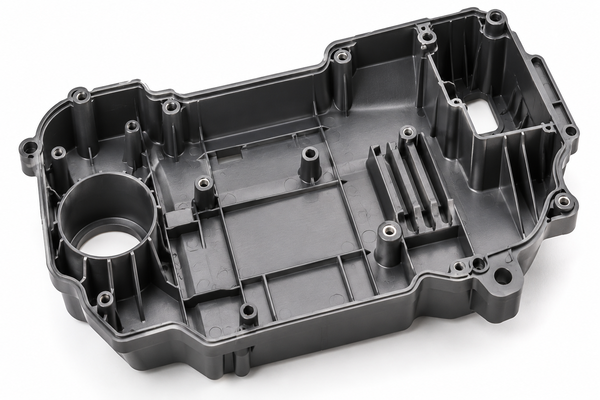
Injection mold hot spots can cause warpage, sink marks, and long cycle times. These problems often start when heat stays in one area of the mold. As a result, the plastic part may cool at different speeds.
Good mold cooling helps prevent these issues. At Fentor Mold, we review part design and cooling layouts before mold production. This helps improve part quality and reduce production risks.
What Are Injection Mold Hot Spots?
Injection mold hot spots are areas that stay hotter than the rest of the mold.
During molding, hot plastic fills the mold cavity. Heat then moves from the plastic into the steel. Cooling water helps remove this heat.
However, some areas may cool more slowly than others. These hot areas can cause defects and longer cycle times.
Hot spots often form near deep cores, thick walls, ribs, and bosses.
What Causes Injection Mold Hot Spots?
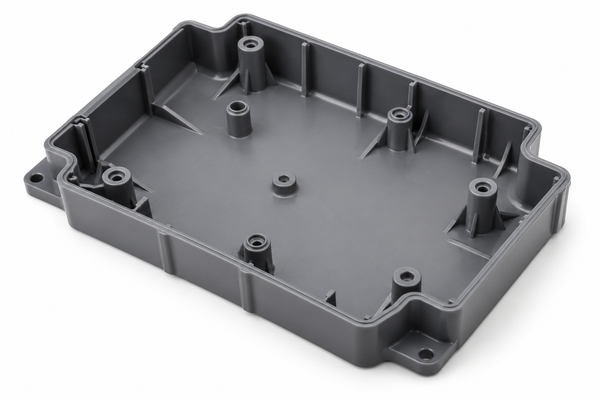
Several factors can cause mold hot spots. Most relate to poor cooling, thick parts, or mold design.
1. Poor Cooling Channel Design
Cooling channels must reach areas that hold more heat.
If a channel is too far away, that area may stay hot. Also, uneven channel spacing can lead to poor cooling.
As a result, the plastic part may shrink unevenly.
2. Thick Plastic Sections
Thick plastic sections need more time to cool.
For example, a thick boss may stay hot after nearby walls have cooled. This can cause sink marks or warpage.
Therefore, keeping wall thickness even can help reduce these problems.
3. Deep Cores and Complex Mold Parts
Deep cores are often hard to cool.
Standard cooling channels may not reach these areas. In addition, sliders and lifters can limit the space for water lines.
As a result, heat may build up in these mold areas.
4. Low Cooling Water Flow
Cooling water removes heat from the mold.
However, low water flow reduces cooling performance. Rust, scale, or blocked channels can also slow the flow.
Therefore, water lines need regular checks and cleaning.
5. Uneven Mold Temperature
Each area of the mold should cool at a suitable rate.
If water flow or water temperature differs too much, cooling may become uneven.
This can affect part size, shape, and quality.
What Problems Can Injection Mold Hot Spots Cause?
Hot spots can affect both part quality and production cost.
Warpage
Warpage occurs when one area of a part shrinks more than another.
For example, one side may cool faster than the other. As a result, the part may bend or twist.
This problem is common in large or thin plastic parts.
Sink Marks
Sink marks are small dents on a plastic surface.
They often appear near thick walls, ribs, or bosses. Poor cooling can make these marks worse.
However, packing pressure and part design also affect sink marks.
Long Cycle Times
Hot spots can increase cooling time.
Even if most of the part has cooled, one hot area may need more time. Therefore, the mold must stay closed longer.
As a result, the factory produces fewer parts each hour.
Poor Part Quality
Uneven cooling can also cause size changes and poor surface quality.
In some cases, it may lead to more rejected parts.
However, not every defect comes from cooling. Material and molding settings also play a role.
How to Find Injection Mold Hot Spots
Before fixing the problem, you need to find the hot area.
1. Check Mold Temperature
Measure the mold temperature at key points.
A thermal camera can help find hot areas on the mold surface. However, use the same test method each time.
This makes the results easier to compare.
2. Check Cooling Channels
Look at the cooling channel layout.
Check whether water lines are too far from deep cores or thick areas.
Also, look for areas with poor water flow.
3. Use Moldflow Analysis
Moldflow can help engineers study cooling before mold production.
It can show areas that may stay too hot. Therefore, engineers can improve the cooling design early.
This may reduce the need for later mold changes.
4. Test Cooling Water Flow
Check the water flow in each cooling line.
Also, check the inlet and outlet water temperatures.
If one line has low flow, look for dirt, scale, or blocked areas.
How to Fix Injection Mold Hot Spots
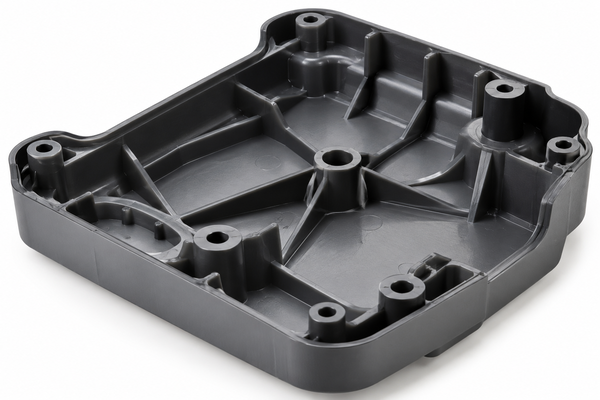
The best cooling solution depends on the mold design and the location of the hot area.
1. Improve Cooling Channel Layout
Better channel placement can help remove heat faster.
Cooling channels should be close enough to hot areas. However, they must also leave enough steel for mold strength.
Good spacing helps keep mold temperature more even.
2. Use Baffles and Bubblers
Baffles and bubblers help cool deep or narrow mold areas.
For example, a bubbler can bring cooling water into a deep core.
These tools are useful when normal water lines cannot reach the hot area.
However, water flow must still be checked.
3. Use High-Conductivity Mold Inserts
Some mold areas are too small for cooling channels.
In these cases, copper alloy inserts may help move heat away faster.
For example, a suitable high-conductivity insert can help cool a deep core.
However, the insert must also meet strength and wear needs.
4. Use Conformal Cooling
Conformal cooling uses water channels that follow the shape of the part.
This can help cool areas with complex shapes.
As a result, the mold may have a more even temperature.
However, this method often costs more than standard cooling. Therefore, it may be better for high-volume projects.
5. Improve Plastic Part Design
Sometimes, the plastic part itself causes the cooling problem.
Thick walls and heavy bosses can hold more heat.
Reducing thick areas may help the part cool faster. In addition, even wall thickness can reduce warpage.
6. Clean Cooling Channels
Dirty water lines can reduce cooling performance.
Scale and rust may block the flow of water.
Therefore, regular cleaning helps keep cooling stable.
How to Prevent Injection Mold Hot Spots
Good mold design is the best way to reduce hot spots.
Before cutting steel, engineers should check the part and cooling layout.
Key steps include:
- Keep plastic wall thickness as even as possible.
- Check deep cores and thick bosses.
- Place cooling channels near hot areas.
- Use Moldflow for complex parts.
- Check water flow during mold trials.
- Measure part size after cooling.
- Review cooling time before mass production.
At Fentor Mold, we review mold structure and cooling needs during injection mold manufacturing.
We also provide injection molding production for custom plastic parts.
Can Injection Mold Hot Spots Increase Production Cost?
Yes. Poor cooling can increase cost in several ways.
First, longer cooling time reduces daily output.
Second, poor cooling may cause more rejected parts.
Also, mold changes can add extra cost and delay production.
For example, a mold has a cycle time of 40 seconds. It can produce about 90 parts per hour.
After cooling changes, the cycle time drops to 35 seconds. Output then rises to about 103 parts per hour.
This is about 14% more output.
However, real results depend on the machine, part design, and production conditions.
When Should You Improve Mold Cooling?
You should review mold cooling if you notice these problems:
- The same part area often has sink marks.
- The part bends or twists after molding.
- Cooling time is longer than expected.
- One mold area stays much hotter than others.
- Different cavities produce parts with different sizes.
- Water flow is too low in some channels.
Before changing the mold, check the full molding process.
For example, poor packing pressure can also cause sink marks. Therefore, cooling may not be the only cause.
Conclusion
Injection mold hot spots can cause poor part quality and long cycle times.
The first step is to find where heat builds up. Then, check the cooling channels, water flow, and mold design.
Better cooling layouts, baffles, bubblers, and suitable inserts can help reduce hot spots.
In addition, good part design and regular mold care help keep cooling stable.
Need Help with Injection Mold Cooling Problems?
Fentor Mold provides custom mold design, mold making, and injection molding services.
If your mold has hot spots, warpage, or long cooling times, contact Fentor Mold to discuss your project.
Send us your 3D drawings, part material, and project needs for an engineering review.