Introduction
Injection mold transfer is the process of moving an existing injection mold from one supplier to another while maintaining production quality, tooling condition, and delivery schedules.
Many companies consider transferring their molds when the current supplier cannot meet production requirements, communication becomes difficult, lead times increase, or they need a more reliable manufacturing partner.
However, transferring an injection mold is not as simple as shipping a tool to a different factory.
A successful transfer requires a clear understanding of the mold condition, complete tooling information, machine compatibility, and a proper production validation process.
Without preparation, an injection mold transfer can lead to unexpected problems such as:
- Longer downtime
- Failed mold trials
- Part quality issues
- Additional modification costs
- Delayed mass production
A professional supplier should evaluate the existing tooling first and determine whether the mold can continue production directly or requires repair and modification before transfer.
Why Do Companies Need Injection Mold Transfer?
Companies usually do not move molds without a reason. In most cases, there is an existing production problem or a business requirement behind the decision.
The Current Supplier Cannot Meet Production Requirements
One of the most common reasons for injection mold transfer is supplier performance.
Typical problems include:
- Missed delivery schedules
- Slow engineering response
- Poor communication
- Repeated quality issues
- Lack of production capacity
- Limited technical support
A mold may still be usable, but the supplier relationship may no longer support the project requirements.
Moving the mold to a more capable supplier can reduce production risk.
Continuous Mold Problems Affect Production
Some companies decide to transfer tooling after repeated unsuccessful corrections.
Common issues include:
- Flash problems
- Short shots
- Dimensional instability
- Cosmetic defects
- Mold breakdowns
- Unstable cycle times
If the same problem appears repeatedly, changing suppliers may be more effective than continuing temporary fixes.
Before transferring the tool, it is recommended to inspect the mold condition first. Learn more about how existing tooling problems can be evaluated in our article:
Injection Mold Repair: Can Another Supplier Repair Your Mold?
Production Needs a Better Manufacturing Partner
Sometimes the original supplier can build a good mold but is not the best long-term production partner.
Companies may look for a supplier with:
- Better injection molding capability
- Stronger quality control
- Faster engineering response
- Better export experience
- More complete tooling support
A supplier that can support both mold and production can reduce future supply chain risks.
What Should Be Checked Before Injection Mold Transfer?
A successful injection mold transfer starts before the mold leaves the original supplier.
The new supplier should understand the actual condition of the tooling before accepting production responsibility.
Mold Condition Inspection
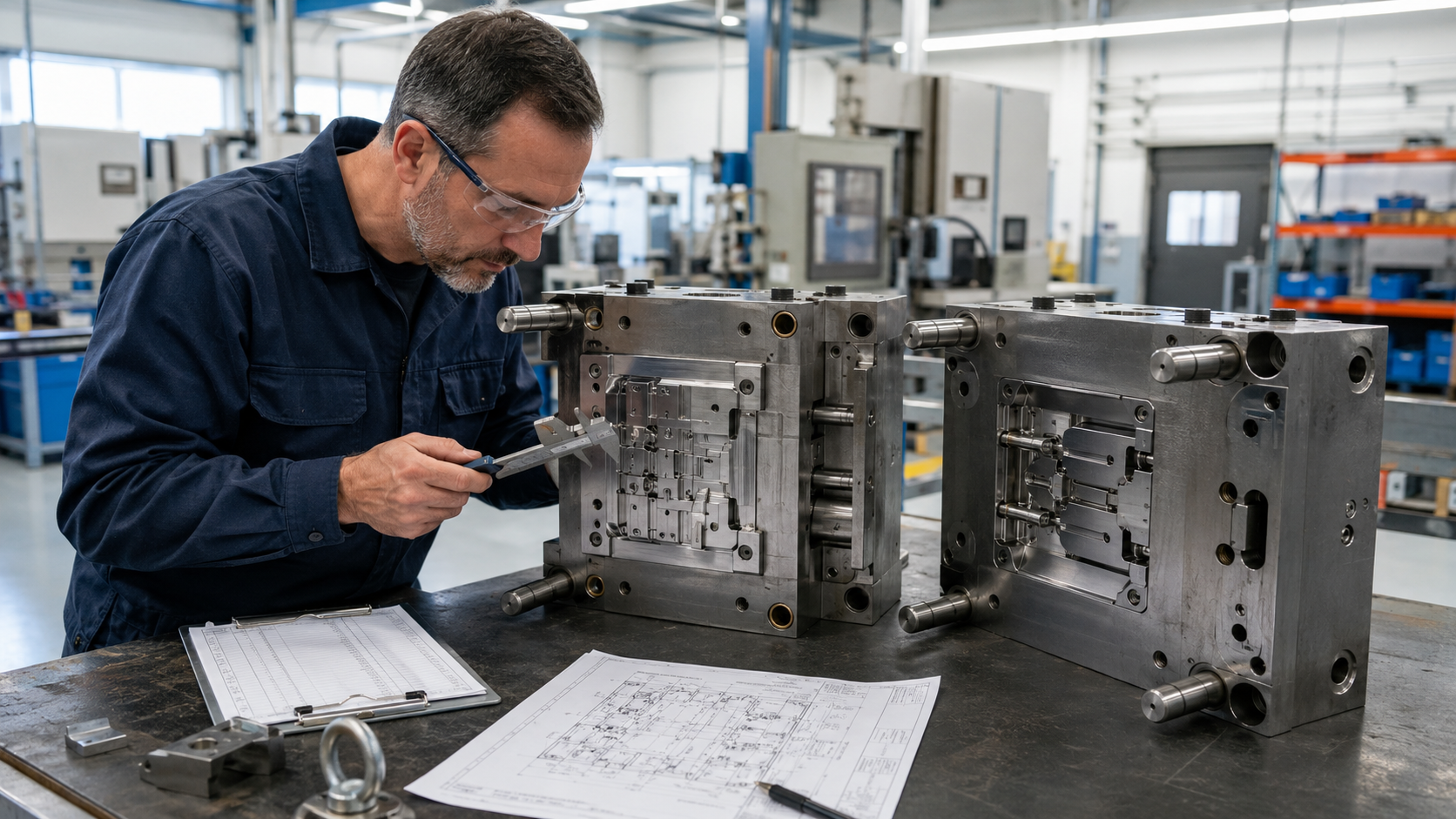
The first step is a complete mold inspection.
Important areas include:
Core and Cavity
Check:
- Wear condition
- Surface damage
- Corrosion
- Previous welding repairs
- Shut-off areas
- Surface finish
Mold Base
Check:
- Plate condition
- Guide pins
- Bushings
- Alignment
- Fasteners
Moving Components
Check:
- Sliders
- Lifters
- Ejector system
- Springs
- Return components
Cooling System
Check:
- Water channels
- Leakage
- Blockage
- Connection condition
Hot Runner System
Check:
- Heater condition
- Controller compatibility
- Nozzle condition
- Wiring
A mold that looks acceptable externally may still have hidden problems. Early inspection helps prevent unexpected downtime after transfer.
What Documents Are Needed for Injection Mold Transfer?
Documentation is one of the most important factors affecting transfer success.
A supplier receiving an existing mold should receive as much information as possible.
Mold Information
Recommended documents include:
- Mold drawings
- 3D mold data
- Mold structure drawings
- Component drawings
- Steel specifications
- Spare parts list
Part Information
Provide:
- 3D CAD files
- 2D drawings
- Material specifications
- Surface finish requirements
- Critical dimensions
- Inspection reports
Production Information
Previous production records are extremely valuable:
- Mold trial reports
- Injection parameters
- Machine information
- Previous modification records
- Quality problems
- Corrective actions
Missing documents do not always stop a transfer, but they increase engineering time and trial risk.
Can You Transfer a Mold Without Original Drawings?
Yes, in many cases.
Many buyers face this situation because the previous supplier does not provide complete tooling information, or the mold was built several years ago.
During an injection mold transfer, the new supplier may need to:
- Measure existing components
- Inspect mold structure
- Reverse engineer damaged parts
- Create missing drawings
- Produce replacement components
However, complex molds require more evaluation.
Examples include:
- Hot runner molds
- Two-shot molds
- Unscrewing molds
- Multi-cavity precision molds
Complete tooling documentation can significantly reduce transfer time.
How to Prepare a Mold Before Shipping?
Before transportation, the mold should be properly prepared.
Clean and Protect the Mold
Remove:
- Resin residue
- Oil contamination
- Dust
- Rust
Protect:
- Core surfaces
- Cavity surfaces
- Slides
- Lifters
- Precision components
Record Mold Condition
Take photos of:
- Complete mold
- Mold plates
- Core and cavity
- Components
- Labels
- Connections
These records help both suppliers confirm the mold condition before shipment.
How Does a New Supplier Validate a Transferred Mold?
After receiving the tooling, the supplier should not immediately start mass production.
A proper process includes:
Incoming Inspection → Mold Setup → Trial Molding → Sample Inspection → Approval
During the trial, engineers should check:
- Mold movement
- Part filling
- Surface appearance
- Dimensions
- Ejection performance
- Cooling performance
- Cycle time
The goal is to confirm that the mold works correctly with the new machine and production environment.
Different factories may have differences in:
- Injection machines
- Cooling systems
- Resin handling
- Process parameters
These differences can affect part quality.
Common Problems During Injection Mold Transfer
Even a good mold can experience issues after moving to another supplier.
Machine Compatibility Problems
The new factory may use equipment with different:
- Clamping force
- Injection unit size
- Platen dimensions
- Ejection system
The mold may require adjustments before stable production.
Missing Process Information
Without previous molding records, engineers may need additional time to optimize:
- Temperature settings
- Injection speed
- Holding pressure
- Cooling time
- Cycle parameters
Hidden Mold Wear
A mold may have been running successfully at the original supplier but still contain worn components.
These issues often appear during the first mold trial.
How Long Does Injection Mold Transfer Take?
The timeline depends on several factors:
- Mold complexity
- Tool condition
- Documentation availability
- Trial requirements
- Required modifications
A simple mold may only require inspection and trial confirmation.
A complex mold may require:
- Component replacement
- Mold repair
- Multiple trials
- Process optimization
A realistic transfer plan should include inspection time, trial time, and possible correction time.
How to Choose a Supplier for Injection Mold Transfer?
The right supplier should have both tooling and production experience.
Important capabilities include:
Mold Manufacturing Capability
Look for:
- CNC machining
- EDM
- Wire EDM
- Mold assembly
- Mold repair capability
Injection Molding Capability
The supplier should understand:
- Production requirements
- Process control
- Quality inspection
- Mass production management
You can learn more about our complete production capability here:
Engineering Support
A capable supplier should provide:
- DFM feedback
- Mold inspection
- Trial support
- Problem solving
- Documentation management
How Fentor Mold Supports Injection Mold Transfer Projects
Fentor Mold supports customers who need to move existing tooling from another supplier.
Our engineering team can assist with:
- Mold condition evaluation
- Tool inspection
- Mold repair
- Component replacement
- Trial production
- Production transfer support
Depending on the tooling condition, the recommended solution may include:
- Continue using the existing mold
- Repair damaged components
- Modify the tooling
- Manufacture replacement parts
- Build a new mold
Learn more about our:
Injection Mold Manufacturing Service
A successful transfer is not only about moving the physical mold.
The real goal is achieving stable production after the move.
FAQ
Can I move my injection mold to another supplier?
Yes. Many companies transfer existing molds when they need better quality, communication, production support, or cost control.
Will injection mold transfer affect part quality?
It can. Differences in machines, process settings, and production conditions may affect the final parts. Proper trial validation is necessary.
Can another supplier modify my existing mold?
Yes. A qualified mold manufacturer can inspect the tooling and recommend repair or modification if needed.
What information should I provide before transferring a mold?
Provide mold drawings, CAD files, part drawings, material information, trial reports, and previous production records whenever available.
Is transferring an existing mold cheaper than building a new mold?
Usually, yes, if the tooling condition is good. However, severely worn or unsuitable molds may require rebuilding.