
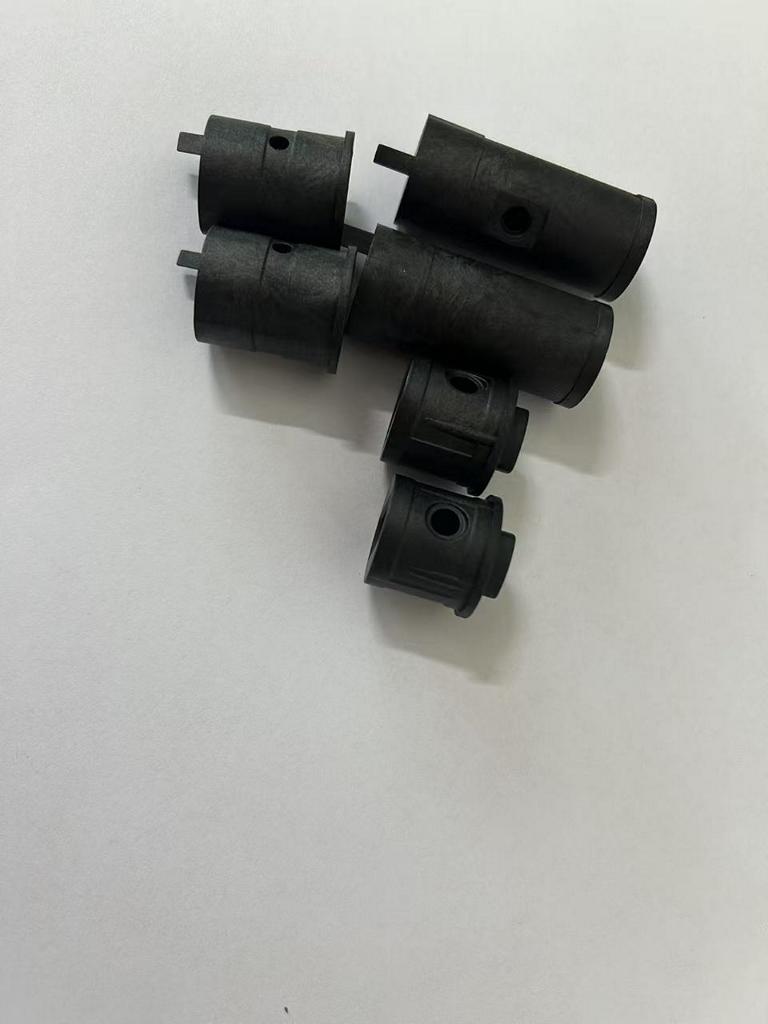
When a mold reaches the trial stage, buyers often ask one question: how many injection mold trial samples do we need?
There is no fixed number.
A simple plastic part may need only a few samples. However, a part with tight tolerances may need more. The same is true for parts that need fit or function tests.
So, the right number depends on the trial stage and the checks you need to make.
Why Injection Mold Trial Samples Matter
Injection mold trial samples help buyers see if the mold can make good parts.
They also help check the part, mold, material, and molding process.
For example, buyers may check:
- Part appearance
- Part size
- Tolerances
- Assembly fit
- Warpage
- Flatness
- Gate marks
- Weld lines
- Sink marks
- Flow marks
- Function
- Part-to-part stability
So, too few samples can make mold approval risky.
However, more is not always better.
If the mold still has clear problems, making many more parts adds little value. The mold should be fixed first.
How Many Injection Mold Trial Samples Are Usually Needed?
The number of samples usually goes up as the mold becomes more stable.
At the first trial, buyers need fewer parts. Later, they may need more parts for final checks.
Injection Mold Trial Samples for Early T0 or T1 Trials
At T0 or early T1, the main goal is simple.
The supplier needs to see if the mold works and if a full part can be made.
At this stage, the molding settings may still change.
For example, the supplier may adjust:
- Injection pressure
- Holding pressure
- Mold temperature
- Melt temperature
- Cooling time
- Injection speed
So, buyers usually do not need many parts at this stage.
In many cases, 5–10 good parts are enough.
These parts can be used to check the look, size, fit, and main molding defects.
However, if the parts already have clear problems, making 50 more samples will not help.
The mold should be fixed before the next trial.
Injection Mold Trial Samples for T1 or T2 Evaluation
After the first changes, the mold should be more stable.
At this stage, buyers often need more injection mold trial samples.
For many projects, 10–30 parts are useful.
This gives the buyer a better view of how stable the mold is.
One good part is not enough.
For example, one part may have the correct size. But the next ten parts may not be the same.
If this happens, the process is still not stable.
So, buyers should compare several parts.
This is very important for key sizes.
For parts with tight tolerances, buyers should also check the parts with the trial report and size report.
Injection Mold Trial Samples for Final Mold Approval
Before final mold approval, buyers may need more parts.
For many projects, 20–50 parts are enough for final checks.
These parts can be used for:
- Size checks
- Fit tests
- Function tests
- Appearance checks
- Customer approval
- Quality checks
- Break tests
However, the right number depends on the product.
A simple plastic cover may need only a small batch.
But a working part may need more samples for different tests.
So, the final number should match the real test plan.
Our Injection Mold service includes mold trials, part checks, and mold changes before final delivery.
When More Injection Mold Trial Samples Are Needed
Some parts need more samples.
This is common when the molded part must fit another part.
For example, it may fit with:
- Another plastic part
- A metal insert
- A seal
- A PCB
- A connector
- A moving part
In these cases, buyers should test more than one part.
One snap-fit part may fit well.
However, another part may be too tight or too loose.
So, one good fit does not prove that the mold is stable.
For these projects, buyers may need 20 or more parts for fit tests.
If the mold will later run in volume, the same part should also be checked under normal injection molding production conditions.
Injection Mold Trial Samples for Tight-Tolerance Parts
Parts with tight tolerances need more size checks.
For example, a drawing may require:
50.00 ±0.05 mm
One part may measure 50.01 mm.
That part is OK.
However, one result does not show if the process is stable.
Five parts may measure:
- 49.97 mm
- 49.99 mm
- 50.01 mm
- 50.03 mm
- 50.04 mm
Now the buyer can see the range much better.
So, key sizes should be checked on several parts.
Do not rely on only one sample.
This is more important for parts with:
- Long shapes
- Thin walls
- Glass fiber
- Large flat areas
- Many sliders
- Many lifters
- Deep ribs
- Hard-to-cool areas
These features can make size control harder.
Injection Mold Trial Samples for Multi-Cavity Molds
Multi-cavity molds need another check.
If a mold has four cavities, samples from only one cavity are not enough.
Each cavity can be a little different.
The cause may be:
- Machining
- Cooling
- Gate balance
- Venting
- Filling pressure
So, buyers should request parts from every cavity.
For example, with a four-cavity mold, ask for five parts from each cavity.
That is better than asking for 20 mixed parts.
Also, each part should show its cavity number.
Then the buyer can compare each cavity more easily.
Should Injection Mold Trial Samples Come From Different Cycles?
For key projects, yes.
Parts from only one short run may not show the full process condition.
So, collect parts from different cycles.
Do this after the molding process is stable.
This can help find problems such as:
- Heat changes
- Warpage
- Size changes
- Material changes
- Cooling problems
Also, a small issue in the trial can become a bigger issue later.
For example, trapped air may look minor at first.
However, it may become worse during a long run.
Poor cooling can do the same.
Loose or unstable mold parts can also cause problems later.
So, buyers should not look at only one perfect part.
They should also check if the process stays stable.
How Many Injection Mold Trial Samples Are Too Many?
At an early trial, buyers usually do not need hundreds of parts.
For example, asking for 100 or 200 parts from a mold that still needs work may waste resin and machine time.
A better way is to increase the number step by step.
First, check the mold and major defects.
Next, check size and fit.
Then, ask for more parts after the mold becomes stable.
However, some projects do need a larger batch.
For example:
- Auto assembly tests
- Packing tests
- Drop tests
- Life tests
- Pilot runs
- Customer tests
- Medical tests
- Process studies
In these cases, the buyer should agree on the sample number before the trial.
Who Should Pay for Extra Trial Samples?
This should be clear before mold work starts.
The quote should state:
- Number of mold trials
- Material included
- Normal sample number
- Shipping terms
- Extra sample cost
- Extra machine cost
For example, the quote may include 20 samples.
If the buyer later asks for 300 parts, extra cost may apply.
This may include resin, machine time, labor, and shipping.
So, clear terms can help avoid disputes.
What Buyers Should Check With Injection Mold Trial Samples
Sample number is important.
However, it is only one part of mold approval.
Buyers should also check how the samples were made.
The parts should come from normal production settings.
For example, check:
- Correct material
- Correct drying
- Stable mold settings
- Correct mold heat
- Normal cycle time
- Enough cooling
- Stable part size
- Good appearance
- Correct fit
- Normal mold movement
A perfect part made with a very long cooling time may not show the real production result.
Also, special trial settings may make a part look good.
But those settings may not work well in long production.
So, buyers should review the process together with the samples.
You can also see more tooling projects in our Case Study section.
A Practical Sample Quantity Reference
The numbers below are a useful starting point:
| Mold Trial Stage | Suggested Quantity | Main Purpose |
|---|---|---|
| T0 / Early Trial | 5–10 good parts | Check filling, appearance, and main problems |
| T1 / T2 Trial | 10–30 parts | Check size, fit, and stability |
| Final Approval | 20–50 parts | Final size and function checks |
| Multi-Cavity Mold | Parts from every cavity | Compare each cavity |
| Validation Project | 50–200+ parts | Testing, pilot runs, or validation |
However, these numbers are only a guide.
The right number depends on the part, tolerance, mold design, and test needs.
Final Thoughts
Buyers do not need the same number of injection mold trial samples at every stage.
At an early trial, 5–10 good parts may be enough.
Later, 10–30 parts can help check size, fit, and stability.
Finally, 20–50 parts may be useful before mold approval.
However, the number is not the only thing that matters.
The molding process should also be stable.
Buyers should check every cavity when needed.
They should also use enough parts to see if the results stay the same.
As a result, mold approval becomes safer.
It can also reduce problems before full production starts.