
Simple Mold Designs Are Often the Best
Most injection molds do not need special or complicated mold structures. Many molds only use common mechanisms such as mechanical slides, lifters, or unscrewing systems.
A good mold is not only about making good parts. It should also support stable and efficient production. In modern factories, automation is a key part of successful injection molding.
One common problem appears after the ejector system pushes the part out of the mold. If the part does not drop by itself, the production line may stop.
Learn more about professional injection mold manufacturing at https://www.fentormold.com/.
Automatic Part Release Is Important
Many injection molding factories use:
- Robots
- Conveyor belts
- Automatic packing systems
- Vision inspection systems
The ideal process is simple. The mold opens, the ejector system pushes the part out, and the part drops onto the conveyor automatically.
If the part stays inside the mold, the robot may fail to pick it up. The machine may stop, and workers may need to remove the part by hand. This lowers production efficiency and increases labor costs.
Why Too Many Lifters Cause Problems
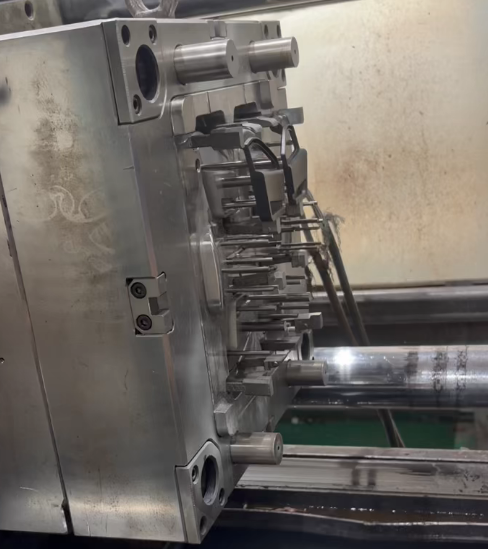
Lifters are common in injection mold design. They help release undercuts that straight ejection cannot handle.
However, every lifter moves at an angle. During ejection, it pushes the part upward and sideways at the same time.
When a mold has many lifters, each lifter creates its own side force.
This can cause several problems:
- Uneven ejection force
- Different movement speeds
- Side movement during ejection
- The part follows one lifter instead of separating from the mold
As a result, the part may stay on the lifter instead of falling freely.
Poor Ejection Balance Hurts Automation
Many molds pass the trial stage without any obvious issues. The parts come out of the mold, so everything seems fine.
The real challenge starts during mass production.
After thousands of molding cycles, factories may see problems such as:
- Parts hanging on lifters
- Parts sticking to the core
- Parts failing to drop
- Robot pick-up errors
- Conveyor interruptions
- Machine downtime
In many cases, the mold structure causes these problems, not the molding process.
Even a small failure rate can reduce the efficiency of a fully automatic production line.
How to Improve Automatic Part Release
Good mold designers think about automation from the beginning.
Reduce the Number of Lifters
Use fewer lifters whenever possible.
Sometimes a small product design change can remove an undercut and eliminate one or more lifters.
Fewer lifters usually mean more stable ejection.
Balance the Ejection Force
Arrange ejector pins, sleeves, blocks, and lifters carefully.
Balanced force helps the part move straight during ejection.
Choose the Right Lifter Angle
A larger lifter angle is not always better.
A suitable angle can:
- Reduce friction
- Lower side force
- Improve part release
- Increase production stability
Add Extra Release Features
Some products need additional help.
Possible solutions include:
- Air blow-off
- Two-stage ejection
- Delayed lifter movement
- Part deflectors
- Automatic part removal devices
These features may increase mold cost, but they often improve long-term production efficiency.
Optimize the Product Design
Many automation issues start with the product design.
Deep undercuts, large ribs, or strong core engagement can make automatic release difficult.
Product designers and mold engineers should work together early in the project.
Think About Automation During Mold Design
Today, a good mold should do more than produce qualified parts.
It should also:
- Run for long production cycles
- Support automatic operation
- Reduce downtime
- Lower maintenance costs
- Improve production efficiency
A mold that releases parts automatically can save both time and money.
Conclusion
Most injection molds only need standard structures such as slides, lifters, and unscrewing mechanisms. Complex designs are not always better.
Too many lifters can create unbalanced ejection forces. The molded part may move with the lifter instead of dropping freely. This can interrupt automated production and reduce factory efficiency.
A good mold design focuses on stable ejection, balanced force, and reliable automation. These details help manufacturers achieve higher productivity and lower operating costs.