
Injection molding for home appliances is widely used to manufacture plastic components for coffee machines, water dispensers, washing machines, robot vacuum cleaners, refrigerators, air conditioners, and other appliances. The right molding process depends on part geometry, material, production volume, appearance, dimensional requirements, and tooling cost.
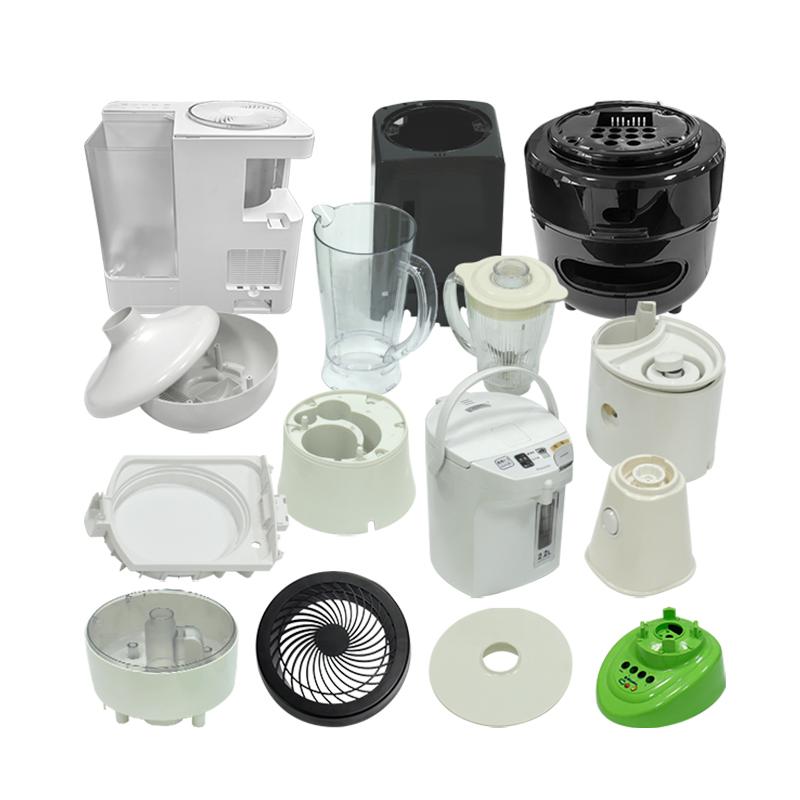
From coffee machines and water dispensers to washing machines, robot vacuum cleaners, refrigerators, air conditioners, microwave ovens, and electric fans, injection molding is widely used to manufacture home appliance components.
Standard injection molding is suitable for many housings, covers, trays, brackets, knobs, and structural parts. However, some components may benefit from two-shot molding, overmolding, insert molding, gas-assisted injection molding, thin-wall molding, or in-mold decoration.
For appliance manufacturers and purchasing teams, the important question is not simply which molding technology is available. The better question is which process provides the right combination of quality, tooling cost, production efficiency, and long-term reliability for the specific part.
Key Takeaways
- Injection molding is one of the most versatile manufacturing processes for plastic home appliance components.
- Coffee machines and water dispensers require a combination of cosmetic, structural, water-contact, and functional plastic parts.
- Washing machines, robot vacuum cleaners, refrigerators, air conditioners, microwave ovens, and fans also use many injection molded components.
- Two-shot molding and overmolding are useful for appliance buttons, handles, grips, seals, and decorative components.
- Material selection affects heat resistance, chemical resistance, strength, appearance, shrinkage, and dimensional stability.
- Mold design, cooling, gating, cavity number, and steel selection influence tooling cost and production performance.
- A DFM review before mold manufacturing can reduce tooling changes, molding defects, and production risk.
Why Is Injection Molding Widely Used for Home Appliances?
Home appliances contain many plastic components that require repeatable dimensions, consistent appearance, and economical mass production.
Injection molding is particularly suitable because manufacturers can produce complex three-dimensional parts with features such as:
- Ribs
- Bosses
- Snap fits
- Clips
- Mounting points
- Louvers
- Handles
- Threads
- Decorative surfaces
- Internal structural features
For example, a washing machine may contain injection molded control panels, detergent trays, knobs, covers, brackets, and internal components.
A robot vacuum cleaner may use injection molding for its upper housing, bumper, brush components, dust-bin components, wheel covers, charging base, and internal structural parts.
A refrigerator can contain injection molded structural and cosmetic components, while an electric fan may use molded housings, blades, grilles, knobs, and motor supports.
The common advantage is repeatability. Once the mold and molding process are properly developed, the same part can be produced thousands or millions of times with controlled dimensions.
For manufacturers that need both tooling and production, Fentormold can support projects from mold development through Injection Molding Production, helping customers move from tooling into stable mass production.
What Home Appliances Commonly Use Injection Molded Parts?
Injection molding can be applied to almost every major home appliance category.
| Home Appliance | Typical Injection Molded Components |
|---|---|
| Coffee Machine | Housing, water tank, drip tray, buttons, handle, internal brackets |
| Water Dispenser | Housing, water tank, bottle support, drip tray, faucet components |
| Washing Machine | Control panel, detergent tray, knobs, covers, brackets |
| Robot Vacuum Cleaner | Upper housing, bumper, dust bin, wheel covers, brush components |
| Refrigerator | Handles, trays, bins, covers, structural components |
| Air Conditioner | Front panels, louvers, fan components, covers, brackets |
| Electric Fan | Housing, blades, grille, knobs, motor supports |
| Microwave Oven | Control panel, knobs, handles, internal plastic components |
| Dishwasher | Control panels, handles, trays, brackets, covers |
| Air Purifier | Housing, air guides, filter frames, control panels, covers |
This broad application range is one reason appliance manufacturers need suppliers with experience in both injection mold manufacturing and injection molding production.
For projects that require complete tooling support, Fentormold provides Injection Mold Design & Manufacturing for plastic components used across different industries.
Which Injection Molding Process Is Best for Coffee Machines?
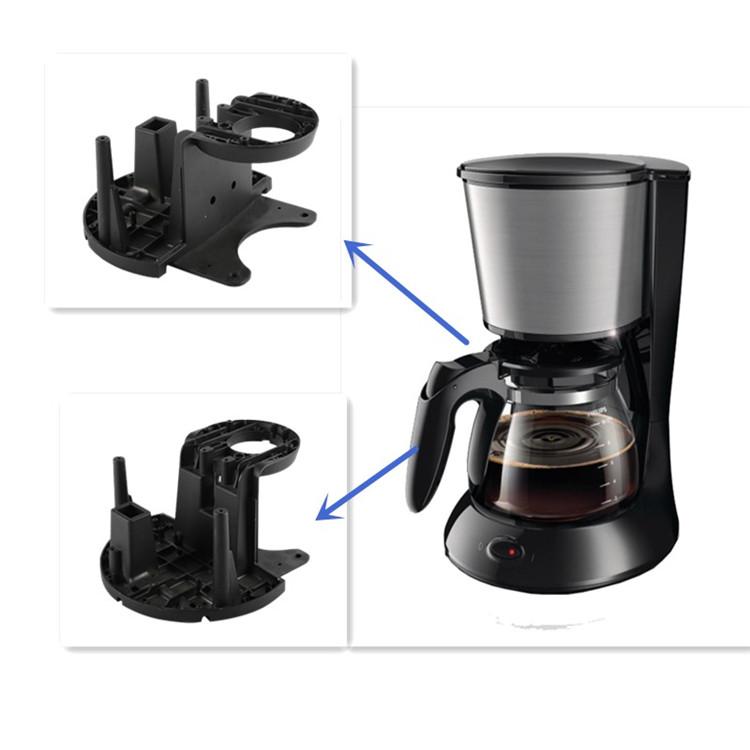
Coffee machines are a good example of why one appliance can require several molding solutions.
The outer housing usually needs good appearance, dimensional stability, and resistance to repeated handling. Standard injection molding is often suitable for this type of component.
Other components may have different requirements.
| Coffee Machine Component | Important Requirement | Possible Molding Solution |
| Outer housing | Appearance and dimensional stability | Injection molding |
| Water tank | Water resistance and dimensional stability | Injection molding |
| Drip tray | Chemical and impact resistance | Injection molding |
| Control buttons | Appearance and repeated operation | Injection / two-shot molding |
| Handle | Strength and comfort | Injection / overmolding |
| Internal bracket | Rigidity and heat resistance | Injection molding |
| Gear | Wear resistance | Precision injection molding |
For premium coffee machines, manufacturers may also consider two-shot molding or in-mold decoration for control panels and user-interface components.
The material selection should be based on the actual operating environment. External housings, water-contact components, high-temperature areas, and internal mechanical components may require different resins.
Which Injection Molding Process Is Best for Water Dispensers?
Water dispensers have a different combination of requirements.
Many components need to manage water, repeated cleaning, mechanical loading, or frequent user interaction.
Common injection molded components include:
- Outer housing
- Water tanks
- Bottle supports
- Drip trays
- Faucet components
- Control panels
- Buttons
- Handles
- Internal brackets
- Decorative covers
For water-contact components, material selection is especially important. The resin should be evaluated according to water exposure, temperature, chemical resistance, dimensional stability, and the applicable product requirements.
Large water dispenser housings also require careful cooling design because uneven cooling can lead to warpage.
In actual mold production, large appliance housings often look simple but can become difficult to manufacture when wall thickness varies significantly. Proper gate placement and cooling design should therefore be considered before mold steel is ordered.
How Is Injection Molding Used for Washing Machines?
Washing machines contain a large number of plastic components, ranging from visible cosmetic parts to internal structural components.
Typical examples include:
- Control panels
- Detergent drawers
- Knobs
- Buttons
- Handles
- Covers
- Water guides
- Brackets
- Protective housings
- Internal supports
Large washing machine components require special attention to warpage and dimensional stability.
For example, a control panel may need to fit accurately against the metal frame while maintaining a consistent cosmetic appearance. If the plastic panel warps during cooling, assembly problems may occur even when the part dimensions appear acceptable in isolated measurements.
For high-volume washing machine production, mold cavity number and cycle time can also have a significant impact on the final unit cost.
How Is Injection Molding Used for Robot Vacuum Cleaners?
Robot vacuum cleaners combine cosmetic housings, moving components, electronic parts, and structural assemblies.
Common molded parts include:
- Upper housings
- Lower housings
- Bumpers
- Dust bins
- Brush components
- Wheel covers
- Charging-base housings
- Sensor covers
- Buttons
- Internal brackets
The appearance of a robot vacuum cleaner is particularly important because consumers interact with the product visually.
At the same time, the housing must maintain accurate assembly interfaces for electronic components, motors, sensors, wheels, and internal mechanisms.
This makes mold design especially important.
Ribs, bosses, clips, screw towers, and mounting points should be positioned carefully to avoid unnecessary sink marks and deformation on visible surfaces.
How Is Injection Molding Used for Refrigerators?
Refrigerators use injection molded components for both internal and external applications.
Examples include:
- Door handles
- Storage bins
- Shelves and supports
- Covers
- Control panels
- Decorative components
- Brackets
- Fan-related components
Large refrigerator components can require significant mold investment because of their size and surface requirements.
For these parts, mold structure, cooling layout, injection balance, and ejection design must be evaluated together.
If the annual production volume is high, a multi-cavity or optimized production mold may provide a better long-term economic result even when the initial tooling investment is higher.
How Is Injection Molding Used for Air Conditioners and Electric Fans?
Air conditioners and electric fans also rely heavily on injection molded components.
Air conditioner applications may include:
- Front panels
- Air louvers
- Covers
- Fan components
- Filter frames
- Brackets
- Decorative parts
Electric fan applications may include:
- Fan blades
- Motor housings
- Front and rear grilles
- Control knobs
- Bases
- Covers
- Internal supports
Fan blades and air-guiding components require particular attention to balance, dimensional stability, and surface quality.
For large visible panels, cooling and mold filling should be analyzed carefully because uneven shrinkage can cause warpage.
When Should You Use Two-Shot Molding for Appliances?
Two-shot molding is useful when one appliance component needs two materials or two colors.
Typical applications include:
- Control buttons
- Knobs
- Decorative panels
- Handles
- User-interface components
- Two-color switches
For example, a coffee machine button can combine a rigid plastic substrate with another material or color to create a clearer operating interface.
A washing machine control panel may also use two-color molding to create visual differentiation between buttons and the main panel.
The main advantage is that two materials or colors can be integrated into one component, potentially reducing separate assembly operations.
For projects involving two different materials or colors, Two-Shot Molding vs Overmolding explains the main differences and design considerations.
When Is Overmolding Better for Home Appliances?
Overmolding is useful when an appliance component needs a second material over a previously molded substrate.
Typical applications include:
- Soft-touch handles
- Grips
- Buttons
- Sealing surfaces
- Vibration-reduction components
A hard plastic substrate can be combined with TPE or another suitable material to improve grip and user comfort.
For a coffee machine or water dispenser, this can be useful for handles that are frequently touched by the user.
The key engineering considerations include material compatibility, bonding strength, shrinkage, surface preparation, and mechanical interlocking.
Two-shot molding and overmolding should therefore be selected according to the part design rather than simply the desired appearance.
When Is Insert Molding Useful for Appliances?
Insert molding is used when a plastic part needs to integrate a metal or other preformed component during injection molding.
Potential appliance applications include:
- Metal threaded inserts
- Electrical contacts
- Bushings
- Shafts
- Structural inserts
- Conductive components
The advantage is that the insert can become part of the molded assembly without requiring a separate installation operation.
However, insert positioning is critical. The mold must securely locate the insert during injection while maintaining the required dimensional relationship with the finished plastic part.
For projects involving guide pins, bushings, ejector components, mold inserts, or other precision tooling parts, Fentormold also provides Components Manufacturing support.
Can Gas-Assisted Injection Molding Reduce Appliance Part Weight?
Gas-assisted injection molding can be considered for large or thick appliance components where reducing weight and sink marks is important.
The process introduces gas into selected areas of the molten plastic, creating partially hollow sections.
Potential applications include:
- Large housings
- Structural panels
- Handles
- Large covers
- Appliance frames
The potential benefits include lower material consumption, reduced weight, and improved rigidity-to-weight ratio.
However, gas-assisted molding requires specialized equipment and careful mold design. The gas channel, wall thickness, injection parameters, and material flow must be evaluated before selecting the process.
For many standard appliance components, conventional injection molding may still provide a more economical solution.
How Does Material Selection Affect Appliance Injection Molding?
Material selection is one of the most important decisions before mold manufacturing.
Different appliance components may require very different material properties.
| Material | Key Advantages | Typical Appliance Applications |
| ABS | Appearance, impact resistance, easy processing | Housings, control panels |
| PC/ABS | Impact resistance and appearance | Premium housings, panels |
| PP | Chemical resistance and low density | Tanks, trays, containers |
| PC | Strength and heat resistance | Transparent or structural parts |
| POM | Low friction and wear resistance | Gears, moving components |
| PA | Strength and wear resistance | Mechanical and structural parts |
| TPE | Flexibility and soft touch | Handles, grips, seals |
The final resin should be selected according to actual operating conditions rather than simply choosing the lowest-cost material.
For example, the resin used for a coffee machine’s external housing may not be appropriate for a high-temperature internal component.
Likewise, a water-contact component requires different evaluation from a decorative cover.
How Does Mold Design Affect Home Appliance Part Quality?
Mold design directly affects part quality, cycle time, tooling life, and production stability.
Important design factors include:
- Gate location
- Runner system
- Cooling channels
- Venting
- Ejection
- Draft angle
- Parting line
- Rib thickness
- Boss design
- Shrinkage compensation
- Mold steel
- Surface texture
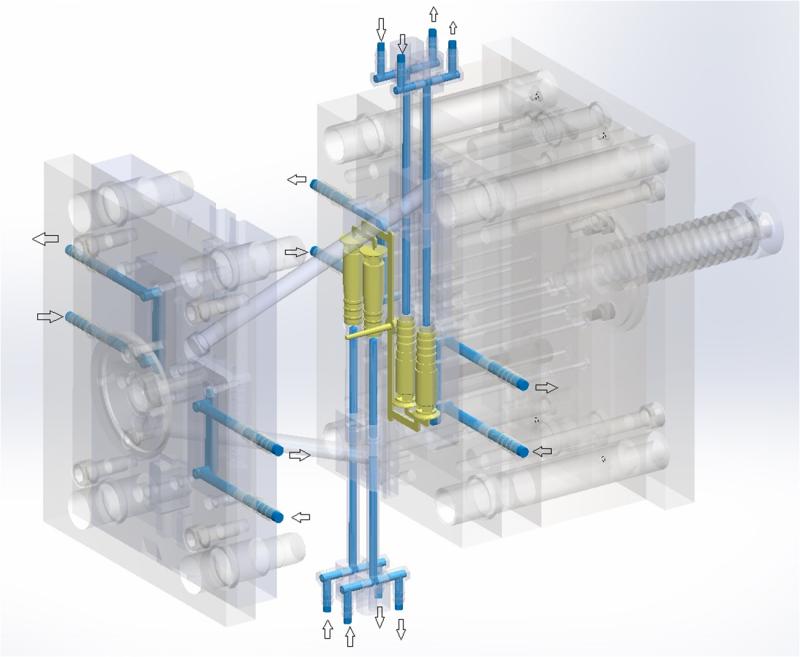
For large appliance housings, cooling is especially important.
Uneven cooling can create differential shrinkage and warpage. A part may then fail to align correctly with the internal assembly even when the mold dimensions appear correct.
This is why DFM should be completed before mold manufacturing.
A practical engineering review should identify thin walls, thick sections, deep ribs, undercuts, sharp corners, cosmetic surfaces, and critical assembly datums before tooling begins.
What Affects Home Appliance Injection Mold Cost?
Home appliance mold cost depends on more than the physical size of the component.
The main factors include:
| Factor | Effect on Mold Cost |
| Part size | Larger mold and machine requirements |
| Part complexity | More machining and mold mechanisms |
| Cavity number | Higher initial tooling cost |
| Mold steel | Determines durability and machining cost |
| Hot runner | Can increase tooling investment |
| Slides and lifters | Add mold complexity |
| Surface finish | Adds polishing or texturing work |
| Tight tolerances | Increase manufacturing requirements |
| Annual volume | Determines tooling economics |
| Expected tool life | Influences steel and component selection |
For high-volume appliance programs, buyers should compare total production cost, not only the initial mold quotation.
A more expensive mold can sometimes provide lower unit cost through faster cycles, better durability, lower scrap, and reduced maintenance.
How Should Buyers Choose a Home Appliance Injection Molding Supplier?
Choosing a supplier is one of the most important decisions in an appliance project.
A supplier should be evaluated on:
DFM and Engineering Capability
The supplier should identify potential filling, cooling, warpage, ejection, and assembly problems before mold manufacturing.
Mold Manufacturing Capability
The supplier should have the machining, EDM, grinding, polishing, assembly, and inspection capabilities required for the mold.
Injection Molding Production Capability
The supplier should have suitable injection molding machines, quality control systems, and production capacity for the expected annual volume.
For appliance buyers, this is important because the project does not end when the mold is completed. Stable Injection Molding Production is necessary to maintain consistent part quality throughout mass production.
Quality Control
The supplier should be able to verify critical dimensions and manage cosmetic requirements consistently.
Material Experience
The engineering team should understand the processing characteristics, shrinkage, and performance requirements of the selected resin.
Production Support
For high-volume appliance programs, long-term mold maintenance and production support can be as important as the initial tooling quotation.
If you need a supplier that can move your project from mold development into production, Fentormold can support Injection Molding Production after tooling is completed.
Common Injection Molding Problems in Home Appliance Parts
Home appliance parts can experience several common molding defects.
Warpage
Large panels and housings are especially sensitive to uneven cooling and material shrinkage.
Sink Marks
Thick ribs and bosses behind visible surfaces can create sink marks if the wall structure and packing conditions are not optimized.
Weld Lines
Weld lines can occur where multiple flow fronts meet around holes, inserts, ribs, or other features.
Short Shots
Thin-wall components may experience incomplete filling when the flow length is too long or the process is not properly optimized.
Flash
Flash can result from excessive injection pressure, mold wear, or insufficient clamping and parting-line control.
Many of these problems can be reduced through DFM, mold flow analysis, appropriate gate placement, and proper cooling design before production begins.
FAQ About Injection Molding for Home Appliances
What Is the Most Common Injection Molding Process for Home Appliances?
Standard injection molding is the most versatile option for many home appliance plastic components because it can produce complex 3D parts with repeatable dimensions at production volume.
What Materials Are Used for Home Appliance Injection Molding?
ABS, PC/ABS, PP, PC, PA, POM, and TPE are commonly considered depending on the component’s strength, heat resistance, chemical exposure, wear requirements, appearance, and operating environment.
How Much Does a Home Appliance Injection Mold Cost?
There is no fixed price because tooling cost depends on part size, complexity, cavity number, steel, surface finish, tolerances, hot runner requirements, mold mechanisms, and expected production volume. A 3D model and project requirements are normally needed for an accurate quotation.
How Long Does It Take to Make a Home Appliance Injection Mold?
Mold lead time depends on part size, complexity, steel, cavity number, surface requirements, and the required mold mechanisms. A simple production mold may have a much shorter lead time than a large multi-cavity appliance mold with complex slides and cosmetic requirements.
How Do I Choose a Home Appliance Injection Molding Supplier?
Compare suppliers based on DFM capability, mold manufacturing, injection molding production capacity, quality control, material experience, tooling maintenance, and engineering support rather than comparing the initial mold quotation alone.
Can One Supplier Handle Both Mold Making and Injection Molding Production?
Yes. Using one supplier for mold manufacturing and injection molding production can simplify communication, reduce handover risks, and make it easier to maintain consistent quality from tooling through mass production.
Conclusion: Choose the Right Molding Process Before Tooling
Home appliance injection molding covers a much wider range of applications than housings alone.
Coffee machines, water dispensers, washing machines, robot vacuum cleaners, refrigerators, air conditioners, microwave ovens, electric fans, dishwashers, and air purifiers all contain plastic components with different functional and cosmetic requirements.
Standard injection molding is often the starting point, but two-shot molding, overmolding, insert molding, gas-assisted molding, and in-mold decoration can provide better solutions for specific components.
For purchasing teams, the best approach is to evaluate part geometry, material, annual volume, appearance, tolerance, assembly requirements, tooling cost, and production risk before selecting the mold structure.
The supplier should also be able to support the project beyond mold manufacturing. Moving directly from tooling into stable Injection Molding Production can simplify project management and help maintain consistent quality during mass production.
Need help selecting the right molding process for your home appliance parts?
Fentormold can review your 3D files, target material, annual volume, surface requirements, and critical tolerances to recommend a practical mold and production solution for your project.