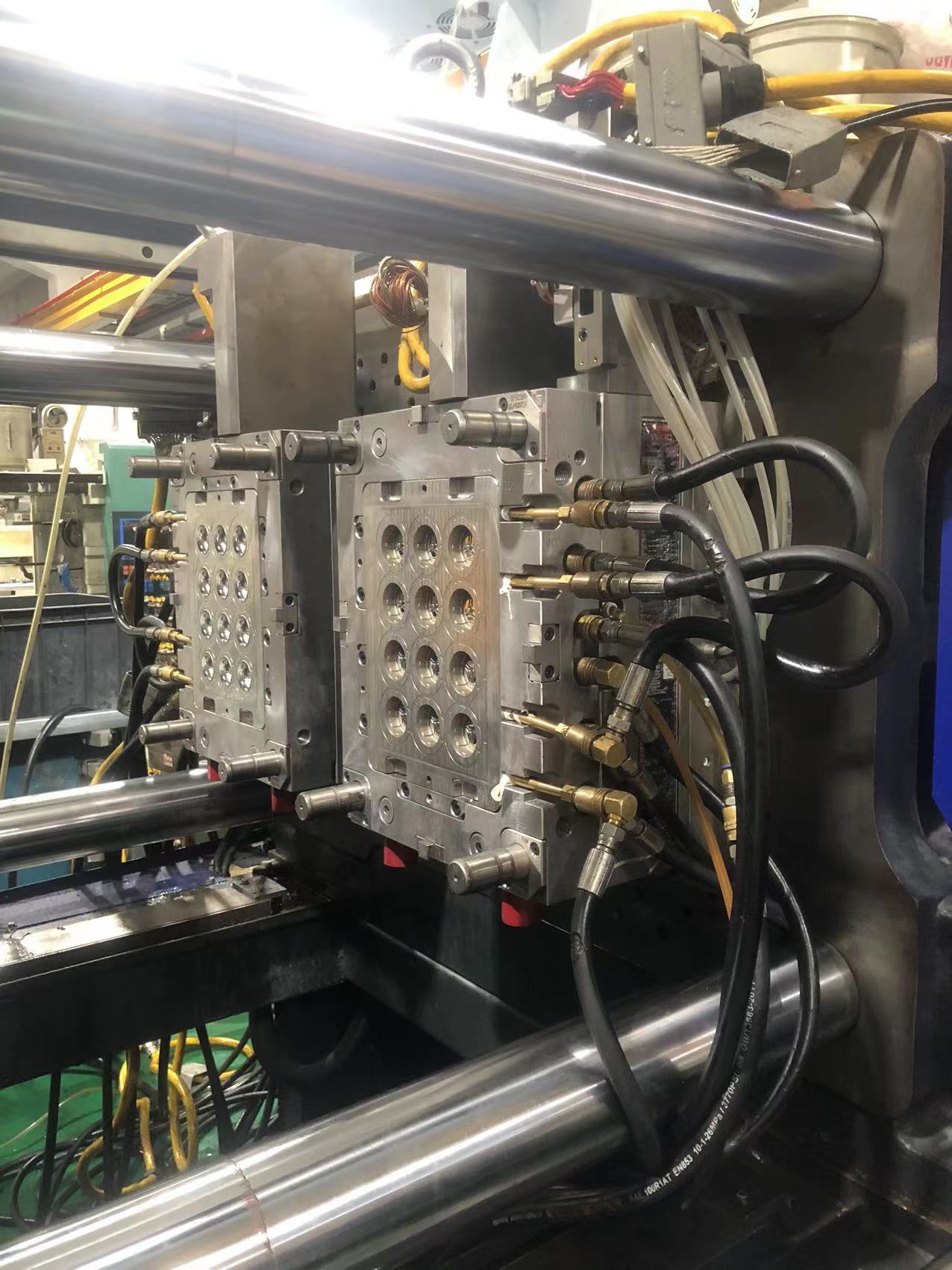
Injection molding tooling cost can vary widely between a prototype mold and a full production mold. A simple prototype tool may cost only a fraction of a hardened production mold. However, the lowest initial mold price does not always mean the lowest total project cost.
The right tooling choice depends on part quantity, material, mold life, surface requirements, dimensional tolerance, and future production plans.
For buyers, the key question is therefore not only, “How much does the mold cost?” Instead, it is better to ask, “Which tooling level gives the best balance between cost, quality, lead time, and expected production volume?”
At Fentor Mold, we evaluate these points before recommending prototype or production tooling. This approach helps avoid both overbuilding a mold and choosing a tool that is too weak for the real production demand.
What Determines Injection Molding Tooling Cost?
Several factors directly affect injection molding tooling cost. Tool steel is important, but it is only one part of the total price.
The main cost drivers include:
- Part size
- Part complexity
- Number of cavities
- Mold material
- Mold base size
- Slider and lifter quantity
- Hot runner or cold runner design
- Surface finish requirements
- Tolerance requirements
- Mold life target
- Automation requirements
- Expected annual production volume
For example, a simple single-cavity ABS cover can use a relatively basic mold structure. In contrast, a multi-cavity engineering plastic part with sliders, inserts, tight tolerances, and a hot runner system will require more machining and assembly work.
As a result, two parts of similar size can have very different tooling costs.
Injection Molding Tooling Cost for Prototype Molds
Prototype tooling is mainly designed for development, validation, market testing, or low-volume production.
Because the expected mold life is lower, manufacturers can often simplify the mold structure and use lower-cost materials.
For example, prototype tooling may use:
- Aluminum
- P20 steel
- Pre-hardened steel
- Simplified mold bases
- Manual inserts
- Reduced automation
- Fewer cavities
Therefore, the initial injection molding tooling cost is usually lower than that of production tooling.
Prototype molds are especially useful when the product design may still change.
Why Prototype Tooling Costs Less
Prototype tools normally require less machining time. In addition, they often need less polishing, less automation, and fewer high-wear components.
A manufacturer may also simplify the cooling layout or use manual inserts instead of expensive sliders.
These choices reduce both mold cost and lead time.
However, they also limit production speed and mold life.
Injection Molding Tooling Cost for Production Molds
Production tooling is designed for stable, repeated manufacturing over a longer period.
A production mold may need to produce tens of thousands, hundreds of thousands, or even millions of parts.
Therefore, the mold must provide:
- Stable dimensions
- Repeatable cycle times
- Reliable cooling
- Durable moving components
- Better wear resistance
- Easier maintenance
- Consistent part quality
Because of these requirements, injection molding tooling cost is normally higher for production molds.
Production tooling often uses hardened steels such as H13, S136, 1.2344, or other grades selected according to resin, mold life, and surface requirements.
For long-term production projects, a stronger tool can reduce repair frequency and downtime.
You can learn more about our full injection mold manufacturing process from design review through machining, assembly, trial, and final mold validation.
Prototype vs Production Injection Molding Tooling Cost
The following comparison shows the main differences.
| Factor | Prototype Tooling | Production Tooling |
|---|---|---|
| Initial tooling cost | Lower | Higher |
| Mold life | Short to medium | Medium to very long |
| Lead time | Faster | Longer |
| Tool material | Aluminum or pre-hardened steel | Hardened tool steel |
| Cavities | Usually fewer | Often multiple |
| Cooling system | Basic to moderate | Fully optimized |
| Automation | Limited | More common |
| Cycle time | Less critical | Highly important |
| Design changes | Easier | More expensive |
| Production quantity | Low volume | Medium to high volume |
The most important difference is not simply mold price. Instead, it is the intended production purpose.
A prototype mold may be more economical for 500 to 5,000 parts. However, the same tool may become expensive if it needs constant repair while producing 100,000 parts.
How Production Volume Changes Injection Molding Tooling Cost
Production quantity is one of the most important factors when choosing tooling.
For low quantities, buyers usually focus on reducing upfront investment. Therefore, prototype tooling makes sense.
As production volume increases, however, cycle time and mold durability become much more important.
For example, suppose one mold costs $12,000 and another costs $25,000.
The $12,000 mold may appear more attractive at first. However, if it has:
- A slower cycle
- More manual operations
- More downtime
- Shorter mold life
- Higher maintenance cost
the total production cost may eventually exceed that of the $25,000 mold.
Therefore, injection molding tooling cost should always be evaluated together with part cost.
How Mold Material Affects Injection Molding Tooling Cost
Mold steel selection can significantly change tooling price.
Aluminum Tooling
Aluminum is easy to machine and can shorten lead time.
It works well for:
- Prototype parts
- Design verification
- Low-volume production
- Short product programs
However, aluminum wears faster than hardened steel.
P20 and Pre-Hardened Steel
P20 is widely used for general injection molds.
It provides a good balance between:
- Cost
- Machinability
- Strength
- Mold life
For many medium-volume projects, P20 can offer a practical solution.
Hardened Tool Steel
Hardened steels cost more to purchase and machine.
However, they provide better wear resistance and longer mold life.
They are often required for:
- Glass-filled materials
- High-volume production
- Optical surfaces
- High-temperature plastics
- Long mold life requirements
Therefore, material choice should match the real application rather than simply selecting the cheapest steel.
Does Mold Complexity Increase Injection Molding Tooling Cost?
Yes. Complex mold actions can quickly increase injection molding tooling cost.
Features such as undercuts often require:
- Sliders
- Lifters
- Hydraulic cylinders
- Unscrewing systems
- Collapsible cores
Each additional movement increases design work, machining time, fitting work, and maintenance requirements.
For this reason, early DFM analysis is important.
Sometimes a small part-design adjustment can remove a slider or simplify the mold structure.
That change can reduce tooling cost without affecting the function of the finished part.
Fentor Mold provides DFM review before mold manufacturing so that customers can identify these opportunities before steel cutting begins.
How Cavities Affect Injection Molding Tooling Cost
A multi-cavity mold normally costs more than a single-cavity mold.
However, it can significantly reduce unit cost.
For example:
- 1 cavity produces 1 part per cycle
- 2 cavities produce 2 parts per cycle
- 4 cavities produce 4 parts per cycle
- 8 cavities produce 8 parts per cycle
Therefore, a higher tooling investment can make sense when annual demand is high enough.
Still, cavity quantity must also consider:
- Machine tonnage
- Part size
- Runner balance
- Cooling capacity
- Mold dimensions
- Production demand
More cavities do not automatically mean a better mold.
Instead, the cavity count should support the required production target.
Hot Runner Systems and Injection Molding Tooling Cost
Hot runner systems can increase initial mold cost.
They require additional components such as:
- Manifolds
- Hot nozzles
- Heaters
- Temperature controllers
- Valve gate components
However, hot runners can reduce runner waste and improve automation.
For high-volume production, this can lower material cost and cycle time.
Therefore, the higher injection molding tooling cost may deliver better economics over the full production program.
Cold runners, on the other hand, are simpler and cheaper to build. As a result, they are often suitable for prototype or lower-volume programs.
Why Mold Life Matters When Comparing Tooling Cost
Mold life should always be defined before quotation.
For example, a customer may require:
- 10,000 shots
- 50,000 shots
- 100,000 shots
- 500,000 shots
- 1,000,000+ shots
These targets can require different mold steels, components, and mold structures.
If the mold life target is unclear, suppliers may quote very different tooling concepts.
One supplier may quote a short-life P20 mold. Another may quote hardened steel designed for 500,000 shots.
The second quotation may appear expensive, although the mold specification is actually different.
Therefore, buyers should compare mold quotations based on the same technical requirements.
Tooling Cost Is Only Part of the Total Production Cost
A lower mold price does not always create a lower project cost.
Buyers should also consider:
- Part price
- Cycle time
- Scrap rate
- Material waste
- Labor
- Mold maintenance
- Production downtime
- Quality stability
- Shipping and logistics
For this reason, production tooling should be evaluated as a complete manufacturing system.
Our injection molding production service combines mold development and part production, which makes it easier to evaluate tooling design together with future cycle time and manufacturing cost.
When Should You Choose Prototype Tooling?
Prototype tooling is usually suitable when:
- The design is still being validated
- Production quantity is low
- The project needs a fast launch
- Market demand is uncertain
- Several design revisions may still occur
- Initial investment must stay low
For these applications, prototype injection molding can provide real molded parts without immediately investing in a full production mold.
It also allows engineers to test:
- Fit
- Assembly
- Material behavior
- Surface appearance
- Functional performance
before moving into mass production.
When Should You Choose Production Tooling?
Production tooling is more suitable when:
- Part design is already stable
- Annual demand is high
- Mold life is important
- Cycle time affects unit cost
- Dimensional consistency is critical
- Automation is required
- Production will continue for several years
Although the initial investment is higher, a well-designed production mold often provides a lower unit cost over time.
How to Reduce Injection Molding Tooling Cost Without Sacrificing Quality
Reducing injection molding tooling cost does not always require using cheaper steel.
A better approach is to simplify the mold intelligently.
For example:
- Reduce unnecessary undercuts.
- Avoid overly tight tolerances where they are not required.
- Select the correct mold life target.
- Choose cavity quantity based on real production volume.
- Use standard mold components where possible.
- Review gate and ejection design early.
- Complete DFM before mold machining.
- Match mold steel to resin and production quantity.
Good engineering can often save more money than simply negotiating the mold price.
Prototype Tooling or Production Tooling: Which One Makes Sense?
There is no single tooling solution for every project.
Prototype tooling reduces upfront investment and gives more flexibility during development. In contrast, production tooling provides better durability, cycle time, and long-term production stability.
Therefore, the right decision depends on expected quantity, product life, resin, quality requirements, and future production plans.
When evaluating injection molding tooling cost, buyers should compare the complete manufacturing strategy rather than the initial mold quotation alone.
For a new project, sharing your 3D model, material, annual quantity, and expected mold life allows the mold supplier to recommend a more accurate tooling concept and quotation.