Introduction
Understanding mold steel properties is essential for developing reliable injection molds with stable production performance and long service life. Different steel grades such as 1.2343, 738H, P20, and H13 provide different levels of hardness, toughness, wear resistance, and machining performance.
During injection molding production, molds are exposed to repeated mechanical pressure, temperature changes, friction, and continuous cycle operations. The steel grade used for the mold must provide the right balance between hardness, toughness, wear resistance, polishing performance, and machinability.
Different injection mold projects require different steel characteristics. A mold for high-volume automotive components may require higher durability, while a mold for general consumer products may prioritize cost efficiency and easier machining.
Among the commonly used materials in injection mold manufacturing, 1.2343, 738H, P20, and H13 are widely selected because they provide different advantages for various applications.
Understanding the properties of these mold steels helps engineers and buyers evaluate tooling solutions more effectively and avoid problems caused by unsuitable material selection.
A professional injection mold manufacturer considers product requirements, expected mold life, plastic material characteristics, and production conditions before recommending suitable steel grades.
Why Mold Steel Properties Matter in Injection Mold Manufacturing,Mold Steel Properties Comparison: 1.2343 vs 738H vs P20 vs H13
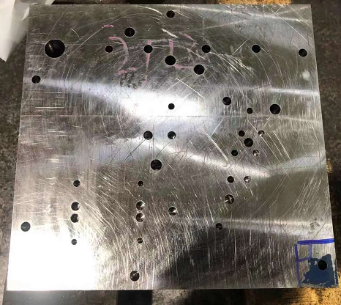
Injection molds are precision tools that must maintain stable performance over thousands or even millions of molding cycles.
The mold steel affects several important factors, including:
- Mold service life
- Surface finish quality
- Dimensional stability
- Maintenance frequency
- Production consistency
- Overall tooling cost
During production, the mold experiences:
- High injection pressure
- Repeated clamping force
- Thermal expansion and contraction
- Friction from moving components
- Contact with abrasive plastic materials
If the steel grade is not suitable for the application, common problems may occur:
- Premature wear
- Surface damage
- Cracking
- Difficult polishing
- Reduced mold lifespan
For this reason, mold steel should not be selected only based on purchase price. The correct material choice should consider the complete production cycle and expected return on tooling investment.
For more information about the role of steel selection in tooling projects, you can review our guide about injection mold steel selection.
1.2343 Steel Properties for Injection Molds
1.2343 is a hot work tool steel commonly used for injection molds that require high toughness, thermal resistance, and long-term stability.
This steel grade is especially suitable for demanding applications where the mold needs to withstand repeated heating and cooling cycles.
Compared with standard pre-hardened steels, 1.2343 provides stronger resistance against thermal stress and mechanical impact.
Hardness and Strength of 1.2343 Steel
After proper heat treatment, 1.2343 can achieve high hardness while maintaining excellent toughness.
The main advantages include:
- High mechanical strength
- Good impact resistance
- Strong resistance to deformation
- Stable performance during long production cycles
These properties make 1.2343 suitable for molds where reliability is more important than the lowest initial tooling cost.
Thermal Fatigue Resistance
One of the key advantages of 1.2343 is its excellent thermal fatigue resistance.
During injection molding, mold surfaces repeatedly experience:
- Contact with high-temperature molten plastic
- Cooling through the mold cooling system
- Opening and closing cycles
- Repeated temperature changes
Over time, lower-grade materials may develop:
- Small surface cracks
- Heat checking
- Dimensional changes
The toughness of 1.2343 helps reduce these risks and improves mold durability.
Machining and EDM Performance of 1.2343
Although 1.2343 is a high-performance steel, it can be processed effectively with proper manufacturing control.
Important manufacturing factors include:
- Correct machining parameters
- Proper stress relief
- Controlled heat treatment
- Accurate EDM processing
These steps help maintain mold precision and reduce deformation risks during manufacturing.
Typical Applications of 1.2343 Steel
1.2343 is commonly used for:
- Automotive plastic components
- Engineering plastic parts
- High-temperature material molding
- Long-life injection molds
- Parts requiring higher durability
For projects requiring extended mold life and stable production performance, 1.2343 is often a reliable choice.
738H Steel Properties for Injection Molds
738H is a widely used pre-hardened mold steel that provides a practical balance between performance, machining efficiency, and cost.
It is commonly selected for general injection mold applications where extremely high hardness or special surface requirements are not necessary.
Pre-Hardened Characteristics of 738H
One major advantage of 738H is that it is supplied in a pre-hardened condition.
This provides several benefits:
- Reduced manufacturing steps
- Lower heat treatment risk
- Shorter tooling lead time
- Stable dimensional performance
For many standard injection molding projects, 738H provides sufficient strength and reliability without increasing unnecessary tooling costs.
Polishing and Surface Finish Performance
738H offers good polishing performance for many common plastic parts.
It can support applications requiring:
- Smooth surfaces
- Standard polishing
- Textured finishes
However, for extremely demanding mirror finishes or optical applications, manufacturers may consider other higher-grade materials.
The final surface quality also depends on:
- Mold machining accuracy
- Polishing process
- EDM condition
- Plastic material characteristics
Machining Performance of 738H
Because 738H is pre-hardened, it provides good machinability during mold manufacturing.
Benefits include:
- Efficient CNC machining
- Predictable processing
- Reduced manufacturing complexity
This makes 738H a popular option for customers looking for a balance between mold performance and production cost.
Typical Applications of 738H Steel
Common applications include:
- Household appliance components
- Consumer plastic products
- Industrial plastic parts
- General production injection molds
738H is suitable for many medium-volume and standard production projects where cost control and reliability are both important.
P20 Steel Properties for Injection Molds
P20 is one of the most widely used mold steels in plastic injection mold manufacturing because it provides a good balance between cost, machinability, and overall performance.
For many general-purpose injection molding projects, P20 offers sufficient strength and stability without requiring the higher investment associated with premium mold steels.
It is commonly selected for molds with moderate production requirements and standard surface finish expectations.
Hardness and Mechanical Performance of P20 Steel
P20 is usually supplied as a pre-hardened mold steel, which allows manufacturers to machine the mold directly without additional heat treatment in many cases.
The main advantages include:
- Good dimensional stability
- Reliable mechanical strength
- Easy machining characteristics
- Suitable wear resistance for general applications
Although P20 does not provide the same durability as higher-grade steels such as H13 or 1.2343, it remains a practical choice for many injection mold projects.
Machining Performance of P20
One of the biggest advantages of P20 steel is its excellent machinability.
During mold manufacturing, good machinability helps improve:
- CNC machining efficiency
- Manufacturing lead time
- Production cost control
This makes P20 attractive for projects where tooling cost is an important consideration.
However, machining parameters still need to be properly controlled to maintain mold accuracy and surface quality.
Polishing Performance of P20
P20 can achieve good polishing results for many standard plastic parts.
It is suitable for:
- General cosmetic parts
- Textured surfaces
- Industrial plastic components
For high-gloss applications requiring mirror finishes, manufacturers may choose materials with better polishing capability.
The final surface quality depends not only on the steel grade but also on:
- CNC machining accuracy
- EDM processing
- Polishing techniques
- Mold design
Typical Applications of P20 Steel
P20 is commonly used for:
- General consumer products
- Plastic housings
- Appliance components
- Low to medium production molds
- Prototype and early production tooling
For customers looking for a cost-effective tooling solution, P20 can provide a good balance between initial mold investment and expected performance.
H13 Steel Properties for Injection Molds
H13 is a hot work tool steel known for excellent toughness, heat resistance, and wear performance.
Although H13 is widely used in die casting applications, it is also selected for injection molds requiring higher durability and resistance to demanding production conditions.
High Temperature Resistance of H13 Steel
The biggest advantage of H13 is its ability to maintain mechanical properties under high temperatures.
This makes it suitable for applications involving:
- High-temperature plastics
- High-speed molding cycles
- Continuous production environments
During injection molding, repeated heating and cooling can create significant stress on the mold surface.
H13 helps reduce risks related to:
- Thermal fatigue
- Cracking
- Surface degradation
Wear Resistance and Mold Life
H13 provides excellent resistance to wear, making it suitable for applications where molds experience higher mechanical stress.
Advantages include:
- Long service life
- Strong impact resistance
- Stable performance during repeated cycles
For high-volume production, selecting a durable steel grade can reduce:
- Maintenance frequency
- Production interruptions
- Replacement tooling costs
Machining and Heat Treatment Considerations
Because H13 is a high-performance steel, proper manufacturing control is important.
Key considerations include:
- Heat treatment quality
- Stress relief process
- Machining accuracy
- Final hardness control
Incorrect processing may affect:
- Mold dimensional accuracy
- Surface quality
- Long-term reliability
Experienced mold manufacturers carefully control these processes during tooling production.
Typical Applications of H13 Steel
H13 is commonly used for:
- High-volume injection molds
- Engineering plastic applications
- High-temperature molding projects
- Components requiring higher wear resistance
When production conditions are demanding, H13 can provide better long-term performance compared with standard mold steels.
1.2343 vs 738H vs P20 vs H13 Steel Properties Comparison
The following table summarizes the main characteristics of these four commonly used mold steels.
| Steel Grade | Main Characteristics | Hardness Level | Toughness | Wear Resistance | Typical Applications |
|---|---|---|---|---|---|
| 1.2343 | High-performance hot work steel with excellent thermal resistance | High | Excellent | High | Long-life molds, engineering plastics, demanding applications |
| 738H | Pre-hardened steel with balanced performance and cost | Medium | Good | Medium | General production molds, consumer products |
| P20 | Cost-effective mold steel with good machinability | Medium | Good | Medium | Standard injection molds, moderate production |
| H13 | High-strength steel with excellent heat resistance | High | Excellent | Very High | High-volume production and demanding applications |
How Steel Properties Affect Injection Mold Performance
Choosing suitable steel is not only about hardness.
Different properties influence different aspects of mold performance.
Hardness
Hardness affects:
- Wear resistance
- Surface durability
- Mold lifespan
Higher hardness can improve wear resistance, but excessive hardness may reduce toughness and increase the risk of cracking.
Toughness
Toughness determines how well the steel handles impact and mechanical stress.
High toughness is important for:
- Complex mold structures
- Large molds
- High-pressure molding conditions
Wear Resistance
Wear resistance becomes especially important when:
- Production volume is high
- Plastic materials contain glass fiber
- Sliding components operate frequently
Poor wear resistance can cause:
- Dimensional changes
- Flash problems
- Increased maintenance
Polishing Performance
For cosmetic plastic parts, polishing performance directly affects product appearance.
Steel with better polishing characteristics can help achieve:
- Smooth surfaces
- High-gloss finishes
- Better visual quality
Machinability
Good machinability helps reduce:
- CNC machining time
- Manufacturing cost
- Production delays
However, machinability must be balanced with final mold performance requirements.
Selecting Mold Steel Based on Application Requirements
Different injection mold projects require different steel characteristics.
For example:
General Plastic Parts
Materials such as P20 and 738H are often suitable because they provide reliable performance with controlled cost.
Long-Life Production Molds
For applications requiring extended mold life, 1.2343 or H13 may provide better value because of their higher durability.
Engineering Plastic Applications
When using materials with:
- Higher molding temperatures
- Higher wear characteristics
- Stronger mechanical requirements
higher-performance steels are usually preferred.
Cosmetic Plastic Parts
Surface requirements should also be considered.
Parts requiring:
- High gloss
- Fine texture
- Premium appearance
may require steel with better polishing capability and surface stability.
Common Mistakes When Choosing Mold Steel for Injection Molds
Although mold steel selection depends on project requirements, some common mistakes can increase tooling costs or create production problems.
Understanding these mistakes helps buyers communicate more effectively with mold suppliers and avoid unnecessary risks.
Choosing Steel Only Based on Initial Cost
One common mistake is selecting the cheapest steel without considering the complete production requirement.
A lower-cost material may reduce the initial mold investment, but it can create additional expenses later, including:
- Frequent maintenance
- Surface repair
- Reduced mold lifespan
- Production interruptions
The best material choice should consider the total cost throughout the mold lifecycle.
Using High-Performance Steel for Every Project
Another mistake is assuming premium steel is always the best solution.
For example, using H13 or 1.2343 for a simple low-volume plastic part may increase tooling costs without providing meaningful benefits.
A suitable steel grade should match:
- Production volume
- Plastic material
- Surface requirements
- Expected mold life
- Operating conditions
Ignoring Plastic Material Characteristics
Different plastic materials can affect mold wear and surface performance.
For example:
- Glass-filled plastics can increase wear
- High-temperature plastics require better thermal resistance
- Transparent plastics require excellent polishing capability
The mold steel should be evaluated together with the selected resin and molding conditions.
The Relationship Between Mold Steel and Injection Mold Manufacturing Quality
Mold steel is only one part of producing a high-quality injection mold.
The final tooling performance also depends on:
- Mold design
- CNC machining accuracy
- EDM processing
- Heat treatment control
- Mold assembly
- Testing procedures
A suitable steel grade combined with accurate manufacturing processes helps achieve stable production performance.
You can learn more about the complete tooling workflow in our guide about injection mold manufacturing process.
How Mold Steel Affects Injection Molding Production
The selected steel grade influences not only mold durability but also production efficiency.
During injection molding production, a properly selected mold material can help maintain:
- Stable dimensions
- Consistent surface quality
- Predictable cycle performance
- Reduced maintenance requirements
For manufacturers producing large quantities of plastic parts, mold reliability directly affects delivery schedules and overall manufacturing costs.
1.2343 vs 738H vs P20 vs H13: Which Steel Is Suitable?
There is no single “best” mold steel for every injection mold project.
Each material has its own advantages:
1.2343
Best suited for:
- High-performance molds
- Thermal stress applications
- Long service life requirements
Main advantages:
- Excellent toughness
- Strong thermal fatigue resistance
- Reliable long-term performance
738H
Best suited for:
- General production molds
- Standard plastic components
- Balanced cost-performance requirements
Main advantages:
- Good machinability
- Stable performance
- Cost-effective solution
P20
Best suited for:
- Standard injection molds
- Moderate production requirements
- Cost-sensitive projects
Main advantages:
- Easy machining
- Lower tooling cost
- Reliable general performance
H13
Best suited for:
- High-temperature applications
- High-volume production
- Higher wear requirements
Main advantages:
- Excellent heat resistance
- Strong durability
- Long mold lifespan
Conclusion
The steel used for an injection mold plays an important role in determining mold performance, production stability, and long-term cost.
1.2343, 738H, P20, and H13 each provide different advantages:
- 1.2343 offers excellent toughness and thermal fatigue resistance for demanding applications.
- 738H provides a balanced solution for general production molds.
- P20 delivers cost-effective performance for standard injection molding projects.
- H13 provides high durability and heat resistance for demanding production environments.
The right mold steel choice should be based on the actual application requirements rather than simply selecting the hardest or most expensive material.
By understanding steel properties and working with an experienced tooling partner, buyers can reduce production risks, improve mold reliability, and achieve better long-term value.