
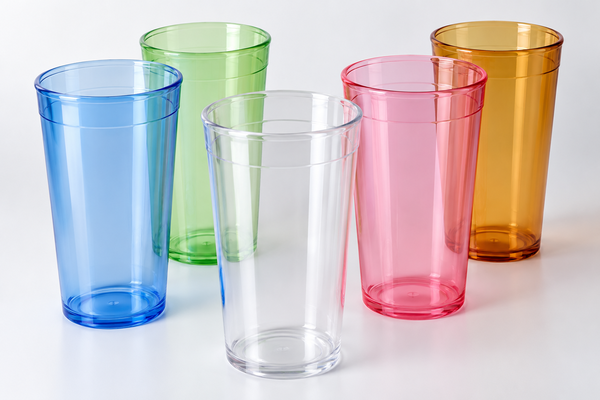
Plastic cup injection molding is a common way to make strong, reusable cups and custom drinkware. However, poor mold design, uneven cooling, and incorrect process settings can cause defects and high production costs.
For manufacturers, the main challenge is to make good-quality cups while keeping material use, cycle time, and scrap rates under control.
At Fentor Mold, we understand how mold design, material selection, and production planning affect plastic part quality and cost.
In this guide, we explain how to improve plastic cup injection molding quality, prevent common defects, and reduce production costs.
What Is Plastic Cup Injection Molding?
Plastic cup injection molding uses heat and pressure to form plastic cups.
First, plastic pellets enter the molding machine. The machine melts the material and pushes it into a steel mold.
Next, the plastic cools inside the mold. Once the cup is firm enough, the mold opens and the finished part comes out.
This process works well for:
- Reusable drinking cups.
- Rigid beverage cups.
- Measuring cups.
- Custom promotional cups.
- Cups with handles or special bases.
- Cups with molded features for lids.
Injection molding is useful when cups need accurate shapes, strong rims, or custom features.
However, not all plastic cups use this process. Very thin disposable cups often use thermoforming instead.
1. Choose the Right Materials for Plastic Cup Injection Molding
Material choice affects cup strength, weight, appearance, and cost.
It also affects how plastic flows inside the mold.
Therefore, selecting the right material is an important step in improving quality and reducing production costs.
Common Materials for Plastic Cup Injection Molding
| Material | Main Benefits | Common Uses |
|---|---|---|
| PP | Lightweight, tough, good chemical resistance | Reusable cups and food containers |
| PS | Rigid, easy to process | Rigid cups and disposable drinkware |
| PC | Good strength and clarity | Durable reusable cups |
| Tritan copolyester | Clear, tough, good durability | Premium reusable drinkware |
| PET | Good clarity and stiffness | Beverage containers, often thermoformed |
Polypropylene (PP)
PP is a popular choice for plastic cups.
It is light, tough, and often cost-effective. It also offers good chemical resistance.
However, PP shrinks during cooling. Poor mold design can cause warpage or size changes.
For thin-wall cups, a high-flow PP grade may help improve filling.
Polystyrene (PS)
PS is rigid and can be easy to mold.
General-purpose PS offers good clarity. However, it is more brittle than PP.
Therefore, it may not be the best choice for cups that need high impact strength.
Polycarbonate (PC)
PC offers good strength and clarity.
It can work well for durable reusable cups. However, its material cost is often higher than PP.
Buyers must also check the food-contact rules that apply to their target market.
Tritan Copolyester
Tritan is often used for clear, reusable drinkware.
It offers good strength and clarity. However, material costs and processing needs may be higher.
For food-contact products, always select a suitable grade and confirm compliance with the rules for the target market and intended use.
2. Improve Plastic Cup Mold Design
A good mold is the foundation of stable plastic cup production.
Poor mold design can cause defects, longer cycle times, and high scrap rates.
Therefore, manufacturers should review key design details before cutting mold steel.
Keep Wall Thickness Consistent
Uneven walls can cause problems during cooling.
For example, thick areas may cool more slowly than thin areas. This can lead to sink marks or warpage.
Therefore, keep wall thickness as even as the product design allows.
The best wall thickness depends on the material, cup size, and strength needs.
Use the Right Draft Angle
Draft angles help release the cup from the mold.
Without enough draft, the cup may stick to the mold core. This can cause scratches or damage during ejection.
The required draft depends on the cup shape, material, and surface finish.
Design a Strong Cup Rim
The rim is an important part of the cup.
It affects drinking comfort, strength, stacking, and lid fit.
For example, cups with snap-on lids need accurate rim dimensions.
Therefore, engineers should check the rim shape and tolerance before mold manufacturing starts.
Design the Cup Base Carefully
The base must provide enough support.
However, thick sections can increase cooling time and cause sink marks.
A good design should provide strength without using too much plastic.
At Fentor Mold, our Injection Mold Manufacturing service supports custom mold design reviews, tooling manufacturing, and mold trials.
3. Improve Gate Design for Better Plastic Cup Quality
The gate controls how molten plastic enters the mold.
A poor gate design can cause short shots, flow marks, and uneven filling.
For many simple cup designs, a center gate at the base may be a practical option.
However, the best gate location depends on cup size, material, and mold structure.
Key Gate Design Factors
Engineers should check:
- Gate location.
- Gate size.
- Melt flow balance.
- Weld line position.
- Gate marks.
- Filling pressure.
- Gate removal needs.
For example, a small gate may make thin walls difficult to fill.
On the other hand, a large gate may leave an unwanted mark.
Therefore, gate design must balance good filling and cup appearance.
A suitable gate can also reduce defects and wasted material.
4. Improve Cooling in Plastic Cup Injection Molding
Cooling is a major part of the molding cycle.
If the mold cools unevenly, the cup may bend or change shape after ejection.
Long cooling times also increase production costs.
Therefore, a good cooling system should provide both stable quality and efficient production.
How to Improve Plastic Cup Mold Cooling
A mold designer should:
- Place cooling channels near important areas where practical.
- Keep cooling as even as possible.
- Check cooling near the base and rim.
- Reduce hot spots.
- Control cooling water flow.
- Use suitable mold temperatures.
- Review cooling time during mold trials.
Deep cup cores may be harder to cool than simple flat mold surfaces.
Therefore, the cooling method should match the core shape and size.
Better cooling can help reduce warpage and shorten production cycles.
However, cooling time should not be reduced so much that cups deform after ejection.
5. Prevent Common Plastic Cup Molding Defects
Plastic cup injection molding can face several common defects.
Many problems are linked to material flow, mold design, cooling, or process settings.
Common Plastic Cup Defects and Solutions
| Defect | Possible Cause | Possible Solution |
|---|---|---|
| Warpage | Uneven cooling or shrinkage | Improve cooling and wall design |
| Short shot | Poor filling or early freezing | Review material flow and gate design |
| Sink marks | Thick walls or low packing | Reduce thick areas and adjust packing |
| Flow marks | Unstable melt flow | Review gate and molding settings |
| Flash | Excess pressure or poor mold fit | Check pressure and mold surfaces |
| Scratches | Poor ejection or low draft | Improve draft and mold finish |
| Bubbles or voids | Trapped gas, moisture, or shrinkage | Check venting, material handling, and packing |
For example, a cup may look good when it leaves the machine.
However, it may change shape after cooling.
This can happen when cooling is not balanced or the cup has uneven shrinkage.
Therefore, the team should check both the mold design and process settings.
How to Reduce Plastic Cup Scrap Rates
High scrap rates increase material costs and waste machine time.
To reduce scrap:
- Keep material quality stable.
- Use suitable processing temperatures.
- Check gate and venting design.
- Control cooling.
- Maintain consistent process settings.
- Inspect samples during production.
A stable process helps reduce defects and lowers production costs.
6. Thin-Wall Plastic Cup Injection Molding
Thin-wall cups use less material.
This can reduce part weight and resin costs.
However, thin walls are harder to fill because the plastic cools quickly.
As a result, thin-wall molding may need more advanced process control.
Key Requirements for Thin-Wall Cups
Important factors include:
- High-flow plastic grades.
- Suitable injection speed.
- Enough injection pressure.
- Good mold venting.
- Balanced cooling.
- Accurate mold machining.
- Reliable part ejection.
For example, reducing cup wall thickness may save material.
However, if the walls become too thin, short shots or weak rims may increase.
This can lead to higher scrap rates.
Therefore, cup wall thickness should balance material savings and product strength.
Manufacturers should test the design before moving to mass production.
7. Injection Molding vs Thermoforming for Plastic Cups
Plastic cups can be made using different processes.
Two common options are injection molding and thermoforming.
Injection molding pushes molten plastic into a mold.
Thermoforming heats a plastic sheet and shapes it into a cup.
Which Process Is More Cost-Effective?
| Feature | Injection Molding | Thermoforming |
|---|---|---|
| Raw material | Plastic pellets | Plastic sheet |
| Wall design | Good control of molded features | Well suited to very thin walls |
| Complex shapes | More design options | More limited for complex features |
| Tooling | Often more complex | Depends on forming and trimming needs |
| Typical products | Rigid reusable cups | Thin disposable cups |
| Unit cost | Depends on volume and cycle time | Depends on sheet use, trim waste, and output |
For very thin disposable cups, thermoforming may offer better production efficiency.
However, injection molding may be more suitable for strong reusable cups or products with complex shapes.
Therefore, the right process depends on cup design, material, and annual order volume.
Choosing the correct process early can prevent unnecessary tooling costs.
8. How to Reduce Plastic Cup Injection Molding Costs
Plastic cup production costs depend on several factors.
The main cost drivers include:
- Plastic material price.
- Cup weight.
- Mold cavity count.
- Mold design.
- Cycle time.
- Machine size.
- Scrap rate.
- Production volume.
To reduce costs, manufacturers should focus on the full production process rather than only material price.
Reduce Unnecessary Wall Thickness
A lighter cup uses less plastic.
However, it must still be strong enough for normal use.
Therefore, reduce wall thickness carefully and test the final design.
Choose the Right Mold Cavity Count
A multi-cavity mold can produce several cups in one cycle.
This can reduce the unit cost for high-volume orders.
However, more cavities also increase mold cost and may require a larger machine.
Therefore, cavity count should match expected production volume.
For example, a small order may not justify a very expensive multi-cavity mold.
On the other hand, a high-volume project may benefit from higher output per cycle.
Reduce Cycle Time
Shorter cycle times can increase production output.
However, cups must cool enough before ejection.
If the cup is removed too early, it may bend or lose its shape.
Therefore, the goal is to find a stable cycle that produces good parts.
Reduce Scrap and Rework
Scrap increases material and machine costs.
For example, a high reject rate means the factory must make extra cups to meet the order quantity.
Therefore, reducing defects can improve total production efficiency.
9. Balance Plastic Cup Quality and Production Cost
Reducing production cost should not mean reducing product quality.
For example, thinner walls may save material. However, they can also create filling problems or weak cup rims.
A better approach is to improve material use, cycle time, and process stability together.
Control Material Use
Choose a suitable plastic grade and avoid unnecessary material.
However, make sure the cup meets strength and use requirements.
A slightly higher-cost resin may sometimes improve filling or reduce scrap. Therefore, compare total production cost, not just resin price.
Improve Production Efficiency
Review cooling time, mold movement, and ejection.
Small improvements in cycle time can make a difference during high-volume production.
However, quality should remain stable after each process change.
Keep Scrap Rates Low
Monitor common defects and identify their causes.
For example, repeated warpage may require changes to cooling or part design.
Solving the main cause is often better than making repeated machine adjustments.
The goal is to achieve stable plastic cup quality at a competitive production cost.
10. Quality Checks for Plastic Cup Injection Molding
Good quality control helps reduce customer complaints and production waste.
Therefore, buyers should define inspection requirements before tooling starts.
Important Plastic Cup Quality Checks
Common checks include:
- Cup height and diameter.
- Rim dimensions.
- Wall thickness.
- Cup weight.
- Surface appearance.
- Base flatness.
- Lid fit, when needed.
- Leak testing, when required.
- Drop or impact testing.
- Stacking performance.
- Food-contact compliance documents, where applicable.
For example, a cup may pass visual inspection but fail when used with its lid.
Therefore, functional tests are as important as dimensional checks.
In addition, the supplier should control the approved material grade and color during production.
11. What to Include in a Plastic Cup Mold RFQ
A clear Request for Quotation (RFQ) helps suppliers understand your project.
It also helps buyers compare tooling costs and production plans.
Before requesting a quote, prepare the main product details.
Plastic Cup Mold RFQ Checklist
| RFQ Item | Information to Provide |
|---|---|
| Cup design | 2D drawing and 3D model |
| Cup capacity | Required volume |
| Material | PP, PS, PC, or another grade |
| Cup size | Height, diameter, and wall thickness |
| Surface finish | Polished, textured, or other finish |
| Mold cavities | Required count or supplier recommendation |
| Annual volume | Expected production quantity |
| Quality needs | Dimensions and functional tests |
| Food contact | Applicable regulations and intended use |
| Delivery | Mold shipment or finished cup production |
If you do not have a finished 3D design, you can provide sketches, sample photos, and target dimensions.
The supplier can then review your needs and discuss the next design steps.
12. How Fentor Mold Supports Plastic Cup Injection Molding
Fentor Mold has more than 20 years of experience in injection mold manufacturing.
We support overseas customers with mold design reviews, custom tooling, mold trials, and injection molding production.
For plastic cup projects, our team can review product structure, material choice, gate location, cooling design, and production needs.
Our Injection Molding Production service can also support customers who need finished plastic parts.
We understand that a successful product must meet both quality and cost targets.
Therefore, we encourage buyers to share cup drawings, material details, and expected production volume during the RFQ stage.
Visit the Fentor Mold official website to learn more about our manufacturing capabilities and discuss your next project.
Conclusion
Plastic cup injection molding can produce strong, accurate, and reusable cups.
However, good results depend on material selection, mold design, cooling, and process control.
To improve quality, manufacturers should focus on stable dimensions, strong rims, good surface finish, and reliable production.
To reduce costs, they should control material use, cycle time, cavity count, and scrap rates.
By improving both quality and production efficiency, manufacturers can produce better plastic cups at a competitive cost.
FAQ
What Is the Best Material for Plastic Cup Injection Molding?
PP is a common choice because it is lightweight, tough, and cost-effective. However, PC and Tritan may suit some reusable cups that need greater clarity or strength.
Can Plastic Cups Be Made by Injection Molding?
Yes. Injection molding works well for rigid, reusable, and custom plastic cups. However, very thin disposable cups are often made by thermoforming.
How Can Manufacturers Reduce Plastic Cup Production Costs?
Manufacturers can reduce costs by improving mold cooling, choosing suitable materials, reducing unnecessary wall thickness, selecting the right cavity count, and lowering scrap rates.
What Causes Warpage in Injection Molded Plastic Cups?
Uneven cooling, material shrinkage, poor wall design, and early ejection can cause warpage. A good mold design and stable molding process help reduce this risk.
Can Multi-Cavity Molds Reduce Plastic Cup Costs?
Yes, especially for high-volume orders. However, multi-cavity molds cost more to build and may need larger machines. The best cavity count depends on production volume.
What Information Is Needed for a Plastic Cup Mold Quote?
Buyers should provide cup drawings, dimensions, material, expected annual volume, cavity requirements, and quality standards. Food-contact requirements should also be clearly stated.