
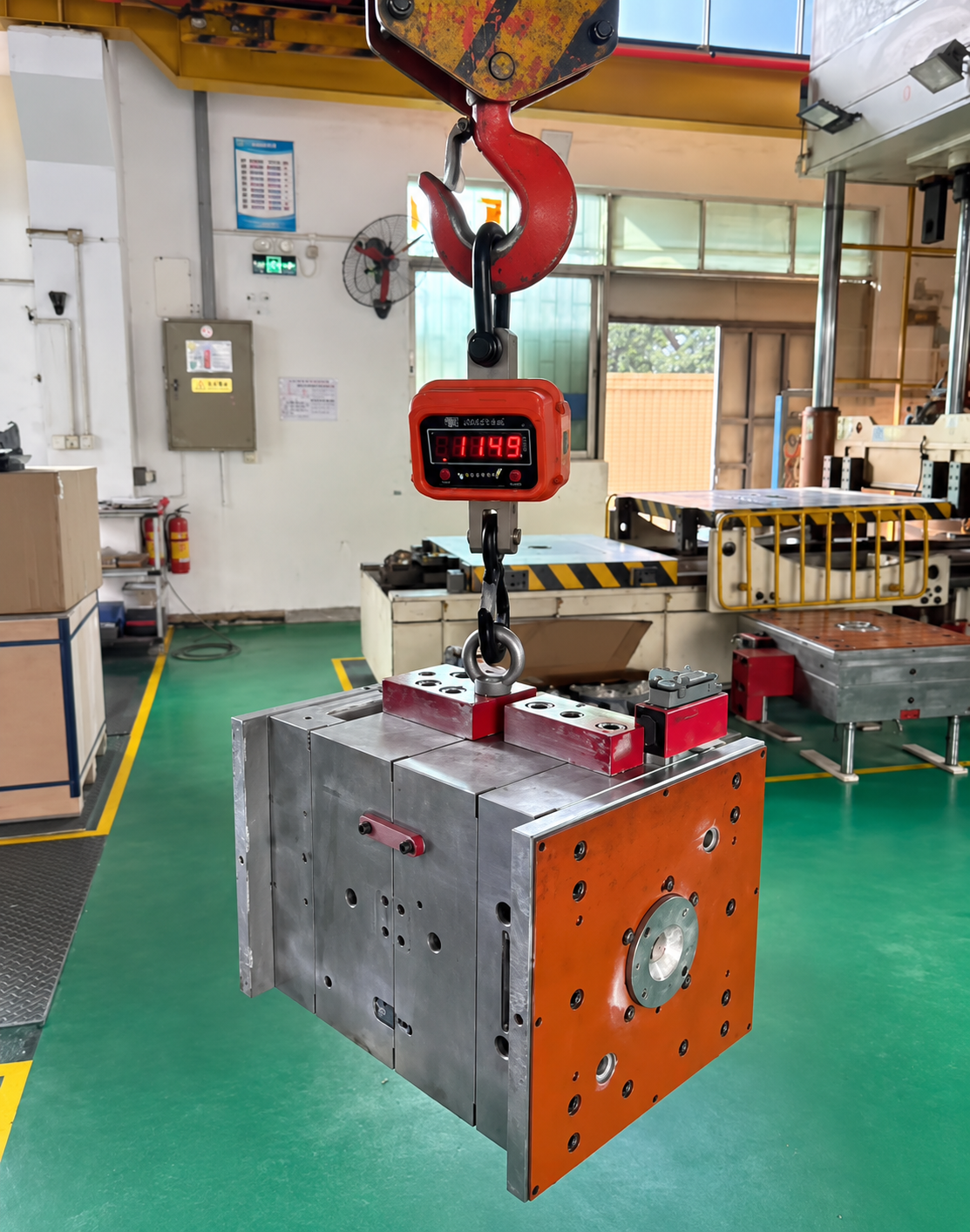
Ordering a plastic injection mold is not simply a matter of sending a 3D file and asking for a price. The mold affects part quality, production stability, cycle time, maintenance cost, and even the final unit price of your plastic parts.
For buyers, many problems actually begin before mold manufacturing starts. An unclear specification, unsuitable mold structure, wrong steel selection, or incomplete quotation can later result in additional costs and project delays.
Therefore, before placing a plastic injection mold order, buyers should understand several important technical and commercial points.
1. Make Sure the Plastic Part Design Is Ready
Before requesting a mold quotation, the plastic part should be reasonably mature.
Ideally, you should provide:
| Information | Why It Matters |
|---|---|
| 3D CAD file | Used for mold design and machining |
| 2D drawing | Defines tolerances and critical dimensions |
| Plastic material | Affects shrinkage, gate design, cooling, and steel selection |
| Surface finish | Influences polishing, texture, and draft requirements |
| Color requirements | Important for appearance parts |
| Annual quantity | Helps determine mold life and cavity number |
| Critical dimensions | Allows the mold maker to focus on key areas |
| Assembly information | Helps evaluate deformation and dimensional risks |
If the product design is still changing frequently, starting the mold too early can become expensive.
At Fentor Mold, we normally review the part before tooling begins. A proper DFM analysis can identify issues such as insufficient draft, thick sections, undercuts, gate restrictions, and difficult parting lines.
You can learn more about our injection mold design and manufacturing process.
2. DFM Should Come Before Plastic Injection Mold Design
A good mold project should not move directly from quotation to steel cutting.
DFM is one of the most important steps before mold design.
During DFM review, the mold supplier may evaluate:
- Parting line position
- Gate type and location
- Ejection method
- Slider and lifter requirements
- Wall thickness
- Draft angles
- Undercuts
- Potential sink marks
- Weld lines
- Venting
- Possible deformation
- Mold construction risks
For simple parts, this process may be straightforward. However, complex automotive, medical, electronic, or industrial components often require more detailed engineering review.
Changing a CAD model before mold manufacturing is relatively inexpensive. Changing hardened mold steel after T0 or T1 is much more costly.
Therefore, buyers should treat DFM as a project risk-control step rather than just another report.
3. Do Not Compare Plastic Injection Mold Prices Only
It is common to receive very different quotations for the same plastic injection mold.
However, the cheapest mold is not always the lowest-cost option.
Two quotations may appear similar while using completely different specifications.
For example:
| Item | Supplier A | Supplier B |
|---|---|---|
| Mold steel | P20 | 1.2344 / H13 |
| Cavities | 1 | 1 |
| Hot runner | Chinese local brand | International brand |
| Mold life | 100,000 shots | 500,000 shots |
| Slider wear plate | Standard steel | Hardened wear plate |
| Cooling | Basic drilling | Optimized cooling |
| Spare parts | Not included | Included |
| Inspection report | Basic | Full dimensional report |
The two molds may produce the same sample during the first trial. However, their long-term performance can be very different.
Therefore, buyers should compare the technical specification behind the quotation, not only the total price.
4. Confirm Mold Steel and Mold Life
Mold steel should match production requirements.
A prototype or low-volume mold may not need expensive hardened steel. In contrast, a mold expected to produce hundreds of thousands of parts requires better steel, wear resistance, and mold construction.
Typical factors include:
- Plastic resin
- Glass fiber content
- Production quantity
- Surface finish
- Part complexity
- Mold temperature
- Required mold life
Glass-fiber-filled materials, for example, can cause significant wear on gates, cores, sliders, and cavity surfaces.
Meanwhile, high-gloss products may require steel with better polishing performance.
Buyers should therefore ask the supplier to clearly state:
cavity/core steel, hardness, mold base, expected mold life, and heat treatment requirements.
5. Check the Number of Cavities Carefully
More cavities can reduce the molding cost per part, but they also increase mold cost and technical difficulty.
A multi-cavity plastic injection mold requires good balance between cavities.
The supplier must consider:
- Runner balance
- Filling pressure
- Cooling consistency
- Part weight balance
- Cavity dimensional consistency
- Injection machine capacity
For high-volume production, four, eight, sixteen, or more cavities may make economic sense.
However, for low-volume projects, a single-cavity or two-cavity mold may provide better overall value.
Therefore, cavity number should be based on expected production volume rather than simply choosing the largest possible configuration.
6. Confirm Hot Runner or Cold Runner
Gate and runner selection can affect both mold cost and part production cost.
Cold Runner
Cold runner molds are usually simpler and less expensive.
They are suitable for many standard projects, especially when material waste is acceptable.
Hot Runner
A hot runner system can reduce runner waste and may improve automation. It can also help with large parts or multi-cavity molds.
However, hot runner molds are more expensive and require additional maintenance.
Buyers should also confirm:
- Hot runner brand
- Open gate or valve gate
- Number of nozzles
- Controller requirements
- Spare heater and thermocouple requirements
For some products, Moldflow analysis can help determine the best gate configuration before mold manufacturing starts.
7. Understand the Plastic Injection Mold Trial Process
The first mold trial is rarely the end of the project.
A typical process may include:
T0 → Evaluation → Modification → T1 → Measurement → Final Adjustment → Approval
During the trial, engineers should evaluate more than whether the mold can produce a complete plastic part.
Important points include:
- Short shots
- Flash
- Sink marks
- Weld lines
- Burn marks
- Ejection marks
- Deformation
- Dimensions
- Surface quality
- Filling balance
- Cycle time
- Mold movement
For complex parts, several trial and modification cycles are normal.
A reliable mold supplier should explain the problem, propose the modification, and provide updated samples after each important adjustment.
8. Define the Sample Approval Standard
One common source of disputes is that the buyer and supplier have different definitions of an “acceptable sample.”
Before final approval, both sides should clearly understand what must be confirmed.
For example:
| Approval Item | Typical Requirement |
|---|---|
| Appearance | No unacceptable flash, sink, burn, or scratch |
| Dimensions | Critical dimensions within drawing tolerance |
| Material | Correct production resin |
| Color | Approved masterbatch or color standard |
| Assembly | Parts fit correctly |
| Function | Meets product requirement |
| Surface | Texture or polishing accepted |
| Process | Stable molding conditions |
Whenever possible, an approved final sample should become the reference for future production.
This helps reduce quality disputes after mass production begins.
9. Ask About Dimensional Inspection
For precision plastic components, visual inspection alone is not enough.
Buyers should determine whether they require:
- Full dimensional inspection
- Critical dimension inspection
- CMM report
- Material certificate
- Steel certificate
- Mold trial report
- Molding parameters
The inspection level depends on the application.
Consumer products may require fewer measurements, while automotive, medical, electrical, and precision mechanical parts may need much stricter documentation.
Fentor Mold can provide dimensional inspection and engineering support according to project requirements before the mold moves to production.
10. Consider Injection Molding Before the Mold Is Finished
The mold and production process should be considered together.
A mold may function during a short trial but still create problems during long-term production if cooling, ejection, automation, or cycle time were not considered properly.
For example, buyers should ask:
- What injection machine tonnage is required?
- Is robot take-out possible?
- What is the estimated cycle time?
- Is the cooling layout sufficient?
- Can the mold run automatically?
- Are inserts loaded manually?
- Does the product require secondary operations?
If the same supplier handles both mold manufacturing and injection molding production, many production risks can be considered earlier in the project.
11. Confirm Mold Ownership and Delivery Terms
Buyers should also clarify commercial terms before placing an order.
Important questions include:
- Who owns the mold after full payment?
- Can the mold be transferred to another factory?
- What documentation will be supplied?
- Are 2D and 3D mold drawings included?
- Are spare parts included?
- Who pays for modifications caused by design changes?
- What happens if the mold requires repair during production?
- How long will the supplier store the mold?
These points are easy to ignore at the beginning, but they become important when production changes or a mold needs to be transferred.
12. Communication Matters as Much as Equipment
A plastic injection mold project involves many decisions.
Even a technically capable supplier can create problems if communication is slow or unclear.
Buyers should therefore evaluate whether the supplier can clearly discuss:
- DFM issues
- Mold structure
- Material selection
- Project schedule
- Trial results
- Modification plans
- Dimensional problems
- Production risks
Fast and accurate engineering communication often prevents small issues from becoming expensive tooling changes.
Final Thoughts
A plastic injection mold is a production tool that may manufacture thousands or even millions of parts. Therefore, buyers should evaluate much more than the initial mold price.
Before ordering, confirm the part design, DFM, mold steel, cavity number, runner system, mold life, trial procedure, inspection standard, and ownership terms.
More importantly, choose a supplier that can identify risks before machining starts and support the project through mold trials and production.
Fentor Mold provides mold engineering, manufacturing, trial, modification, and plastic part production support for custom projects. If your project also requires machining or additional component manufacturing, you can review our components manufacturing capabilities.
A clear specification at the beginning usually means fewer modifications, fewer delays, and a more stable plastic injection mold in production.