
A medical connector can look simple on a CAD drawing. In production, however, a very small dimensional shift can affect sealing, assembly, or product performance.
This is a common challenge in medical injection molding.
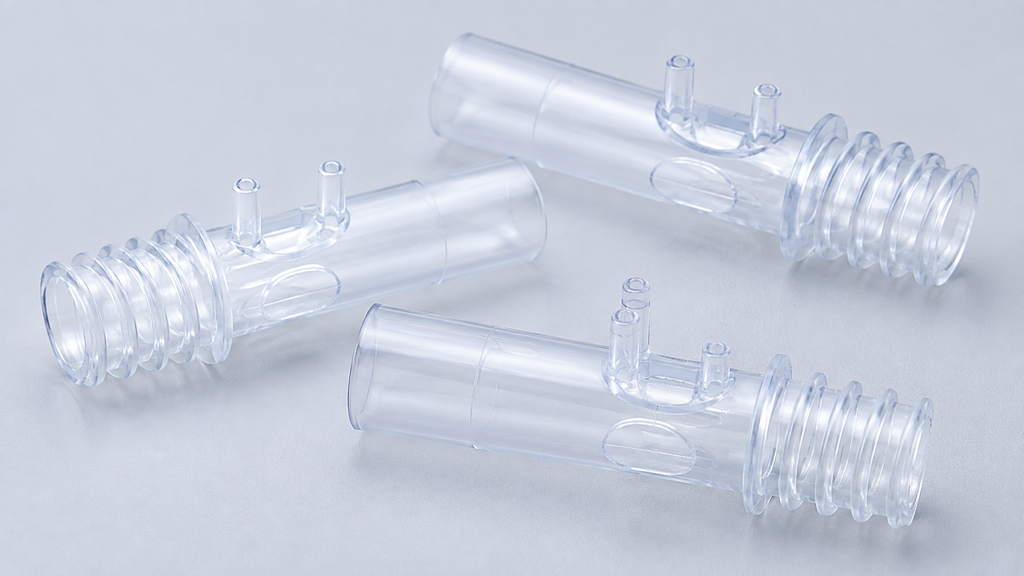
In this plastic injection molding medical part case, the customer needed a transparent fluid connector with several precision mating features. The part had to connect with existing medical components, so appearance alone was not enough. The dimensions had to remain stable and the connection had to work repeatedly.
The main challenge was controlling the connector geometry after molding.
Project Background
The molded part was used in a medical fluid system.
Its main features included:
- Transparent plastic body
- Small internal flow channels
- Precision mating diameters
- Sealing surfaces
- Thin-wall sections
- Tight concentricity
- Standardized connector geometry
- Functional assembly features
The customer already had the product design, but the mold still needed careful engineering.
Medical connectors are different from ordinary plastic parts because a small error in one interface can affect the complete assembly.
Why Medical Connector Dimensions Are Critical
Many medical products use standardized connectors, including ISO-based interfaces, Luer-style fittings, tubing connections, caps, and valve components.
These features are not only geometric details. They are functional dimensions.
If a diameter is too large, the mating part may be difficult to install.
If it is too small, the connection may become loose.
If a taper is incorrect, the sealing condition may change.
If two cylindrical features are not concentric, the connector may assemble unevenly.
This means the engineering team must identify the critical dimensions before mold manufacturing starts.
Identifying Critical-to-Function Features
Before mold design, the team reviewed the part drawing and separated normal dimensions from critical functional dimensions.
The main control points included:
- Mating diameters
- Taper geometry
- Connector length
- Sealing surfaces
- Internal flow diameters
- Concentricity
- Locking features
- Assembly stop positions
These dimensions received more attention during mold design, T1 inspection, and later correction.
For projects like this, an experienced injection mold manufacturer should review these features before steel cutting, because some dimensions may need a steel-safe strategy.
Standard Dimensions Still Need Shrinkage Compensation
A common mistake is to assume that a standard connector dimension can simply be copied directly from the CAD model into the mold.
Plastic shrinkage makes this more complicated.
The final molded dimension depends on:
- Resin type
- Wall thickness
- Packing pressure
- Mold temperature
- Flow direction
- Gate position
- Cooling
- Local part geometry
For precision medical parts, even a small change in shrinkage can affect assembly.
The mold team therefore reviewed both the nominal connector dimensions and the expected molding behavior before machining the cavity.
Material Choice Changed the Mold Strategy
The customer required a transparent engineering plastic.
Transparent parts create extra molding challenges because defects are easier to see.
Possible problems include:
- Flow marks
- Silver streaks
- Burn marks
- Weld lines
- Black spots
- Scratches
- Stress marks
The material also required proper drying and stable processing conditions.
Because of this, the mold had to support both dimensional control and good surface quality.
Gate position, polishing, venting, and cooling were all considered during the mold design stage.
Gate Position Was Important
The gate could not be placed only according to machining convenience.
The melt flow direction had to support stable filling around the connector features.
A poor gate position can create:
- Uneven packing
- Weld lines near sealing areas
- Dimensional imbalance
- Visible flow marks
- Warpage
- Internal stress
The final gate position was selected after reviewing both appearance and function.
This is especially important for transparent medical components where both performance and visual quality matter.
Steel-Safe Design Reduced Risk
Several critical dimensions were designed with steel-safe conditions.
This means the mold was intentionally left in a condition that allowed controlled adjustment after the first trial.
This approach is useful because the real molded size cannot always be predicted perfectly before T1.
After the first trial, the team could measure the actual part, compare it with the target dimension, and then make a small correction.
This is safer than removing too much steel before the real shrinkage behavior is known.
T1 Revealed the Real Part Behavior
The first mold trial produced complete parts with acceptable appearance.
However, some critical dimensions showed small deviations.
Instead of modifying the mold immediately, the team first stabilized the molding process.
The review included:
- Mold temperature
- Melt temperature
- Packing pressure
- Cooling time
- Part weight
- Dimensional consistency
- Visual condition
This step was important because not every dimensional problem comes from the steel.
Some differences come from process settings.
For early-stage medical projects, prototype injection molding can also help confirm material behavior and connector fit before investing in a full production mold.
One Mating Diameter Needed Correction
One connector diameter was slightly outside the preferred functional range.
The difference was small and could not be identified by appearance alone.
During assembly testing, however, the connector felt tighter than expected.
The engineering team compared:
- Drawing requirement
- T1 measurement
- Mating component dimension
- Assembly condition
- Mold steel condition
Because the process was already stable, the team confirmed that a small steel adjustment was required.
After modification, the next trial showed a better and more consistent fit.
This example shows why medical connector projects should not rely only on general dimensional inspection.
Functional testing matters.
Assembly Testing Was Essential
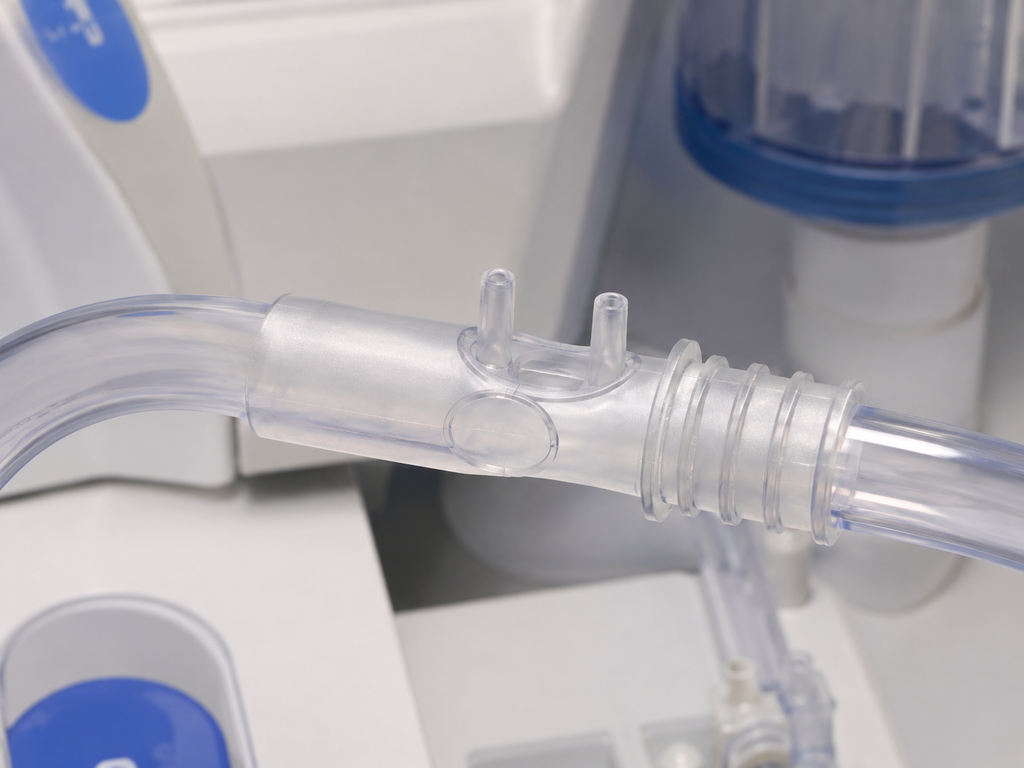
A molded part can be within drawing tolerance and still create assembly problems.
This often happens because several dimensions combine during mating.
For this project, the customer tested the connector with the actual matching component.
The evaluation included:
- Connection feel
- Assembly force
- Alignment
- Locking behavior
- Removal force
- Sealing condition
- Repeatability
This gave the engineering team a better understanding of the real performance than a dimensional report alone.
Concentricity Was Another Key Point
The connector contained several cylindrical features on the same centerline.
If the core or insert moved during molding, the part could lose concentricity.
This could affect assembly and sealing.
Possible causes include:
- Core deflection
- Poor insert positioning
- Mold assembly error
- Uneven filling
- Cooling imbalance
The mold structure was designed to keep the core stable during injection.
The inspection plan also included checks for important coaxial features.
Internal Flow Channels Needed Careful Design
The part contained small internal fluid passages.
These created another tooling challenge.
If a long internal core is too thin, it may deflect during injection.
If the core moves, the internal flow channel can shift.
This may reduce wall thickness on one side or change the internal flow area.
The mold design therefore had to balance:
- Required internal diameter
- Core strength
- Mold filling pressure
- Cooling
- Tooling durability
These details are especially important for small medical fluid components.
Transparent Parts Need Stable Processing
The customer also expected clean visual quality.
Transparent medical parts can show very small defects clearly.
The molding team therefore controlled:
- Resin drying
- Injection speed
- Mold temperature
- Melt temperature
- Material residence time
- Mold cleanliness
A stable process was important not only for appearance but also for dimensions.
Once the tool enters injection molding production, process stability becomes just as important as mold accuracy because changes in packing, temperature, or cooling can shift critical connector dimensions.
Inspection Focused on Functional Dimensions
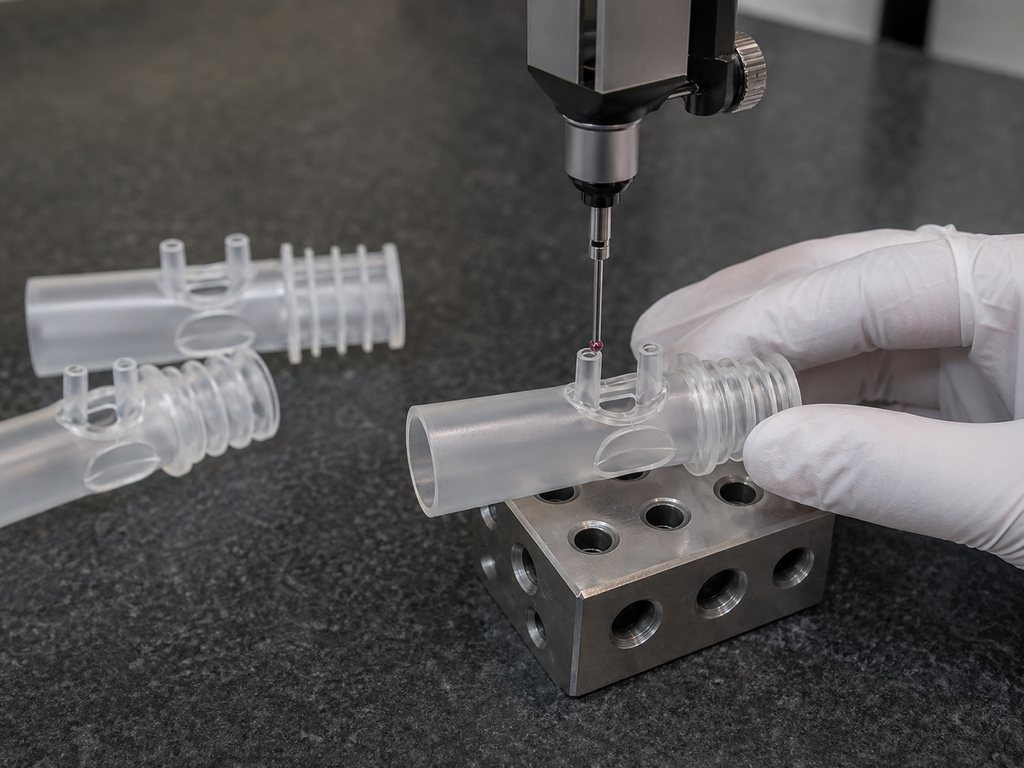
The inspection team did not treat every dimension equally.
More attention was given to dimensions that affected product function.
The main checks included:
- Mating diameter
- Internal diameter
- Taper geometry
- Connector length
- Sealing area
- Concentricity
- Assembly position
- Overall appearance
This made the inspection report more useful for engineering decisions.
A long dimensional report is not automatically better.
For medical parts, the most valuable data is the data that shows whether the product will work.
Measurement Timing Also Matters
Plastic parts can continue to change slightly after molding.
Temperature and material relaxation can affect final dimensions.
For this reason, important dimensions should not always be approved immediately after the part leaves the mold.
The samples were allowed to stabilize before final measurement.
This reduced the risk of correcting the mold based on unstable data.
From T1 to Approved Samples
After the first trial, the team created a correction list.
Each issue was reviewed before action.
Some problems could be solved through processing.
Others required small steel adjustments.
The correction flow was:
- Confirm the issue
- Check the root cause
- Decide whether process or steel should change
- Make the correction
- Run another trial
- Measure again
- Repeat assembly testing
This avoided unnecessary mold modifications.
Communication Helped Keep the Project Moving
Because the customer was overseas, clear technical communication was important.
Each major issue was reported with:
- Measured result
- Target dimension
- Photos where useful
- Proposed action
- Expected result
- Schedule impact
This allowed the customer to make decisions without being at the factory.
For precision medical projects, clear communication can reduce delays and prevent repeated misunderstandings.
Final Result
After the modification and verification cycle, the critical connector dimensions became stable.
The final molded parts showed better performance in:
- Fit
- Sealing
- Alignment
- Appearance
- Repeatability
The project then moved toward production approval.
Similar challenges can also be found in other injection molding case studies, especially when part function depends on tight tolerances, mating geometry, or process stability.
The key lesson was that the success of the project did not depend on controlling every dimension equally.
It depended on controlling the right dimensions.
What This Medical Molding Case Shows
This plastic injection molding medical part case highlights several useful lessons for engineers and purchasing teams:
- Identify critical dimensions before tooling
- Review ISO or standard mating features carefully
- Consider actual resin shrinkage
- Use steel-safe design where practical
- Stabilize the molding process before changing steel
- Test the part with real mating components
- Control concentricity and internal flow geometry
- Focus inspection on functional dimensions
- Keep technical communication clear
These steps can reduce repeated mold changes and help shorten the path from T1 to production approval.
Similar Parts That Need the Same Approach
The same engineering method is useful for:
- Luer-style connectors
- Tube fittings
- Fluid connectors
- Medical valves
- Small manifolds
- Diagnostic cartridge components
- Syringe-related parts
- Respiratory connectors
- Drug delivery components
- Other precision medical plastic parts
If a molded part connects to another component, carries fluid, or uses a standardized interface, the functional dimensions should be reviewed early.
Final Thoughts
Medical connectors are not difficult because they are large or visually complex.
They are difficult because a few small dimensions can control the function of the complete product.
A successful project requires more than accurate mold machining.
It also requires material knowledge, stable molding conditions, functional testing, dimensional inspection, and controlled mold corrections.
For medical product buyers, the best time to identify these risks is before steel is cut.
That is when the engineering team has the most options and the lowest cost of change.