
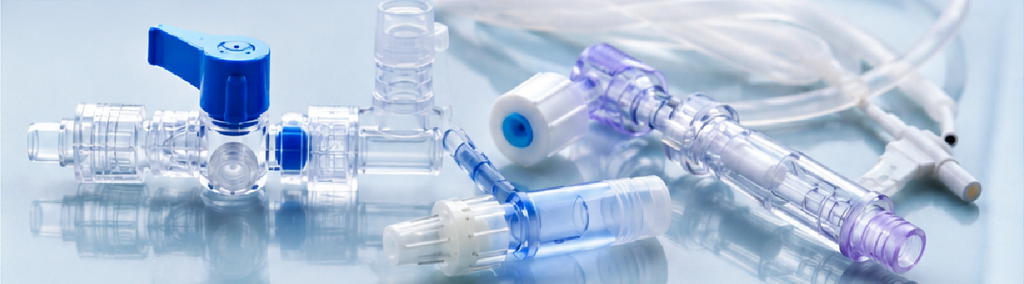
Medical device buyers rarely worry about injection molding only after production starts. The real concerns appear much earlier: Can the supplier hold the required dimensions? Will the material survive sterilization? Will small connectors seal correctly? Can the same quality be maintained across thousands or millions of parts?
These questions matter because even a small molding issue can affect assembly, leakage, device performance, or validation.
For example, imagine a medical device company developing a disposable fluid-control product. The design includes a transparent body, several thin walls, and a precision connection to flexible tubing. Early samples look acceptable, but the connector dimension changes slightly from cavity to cavity. During assembly, some parts fit correctly while others feel loose. At this point, changing only the molding parameters may not solve the problem. The solution usually requires reviewing material behavior, mold tolerances, gating, cooling, and the functional dimensions together.
This is why plastic injection molding medical parts requires more than simply producing a plastic component from a CAD drawing. The molding process must match the medical product’s function, material, tolerance, assembly method, and expected production volume.
Medical Parts Have Different Molding Requirements

Medical products cover a very wide range of applications.
A housing for a diagnostic device does not have the same requirements as a small fluid connector. A disposable test component is different from a reusable surgical device. Some products focus heavily on appearance, while others depend on very precise internal dimensions.
Before developing the mold, it helps to first identify how the part will be used.
Common medical applications include:
- Fluid delivery systems
- Diagnostic equipment
- Drug delivery devices
- Laboratory products
- Surgical instruments
- Patient monitoring equipment
- Respiratory products
- Diabetes care products
- Medical equipment housings
- Disposable medical components
The product function determines which dimensions are critical and which molding risks deserve the most attention.
Medical Connectors and Fluid-Control Parts
Connectors are among the most demanding small medical molded parts.
They may look simple, but their functional dimensions can be extremely important.
Typical parts include:
- Tube connectors
- Luer-style fittings
- Valve bodies
- Fluid manifolds
- Hose adapters
- Caps and plugs
- Small medical couplings
For these products, engineers usually focus on sealing surfaces, mating dimensions, roundness, concentricity, and thread or locking geometry.
A small dimensional variation can create leakage or assembly problems.
The mold design must therefore consider not only the nominal CAD dimension but also material shrinkage, cavity balance, cooling consistency, and the way the part is ejected from the mold.
For connectors with standardized interfaces, the molding supplier should clearly identify the critical dimensions before tooling begins.
Diagnostic Device Housings
Diagnostic equipment often uses injection molded housings to protect electronics, displays, sensors, and internal assemblies.
These components may require:
- Good surface appearance
- Stable overall dimensions
- Accurate screw bosses
- Reliable snap fits
- Thin-wall sections
- Consistent gaps between assembled parts
- Clear windows or light pipes
PC, ABS, and PC/ABS are commonly considered depending on the application.
For these parts, dimensional stability is important because even when the housing itself is not in direct contact with the patient, poor molding can still create assembly problems.
Warping may cause uneven gaps. Sink marks may appear near ribs or bosses. Incorrect shrinkage compensation can affect the alignment of internal components.
A good mold review should therefore include both cosmetic surfaces and assembly interfaces.
Drug Delivery Components
Drug delivery products often contain multiple small molded components that must work together.
Examples include:
- Syringe-related components
- Injector housings
- Pen device components
- Cartridges
- Caps
- Buttons
- Internal mechanical parts
These products may contain sliding surfaces, snap features, guide structures, or controlled engagement dimensions.
Repeatability is especially important.
A part that works during prototype testing must continue to perform consistently during volume production.
For this reason, mold construction, cavity consistency, material drying, processing conditions, and inspection methods should be planned as one system rather than treated separately.
Laboratory and Diagnostic Consumables
Many laboratory products are disposable and produced in relatively high volumes.
Typical examples include:
- Tubes
- Caps
- Sample containers
- Cuvettes
- Small trays
- Test cartridge components
- Analyzer consumables
These products may require clean surfaces, thin walls, high productivity, and reliable cavity-to-cavity consistency.
Polypropylene is widely used for many disposable products because of its processing characteristics and chemical resistance, although the final material choice depends on the actual application.
For high-volume projects, small differences in cycle time can also have a major effect on overall production cost.
This means the mold should be designed not only for part quality but also for stable automation and efficient production.
Surgical and Reusable Medical Components
Reusable medical products create another set of challenges.
Some components may need to withstand:
- Repeated cleaning
- Chemical exposure
- Elevated temperatures
- Sterilization processes
- Mechanical loading
Depending on the product, materials such as PC, PPSU, PEEK, or other engineering plastics may be considered.
These materials can behave very differently during molding.
Some require higher mold temperatures. Some are more sensitive to moisture. Others create higher tooling or processing demands.
The material should therefore be selected before the mold design is finalized whenever possible.
Changing from a standard resin to a high-performance medical material late in the project can affect shrinkage, gating, cooling, and even mold steel selection.
Common Materials for Plastic Medical Parts
Material selection should begin with the product requirements rather than with price alone.

Polypropylene
PP is commonly used for disposable medical and laboratory products.
Advantages may include:
- Good chemical resistance
- Low density
- Good molding performance
- Suitable flexibility for certain designs
- Good cost efficiency
It is often considered for caps, containers, disposable components, and fluid-related parts.
Polycarbonate
PC is selected when transparency, stiffness, and impact resistance are important.
Typical applications can include:
- Transparent housings
- Medical device covers
- Connectors
- Fluid components
- Inspection windows
However, PC requires careful moisture control before molding. Poor drying can cause surface defects and reduce material performance.
ABS and PC/ABS
ABS and PC/ABS are often used for medical equipment housings and non-fluid-contact structural parts.
They provide good appearance and relatively good dimensional control.
The main considerations often include:
- Boss design
- Rib thickness
- Sink marks
- Weld lines
- Cosmetic surface requirements
PEEK and Other High-Performance Plastics
PEEK is used for more demanding applications where high strength, temperature resistance, and chemical resistance are required.
These projects normally need more careful tooling and process planning.
The resin cost is also much higher, making process stability even more important.
Sterilization Should Be Considered Before Tooling
Sterilization can influence material choice significantly.
Different medical products may use methods such as:
- Ethylene oxide
- Gamma radiation
- Electron beam
- Steam sterilization
- Chemical sterilization
A plastic that performs well during molding may not perform equally well after repeated sterilization exposure.
Possible concerns include:
- Color changes
- Brittleness
- Loss of strength
- Dimensional changes
- Surface degradation
The device manufacturer should confirm the sterilization method early so the resin supplier and molding partner can evaluate material compatibility.
Tight Tolerances Need More Than a Tight Mold
Engineers sometimes specify very tight tolerances and assume the mold supplier only needs to machine the steel accurately.
In reality, final molded dimensions depend on several factors:
- Mold machining accuracy
- Material shrinkage
- Melt temperature
- Mold temperature
- Packing pressure
- Cooling time
- Gate location
- Part geometry
- Measurement method
This is especially important for small medical fittings and mating components.
When dimensions affect sealing or assembly, those dimensions should be marked as critical before mold manufacturing starts.
The mold maker can then plan steel-safe conditions where practical, allowing adjustment after the first mold trial.
Mold Design Matters More for Thin Medical Parts
Many medical products use thin walls to reduce material consumption and part weight.
Thin walls create molding challenges because the plastic must travel through the cavity before it freezes.
Typical problems may include:
- Short shots
- Hesitation marks
- Weld lines
- High injection pressure
- Uneven filling
- Warpage
Gate position becomes particularly important.
The moldflow behavior should be considered together with cosmetic and functional requirements.
A gate placed only for manufacturing convenience may create defects in an important area of the final product.
Cleanliness Requirements Depend on the Product
Not every medical plastic part requires the same manufacturing environment.
This is an important distinction for buyers.
A structural cover used on external medical equipment may have different cleanliness requirements from a component used inside a sterile disposable device.
Before requesting quotations, clarify:
- Whether the part contacts the patient
- Whether it contacts fluid
- Whether the part will be sterilized
- Whether cleanroom molding is required
- Whether special packaging is required
- Whether bioburden control is needed
This prevents suppliers from making incorrect assumptions and helps buyers compare quotations more accurately.
What Engineers Should Provide Before Mold Development
Better project information usually leads to better mold quotations and fewer changes later.
For a medical injection molding project, provide as much of the following information as possible:
- 3D CAD files
- 2D drawings
- Critical dimensions
- Material specification
- Expected annual volume
- Sterilization requirements
- Cosmetic requirements
- Assembly information
- Functional mating parts
- Expected mold life
- Validation requirements
- Packaging expectations
If your project is still at the sourcing stage, reviewing these details with an experienced injection mold manufacturer can help identify tooling risks before steel cutting begins.
Prototype Tooling Can Reduce Early Project Risk
Some medical projects should not move directly into a large multi-cavity production mold.
If the design is still changing, prototype tooling can be useful for checking:
- Material behavior
- Assembly
- Critical dimensions
- Surface finish
- Connector fit
- Functional performance
This allows engineers to improve the part before investing in the final production tool.
For early-stage projects, prototype injection molding can be particularly useful when molded production material is required for testing.
What Buyers Should Check During T1
The first mold trial should answer more than one question.
It should not only show whether the mold can produce a complete part.
For medical parts, the T1 review should also check:
- Critical dimensions
- Assembly performance
- Sealing areas
- Cosmetic surfaces
- Warpage
- Gate appearance
- Ejection marks
- Weld lines
- Flash
- Sink marks
- Material processing conditions
If a problem appears, the team should determine whether the cause comes from the mold, the process, the material, or the product design.
Changing steel without identifying the real cause can create additional problems.
Choosing the Right Manufacturing Approach
There is no single mold design that fits every medical product.
A disposable PP cap, a transparent PC connector, a diagnostic housing, and a reusable surgical component all require different decisions.
The most effective approach starts with the function of the final product.
Buyers should ask:
What dimensions affect performance?
Which surfaces are critical?
How will the part be assembled?
Will the product be sterilized?
What production volume is expected?
What defects would create the highest risk?
Once these questions are clear, the mold supplier can make better decisions about gating, cooling, cavity layout, steel-safe dimensions, material handling, and inspection.
Final Thoughts
Plastic medical components may look simple, but many of them carry demanding requirements.
The most successful projects usually begin with clear communication between the product engineer, mold maker, molding team, and quality team.
Material selection, critical dimensions, mold design, sterilization requirements, and production volume should be reviewed before tooling starts.
For buyers, the goal is not only to receive acceptable first samples.
The real goal is to build a molding process that can reproduce the same functional part consistently throughout production.