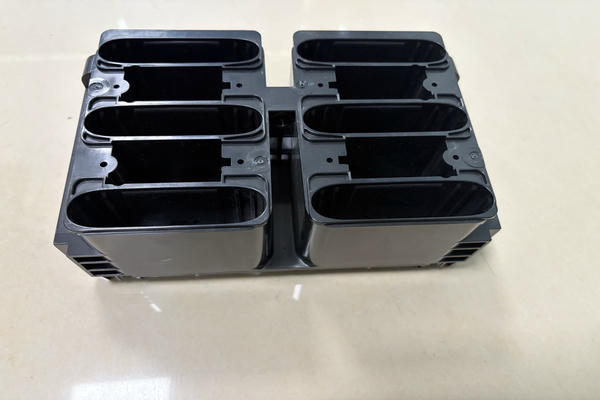
A power bank housing does more than make a portable charger look good. It protects the battery, holds the circuit board, and keeps the USB ports in place. It also needs to feel strong and comfortable in daily use.
However, making a good plastic housing is not always easy. A poor mold design can cause warpage, sink marks, scratches, and poor part fit. These issues may delay production and increase costs.
For example, a small change in the USB opening can make assembly difficult. Uneven cooling may also bend the cover and leave visible gaps.
Fortunately, good design and stable injection molding can prevent many of these problems.
In this guide, Fentor Mold explains how to improve power bank housing mold design, choose suitable materials, and maintain good part quality during production.
What Is a Power Bank Housing?
A power bank housing is the outer case that holds and protects the parts inside a portable charger.
Most power banks use two or more housing parts. The outer covers provide protection and appearance. Internal frames help hold the battery, PCB, and connectors.
Common parts include:
- Front and back covers
- Internal plastic frames
- USB port supports
- Button covers
- LED light covers
- Battery positioning features
Each part has a different job.
For example, the front cover may need a smooth surface. In contrast, an internal frame needs strong ribs and accurate mounting points.
Therefore, the design must consider both appearance and function.
Best Materials for Power Bank Housing
Material choice affects housing strength, surface quality, heat resistance, and cost.
ABS, PC, and PC/ABS are common choices for electronic plastic housings.
However, not every material grade is suitable for a battery-powered product.
| Material | Main Benefits | Main Limits |
|---|---|---|
| ABS | Good surface finish and reasonable cost | Standard grades may have limited heat resistance |
| PC | High impact strength and good heat resistance | Needs careful drying and process control |
| PC/ABS | Good balance of strength and appearance | Performance depends on the grade |
| PP | Lightweight and good chemical resistance | Higher shrinkage and lower stiffness than many ABS grades |
ABS for Power Bank Housing
ABS is often suitable for consumer electronic covers.
It provides good surface quality and supports many colors and textures. Also, it is usually easier to mold than some high-performance plastics.
However, standard ABS may not meet every heat or flame safety requirement.
Therefore, buyers should confirm the exact material grade before making the mold.
PC and PC/ABS for Better Strength
PC has good impact strength and heat resistance.
PC/ABS can offer a balance of strength, appearance, and molding performance.
These materials may suit power bank covers that need better impact performance.
However, the final choice depends on the product’s safety and strength needs.
For battery-powered products, buyers should review the required flammability rating, heat performance, and electrical safety rules.
A material certificate alone does not prove that the complete product is safe.
How to Improve Power Bank Housing Mold Design
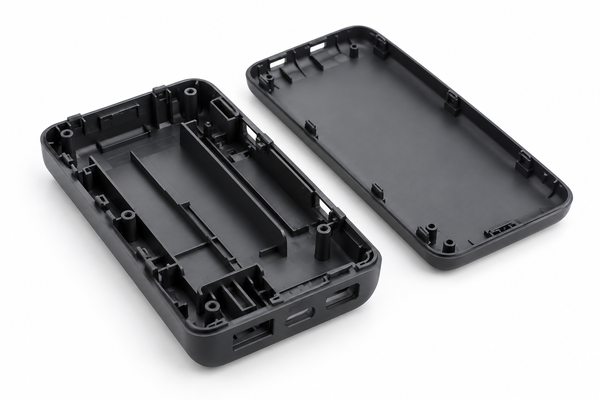
Good mold design helps reduce defects and improve production stability.
The mold must also support the housing’s appearance, strength, and assembly needs.
Keep Wall Thickness Even
Uneven walls can cause sink marks and warpage.
For many ABS and PC/ABS housings, 1.5–2.5 mm may be a useful starting range.
However, the final thickness depends on the housing size, material, and strength requirements.
Avoid sudden changes between thick and thin sections.
Instead, use smooth transitions to help the plastic flow and cool evenly.
Use Ribs to Improve Strength
Ribs can make a housing stronger without adding too much weight.
They are useful around long walls and mounting points.
However, thick ribs can leave sink marks on the outer surface.
As a starting point, rib thickness may be about 40–60% of the main wall thickness.
The final size should depend on the material and part design.
Design Strong Snap-Fits
Many power bank housings use snap-fits or screws to join the covers.
Snap-fits can reduce assembly time and the number of loose parts.
However, poor snap design may lead to cracking.
Therefore, engineers should check the snap length, thickness, and assembly force.
Some snap features may also need sliders or lifters in the mold.
Leave Enough Space Inside
The housing must provide room for the battery, circuit board, wires, and connectors.
Also, ribs and screw bosses must not press against the battery.
The product design should allow for thermal needs, insulation, and battery movement or swelling as specified by the battery system engineer.
These checks help protect internal parts during assembly and use.
Key Points in Power Bank Housing Injection Mold Design
A good plastic part design is only the first step.
The injection mold must also control flow, cooling, ejection, and part dimensions.
Choose the Right Gate Location
Gate location affects filling, weld lines, and surface marks.
For example, a gate on the front cover may leave a visible mark.
Therefore, engineers often place gates in less visible areas when possible.
However, the gate must still allow the plastic to fill the cavity evenly.
Moldflow analysis can help compare gate positions before mold manufacturing.
Improve Mold Cooling
Power bank covers often have wide and flat areas.
These areas may warp if cooling is uneven.
Therefore, the mold should have a balanced cooling system.
Good cooling helps control part shape and may also reduce cycle time.
Plan the Parting Line
The parting line should avoid important appearance areas when possible.
It must also allow the mold to open and the part to release safely.
Poor parting line design may cause flash or visible marks along the cover edge.
Select Suitable Mold Steel
Mold steel affects surface finish, wear resistance, and mold life.
For example, P20-type steel may suit many standard plastic housing molds.
However, higher production volumes or special surface needs may require other steel grades.
Fentor Mold reviews mold structure, steel, and production needs during custom injection mold manufacturing.
Common Power Bank Housing Injection Molding Defects
Plastic housings need good appearance and stable dimensions.
However, poor design or molding settings can cause defects.
| Defect | Common Cause | Possible Solution |
|---|---|---|
| Sink marks | Thick walls or ribs | Improve wall and rib design |
| Warpage | Uneven cooling and shrinkage | Improve cooling and molding settings |
| Flow marks | Poor filling conditions | Adjust gate and injection settings |
| Weld lines | Plastic flow fronts joining | Improve gate position and filling |
| Flash | Poor mold sealing or high pressure | Check mold fit and process settings |
| Scratches | Ejection or handling damage | Improve ejection and handling |
How to Prevent Sink Marks
Sink marks often appear near thick ribs and screw bosses.
These areas cool more slowly than thin walls.
As a result, the outer surface may develop small dents.
To reduce this problem, keep ribs and bosses as thin as the design allows.
Also, review packing pressure and cooling time.
How to Reduce Warpage
Warpage can cause the front and back covers to fit poorly.
For example, a long cover may bend after cooling.
To reduce this risk, keep wall thickness even and improve cooling balance.
Gate position and packing conditions also need attention.
How to Improve Surface Quality
Many power banks use smooth, matte, or textured covers.
Surface defects can make a product look cheap, even when it works well.
Therefore, mold polishing, texture quality, gate position, and ejection design all matter.
Early mold trials help identify these problems before mass production.
How to Improve Power Bank Housing Assembly
A good housing must fit the internal parts and close correctly.
Even small errors can cause assembly problems.
Important areas include:
- USB-C and USB-A openings
- PCB mounting points
- Battery locating features
- Snap-fit clips
- Screw holes
- Cover joints
For example, an incorrect USB opening may stop the charging connector from fitting.
Also, a warped cover may leave gaps after assembly.
Therefore, engineers should check key dimensions during mold trials.
Assembly tests should use real or suitable test components whenever possible.
For more assembly design tips, read our guide on plastic parts assembly.
How to Reduce Power Bank Housing Manufacturing Costs
A lower mold price does not always mean a lower total cost.
Buyers should consider tooling, molding, assembly, and scrap.
Simplify the Housing Design
First, remove features that do not improve the product.
For example, too many undercuts may require extra mold sliders.
These features can raise mold costs and add maintenance work.
A simpler design may reduce both tooling and production risks.
Choose the Right Mold Cavities
Production volume helps determine the number of mold cavities.
A single-cavity mold may suit a smaller project.
For high-volume orders, a multi-cavity mold may reduce the part cost.
However, the best choice depends on machine size, tooling budget, and yearly demand.
Reduce Assembly Labor
Snap-fits may reduce the number of screws and assembly steps.
Also, guide features can help workers align the covers faster.
However, every design must still meet strength and service needs.
Keep Production Stable
Stable molding helps reduce scrap.
Good process control also keeps part size and appearance more consistent.
Our injection molding production services support customers who need repeat plastic part manufacturing.
What Should Buyers Provide for a Power Bank Housing Quote?
Clear project information helps suppliers prepare a more accurate quote.
Buyers should provide:
- 3D CAD files, if available
- Housing dimensions
- Required plastic material
- Surface finish and texture
- Color requirements
- Expected yearly production volume
- Assembly drawings or samples
- Product and material safety requirements
- Target delivery date
If only product photos are available, a supplier may still review the basic design.
However, a firm mold quote often requires more detailed information.
For new products, prototype injection molding may help check the design before full production tooling.
How Fentor Mold Supports Power Bank Housing Manufacturing
A power bank housing project needs good mold design and stable plastic part production.
Fentor Mold provides custom injection molds and plastic injection molding services.
Our team can review wall thickness, ribs, parting lines, gate positions, and key dimensions.
We can also support mold trials and part quality checks.
This helps customers find possible problems before mass production.
For customers who need both molds and molded parts, good planning can reduce delays and improve quality.
Conclusion
A good power bank housing needs the right material, mold design, and molding process.
Even walls, well-designed ribs, and balanced cooling help reduce common defects.
In addition, accurate USB openings and strong assembly features help improve the finished product.
By planning these details early, buyers can reduce tooling risks and improve production quality.
Looking for a supplier for custom power bank housing molds and injection molded parts?
Contact Fentor Mold to discuss your drawings, tooling needs, and production volume.