
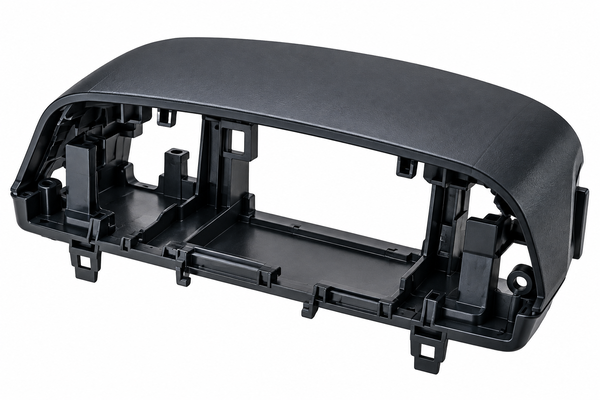
Plastic parts assembly can cost more than buyers expect. A product may need several plastic parts, and each part must fit well. If one part has a size problem, the whole project may face delays.
For example, a plastic cover may look perfect on its own. However, it may not fit the main housing. The supplier then needs to check the mold, part size, and design. As a result, costs rise and delivery takes longer.
The good news is that better planning can prevent many of these problems.
In this guide, Fentor Mold explains how to reduce plastic parts assembly costs, improve part quality, and shorten lead times.
What Is Plastic Parts Assembly?
Plastic parts assembly means joining two or more plastic parts to make a finished product.
These parts may use clips, screws, snap-fits, glue, or welding. Some products also include metal inserts, seals, or other small parts.
Common examples include:
- Automotive air vents
- Electronic connectors
- Medical equipment parts
- Home appliance components
- Consumer products
- Industrial plastic housings
For example, a car air vent may have a frame, blades, clips, and control parts. Each part must fit and move as planned.
Therefore, good assembly starts with good product design.
Why Does Plastic Parts Assembly Cost So Much?
Several factors can increase assembly costs. These include poor part design, too many parts, and extra labor.
However, many problems start before production begins.
1. Too Many Parts
Each extra part adds work. Workers must mold, inspect, store, and assemble it.
Some parts also need their own molds. As a result, both tooling and labor costs increase.
A simpler design may reduce these costs.
2. Poor Part Fit
Plastic parts shrink as they cool. Also, thin and thick areas may shrink at different rates.
Because of this, a cover may not fit its housing.
The supplier may need to adjust the mold or change the process. Both steps take time and money.
3. Difficult Assembly Steps
Some products need many screws or special tools. Others require glue or welding.
These methods can work well. However, they may add labor and inspection time.
In some cases, a simple snap-fit can reduce the work.
4. Too Many Suppliers
When several suppliers make different parts, delays become more likely.
For example, one supplier may use a new drawing while another uses an old version.
The parts may then fail to fit.
Better supplier control helps prevent this problem.
How to Reduce Plastic Parts Assembly Costs
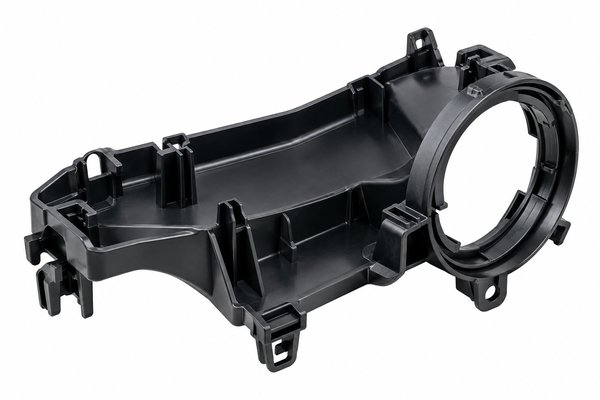
Good design is one of the easiest ways to lower costs.
Before making the molds, check how each part will fit and connect.
Reduce the Number of Parts
First, look for parts that can be combined.
For example, you may add a plastic clip to a cover instead of using a separate fastener.
This may reduce labor and part costs.
However, a more complex molded part may need an expensive mold.
Therefore, always compare tooling costs with assembly savings.
Use Snap-Fit Designs
Snap-fits allow two plastic parts to join without screws.
They are common in covers, housings, and car interior parts.
Their benefits include:
- Faster assembly
- Fewer loose parts
- Lower labor costs
- Less need for tools
- Easier automated assembly
However, snap-fits must have the right shape and strength.
A weak snap may break during use. A very stiff snap may crack during assembly.
Therefore, engineers must select the right plastic and test the snap design.
Make Parts Easy to Assemble
A good part should be easy to place and connect.
For example, guide pins can help align two parts. Clear shapes can also prevent workers from fitting a part in the wrong direction.
These small design details save time.
They also reduce errors during mass production.
How Mold Design Affects Plastic Parts Assembly
Good mold design helps plastic parts fit together.
Even a well-designed product can fail if the molds cannot control part size.
Control Important Dimensions
Not every part needs very tight tolerances.
Instead, focus on dimensions that affect fit and function.
These may include:
- Snap-fit positions
- Screw holes
- Guide pins
- Sealing areas
- Sliding surfaces
- Connector openings
Tight tolerances can raise mold and inspection costs.
Therefore, use them only where they matter.
Reduce Shrinkage and Warpage
Plastic parts may bend or change shape as they cool.
For example, a long cover may become curved. It may then leave gaps after assembly.
To avoid this, engineers should check:
- Wall thickness
- Rib design
- Gate position
- Mold cooling
- Material shrinkage
- Ejection method
Good injection mold design helps control these issues.
As a result, the finished parts can fit more consistently.
Test the Parts During Mold Trials
Mold trials should check more than part appearance.
Engineers should also test how the parts fit together.
For example, a clip may have the correct size but need too much force to lock.
The design or molding process may still need changes.
Early testing can prevent costly problems later.
Which Plastic Parts Assembly Method Is Best?
Different products need different assembly methods.
The best choice depends on the material, part design, and product use.
| Method | Main Benefit | Main Limit |
|---|---|---|
| Snap-fit | Fast and low-cost assembly | Needs good snap design |
| Screws | Easy to remove for repair | Adds parts and labor |
| Ultrasonic welding | Fast, strong permanent joint | Needs special equipment |
| Glue | Can join different materials | Adds drying or curing time |
| Heat staking | Useful for fixing parts and inserts | Usually hard to take apart |
For example, a plastic cover may use snap-fits.
However, a housing that needs regular repair may use screws.
Therefore, choose a method that fits the product’s needs.
How to Reduce Plastic Parts Assembly Lead Time
Good planning can help reduce delays.
This is especially important when a product needs several molds.
Plan Assembly Before Mold Making
Do not wait until the molds are finished to think about assembly.
Instead, check fit and function during the design stage.
This helps find problems before mold steel cutting begins.
As a result, fewer mold changes may be needed.
Develop Related Molds Together
A product may need separate molds for its cover, frame, and support parts.
If one mold runs late, final testing may also be delayed.
Therefore, all related molds should follow one clear schedule.
This makes it easier to plan trials and final production.
Check Assembly During T1 and T2 Trials
Use early mold samples to check how the parts fit.
Common checks include:
- Gaps between parts
- Snap-fit force
- Hole positions
- Part movement
- Surface damage
- Loose or tight connections
If a problem appears, engineers can review it before full production.
This can save both time and money.
Keep the Molding Process Stable
Part size can change when molding conditions change.
For example, a different mold temperature may affect shrinkage.
Therefore, suppliers should control key process settings and inspect important dimensions.
Fentor Mold provides injection molding production services to support stable plastic part manufacturing.
Can One Supplier Reduce Plastic Parts Assembly Costs?
Using one supplier for mold making and injection molding can make a project easier to manage.
It may also help reduce delays.
For example, if two parts do not fit, the same project team can check both the mold and molding process.
This may help find the cause faster.
Other benefits may include:
- Faster communication
- Better control of design changes
- Easier mold trial planning
- Fewer mold transfers
- Clearer quality responsibility
However, one supplier is not always the cheapest choice.
The supplier must have the right machines, skills, and production capacity.
Also, buyers should confirm whether the supplier can handle final assembly or needs an outside partner.
For more details, read our guide on mold making and injection molding.
How to Calculate Plastic Parts Assembly Cost
Buyers should look at the total cost, not just the mold price.
A product with several plastic parts may have many cost items.
| Cost Item | What Affects the Cost? |
|---|---|
| Mold making | Mold size, steel, cavities, and design |
| Injection molding | Material, cycle time, and part volume |
| Assembly labor | Number of parts and assembly steps |
| Assembly tools | Fixtures, welding, and other equipment |
| Quality checks | Size inspection and function tests |
| Shipping | Packing, transport, and supplier location |
For example, a low-cost mold may produce parts that do not fit well.
Workers may need extra time to sort or adjust the parts.
As a result, the total cost may be higher.
Therefore, always compare the full project cost.
Example: Screws vs Snap-Fits
Consider a plastic housing and cover.
One design uses two screws. The other uses snap-fits.
The snap-fit design may save labor and remove the cost of screws.
However, its mold may cost more. It may also need extra testing.
Therefore, the best option depends on production volume and product use.
For high-volume products, even small savings per part can add up.
How to Improve Plastic Parts Assembly Quality
Stable assembly quality starts with good molded parts.
However, checking each part alone is not enough.
Buyers should also check the complete product.
Check Important Part Dimensions
First, measure the areas that affect assembly.
For example, a small change in a clip may affect how firmly it locks.
Therefore, these dimensions need regular checks.
Test Complete Assembly Samples
Two parts may pass inspection but still fail when joined.
For this reason, test the finished assembly before mass production.
Tests may include:
- Visual checks
- Fit checks
- Snap-fit tests
- Movement tests
- Strength tests
- Leak tests, if needed
These checks help confirm that the product works as expected.
Control Production Quality
Molding settings affect part quality and size.
Therefore, suppliers should control material drying, mold temperature, cooling time, and other key settings.
Regular checks help catch problems early.
This reduces scrap and assembly delays.
What Should Buyers Send for a Plastic Parts Assembly Quote?
A clear RFQ helps the supplier understand the project.
It also makes the quote more accurate.
Buyers should prepare:
- 3D files for all plastic parts
- 2D drawings with important dimensions
- Material requirements
- Annual production volume
- Assembly drawings
- Joining methods
- Surface finish requirements
- Function and quality tests
- Packing needs
- Target delivery date
If some details are missing, discuss them with the supplier early.
For example, the supplier may suggest changes to clips, walls, or mold design.
This helps reduce changes later.
How Fentor Mold Supports Plastic Parts Assembly Projects
A multi-part product needs careful planning.
The molds, plastic materials, and part sizes must all work together.
Fentor Mold provides custom injection mold making and injection molding production.
Our team can review part designs, mold requirements, and key assembly dimensions before production.
We also provide precision mold components manufacturing for mold projects.
By reviewing these details early, customers can reduce design problems and improve part quality.
If a project also needs final assembly, the required work and quality checks should be discussed during quotation.
Conclusion
Plastic parts assembly costs depend on product design, mold quality, molding stability, and assembly work.
To reduce costs, start with fewer parts and simple joining methods.
Also, control important dimensions and test assembly fit during mold trials.
Good supplier coordination can help reduce delays and avoid extra work.
As a result, buyers can achieve lower total costs and more stable production.
Need custom injection molds and plastic parts for your next project?
Contact Fentor Mold to discuss your drawings, mold requirements, and production needs.