Prototype injection mold cost is one of the first questions buyers ask when they need plastic prototypes before moving into mass production. However, a prototype mold is not simply a “cheap version” of a production mold. The actual price depends on part geometry, mold structure, material, cavity count, tooling life, surface requirements, and how closely the prototype tooling needs to match the final production process.
For purchasing teams, the important question is not only “How much does a prototype mold cost?” It is also “What am I paying for, and where can I save without compromising the validation results?”
This guide explains the main factors that affect prototype injection mold cost and how buyers can compare quotations more effectively.
What Is a Prototype Injection Mold?
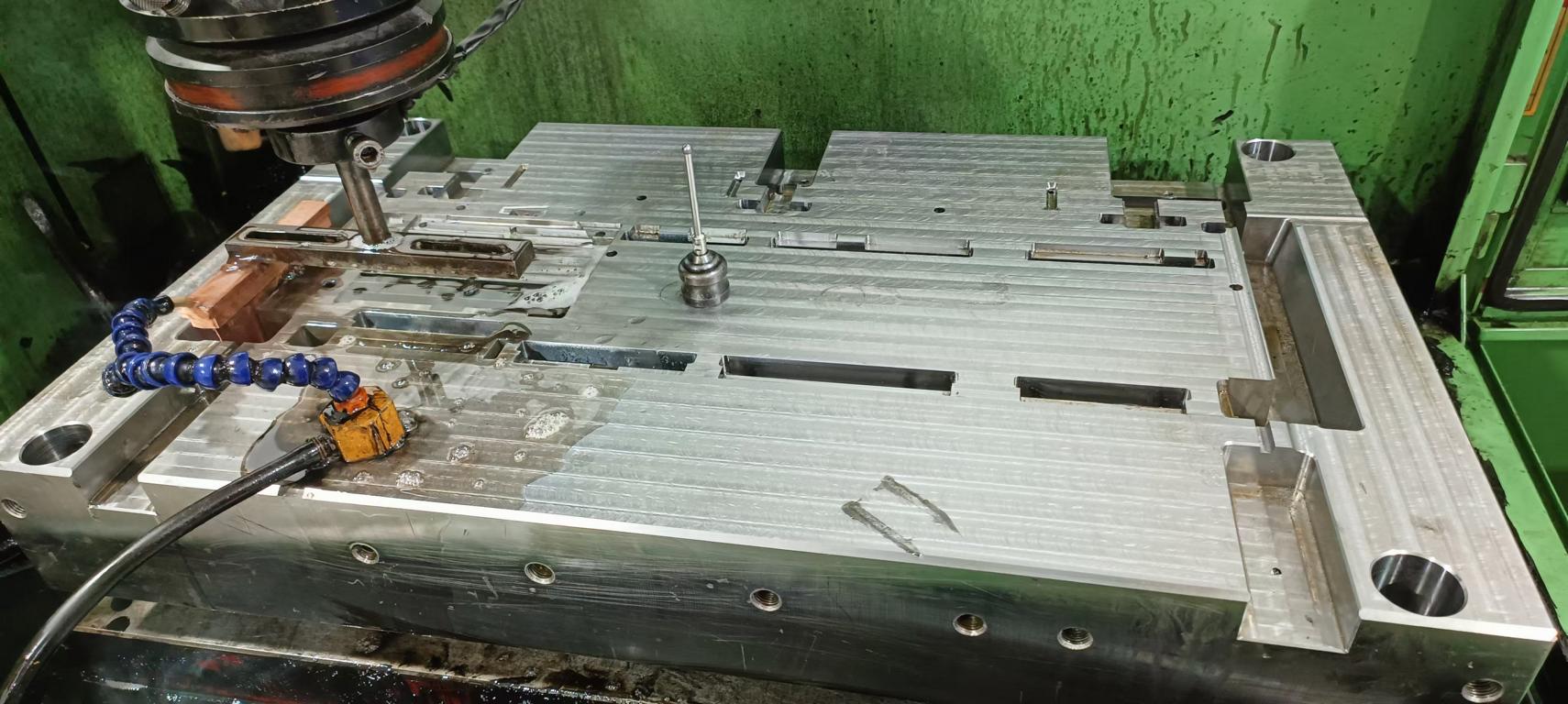
A prototype injection mold is tooling designed to produce a limited quantity of plastic parts for product development, design verification, functional testing, or pre-production evaluation.
Compared with a conventional production mold, prototype tooling may use:
- Fewer cavities
- Simplified mold structures
- Aluminum or lower-cost tool steel
- Standard mold components
- Shorter expected tool life
- Reduced automation
- Simplified cooling or ejection systems where appropriate
The goal is not necessarily to make the cheapest possible mold. The goal is to produce representative plastic parts quickly and economically enough to validate the design before committing to expensive production tooling.
This makes prototype injection molding particularly useful when a product is still going through engineering changes.
For a broader comparison of prototype manufacturing methods, see our guide to Prototype Injection Molding: From Design Validation to Production.
How Much Does a Prototype Injection Mold Cost?
There is no single price that applies to every prototype mold.
A simple, single-cavity tool for a small plastic component can be relatively economical, while a large or complicated prototype mold with slides, lifters, inserts, tight tolerances, and cosmetic requirements can cost considerably more.
The quotation is normally determined by the amount of machining, mold components, engineering work, assembly, testing, and finishing required.
A useful way to look at the cost is:
Prototype injection mold cost = mold design + mold materials + machining + components + assembly + mold trials + finishing + project requirements
This is why two suppliers can quote very different prices for what appears to be the same prototype mold.
The lowest quotation is not automatically the best choice. If important tooling features are removed simply to reduce the initial price, the prototype may not accurately represent the final production part.
8 Factors That Affect Prototype Injection Mold Cost
1. Part Size and Geometry
Part geometry is one of the first things a mold maker evaluates.
A small, simple housing with uniform walls is generally easier to tool than a large part with:
- Deep ribs
- Undercuts
- Complex bosses
- Thin walls
- Deep cavities
- Textured surfaces
- Multiple shutoffs
- Tight dimensional requirements
Complex geometry increases machining time and may require additional mold mechanisms.
For example, an undercut may require a slider or lifter instead of a simple straight ejection system. That adds components, machining, assembly work, and testing.
This is why two parts with similar overall dimensions can have very different prototype tooling costs.
2. Number of Cavities
For most prototype projects, one cavity is often sufficient.
A single-cavity prototype mold reduces tooling complexity and allows the development team to validate the part before investing in a multi-cavity production tool.
However, buyers sometimes request two or more cavities because they need more parts for testing or want to evaluate multiple variations.
Increasing cavity count can increase:
- Mold base size
- Number of inserts
- Runner complexity
- Cooling requirements
- Ejection components
- Machining time
- Mold balancing requirements
If you only need a small number of prototype parts, a multi-cavity mold may not provide enough benefit to justify the additional tooling cost.
For production planning, our guide on Single Cavity vs Multi Cavity Mold explains how cavity count affects tooling and production economics.
3. Mold Material: Aluminum or Steel
The choice of mold material can have a significant effect on prototype tooling cost.
Aluminum tooling is often considered when the project requires a limited number of parts and a relatively short development cycle. It can be faster to machine and may reduce initial tooling investment.
Steel tooling generally makes more sense when the prototype tool is expected to produce more parts, withstand demanding materials, or transition into longer-term production use.
The decision should not be based on material price alone.
Consider:
- Expected shot quantity
- Plastic material
- Glass fiber content
- Required surface finish
- Dimensional requirements
- Tool life
- Possibility of future production
For more information, see our comparison of Steel vs Aluminum for Injection Molds.
4. Mold Structure and Moving Components
A simple mold can be relatively straightforward to manufacture.
However, when the part has undercuts or difficult ejection areas, the tooling may require:
- Sliders
- Lifters
- Angled ejectors
- Inserts
- Replaceable cores
- Special ejection structures
Each additional mechanism increases both machining and assembly requirements.
For a prototype, the engineering team should ask an important question:
Does this feature need to be included in the prototype mold, or can the design be temporarily simplified without affecting the test objective?
For example, if an undercut has no effect on functional testing, there may be an opportunity to simplify the tooling. But if the undercut is critical to assembly or function, removing it would make the prototype misleading.
5. Surface Finish and Cosmetic Requirements
Surface finish can also affect prototype injection mold cost.
A functional prototype may only require a standard machined finish. A cosmetic prototype, however, may need:
- Polishing
- EDM texture
- Mold texture
- High-gloss finishing
- Controlled parting lines
- Carefully positioned gates
- Cosmetic-grade ejection
This is particularly important for consumer products, visible automotive components, electronics housings, and other appearance-sensitive parts.
If the purpose of the prototype is to evaluate appearance, the tooling should reproduce the intended production surface finish as closely as practical.
Otherwise, the prototype may pass functional testing but fail the appearance review later.
6. Plastic Material
The plastic selected for the prototype can affect tooling requirements.
Common materials such as PP, ABS, and some grades of PE are generally easier to process than highly abrasive or high-temperature engineering plastics.
Materials containing glass fiber can be particularly important because they can increase mold wear and influence the selection of mold steel and inserts.
Likewise, high-temperature materials may require more attention to:
- Mold steel
- Cooling
- Mold temperature
- Thermal expansion
- Venting
- Processing conditions
Our article on 10 Best Injection Molding Materials for High Quality Parts provides a broader overview of common injection molding materials.
7. Tolerance and Dimensional Requirements
Not every prototype needs production-level tolerances.
If the prototype is mainly being used to check basic appearance and assembly, extremely tight tolerances across every feature may unnecessarily increase tooling cost.
On the other hand, functional testing may require specific critical dimensions to be tightly controlled.
A better approach is to identify critical-to-function dimensions before requesting the tooling quotation.
This helps the mold maker understand where precision is essential and where standard machining tolerances may be acceptable.
For more information, see our guide to Injection Molding Tolerance Standards.
8. Expected Tool Life and Prototype Quantity
The expected number of parts should always be discussed before the mold is designed.
There is a big difference between needing:
- 20 prototype parts
- 200 parts
- 2,000 parts
- 10,000+ parts
If the project only requires a small number of samples, investing heavily in long-life production tooling may not be economical.
But if the same prototype mold will also support pilot production, a more durable tooling solution may make sense.
This is one reason buyers should provide an estimated production quantity when requesting a prototype mold quotation.
Prototype Mold vs Production Mold: Why the Cost Is Different
A common mistake is to compare a prototype mold quotation directly with the quotation for a production mold.
They may be designed for completely different objectives.
| Factor | Prototype Mold | Production Mold |
|---|---|---|
| Typical cavity count | Often 1 | 1 to multiple cavities |
| Tool life | Limited or moderate | Long-term |
| Mold material | Aluminum or steel | Usually production-grade steel |
| Automation | Often limited | May be highly optimized |
| Cycle time optimization | Moderate | Important |
| Maintenance requirements | Lower | Higher |
| Production volume | Low | Medium to high |
| Initial tooling investment | Lower | Higher |
A prototype mold should be optimized for the development objective, while a production mold must be optimized for repeatability, cycle time, maintenance, tool life, and production economics.
If you are still deciding whether prototype tooling or production tooling is appropriate, our article on Prototype vs Production Injection Molding can help with that decision.
How Can Buyers Reduce Prototype Injection Mold Cost?
Reducing prototype injection mold cost does not necessarily mean asking the supplier to remove tooling features.
A better approach is to reduce unnecessary complexity.
Use a Single-Cavity Mold When Possible
If the project only needs a limited number of samples, one cavity may be enough.
There is little value in paying for four cavities when the engineering team only needs a few dozen parts for validation.
Define the Prototype Objective Clearly
Tell the mold supplier what you actually need to validate.
Is the purpose:
- Assembly?
- Function?
- Appearance?
- Material performance?
- Dimensional testing?
- Production process validation?
The answer can affect the appropriate tooling strategy.
Avoid Over-Specifying the Mold
Not every prototype requires:
- Premium mold steel
- Complex automation
- Full production-level cavity count
- Extremely long tool life
- Advanced hot runner systems
If these features do not contribute to the prototype objective, they may increase the cost without providing meaningful value.
Identify Critical Dimensions
Instead of demanding tight tolerances everywhere, identify the dimensions that affect function, assembly, or performance.
This allows the tooling supplier to focus engineering effort where it matters most.
Consider Future Production
However, cost reduction should not make the prototype irrelevant.
If the prototype will be used to validate a design that will later enter mass production, important production characteristics should be considered from the beginning.
That is particularly important for:
- Gate location
- Parting line
- Draft angle
- Ejection
- Cooling
- Shrinkage
- Material behavior
A cheap prototype that cannot tell you anything useful about the eventual production process can become an expensive shortcut.
What Should Buyers Include When Requesting a Prototype Mold Quote?
A supplier can provide a much more accurate quotation when the RFQ includes enough technical information.
At minimum, provide:
- 3D part files
- 2D drawings if available
- Plastic material and grade
- Expected prototype quantity
- Target production quantity
- Surface finish requirements
- Critical dimensions and tolerances
- Color requirements
- Intended application
- Target delivery date
It is also helpful to tell the supplier whether the prototype mold is expected to be used only for validation or potentially for low-volume production.
For buyers preparing an RFQ, our Injection Mold RFQ Checklist covers the information that should be confirmed before placing a tooling order.
When Does a Prototype Mold Make Financial Sense?
Prototype tooling is most useful when the cost of finding a design problem later is much higher than the cost of validating it earlier.
For example, changing a plastic part before production tooling is completed may be relatively straightforward.
Changing the same feature after a production mold has been fully manufactured can involve:
- Steel modifications
- Re-machining
- EDM
- Insert replacement
- Additional mold trials
- Delayed production
- Engineering costs
Therefore, the value of a prototype mold should not be measured only by its tooling price.
The better question is:
How much risk can this prototype mold remove before production?
For a new product, that can be much more important than saving a few hundred dollars on the initial tooling quotation.
Final Thoughts on Prototype Injection Mold Cost
Prototype injection mold cost depends on much more than the size of the mold.
Part complexity, cavity count, mold material, tooling structure, surface finish, plastic material, tolerance requirements, and expected tool life all influence the final quotation.
For buyers, the best strategy is to define the prototype objective first and then choose the simplest tooling solution that can provide reliable and meaningful test results.
A low-cost mold is useful only when it produces the right parts.
If you are comparing prototype tooling options for a new plastic part, Fentormold can review your part design, material, expected quantity, and validation requirements to recommend a practical tooling approach before manufacturing begins.
Need a prototype mold quotation? Send your 3D part file and project requirements to our Injection Mold Service team for review.