Choosing between prototype molding vs production molding is an important step in plastic product development. Both methods can produce real injection molded parts. However, they serve different goals.
Prototype molding focuses on speed, testing, and lower initial cost. In contrast, production molding focuses on stable quality, long mold life, and efficient high-volume production.
Therefore, buyers should not compare mold price alone. They should also consider part quality, expected quantity, mold life, and lead time.
This guide explains the main differences between prototype molding and production molding. It also shows when each option makes more sense.
What Is Prototype Molding?
Prototype molding uses an injection mold mainly for testing, validation, pilot production, or low-volume manufacturing.
The mold often has a simpler structure than a full production mold. As a result, the mold maker can reduce both tooling cost and lead time.
Typical applications include:
- Functional prototype parts
- Engineering validation
- Assembly testing
- Market testing
- Low-volume production
- Pre-production samples
- Product design verification
Unlike 3D printing, prototype injection molding can use real production-grade plastic materials.
Therefore, engineers can test real molding behavior, shrinkage, strength, surface finish, assembly, and dimensional accuracy.
At Fentor Mold, we evaluate prototype tooling based on part design, material, tolerance, quantity, and future production plans.
What Is Production Molding?
Production molding is designed for stable and repeated manufacturing over a longer period.
A production mold may need to make tens of thousands or even millions of parts. Therefore, mold strength, cooling, steel selection, and wear resistance become more important.
Production molds often use:
- Higher-grade mold steel
- Complete cooling systems
- Reliable ejection systems
- Stronger mold structures
- Replaceable wear parts
- Optimized gates
- Stable mold alignment
- Controlled cycle times
In addition, production molds often need better long-term maintenance planning.
For projects that move into regular manufacturing, our injection molding production service focuses on stable part quality and repeatable production.
Prototype Molding vs Production Molding at a Glance
The main differences are easy to see in the table below.
| Factor | Prototype Molding | Production Molding |
|---|---|---|
| Main purpose | Testing and validation | Long-term production |
| Tooling cost | Lower | Higher |
| Mold structure | Simpler | More robust |
| Mold life | Shorter | Longer |
| Lead time | Shorter | Longer |
| Production volume | Low to medium | Medium to very high |
| Cycle time | Less critical | Very important |
| Automation | Usually limited | Often required |
| Maintenance | Simple | Long-term planning |
| Engineering focus | Fast validation | Stable production |
However, prototype molding vs production molding is not simply a choice between a cheap mold and an expensive mold.
Instead, the best option depends on the whole project.
Prototype Molding vs Production Molding Cost
Cost is often the first point buyers compare.
A prototype mold usually costs less because it can use a simpler design. In addition, the mold maker may remove features that are not necessary for low-volume production.
Where Prototype Molding Can Save Cost
Prototype tooling can reduce cost through:
- Simpler mold bases
- Lower mold-life targets
- Fewer cavities
- Less automation
- Simpler cooling
- Standard mold components
- Basic surface finishing
However, the mold still needs enough strength and accuracy to produce good parts.
If the mold design becomes too simple, problems can appear. For example, the parts may have flash, poor ejection, or unstable dimensions.
Therefore, reducing cost should never mean ignoring basic mold quality.
Why Production Molds Cost More
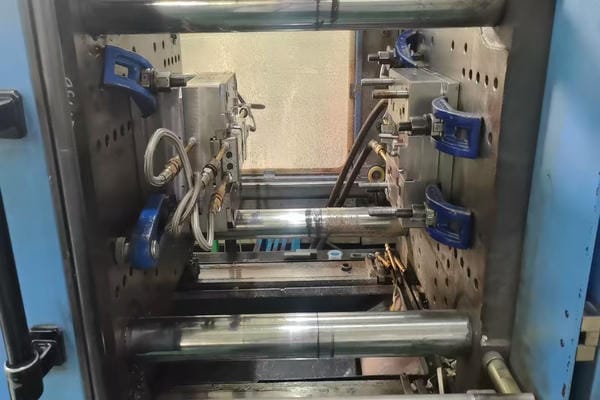
Production molds need stronger and more stable structures.
They must handle injection pressure, heat, cooling, and repeated mechanical movement for many cycles. Therefore, the mold maker often needs more machining and more durable materials.
Production mold cost may increase because of:
- Hardened tool steel
- More CNC machining
- More EDM work
- Complex cooling
- Hot runner systems
- Multiple cavities
- Precision inserts
- Wear plates
- Lifters and sliders
- More mold trials
As a result, production tooling requires a higher initial investment.
However, the higher tooling cost can reduce long-term production cost.
Cost per Part Can Be More Important
A cheaper mold does not always mean cheaper parts.
For example:
| Item | Prototype Mold | Production Mold |
|---|---|---|
| Tooling investment | Lower | Higher |
| Cavities | 1 | 4 |
| Cycle time | 45 sec | 25 sec |
| Expected quantity | 5,000 pcs | 300,000 pcs |
| Automation | Limited | Optimized |
| Unit cost | Higher | Lower |
For 3,000 parts, a prototype mold may be enough.
However, for 300,000 parts, a four-cavity production mold may save a large amount of machine time.
In addition, a shorter cycle can reduce labor and machine cost.
Therefore, when comparing prototype molding vs production molding, buyers should calculate both tooling cost and part cost.
Prototype Molding vs Production Molding Quality
Prototype molding does not mean low quality.
A well-made prototype mold can produce very good parts. In many cases, the mold can use the same plastic material planned for mass production.
However, long-term consistency is different.
A production mold needs to keep the same:
- Part dimensions
- Surface quality
- Ejection performance
- Mold alignment
- Cooling balance
- Gate condition
- Cycle stability
for a much larger number of cycles.
Therefore, production tooling needs better wear resistance and stronger structures.
Dimensional Accuracy Requirements
Some prototype parts only need to confirm basic fit and function.
However, other prototype parts require tight tolerances from the beginning.
For example, a housing may need accurate:
- Screw boss positions
- Snap-fit dimensions
- Connector openings
- Sealing surfaces
- Mounting points
In these cases, the mold maker can simplify the mold structure. However, critical dimensions still need good control.
Fentor Mold reviews important dimensions before deciding where tooling can be simplified.
For projects that also need machining or precision secondary work, buyers can review our components manufacturing capabilities.
Surface Quality Can Affect Tooling Cost
Surface requirements also affect the difference between prototype and production tooling.
A simple engineering sample may only need a standard molded finish.
However, appearance parts may require:
- High polishing
- Texture
- Grain
- Painting
- Chrome plating preparation
- Tight parting-line control
As a result, even a prototype mold can become expensive if the cosmetic requirements are high.
For example, a transparent PC part may need optical polishing. In that case, the mold surface must reach a high standard even for low-volume production.
Prototype Molding vs Production Molding Lead Time
Lead time is another major difference.
Prototype molds usually target fast T0 or T1 samples. Therefore, the mold maker keeps the structure as simple as possible.
Production molds usually need more steps.
These steps may include:
- DFM review
- Moldflow analysis
- Mold design
- Steel preparation
- CNC machining
- EDM
- Grinding
- Mold fitting
- Mold assembly
- T0 trial
- Mold modification
- T1 or T2 validation
- Final inspection
In addition, complex production molds may need hot runner systems, texture, or custom mold parts.
Therefore, production tooling usually takes longer to complete.
When Prototype Molding Is a Better Fit
Prototype molding is a good option when the product is still under development.
For example, it works well when:
- The design may still change
- Market demand is uncertain
- Only a few thousand parts are needed
- Functional testing is still required
- The customer needs real molded samples
- The launch schedule is tight
In these cases, a full production mold may create too much early investment.
Our prototype injection molding service supports projects that need real molded parts before full-scale production.
When Production Molding Makes More Sense
Production molding becomes more suitable when the product design is stable and expected demand is higher.
It is often the better choice when:
- Annual quantity is high
- Stable quality is important
- Short cycle time matters
- Multi-cavity tooling makes sense
- Automation is needed
- Mold life must reach a clear target
- Production downtime would be expensive
In these cases, better mold construction can reduce long-term production cost.
Therefore, spending more on the mold at the beginning may save money later.
Can a Prototype Mold Become a Production Mold?
Sometimes it can.
However, the buyer should discuss this before mold design starts.
If the project may move into production quickly, the mold maker can prepare for future needs.
For example, the mold may use:
- Better steel
- A standard production mold base
- Stronger inserts
- Better cooling
- Replaceable wear parts
This approach raises the first tooling cost slightly.
However, it may reduce the need to build a completely new mold later.
On the other hand, upgrading a very simple prototype mold may not be practical.
Should You Build One Mold or Two?
There is no single answer.
Instead, the best choice depends on product maturity and production volume.
| Project Situation | Possible Strategy |
|---|---|
| Design still changing | Prototype mold first |
| Demand uncertain | Prototype or low-volume mold |
| Design confirmed and volume high | Production mold |
| Launch deadline is tight | Prototype tool first, production tool later |
| Annual quantity is low | Prototype tooling may be enough |
| Long-term high-volume project | Dedicated production mold |
In some projects, building a prototype mold first can reduce risk.
In other projects, the design is already mature. Therefore, the buyer can move directly to production tooling.
Questions to Ask Before Choosing
Before choosing between prototype molding vs production molding, buyers should provide enough project information.
Important information includes:
- 3D CAD data
- 2D drawings
- Plastic material
- Surface finish
- Critical tolerances
- Annual quantity
- Total production quantity
- Mold life target
- Launch date
- Injection machine requirements
- Future production location
With this information, the mold supplier can recommend a more suitable tooling plan.
As a result, the buyer can avoid choosing a mold only because it has the lowest initial price.
Final Thoughts
The main difference between prototype molding vs production molding is not only mold cost.
Prototype tooling focuses on speed, flexibility, and lower initial investment. In contrast, production tooling focuses on mold life, stable quality, and efficient long-term production.
Therefore, buyers should consider the full product lifecycle.
If the product is still under testing, prototype molding can reduce early investment. It also allows design changes before full production.
However, if the design is stable and production volume is high, production tooling can provide better long-term value.
Most importantly, buyers should discuss quantity, quality, mold life, and lead time before mold design starts. This helps reduce unnecessary mold changes later.