
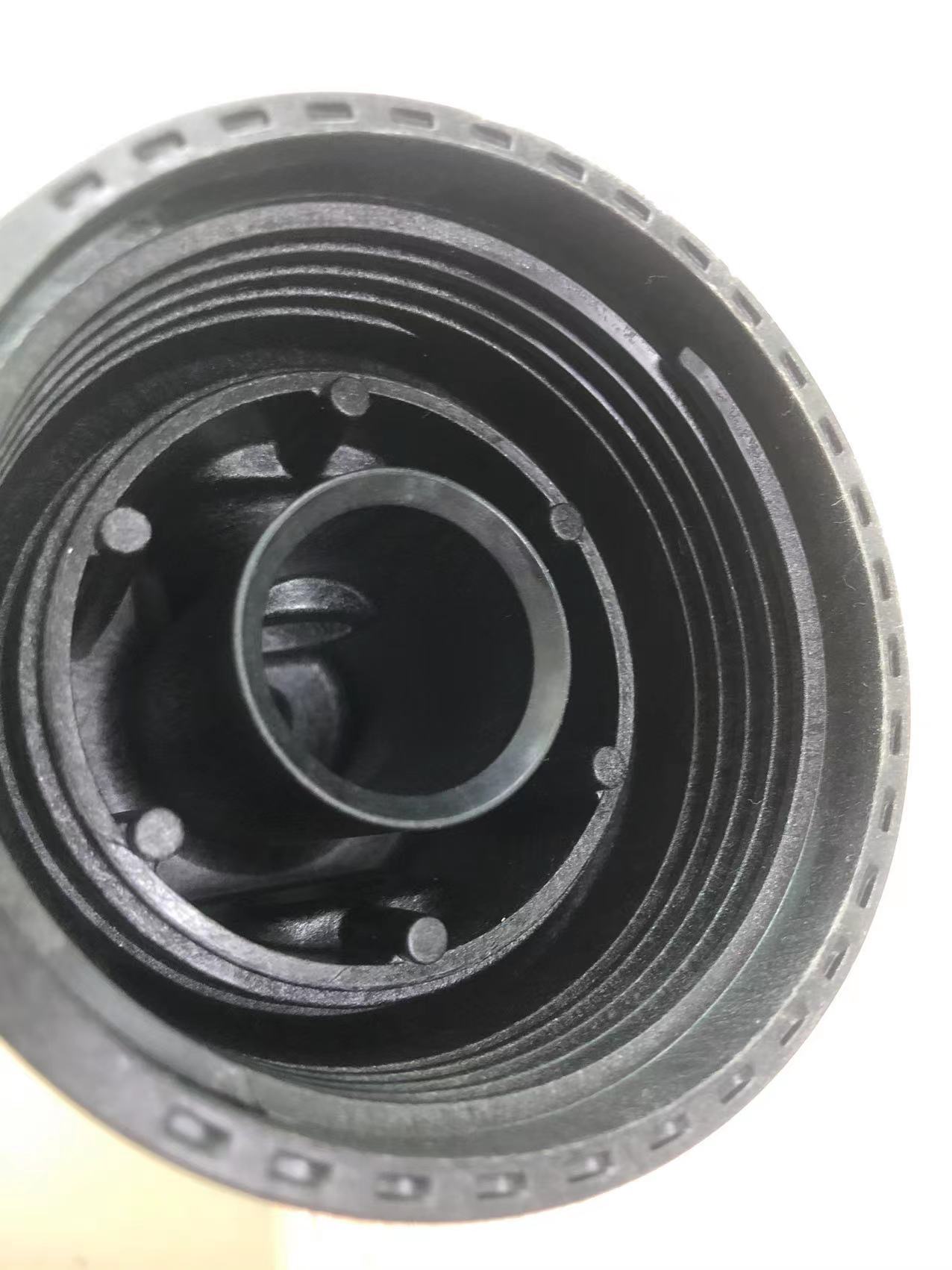
Threaded holes in plastic parts are common in housings, brackets, connectors, covers, and many other molded products. However, plastic threads do not behave like metal threads. Poor thread design can cause stripping, cracking, loosening, or early failure.
There are several ways to create threaded holes in plastic parts. Common options include molded threads, metal inserts, self-tapping screws, and machining after molding.
Each method offers different strength, cost, and tooling requirements. Therefore, the best choice depends on the plastic material, load, assembly frequency, and production volume.
At Fentor Mold, we review these factors before mold design starts. This helps reduce thread failure and unnecessary tooling cost.
What Are Threaded Holes in Plastic Parts?
Threaded holes in plastic parts allow screws, bolts, or fittings to connect directly with a molded component.
They are widely used in:
- electrical housings;
- automotive plastic parts;
- medical devices;
- industrial equipment;
- home appliance parts;
- connectors;
- mounting brackets.
However, no single thread method works for every product.
For example, a simple housing may only need a self-tapping screw. In contrast, an industrial part may need a brass insert because the screw will be removed many times.
Therefore, the thread solution should match the real assembly need.
Main Options for Threaded Holes in Plastic Parts
The four most common methods are:
| Thread Method | Strength | Cost | Best Use |
|---|---|---|---|
| Molded plastic threads | Medium | Low to medium | High-volume parts |
| Metal threaded inserts | High | Medium | Repeated assembly |
| Machined threads | Medium | Higher | Prototypes or low volume |
| Self-tapping screws | Low to medium | Low | Simple housings |
Each option has clear advantages.
For this reason, engineers should compare strength, cost, production volume, and service life before choosing the final design.
Molded Threads for Threaded Holes in Plastic Parts
Molded threads form directly during injection molding.
The mold creates the thread shape, so the part does not need a second machining step.
As a result, molded threads can reduce unit cost in high-volume production.
Advantages of Molded Threads
Molded threads offer several benefits:
- no secondary machining;
- shorter production flow;
- lower cost at high volume;
- good repeatability;
- suitable for many plastics.
However, the mold may become more complex.
Internal Molded Threads
Internal threads require a way for the threaded core to leave the molded part.
Common solutions include:
- unscrewing cores;
- collapsible cores;
- removable inserts;
- special lifter systems.
An automatic unscrewing system improves production speed. However, it also increases tooling cost and complexity.
For lower quantities, a manual insert may be a simpler option.
Our custom injection mold manufacturing service includes mold structure review before machining begins.
When Do Threaded Holes in Plastic Parts Need Molded Threads?
Molded threads often work well when:
- production volume is high;
- the thread size is suitable for molding;
- assembly does not happen many times;
- the plastic has enough strength;
- secondary work should be minimized.
In addition, molded threads can help reduce assembly steps.
However, plastic threads can wear after repeated use. Therefore, metal inserts may be better when the product needs regular service or maintenance.
Metal Inserts for Threaded Holes in Plastic Parts
Metal inserts provide stronger threads than plastic alone.
Brass inserts are common because they offer good strength and stable threads.
Typical installation methods include:
- insert molding;
- heat staking;
- ultrasonic insertion;
- press-fit installation.
Each process works differently. Therefore, the best method depends on the plastic, insert shape, production volume, and required strength.
Insert Molding for Stronger Threaded Holes
In insert molding, the operator or automation places the metal insert into the mold before injection.
Plastic then flows around the insert and locks it into the part.
This method can provide strong pull-out resistance. In addition, it can reduce later assembly work.
However, insert location must stay stable during injection. Otherwise, the insert may move and create an incorrect thread position.
For that reason, the mold needs a reliable insert locating system.
Heat-Set Inserts in Plastic Parts
Heat-set inserts are installed after molding.
The insert heats the surrounding plastic and moves into a prepared boss.
After cooling, the plastic holds the insert in place.
This method works well with many thermoplastics, including:
- ABS;
- PC;
- PC/ABS;
- PA;
- POM;
- PP.
However, boss design is critical.
If the boss wall is too thin, it may crack. On the other hand, if the hole is too large, the insert may loosen or pull out.
Therefore, both insert size and boss size should match.
When Should Threaded Holes in Plastic Parts Use Metal Inserts?
Metal inserts are often the better choice when the product needs:
- repeated screw assembly;
- higher tightening torque;
- stronger pull-out force;
- accurate metal threads;
- long service life;
- regular maintenance.
For example, an industrial housing that opens often can benefit from brass inserts.
Although the initial cost is higher, the connection usually lasts longer.
Machining Threaded Holes in Plastic Parts
Another option is to machine the thread after molding.
Manufacturers can drill and tap the plastic part after the molding process.
This gives more flexibility because the mold does not need to form the final thread.
Machining can work well for:
- prototypes;
- low-volume production;
- engineering samples;
- unusual thread sizes;
- parts that may still change.
At Fentor Mold Components Manufacturing, machining can support projects that need secondary operations after molding.
However, machining adds another production step. As volume increases, this extra labor can increase unit cost.
Common Problems With Machined Plastic Threads
Machining plastic requires careful process control.
Too much cutting force can damage the thread or surrounding boss.
Possible problems include:
- melted material;
- rough thread surfaces;
- cracking;
- burrs;
- poor hole accuracy;
- weak thread engagement.
In addition, glass-filled plastics can wear cutting tools faster.
Therefore, tool type, cutting speed, and feed should match the plastic material.
Self-Tapping Screws for Threaded Holes in Plastic Parts
Self-tapping screws create their own thread during assembly.
Instead of molding a finished internal thread, the mold creates a pilot hole or boss.
During assembly, the screw forms or cuts the thread into the plastic.
This method offers several advantages:
- simple mold design;
- low tooling cost;
- fast assembly;
- fewer added components.
Because of these benefits, self-tapping screws are common in plastic housings.
However, repeated removal can damage the formed plastic thread. Therefore, metal inserts are usually better for products that need frequent opening.
How Boss Design Affects Threaded Holes in Plastic Parts
Thread strength depends on more than the thread itself.
The boss around the hole also plays a major role.
Poor boss design can cause:
- cracking;
- sink marks;
- weak pull-out strength;
- warpage;
- incomplete filling.
Several design points matter.
Boss Wall Thickness
A very thick boss can create sink marks on the opposite surface.
Instead, support ribs can add strength without adding too much material.
This approach can improve both strength and appearance.
Boss Outside Diameter
The boss needs enough plastic around the threaded hole.
If the wall is too thin, tightening force may split the boss.
Therefore, the outside diameter should match the screw and plastic material.
Support Ribs
Ribs can improve boss stiffness.
However, very thick ribs may cause sink marks.
For this reason, rib thickness should remain balanced with the surrounding wall.
Material Selection for Threaded Holes in Plastic Parts
Plastic material has a strong effect on thread performance.
Some materials are tougher. Others offer better stiffness or wear resistance.
| Plastic | Thread Performance | Typical Use |
|---|---|---|
| ABS | Good for normal loads | Housings |
| PC | Strong and tough | Technical parts |
| PC/ABS | Balanced performance | Automotive and electronics |
| PA | Strong, especially with GF | Mechanical parts |
| POM | Good wear resistance | Moving components |
| PP | Softer and flexible | Consumer products |
| PEEK | High performance | Technical applications |
Glass fiber can improve stiffness and strength.
However, it can also make the material more brittle around sharp corners. Therefore, radii and boss geometry still need careful design.
Which Threaded Holes in Plastic Parts Are Strongest?
In many applications, metal inserts provide the strongest and most durable thread.
However, they also increase part and assembly cost.
A simple comparison helps:
| Requirement | Better Option |
|---|---|
| Lowest cost | Self-tapping screw |
| High-volume molded thread | Molded thread |
| Repeated assembly | Metal insert |
| High torque | Metal insert |
| Prototype | Machined thread |
| Low-volume custom part | Machining or insert |
| Minimum secondary work | Molded thread |
| Easy design changes | Machined thread |
There is no universal best solution.
Instead, engineers should choose the method based on load, service life, and production quantity.
Common Mistakes With Threaded Holes in Plastic Parts
Several mistakes can reduce thread strength.
Boss Wall Too Thin
A thin boss can crack when the screw is tightened.
Therefore, enough plastic should remain around the hole.
Boss Wall Too Thick
More material does not always improve performance.
An oversized boss can create sink marks, long cooling time, and internal stress.
Poor Draft
Molded bosses still need draft.
Without enough draft, the part can stick during ejection.
Sharp Corners
Sharp corners increase stress concentration.
Adding a suitable radius can improve strength.
Wrong Thread Type
Plastic threads may work well for normal assembly. However, they may not survive frequent removal.
For repeated assembly, metal inserts often provide a safer solution.
How Molding Quality Affects Threaded Holes in Plastic Parts
Even a good design can fail if molding conditions are unstable.
Common problems include:
- short shots near the boss;
- weld lines around the hole;
- sink marks;
- warpage;
- internal stress;
- flash.
Gate location also matters.
For example, plastic flow may split around a boss and create a weld line behind it. This area can become weaker.
Therefore, engineers should review gate position, venting, cooling, and packing pressure.
Our injection molding production service includes mold trials and process adjustment to help improve part stability.
How to Choose Threaded Holes in Plastic Parts
Before selecting a thread method, answer several basic questions:
- How many times will the screw be removed?
- What tightening torque is required?
- Which plastic will be used?
- What is the expected production volume?
- Is metal-to-metal fastening required?
- Can secondary assembly be accepted?
- What tooling budget is available?
These answers usually make the decision easier.
For example, a simple disposable product may not need a metal insert. In contrast, an industrial enclosure that opens often may benefit from one.
Final Thoughts
Strong threaded holes in plastic parts need the right thread type, plastic material, boss design, and manufacturing method.
Molded threads can reduce secondary work. Metal inserts provide higher strength. Machined threads offer flexibility for low-volume projects. Self-tapping screws remain a simple and low-cost option.
However, the best solution depends on how the product will be assembled and used.
By reviewing the thread requirement before mold design starts, manufacturers can reduce cracking, thread stripping, insert pull-out, and unnecessary tooling cost.