
You have completed your product design, selected the materials, and prepared to manufacture a two-shot mold.
Everything looks ready.
Then your supplier discovers a serious problem:
The two materials may not bond properly.
This issue can appear during mold trials or even after mass production begins.
The consequences can be expensive:
- Soft materials separate from rigid substrates.
- Parts fail during durability testing.
- Appearance defects appear at the bonding interface.
- Tooling modifications are required after mold completion.
- Production schedules are delayed.
In two-shot molding, material selection is not just a plastic choice. It directly affects bonding performance, mold design, production stability, and final part quality.
At Fentormold, we help customers evaluate two-shot molding material compatibility, optimize mold design, and validate production performance before large-scale manufacturing.
Key Takeaways
- Material selection is one of the most important factors in two-shot molding success.
- ABS + TPE is one of the most widely used combinations because of reliable bonding performance.
- Incorrect material combinations can cause delamination, warpage, and production failures.
- Processing temperature, chemical compatibility, and shrinkage difference must be considered before tooling.
- Early material validation helps avoid expensive mold modifications.
Why Material Selection Matters in Two-Shot Molding
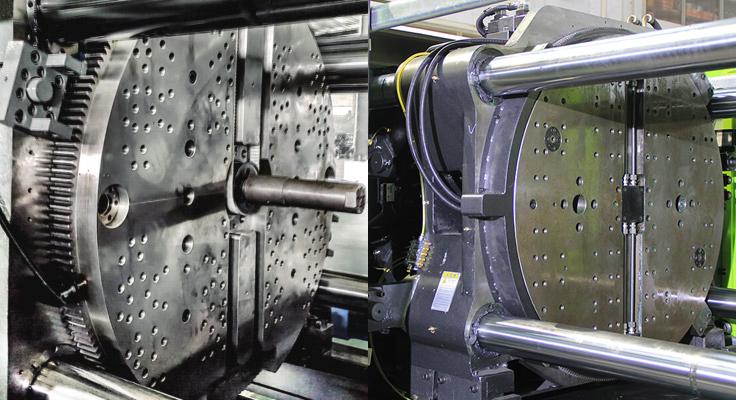
Two-shot molding creates a single plastic component by combining two different materials during one molding cycle.
Typical applications include:
- Soft-touch grips
- Automotive interior components
- Electronic housings
- Sealing parts
- Multi-color plastic products
Compared with standard injection molding, two-shot molding has an additional challenge:
The two materials must work together as one part.
A successful two-shot component requires:
- Strong bonding between materials
- Stable dimensions
- Good appearance
- Long-term durability
Many failures happen because material selection is considered too late.
Once the mold has been manufactured, changing the material combination may require:
- Mold modification
- New trial runs
- Additional development costs
For this reason, experienced suppliers evaluate materials before starting the tooling process.
If you are planning a two-shot molding project, it is important to understand the difference between two-shot injection molding and overmolding because each process requires different material combinations, bonding conditions, and mold design considerations.
Two Shot Molding Material Mistake: Choosing Incompatible Plastics
Mistake 1: Assuming Any Two Plastics Can Bond Together
One of the biggest mistakes in two-shot molding is choosing materials based only on appearance or mechanical properties.
Two plastics may look suitable but still fail because they have different:
- Chemical structures
- Surface energy
- Polarity
- Processing temperatures
Material compatibility determines whether the two layers create a strong bond or separate during use.
For example:
ABS + TPE
ABS and TPE are one of the most common two-shot combinations.
Advantages include:
- Reliable adhesion
- Good processing window
- Excellent soft-touch performance
Common applications:
- Consumer electronics
- Power tools
- Automotive interior parts
PP + ABS
This combination is much more challenging.
PP has low surface energy, making chemical bonding difficult with many engineering plastics.
Without special material grades or mechanical locking structures, bonding strength may be insufficient.
Mistake 2: Ignoring Chemical Compatibility
Two-shot bonding depends heavily on the relationship between the two polymer materials.
Materials with similar chemical structures usually have better bonding performance.
Common successful combinations include:
| First Material | Second Material | Bond Performance |
|---|---|---|
| ABS | Styrenic TPE | Excellent |
| PC/ABS | TPE | Excellent |
| PA66 | PA-based TPE | Good |
| PP | TPV/TPE | Good |
| POM | TPE | Difficult |
For example, ABS and styrenic TPE work well because they belong to similar polymer families.
However, materials such as POM are difficult to bond because of their low surface energy.
When selecting materials, engineers should review compatibility data before mold manufacturing begins.
Mistake 3: Choosing Materials With Large Temperature Differences
Temperature compatibility is another important factor in two-shot molding.
During the second shot, the first material must:
- Maintain its shape
- Resist deformation
- Provide enough surface heat for bonding
If the second material temperature is too high:
- The first shot may deform
- Surface defects may appear
- Dimensions may change
If the temperature is too low:
- Material fusion becomes weaker
- Adhesion performance decreases
A reliable two-shot molding supplier should consider:
- Melt temperature
- Mold temperature
- Cooling time
- Material processing window
Mistake 4: Ignoring Shrinkage Differences Between Materials
Even when two materials can bond chemically, different shrinkage rates may create problems during cooling.
Each plastic material shrinks differently after injection molding.
When the shrinkage difference is too large, stress can build up at the bonding interface.
This may result in:
- Warpage
- Cracking
- Interface separation
- Dimensional instability
For example, semi-crystalline materials such as PA66 and PP usually have higher shrinkage than amorphous materials such as ABS and PC.
Before selecting materials, engineers should evaluate:
- Shrinkage rate
- Part geometry
- Wall thickness
- Cooling conditions
A correct material combination improves not only bonding strength but also overall part reliability.
Two-Shot Molding Material Compatibility Chart
Selecting the right material combination before tooling can significantly reduce development risks.
| Substrate Material | Overmold Material | Bonding Performance | Typical Applications |
|---|---|---|---|
| ABS | Styrenic TPE | Excellent | Soft grips, electronic products |
| PC | TPE / TPU | Good | Medical and industrial components |
| PC/ABS | TPE | Excellent | Automotive interior parts |
| PA66 | PA-based TPE | Good | Automotive connectors |
| PP | TPV / Olefin TPE | Good | Sealing components |
| POM | TPE | Difficult | Precision mechanical parts |
ABS + TPE: The Most Common Two-Shot Combination
Among different two-shot molding material combinations, ABS + TPE is one of the most widely used solutions.
Why manufacturers choose this combination:
Reliable bonding
Styrenic TPE materials can bond effectively with ABS substrates.
Good processing compatibility
The processing conditions of both materials are relatively close, reducing bonding risks.
Cost-effective production
Both materials are widely available and suitable for high-volume manufacturing.
Common applications include:
- Consumer electronics housings
- Hand tools
- Automotive interior components
- Household products
How to Avoid Two-Shot Molding Material Failures Before Production
Choosing the right material combination is only the first step.
A successful two-shot molding project requires validation before production.
Step 1: Define the Function of Each Material
Before selecting materials, engineers should understand the role of each layer.
Questions to consider:
- Is the second material only for appearance?
- Does it need soft-touch performance?
- Does it provide sealing?
- Will it experience repeated mechanical stress?
Different applications require different bonding requirements.
Step 2: Select the Right Base Material
The first shot usually provides the main structure of the part.
The substrate material should be selected based on:
- Mechanical strength
- Heat resistance
- Chemical resistance
- Dimensional requirements
For example:
- PC may be selected for high impact resistance.
- PA66 may be selected for heat resistance.
- ABS may be selected for appearance and balanced performance.
Step 3: Match the Overmold Material
The second material should be selected according to:
- Adhesion performance
- Hardness requirements
- Flexibility
- Processing compatibility
For soft-touch applications, different TPE grades may be required depending on the substrate material.
Step 4: Validate Materials Before Tooling
One of the most effective ways to avoid costly failures is testing before mold manufacturing.
Recommended validation includes:
- Material compatibility review
- Trial molding
- Bond strength testing
- Appearance inspection
Confirming materials early can prevent expensive changes after tooling begins.
Common Two-Shot Bonding Failures and Solutions
Delamination Between Two Materials
Possible Causes:
- Incompatible materials
- Poor surface bonding
- Incorrect processing parameters
Solutions:
- Select a compatible material pair
- Adjust molding temperature
- Improve mold design
Weak Soft-Touch Layer Adhesion
Possible Causes:
- Incorrect TPE grade
- Insufficient bonding area
- Poor material selection
Solutions:
- Choose the correct TPE formulation
- Increase mechanical locking features
- Validate bonding before mass production
Warpage After Cooling
Possible Causes:
- Different shrinkage rates
- Uneven cooling
- Excessive internal stress
Solutions:
- Optimize cooling system design
- Adjust material combination
- Improve part design
Before starting production, engineers should follow an effective injection mold design process to identify potential issues related to part structure, material flow, and tooling performance.
How Fentormold Helps Prevent Two-Shot Molding Material Mistakes
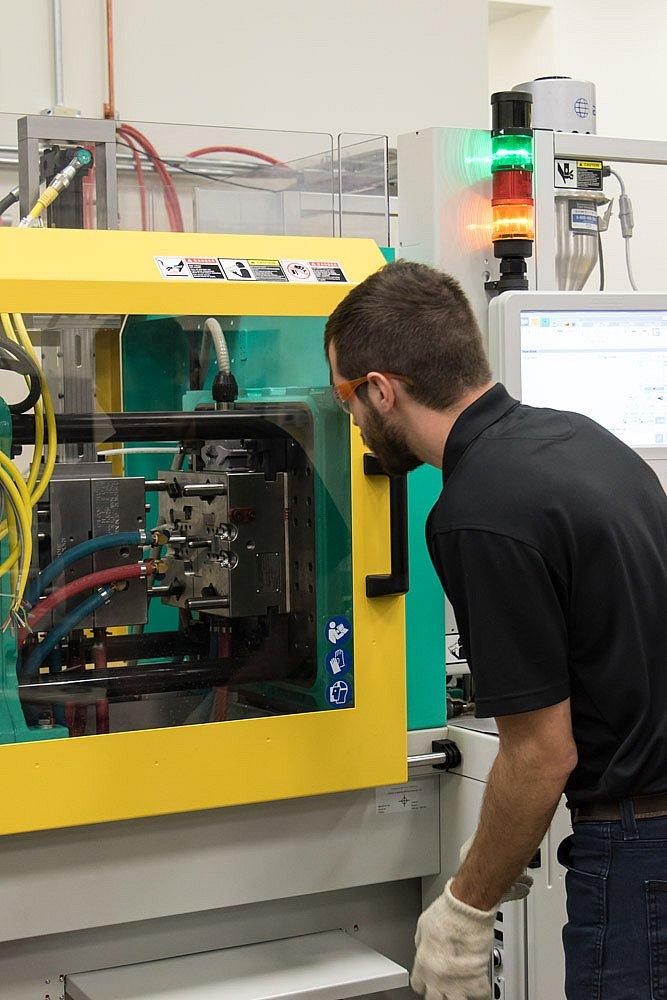
Selecting the wrong materials can create expensive problems during mold trials and production.
Fentormold provides engineering support from early material selection to final production.
Material Compatibility Evaluation
Before tooling begins, our engineers review:
- Material combinations
- Bonding requirements
- Product application
- Manufacturing feasibility
This helps customers avoid selecting materials that may fail during production.
Two-Shot Mold Design Optimization
Material selection directly affects mold design.
Our team considers:
- Material flow behavior
- Gate location
- Cooling system design
- Part structure
- Mold mechanism requirements
For customers developing complex plastic parts, Fentormold also provides custom injection molding services from prototype validation to mass production.
Trial Molding and Production Support
Before mass production, we help verify:
- Bonding performance
- Part appearance
- Dimensional accuracy
- Production stability
This integrated approach reduces project risks and helps customers achieve reliable two-shot molding results.
Frequently Asked Questions About Two-Shot Material Selection
Can Any Two Plastic Materials Be Used for Two-Shot Molding?
No.
Different plastics have different chemical properties and surface characteristics. Some combinations bond naturally, while others require special materials or mechanical locking designs.
What Is the Best Material Combination for Two-Shot Molding?
ABS + TPE is one of the most common combinations because it provides reliable bonding, good processing performance, and wide application possibilities.
When Should Material Compatibility Be Checked?
Material compatibility should be reviewed before mold design and tooling.
Changing materials after mold manufacturing begins may require:
- Mold modifications
- Additional trial runs
- Increased development costs
Does Two-Shot Molding Cost More Than Standard Injection Molding?
Yes, two-shot molding usually requires more complex tooling and equipment.
However, it can reduce assembly operations because two materials are produced as one finished component.
For cost-related decisions, customers should evaluate the total manufacturing process rather than only the initial mold cost. Understanding the factors behind two-shot molding cost can help companies make better decisions before investing in tooling.
Conclusion
Two-shot molding can create high-performance multi-material plastic parts, but material selection determines whether the final product succeeds or fails.
Choosing incompatible materials can lead to:
- Bonding failures
- Production delays
- Additional tooling costs
- Quality problems during mass production
The best approach is to evaluate material compatibility before mold manufacturing begins.
With experience in two-shot mold design, injection molding, and production validation, Fentormold helps customers reduce risks and develop reliable multi-material plastic parts.
From material selection and mold design to trial molding and production, we support customers throughout the entire manufacturing process.