A backup injection molding supplier is easiest to qualify before anything goes wrong.
When your main supplier is delivering on time, quality is stable, and production is running normally, there is little pressure to find another source. But once a serious delay, capacity shortage, quality problem, or communication issue appears, the situation can change quickly.
At that point, buyers often start searching for another molding factory under time pressure.
That is usually the worst time to begin.
A better approach is to qualify a backup injection molding supplier before the project becomes urgent.
Why Do You Need a Backup Injection Molding Supplier?
A backup supplier does not mean you plan to replace your current factory.
It simply gives you another option.
Many injection molding projects depend heavily on one mold, one factory, and one production schedule. If that supplier suddenly cannot produce, the impact can extend far beyond a few late parts.
Possible problems include:
- Production delays
- Missed customer deliveries
- Capacity shortages
- Machine breakdowns
- Quality instability
- Material shortages
- Unexpected price increases
- Communication problems
- Factory relocation
- Business closure
For a mature project, even a temporary interruption can create significant pressure.
A qualified backup injection molding supplier gives you more flexibility if the original source cannot support production.
Start With the Actual Part Requirements
Do not qualify a supplier from a company presentation alone.
Start with the actual project.
The supplier should understand:
- Part size
- Part weight
- Material
- Annual volume
- Mold dimensions
- Required machine tonnage
- Critical tolerances
- Cosmetic requirements
- Assembly requirements
- Packaging
- Secondary operations
- Quality documentation
A factory may be capable of injection molding in general but still be unsuitable for your particular part.
For example, a supplier that mainly runs small PP housings may not be the best backup source for a large glass-filled nylon component with tight flatness requirements.
The question is not:
“Are you an injection molding company?”
It is:
“Can you run this specific project reliably?”
A reliable backup injection molding supplier should be evaluated against the actual part, mold, material, and production requirements rather than general factory capability.
Check Whether the Backup Injection Molding Supplier Has the Right Equipment
One of the first things to confirm is machine compatibility.
A backup injection molding supplier should have molding machines that match:
- Required clamping force
- Mold dimensions
- Tie-bar spacing
- Shot size
- Injection pressure
- Mold thickness
- Core-pull requirements
- Hot runner requirements
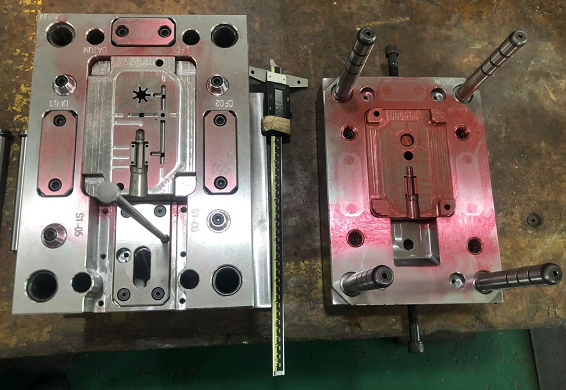
A mold may physically fit between the platens but still be unsuitable for the machine.
For example, the shot size may be wrong, the mold may require hydraulic connections that are unavailable, or the tie-bar spacing may prevent installation.
If the mold may eventually be transferred, these details should be checked in advance.
Our injection molding production capability includes project review before production so that mold and machine requirements can be checked before a transfer becomes urgent.
Can the Backup Injection Molding Supplier Handle Your Material?
Material experience matters.
A supplier that frequently molds PP and ABS may not have the same process experience with:
- PC
- POM
- PA
- PA + GF
- PBT
- TPE
- PPS
- High-temperature engineering plastics
Different resins require different drying, mold temperatures, processing windows, and equipment conditions.
If your component uses a moisture-sensitive or glass-filled material, ask how the supplier controls:
- Material storage
- Drying conditions
- Regrind
- Lot traceability
- Contamination
- Machine cleaning
A backup injection molding supplier should be able to explain how the actual material will be handled rather than simply saying that the factory can mold engineering plastics.
Review Tooling Capability Even If the Mold Already Exists
This is often overlooked.
Buyers may think:
“The mold is already finished. The backup supplier only needs to run it.”
In reality, transferred molds often need adjustment.
Possible issues include:
- Water connectors do not match
- Hydraulic fittings need modification
- Mold protection settings need adjustment
- Ejector stroke is different
- Hot runner connections differ
- Minor fitting is required
- Venting needs cleaning
- Sliders need maintenance
- Inserts need correction
If the new factory cannot inspect and repair molds internally, every small issue may require outside support.
That creates additional delays.
A backup injection molding supplier with injection mold manufacturing capability can usually respond more quickly when tooling adjustments are required.
This is especially important for older molds that have already completed a large number of cycles.
How to Check Quality at a Backup Injection Molding Supplier
Avoid asking only:
“Do you have ISO certification?”
Certification can be useful, but it does not tell you whether the supplier can control your particular part.
Instead, review the actual inspection requirements.
For example:
- Which dimensions are critical?
- How frequently are they checked?
- What inspection equipment is required?
- Are cavities identified separately?
- Are first-piece reports available?
- Is material traceability required?
- Are visual standards documented?
- How are nonconforming parts controlled?
For precision components, ask the supplier to review the drawing before qualification.
A capable supplier should identify dimensions or features that may require special control.
If they simply say:
“No problem. We can make it.”
without asking questions, that tells you very little.
A qualified backup injection molding supplier should be able to explain how part quality will be controlled during both trial and long-term production.
Send a Real RFQ to the Backup Injection Molding Supplier
A useful way to evaluate a backup injection molding supplier is to give them a real project to quote.
Do not only ask:
“What is your injection molding price?”
Provide enough information for a proper review:
- 3D file
- 2D drawing
- Material
- Annual quantity
- Existing mold information
- Mold size
- Current cycle time
- Current part weight
- Quality requirements
Then compare how the supplier responds.
A strong response normally includes questions.
They may ask about:
- Critical tolerances
- Mold condition
- Expected production volume
- Packaging
- Material grade
- Existing quality issues
- Machine requirements
- Transfer timing
These questions often reveal more about technical capability than the quotation itself.
Do Not Choose a Backup Injection Molding Supplier Only by Price
A backup supplier quoting 10% lower is not automatically the best option.
Remember why you are qualifying them.
The purpose is to reduce risk.
A backup injection molding supplier should offer:
- Reasonable pricing
- Suitable equipment
- Technical competence
- Reliable quality control
- Fast communication
- Ability to accept transferred tooling
- Capacity when needed
If the cheapest supplier creates another quality or delivery problem, the backup strategy has failed.
Price still matters.
But for a second source, reliability matters at least as much.
Test Communication Before You Need Emergency Support
Communication should be tested during qualification.
Send technical questions and see how they respond.
Useful signs include:
- Replies are reasonably fast
- Technical questions receive technical answers
- Drawings are reviewed carefully
- Problems are explained clearly
- The supplier does not hide uncertainty
- Actions and dates are specific
This becomes very important during an emergency transfer.
Imagine your main supplier suddenly cannot produce and you ask the backup factory:
“Can you inspect this mold and start production quickly?”
If every technical question requires several days of back-and-forth, the supplier may not actually reduce your risk.
A reliable backup injection molding supplier should have a clear communication path from technical question to action.
Fast communication does not mean instant answers.
It means the project does not become stuck because nobody knows who should respond.
Consider a Small Trial Project First
If the project is important enough, the safest qualification method is not only a factory audit.
It is actual work.
You may start with:
- A small production order
- A prototype mold
- A simple transferred mold
- A secondary component
- A low-risk project
This lets you evaluate:
- Quotation accuracy
- Drawing review
- Tooling communication
- Sample quality
- Production stability
- Inspection reports
- Packaging
- Delivery
You learn much more from one real project than from dozens of slides in a factory presentation.
A backup injection molding supplier does not necessarily need to receive your most important mold first.
Qualification can be gradual.
Can the Backup Injection Molding Supplier Accept a Mold Transfer?
If your backup plan depends on moving an existing mold, prepare for that possibility before the emergency happens.
Confirm that you have access to:
- Mold 3D files
- Mold 2D drawings
- Product drawings
- Hot runner information
- Water circuit information
- Electrical information
- Mold trial records
- Modification history
- Spare inserts
- Current sample parts
This is also why clear injection mold documentation matters.
A transferred mold with complete documentation is much easier to evaluate than a mold arriving with no drawings and no history.
Before transfer, the backup injection molding supplier should ideally receive basic mold information so they can check machine compatibility and identify possible modifications.
This can save several days or even longer once the project becomes urgent.
Check Available Production Capacity
A supplier may be technically capable but have no available production capacity.
That makes them a weak backup.
Ask:
- What machine sizes are normally available?
- How much capacity is currently used?
- Can additional shifts be added?
- How quickly can production begin?
- Are critical machines heavily loaded?
- Can the project be prioritized during an emergency?
You do not need guaranteed empty machines waiting for your project.
That is unrealistic.
But a qualified backup injection molding supplier should be able to explain how additional production would be accommodated.
For higher-volume projects, capacity should be evaluated before qualification.
How Much Should You Prepare Before You Actually Need the Supplier?
You do not need to transfer every mold or place duplicate orders with two factories.
The level of preparation depends on the risk of the project.
For a low-volume non-critical plastic part, having a second qualified supplier in your records may be enough.
For an important production component, you may want more:
- Approved supplier information
- NDA completed
- Quotation completed
- Technical review finished
- Machine compatibility checked
- Quality requirements confirmed
- Sample or small order completed
- Mold transfer documents ready
The more important the component is, the more preparation makes sense.
The objective is to make sure the backup injection molding supplier can become operational without beginning the qualification process from zero.
Red Flags When Qualifying a Backup Injection Molding Supplier
Be careful if the supplier:
- Quotes without reviewing drawings
- Cannot explain which machine would run the mold
- Does not ask about material
- Promises every tolerance without discussion
- Cannot repair molds internally
- Gives vague answers about capacity
- Avoids inspection requirements
- Communicates slowly before the order
- Focuses only on price
- Cannot provide a clear project contact
None of these points alone automatically disqualifies a supplier.
But several of them together indicate that the factory may not perform well when you actually need urgent support.
Backup Injection Molding Supplier Qualification Checklist
Before adding a backup injection molding supplier to your approved list, confirm the basics:
| Area | What to Confirm |
|---|---|
| Part capability | Similar size, material, and complexity |
| Machine compatibility | Mold fits and process requirements can be supported |
| Material experience | Correct handling and processing knowledge |
| Mold support | Ability to inspect, repair, or modify transferred tooling |
| Quality | Inspection capability matches the drawing |
| Capacity | Additional production can be accommodated |
| Communication | Technical responses are clear and timely |
| Pricing | Commercially reasonable for production |
| Documentation | Quality and production records are available |
| Trial experience | Ideally proven through a real project |
This does not need to become a complicated supplier-audit program.
For many projects, a practical technical review is enough to identify whether the supplier is a realistic second source.
Final Thoughts
The best time to qualify a backup injection molding supplier is when your current supplier is still performing well.
That gives you time to review equipment, tooling capability, quality control, material experience, communication, and production capacity without making decisions under pressure.
A backup supplier does not need to replace your existing source.
It simply gives you another path if production is interrupted.
The goal is not to maintain two identical factories for every project.
The goal is to avoid reaching a critical production problem and realizing that you have no alternative supplier, no transfer plan, and no time to qualify one.
If you are looking for a second injection molding source, Fentormold can review your part drawings, existing mold information, material, annual quantity, and production requirements first to determine whether the project matches our tooling and molding capability.