What You Need to Know
- Injection mold lifters are precision mold components used to release undercut features that cannot be removed by standard ejection systems.
- A reliable injection mold lifter supplier should provide accurate machining, suitable materials, and strict quality control.
- Material selection, machining tolerance, and surface treatment directly affect lifter performance and service life.
- Poor-quality lifters can cause mold damage, production delays, and increased maintenance costs.
- Choosing an experienced mold component supplier helps reduce tooling risks and improve production stability.
Introduction
Injection Mold Lifter is an important component used in plastic injection molds to release internal undercuts and complex features during ejection. Unlike standard ejector systems, lifters combine vertical ejection movement with angled sliding movement to remove difficult part geometries without damaging molded parts.
For mold makers and purchasing engineers, choosing the right injection mold lifter supplier is critical. A quality supplier should not only manufacture accurate components but also understand mold structure, material selection, machining requirements, and production challenges.
In actual mold manufacturing, many lifter failures are not caused by the mold design itself. Problems often come from incorrect steel selection, insufficient hardness, poor surface finishing, or inaccurate machining tolerances.
Therefore, selecting a supplier with strong mold component manufacturing experience can significantly reduce maintenance costs and production risks.
For complete tooling solutions, Fentormold provides professional Injection Mold Manufacturing services, including mold components, precision machining, and custom tooling support.
Internal Link:
https://www.fentormold.com/
Why Are Injection Mold Lifters Important in Mold Production?
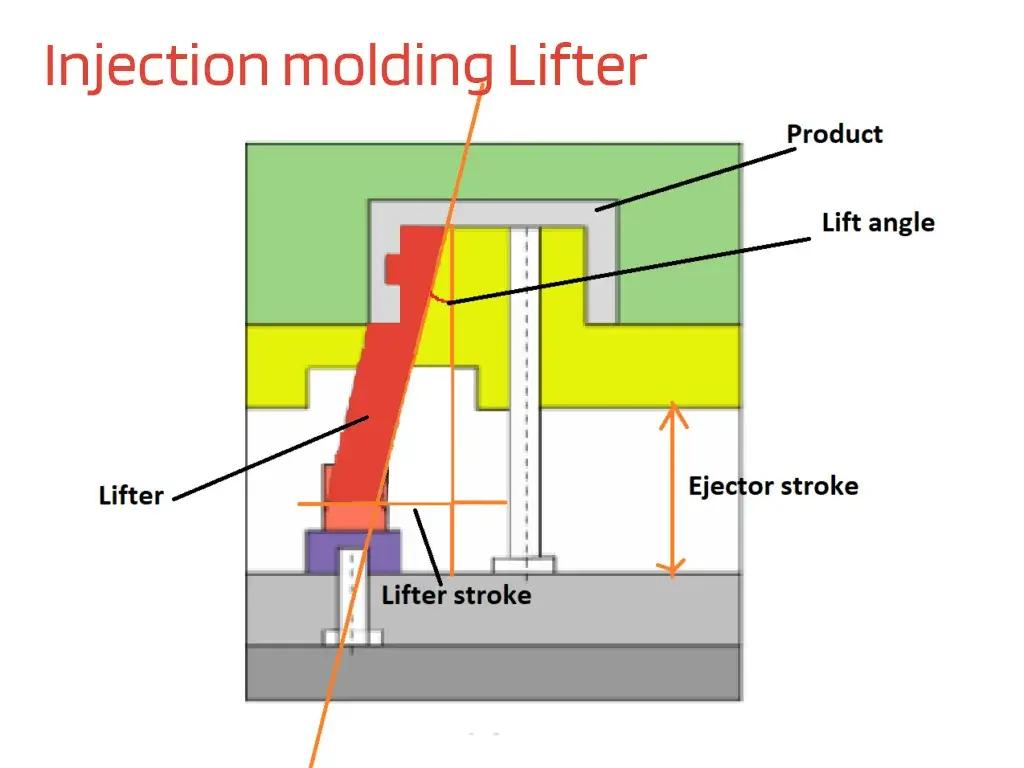
Injection mold lifters solve one of the most common challenges in injection molding: releasing parts with undercut structures.
Traditional ejector pins can only move vertically. However, many plastic parts include:
- Internal hooks
- Snap features
- Angled ribs
- Complex cavities
- Side undercuts
These features require additional movement during ejection. A lifter converts the vertical movement of the ejector plate into angled movement, allowing the molded part to release smoothly.
The main benefits of using high-quality mold lifters include:
- Improved mold reliability
- Reduced part damage
- Faster maintenance
- Longer mold service life
- Stable production cycles
For high-volume injection molds, even a small lifter problem can stop production. Therefore, lifter quality directly affects manufacturing efficiency.
Common Injection Mold Lifter Types and Applications
Different products require different lifter structures. The correct design depends on part geometry, available mold space, ejection requirements, and production conditions.
| Lifter Type | Main Feature | Typical Application |
|---|---|---|
| Round Lifter | Compact structure and easy machining | Small plastic parts and simple undercuts |
| Flat Lifter | Higher contact area and stability | Larger sliding surfaces |
| Custom Lifter | Designed for special requirements | Complex automotive and electronic parts |
| Wear-resistant Lifter | Improved durability | High-cycle production molds |
Round Injection Mold Lifters
Round lifters are commonly used for smaller mold structures where installation space is limited.
Advantages:
- Simple structure
- Lower machining cost
- Easy replacement
They are suitable for many general injection molding applications.
Flat Injection Mold Lifters
Flat lifters provide better support for larger contact areas.
They are often used when:
- The moving distance is longer
- The undercut structure is larger
- Higher stability is required
Custom Injection Mold Lifters
Complex plastic components often require customized lifter solutions.
Examples include:
- Automotive interior parts
- Electronic housings
- Industrial components
Custom lifters require more engineering experience because the supplier must consider:
- Ejection angle
- Wear conditions
- Mold space
- Manufacturing tolerance
How Material Selection Affects Injection Mold Lifter Performance
Material selection is one of the most important factors affecting the durability and reliability of an Injection Mold Lifter.
Because lifters experience repeated sliding movement during mold operation, they must have sufficient:
- Wear resistance
- Hardness
- Toughness
- Dimensional stability
- Corrosion resistance
Choosing the wrong material can lead to premature wear, lifter sticking, or even mold failure during production.
In actual tooling projects, lifters used with high-volume molds or abrasive plastic materials require higher-performance steel than standard production molds.
For example, glass-filled plastics contain abrasive fibers that can accelerate wear on moving mold components. In these applications, using wear-resistant tool steel can significantly extend component life.
Common Materials Used for Injection Mold Lifters
| Material | Main Advantages | Recommended Applications |
|---|---|---|
| S136 Stainless Steel | Excellent corrosion resistance and polishing performance | Medical parts, optical parts, high-gloss surfaces |
| SKD11 Tool Steel | High wear resistance and hardness | High-cycle molds and abrasive materials |
| H13 Tool Steel | Good toughness and heat resistance | High-stress molding applications |
| 718H Steel | Good balance of machinability and strength | General injection mold components |
A professional Injection Mold Lifter supplier should recommend materials based on:
- Plastic resin type
- Production volume
- Mold life requirements
- Surface finish requirements
- Operating environment
Material selection should not only consider initial cost. A cheaper material may increase long-term expenses due to frequent replacement and production downtime.
How Quality Suppliers Manufacture Mold Lifters
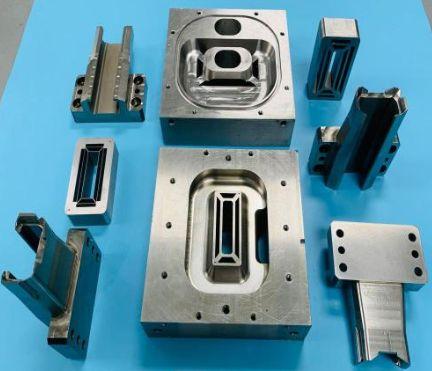
Manufacturing precision lifters requires more than basic machining capability.
A reliable supplier should control the complete manufacturing process, including:
- Material preparation
- CNC machining
- EDM processing
- Heat treatment
- Precision grinding
- Surface finishing
- Quality inspection
CNC Machining
CNC machining creates the basic lifter geometry with accurate dimensions.
Important machining requirements include:
- Tight dimensional tolerance
- Accurate angle control
- Smooth sliding surfaces
- Correct assembly dimensions
For precision mold components, machining accuracy directly affects mold assembly and operation stability.
EDM Machining
EDM is commonly used when lifters require:
- Complex profiles
- Sharp corners
- Hardened steel machining
- Difficult-to-reach areas
Compared with traditional machining methods, EDM provides better control for complex mold component geometries.
Heat Treatment
Heat treatment improves hardness and wear resistance.
However, incorrect heat treatment may cause:
- Deformation
- Cracking
- Dimensional changes
Experienced suppliers carefully control heat treatment parameters to maintain final accuracy.
Precision Grinding and Finishing
After heat treatment, grinding ensures the final dimensions and surface quality.
The finishing process affects:
- Sliding performance
- Friction level
- Mold service life
For high-precision molds, lifter surfaces may require additional polishing or coating treatment.
Injection Mold Lifter Cost Factors
The cost of a custom Injection Mold Lifter depends on several technical and manufacturing factors.
Many buyers only compare unit price, but the lowest price does not always provide the best value.
A high-quality lifter supplier considers:
| Cost Factor | Impact on Price |
|---|---|
| Material Selection | Premium tool steel increases material cost |
| Lifter Size | Larger components require more machining time |
| Geometry Complexity | Special angles and structures increase processing difficulty |
| Tolerance Requirements | Higher accuracy requires additional machining and inspection |
| Surface Treatment | Polishing and coating add processing costs |
| Quantity | Multiple parts can reduce average unit cost |
How to Reduce Injection Mold Lifter Costs
Companies can reduce costs by:
Choosing the right material
Using premium steel only where necessary avoids unnecessary material costs.
Providing complete drawings
Clear technical drawings reduce communication time and engineering modifications.
Working with experienced suppliers
Experienced suppliers can identify manufacturing problems before production begins.
In many projects, the biggest cost is not the lifter itself but the downtime caused by poor-quality components.
A reliable supplier helps reduce:
- Mold repair frequency
- Production interruptions
- Replacement costs
Common Quality Problems with Mold Lifters
Poor-quality lifters may create serious production problems.
Lifter Wear
Wear usually happens because of:
- Incorrect material selection
- Insufficient hardness
- Poor lubrication
- High production cycles
Regular Injection Mold Repair and Maintenance practices can help identify wear problems early, reduce unexpected downtime, and extend the service life of mold components.
Solution:
Use suitable tool steel and ensure proper surface finishing.
Lifter Sticking
Lifter movement problems may occur because of:
- Incorrect clearance
- Poor machining accuracy
- Surface damage
Solution:
Control machining tolerance and inspect sliding surfaces carefully.
Lifter Breakage
Breakage is often caused by:
- Excessive stress
- Incorrect lifter design
- Low toughness material
Solution:
Choose the correct steel grade and evaluate mold structure before manufacturing.
Misalignment During Mold Operation
Even small dimensional errors can affect lifter movement.
Possible results:
- Part damage
- Flash defects
- Increased mold wear
Precision inspection is essential before component delivery.
What Makes a Quality Injection Mold Lifter Supplier?
Choosing the right Injection Mold Lifter supplier is not only about finding a company that can manufacture the component. A reliable supplier should understand injection mold requirements and provide consistent quality throughout the entire production process.
For overseas customers, especially those outsourcing mold components internationally, supplier capability is often more important than the initial quotation.
A qualified supplier should provide:
1. Precision Manufacturing Capability
Injection mold lifters require accurate dimensions because they directly affect mold movement and part release.
A professional supplier should have:
- CNC machining capability
- EDM processing equipment
- Precision grinding equipment
- Measuring equipment
- Experienced technicians
For precision mold components, even small dimensional errors can create assembly problems during mold trial.
2. Material Knowledge and Recommendation
A good supplier should not simply manufacture parts based on drawings. They should also provide technical suggestions.
For example:
- Which steel is suitable for high-cycle molds?
- Is corrosion resistance required?
- Does the plastic material contain glass fiber?
- Is additional surface treatment needed?
Correct material selection can improve mold life and reduce maintenance frequency.
3. Strict Quality Control Process
Before shipment, injection mold lifters should be inspected carefully.
Typical inspection includes:
| Inspection Item | Purpose |
|---|---|
| Dimension Measurement | Ensure assembly accuracy |
| Hardness Testing | Confirm material performance |
| Surface Inspection | Prevent scratches and defects |
| Tolerance Check | Ensure proper mold operation |
A supplier with a complete inspection system can reduce the risk of receiving defective components.
4. Experience With Mold Components
Manufacturing mold components requires practical tooling experience.
A supplier familiar with mold structures can better understand:
- Lifter movement requirements
- Clearance requirements
- Wear areas
- Assembly conditions
This experience helps avoid problems that may not appear during machining but occur during mold operation.
Injection Mold Lifter vs Other Mold Components
Injection mold lifters are often used together with other precision mold components.
For molds requiring easy maintenance and quick replacement of molding areas, Injection Mold Inserts are another important solution. Replaceable inserts help reduce repair time and improve mold maintenance efficiency, especially for high-volume production molds.
Understanding the differences helps engineers select the right solution.
| Component | Main Function | Typical Application |
|---|---|---|
| Lifter | Releases internal undercuts with angled movement | Complex plastic parts |
| Slider | Creates side core movement | Side holes and side features |
| Insert | Replaceable molding area | Easy maintenance and repair |
| Ejector Pin | Pushes parts out of mold | Standard ejection |
For projects requiring multiple precision mold parts, working with one experienced supplier can simplify communication and improve consistency.
Similar to Injection Mold Slider mechanisms, lifters are designed to solve complex part release challenges caused by undercut structures. Understanding the differences between lifters and sliders helps engineers choose the right mold component for each application.
Fentormold also provides Injection Mold Components Manufacturing services, including custom mold inserts, sliders, lifters, and other precision tooling parts.
How to Select the Right Injection Mold Lifter Supplier
Before choosing a supplier, buyers should evaluate several important factors.
Manufacturing Experience
Check whether the supplier has experience producing:
- Injection mold components
- Custom lifters
- Precision tooling parts
- High-volume production components
Technical Communication
A good supplier should be able to:
- Review drawings
- Identify potential issues
- Suggest material options
- Confirm manufacturing feasibility
Clear communication helps avoid costly modifications.
Production Capability
Important questions include:
- What machining equipment is available?
- Can the supplier control tight tolerances?
- Does the supplier perform inspection before delivery?
- Can they support urgent replacement parts?
Delivery Reliability
For overseas customers, lead time is critical.
A reliable supplier should provide:
- Clear production schedule
- Quality confirmation before shipment
- Stable delivery performance
Why Choose an Experienced Injection Mold Component Supplier?
Injection mold lifters may look like small components, but they have a direct impact on mold performance.
A low-quality lifter can cause:
- Mold downtime
- Additional repair costs
- Production delays
- Reduced mold life
An experienced supplier can help customers reduce these risks through:
- Proper material selection
- Precision machining
- Professional quality control
- Engineering support
Before manufacturing mold components, DFM review and technical communication can help identify potential issues early and avoid unnecessary production problems.
Frequently Asked Questions About Injection Mold Lifters
1. What is an injection mold lifter used for?
An injection mold lifter is used to release internal undercuts or complex features that cannot be removed with standard ejector pins. It moves at an angle during ejection to separate the molded part from the mold core.
2. What materials are commonly used for injection mold lifters?
Common materials include S136 stainless steel, SKD11 tool steel, H13 steel, and 718H steel. The best choice depends on mold life requirements, plastic material, and production conditions.
3. How long does an injection mold lifter last?
The service life depends on material quality, hardness, lubrication, mold design, and production volume. High-quality lifters used in well-maintained molds can support hundreds of thousands or even millions of molding cycles.
4. How much does a custom injection mold lifter cost?
The cost depends on size, material, machining complexity, tolerance requirements, and quantity. Simple lifters may have lower costs, while complex precision components require more machining time.
5. How do I choose a reliable injection mold lifter supplier?
A reliable supplier should have precision machining capability, experience with mold components, strict quality control, and the ability to provide engineering support.
Conclusion: Choose a Supplier That Understands Mold Performance
Injection mold lifters are small but critical components that directly affect mold reliability and production efficiency.
A quality Injection Mold Lifter supplier should provide more than competitive pricing. The supplier should understand material selection, precision machining, quality inspection, and real-world mold operation requirements.
By choosing an experienced mold component manufacturer, companies can reduce production risks, improve mold life, and achieve more stable injection molding performance.
Need custom injection mold lifters or other precision mold components? Fentormold can provide engineering support, material recommendations, and manufacturing solutions for your tooling projects.